
Converting your regular bicycle into an electric bike has never been more accessible in India. With a quality ebike conversion kit India available online, you can transform any standard bicycle into a powerful electric ride for a fraction of the cost of buying a new e-bike. Whether you want to tackle steep Bangalore streets, commute across Mumbai traffic, or cruise through Delhi’s colonies without breaking a sweat, a hub motor conversion kit is your best starting point.
This beginner-friendly guide walks you through every step of the hub motor setup — from selecting the right components to wiring it all together safely. By the end, you’ll have the knowledge to build a reliable e-bike that suits Indian roads and your daily commute needs.
What Is an E-Bike Conversion Kit?
An e-bike conversion kit is a bundle of components that replaces or augments your bicycle’s existing drivetrain with an electric motor system. Unlike buying a factory-built e-bike, a conversion kit lets you use your existing bicycle frame — saving significant money while giving you full control over the components you choose.
A typical hub motor conversion kit for India includes:
- Hub motor wheel — a motor built into the front or rear wheel hub
- BLDC motor controller — the brain that regulates power from battery to motor
- Throttle — twist-grip or thumb throttle to control speed
- Battery pack — usually 36V or 48V lithium-ion
- Battery charger
- Brake levers with motor cutoff
- Display / speedometer (optional but useful)
- PAS sensor — pedal assist sensor (optional)
The hub motor is the centerpiece of the kit. It’s a brushless DC (BLDC) motor embedded in the wheel hub, spinning the wheel directly without chains or gears (in most cases). This makes it mechanically simpler and very maintenance-friendly — ideal for Indian conditions where dust, potholes, and monsoon rains are everyday realities.
Components You Need for a Complete Conversion
Before purchasing, make sure your bicycle frame is compatible. Most standard 26-inch and 28-inch bicycles with standard front fork dropouts (100mm) or rear dropouts (135mm) work perfectly. Here’s a detailed component checklist:
Essential Components
- Hub Motor: 250W for flat terrain, 350W for mild hills, 500W for steep climbs or heavier riders
- Controller: Must match motor voltage and current rating. A 48V 15A controller suits most 500W builds
- Battery: 36V 10Ah gives ~30-40 km range; 48V 20Ah gives 60-80 km range
- Throttle: Twist-grip style is most popular in India
- Charger: Must match battery voltage (36V or 48V)
- Brake levers: Motor-cutoff levers improve safety
Optional but Recommended
- PAS (Pedal Assist Sensor) — extends battery range by blending pedal and motor power
- LCD display — shows speed, battery level, trip distance
- Front light powered by e-bike battery
- Horn / bell
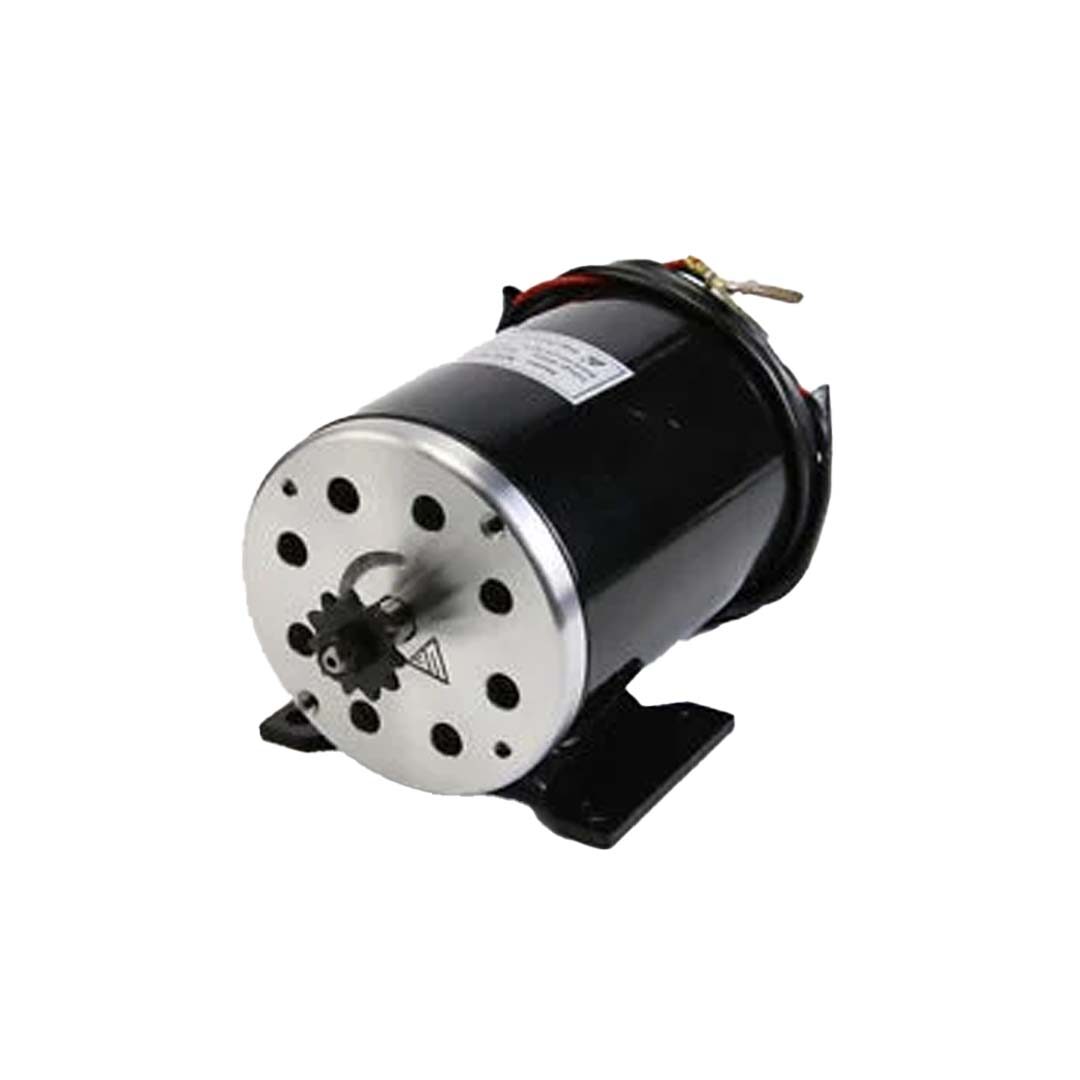
Ebike 500W 24V DC 2500 RPM Motor MY1020
A powerful 500W DC motor perfect for e-bike conversions, go-karts, and scooter builds. Runs on 24V, delivers 2500 RPM for strong acceleration on Indian roads.
Choosing the Right Hub Motor for India
The hub motor is the heart of your e-bike conversion. Indian riding conditions demand a motor that handles heat well, tolerates poor road surfaces, and delivers adequate torque for laden riding (carrying a bag, occasional pillion).
Front vs Rear Hub Motor
Front hub motor: Easier to install (no derailleur interference), provides front-wheel drive which feels unusual but works fine. Suitable for lighter 250W-350W builds. Not recommended for very hilly terrain as front wheel can slip on climbs.
Rear hub motor: More natural feel (rear-wheel drive like most motor vehicles), better traction, especially on climbs. Slightly more complex installation due to chain and freewheel. Recommended for 500W+ builds and hilly cities like Pune or Shimla.
Wattage Guide for Indian Riders
| Wattage | Best For | Top Speed | Rider Weight |
|---|---|---|---|
| 250W | Flat urban commute | 25 km/h | Up to 75 kg |
| 350W | Mild hills, heavier riders | 30 km/h | Up to 90 kg |
| 500W | Hilly terrain, heavy loads | 35-40 km/h | Up to 120 kg |
Note: India’s motor vehicle regulations technically classify e-bikes above 250W as motor vehicles requiring registration. Many builders use 250W rated motors that are actually capable of 350W peak — a practical compromise.
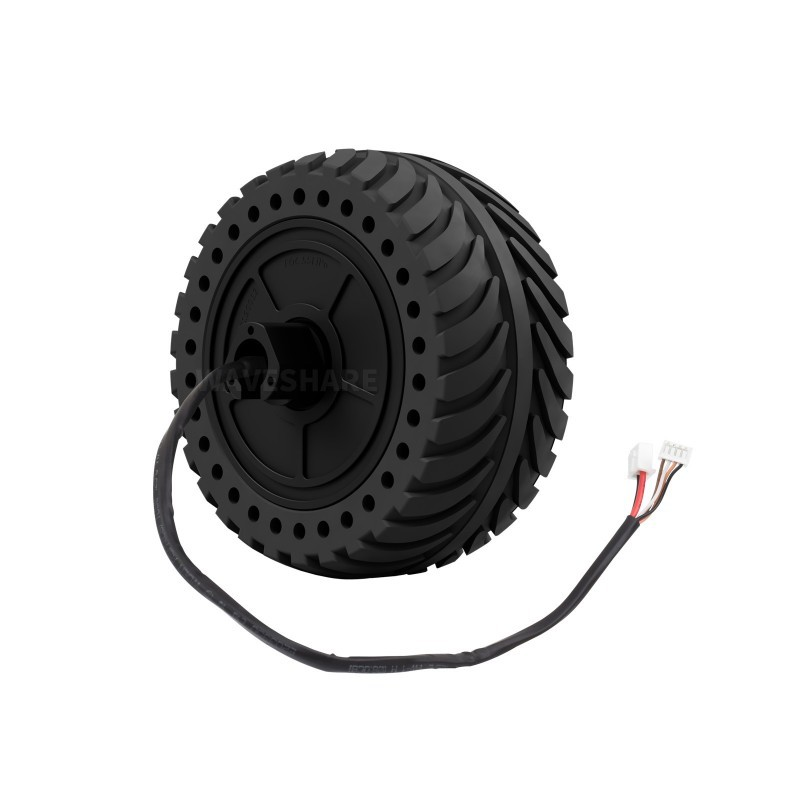
Waveshare DDSM115 Direct Drive Hub Motor
Low-speed, high-torque hub motor with direct drive mechanism. Low noise operation makes it ideal for smooth urban e-bike conversions and robotic platforms.
Controller, Throttle, and Display Setup
The BLDC motor controller is what translates your throttle input into precise motor speed. A mismatched controller can damage your motor or battery, so getting this right is critical.
Controller Specifications to Match
- Voltage: Controller voltage must match battery voltage exactly (36V battery → 36V controller)
- Current: Controller max current should equal or exceed motor’s rated current. For a 500W 48V motor: 500/48 ≈ 10.4A rated, so a 15A or 20A controller gives headroom for hills
- Phase connections: 3 thick wires (motor phases) + 5 thin wires (Hall sensors) — match colors carefully
Common Controller Features in India
- Regenerative braking (regen) — charges battery slightly when braking
- Three speed modes (Eco/Normal/Sport)
- PAS support for up to 12 magnets
- Cruise control
- Temperature protection
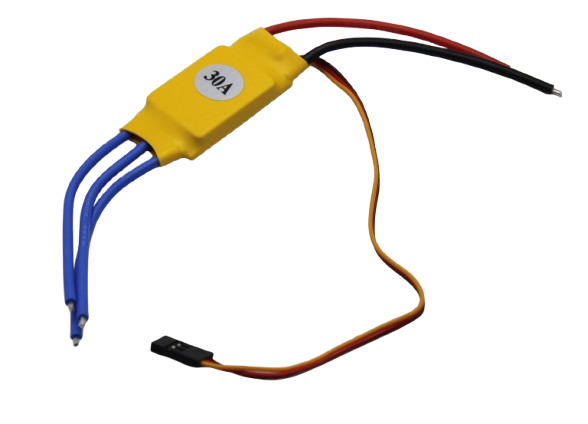
30A BLDC ESC Brushless Electronic Speed Controller
High-quality 30A brushless ESC suitable for BLDC motor control in e-bike projects, robotics, and RC applications. Handles continuous load reliably.
Battery Selection: Voltage and Capacity
The battery is the most expensive single component of your e-bike conversion kit. Choosing wisely means balancing range, weight, cost, and longevity.
Understanding Battery Specs
- Voltage (V): Determines motor compatibility and speed. 36V is common for 250W builds; 48V for 500W
- Capacity (Ah): Determines range. Energy = V × Ah. A 48V 15Ah battery = 720Wh
- Cell type: 18650 or 21700 Li-ion cells. Look for cells from Samsung, LG, Panasonic, or CATL for reliability
- BMS: Battery Management System is critical — protects against overcharge, over-discharge, and short circuits
Range Estimation for India
A useful rule of thumb: divide Wh by 15 for real-world Indian conditions (hills, stop-and-go traffic, heat). So:
- 36V 10Ah = 360Wh → ~24 km real-world range
- 48V 15Ah = 720Wh → ~48 km real-world range
- 48V 20Ah = 960Wh → ~64 km real-world range
For most Indian city commuters (10-20 km per day), a 48V 12Ah or 15Ah battery is the sweet spot. If you carry cargo or tackle significant hills, step up to 20Ah.
Step-by-Step Hub Motor Installation
Installing a rear hub motor kit on a standard Indian bicycle takes 2-4 hours for a first-timer. Here’s the process:
Tools Required
- Tire levers (2 nos)
- Cone spanner set
- Adjustable wrench
- Cable ties (zip ties)
- Electrical tape and heat shrink
- Multimeter
- Allen key set
Installation Steps
- Remove rear wheel: Deflate tire, undo axle nuts (usually 15mm), disconnect brake cable, remove chain from sprocket
- Transfer tyre and tube: Remove tyre and inner tube from old wheel. Mount on hub motor wheel using tire levers. Reinflate
- Transfer freewheel/cassette: If using rear hub motor, you’ll use the motor’s built-in freewheel. Install original freewheel only if motor doesn’t include one
- Mount hub motor wheel: Insert into rear dropouts, ensure axle washers are correctly seated, tighten axle nuts to 40-50 Nm. Thread axle wire through frame
- Mount controller: Velcro or zip-tie to frame under seat or in front bag. Keep away from motor heat
- Connect motor wires: Phase wires (3 thick): yellow-yellow, green-green, blue-blue. Hall sensor wires (5 thin): match colors exactly
- Mount throttle: Replace right-side grip. Connect to controller throttle port
- Mount battery: Use frame bag or rear rack mount. Connect to controller battery input — double-check polarity!
- Mount brake levers: Replace existing levers. Connect brake cutoff wires to controller
- Test before riding: Lift rear wheel off ground, engage throttle slowly. Check direction, speed, brake cutoff
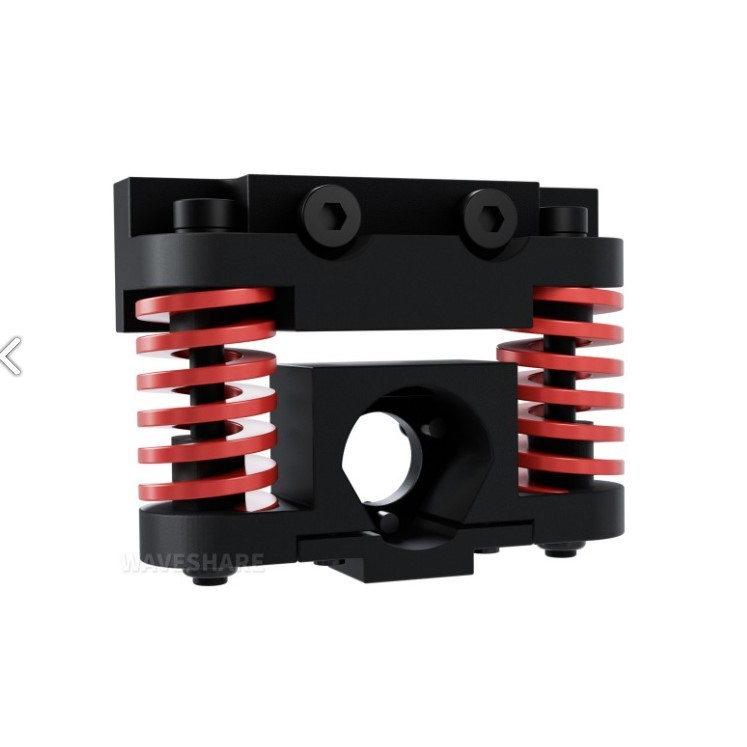
Waveshare All-Metal UGV Suspension for DDSM115 Hub Motor
High-strength spring suspension system with 7.5 kg load capacity, compatible with DDSM115 hub motors. Great for DIY e-vehicles and robotic platforms.
Wiring Guide for Beginners
Wiring is the step most beginners find daunting, but a methodical approach makes it straightforward. Follow color coding strictly and test with a multimeter before energizing.
Standard Wire Colors (KT/Lishui Controllers)
- Motor phase: Yellow, Green, Blue (thick, ~14 AWG)
- Hall sensors: Black (GND), Red (5V), Yellow/Blue/Green (signals) — 5-pin JST connector
- Throttle: Black (GND), Red (5V), Green (signal) — 3-pin JST
- Brake cutoff: Black and White — normally closed (NC) type
- Battery: Red (+) and Black (−) — heavy gauge, 10-12 AWG
Safety Wiring Tips
- Always add a main fuse (30A for 500W builds) between battery positive and controller
- Use an XT60 or Anderson connector as the main power disconnect
- Wrap all exposed connections with self-amalgamating tape for waterproofing
- Route motor cable through frame tubes if possible for protection
- Never connect or disconnect motor phase wires while powered
Cost Breakdown in India (2024)
| Component | Budget Build | Mid-Range | Premium |
|---|---|---|---|
| Hub Motor (350W) | ₹2,500 | ₹4,000 | ₹7,000 |
| Controller (15A) | ₹800 | ₹1,500 | ₹3,000 |
| Battery (48V 15Ah) | ₹8,000 | ₹12,000 | ₹18,000 |
| Throttle + Display | ₹400 | ₹800 | ₹1,500 |
| Miscellaneous | ₹500 | ₹1,000 | ₹2,000 |
| Total | ₹12,200 | ₹19,300 | ₹31,500 |
Compare this to factory e-bikes starting at ₹35,000-₹50,000, and the conversion route delivers excellent value — especially if you already own a quality bicycle.
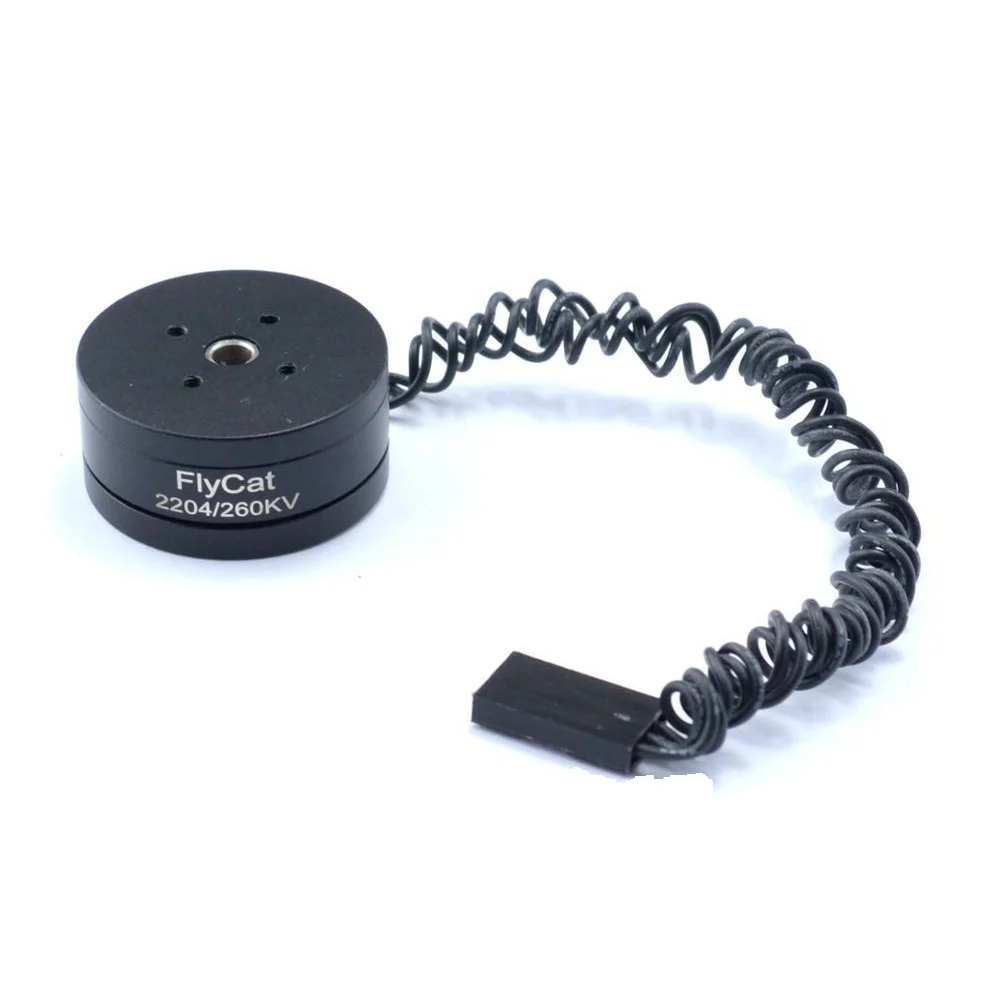
2204 260KV Brushless Motor (30cm Cable)
Compact and efficient brushless motor with 260KV rating and 30cm cable. Ideal for small e-vehicle and robotics projects requiring precise BLDC motor control.
Frequently Asked Questions
Is it legal to ride a converted e-bike in India?
E-bikes with motors up to 250W and a maximum speed of 25 km/h are exempt from registration and driving license requirements under the CMVR (Central Motor Vehicles Rules). Motors above 250W technically require registration as a motor vehicle. Most DIY converters use 250W rated motors that handle real-world loads.
How long does it take to convert a bicycle?
With basic mechanical skills, expect 3-5 hours for a first conversion. Subsequent builds take 1-2 hours. The most time-consuming part is careful wiring and cable routing.
Can I use my existing bicycle brakes?
You can, but motor cutoff brake levers are highly recommended for safety. These interrupt motor power when you squeeze the brake, preventing the motor from fighting your stopping effort. They’re inexpensive (₹300-600 a pair).
What happens if the motor gets wet in rain?
Hub motors are typically IP54 rated — they tolerate rain and splashing but not submersion. The controller is the more vulnerable component; mount it in a protected location and cover it during heavy rains.
How often does the battery need replacement?
Quality lithium-ion batteries last 500-800 charge cycles before significant capacity loss. At one charge per day, that’s 1.5-2 years. Avoid fully depleting the battery and store it at 50-80% charge to maximize lifespan.
Can I fit a conversion kit on any bicycle?
Most standard adult bicycles with 20″, 24″, 26″, or 28″ wheels work. Ensure your fork dropouts are metal (not carbon), and check that rear dropouts are at least 135mm wide. Very lightweight carbon frames are not recommended.
Ready to Build Your E-Bike?
Zbotic.in stocks a wide range of motors, controllers, and electronic components for e-bike conversions and robotics projects across India. Fast shipping, genuine components, and expert support available.


Add comment