
Drone Winch System: Pick and Place Payload Delivery UAV
The idea of drones that can autonomously pick up and deliver payloads has captured the imagination of engineers, logistics companies, and hobbyists alike. Whether it is delivering medicine to a remote village in the hills of Himachal Pradesh, lowering a rope to a trekker in distress, or conducting automated warehouse inventory checks, a drone-mounted winch system turns a standard multirotor into a versatile robotic tool.
Unlike simple cargo drop mechanisms, a winch system allows precise vertical deployment and retrieval of payloads — lowering a package to the ground, releasing it, and returning home without the drone ever landing. This capability, combined with advances in flight controllers and telemetry systems, makes the winch UAV one of the most exciting DIY build projects for serious drone engineers.
This comprehensive guide walks you through the mechanical design, electronics selection, firmware configuration, and operational procedures for building a functional pick-and-place payload delivery UAV in India.
1. Understanding Payload Delivery UAV Systems
A winch-based delivery UAV works on a deceptively simple principle: a spool of line, driven by a motor, lets out and reels in a payload suspended below the drone. But the engineering challenges hidden in this simplicity are substantial:
- Pendulum stability: A hanging payload acts like a pendulum, swinging freely and destabilising the drone, especially in wind.
- Load detection: The system needs to know when the payload has reached the ground (tension drops) to stop paying out line.
- Safe release: The gripper or release mechanism must operate reliably in all weather conditions.
- Return-to-home accuracy: After releasing a payload, the drone must navigate precisely to pick up the next item or return to base.
There are two primary deployment architectures:
Fixed-height hover + winch out/in: The drone hovers at a fixed altitude while the winch pays out line. Simpler control, but requires a tall hover altitude to clear obstacles.
Descent + winch: The drone descends while the winch maintains line tension. More complex but allows delivery in tight spaces with lower altitude requirements.
2. Choosing the Right Airframe for Winch Operations
A payload delivery drone must be significantly larger and more powerful than a standard FPV quad. Key requirements:
Payload Capacity
For a 500g delivery payload, plan for a drone with minimum 2kg thrust headroom beyond its own weight. A typical 500g-payload drone might weigh 1.5kg without payload, needing 4kg+ total thrust for 30% hover throttle efficiency.
Frame Size and Type
- X6 hexacopter: Adds motor redundancy — the drone can land safely even with one motor failure (critical for payload operations over people)
- X4 quadcopter with large props (10–15 inch): Simpler, cheaper, but no motor redundancy
- Octocopter: Maximum redundancy and payload but very expensive and complex
For most Indian hobbyist/startup payload drone projects, a hexacopter with 10–12 inch props offers the best balance of safety, cost, and payload capacity.
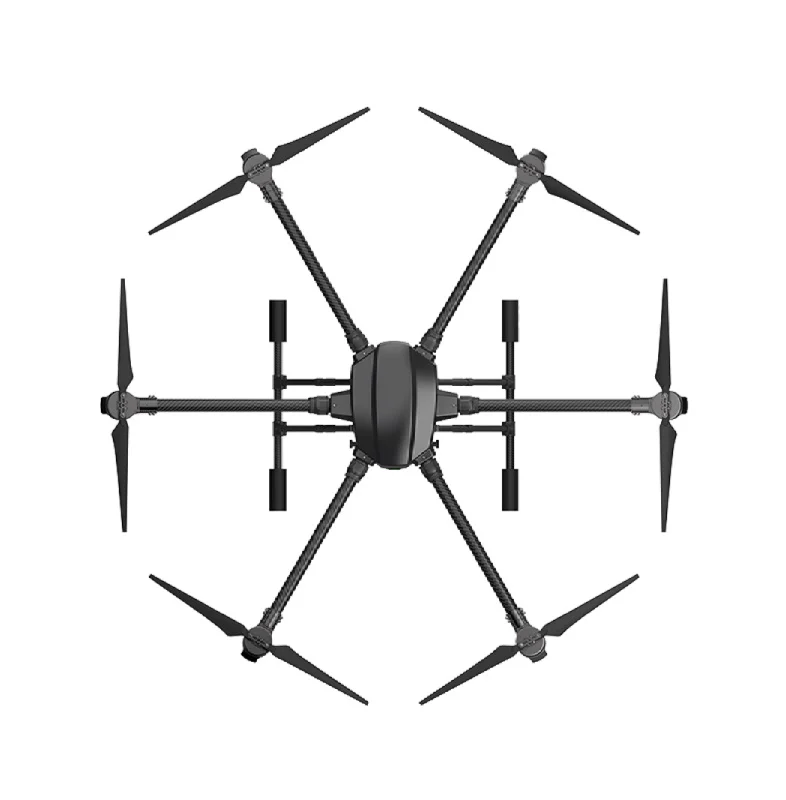
EFT 6120 Multifunction Surveillance Drone Frame
A professional-grade drone frame designed for multi-mission deployments including surveillance and payload operations. Its rigid construction and generous motor spacing make it ideal as the base airframe for a winch delivery system.
View on Zbotic3. Designing the Winch Mechanism
The winch mechanism is the heart of your payload system. Here is how to design one that is reliable and lightweight:
Spool Design
Use a 3D-printed or aluminium spool with flanges. Key dimensions:
- Core diameter: 20–30mm (smaller core = higher torque required per metre of line)
- Flange diameter: 60–80mm
- Line capacity: Design for 20–30m of 1.5mm Dyneema braid at minimum
Line Selection
Dyneema (UHMWPE braid) is the best choice for drone winch applications:
- Extremely high strength-to-weight ratio (200kg breaking strength at 1.5mm diameter)
- Minimal stretch (less pendulum amplification compared to nylon)
- UV and moisture resistant for outdoor use
- Available in India through fishing tackle suppliers and technical textile dealers
Line Tension Sensing
Install a load cell (0.5kg–5kg capacity) in the winch line path to measure real-time tension. When the payload touches ground, tension drops sharply — this triggers the release/stop logic in your flight controller script. Load cells with HX711 ADC boards are inexpensive and interface easily with Arduinos or Raspberry Pis running alongside the flight controller.
4. Winch Motor and ESC Selection
The winch motor is entirely separate from the propulsion motors. It needs different characteristics:
- High torque at low speed: Unlike propulsion motors that spin at 20,000+ RPM, winch motors need 200–1000 RPM with maximum torque for controlled lowering/lifting
- Bidirectional control: Must spool out and reel in smoothly
- Holding torque: Must maintain tension when stopped (especially with a hanging payload)
Motor Options
Brushed gear motors are the simplest solution — a high-torque DC brushed motor with an integrated gearbox (like those found in car window lifters or windshield wiper motors) provides excellent torque and natural braking. They can be controlled with bidirectional brushed ESCs.
Brushless motors with gearbox offer better efficiency and longer life but require more complex ESC configuration for bidirectional low-speed operation.
Servo motors (large-scale) — standard RC servos are limited in rotation but 360° continuous servos or large hobby servo winches can handle light payloads up to 200g.
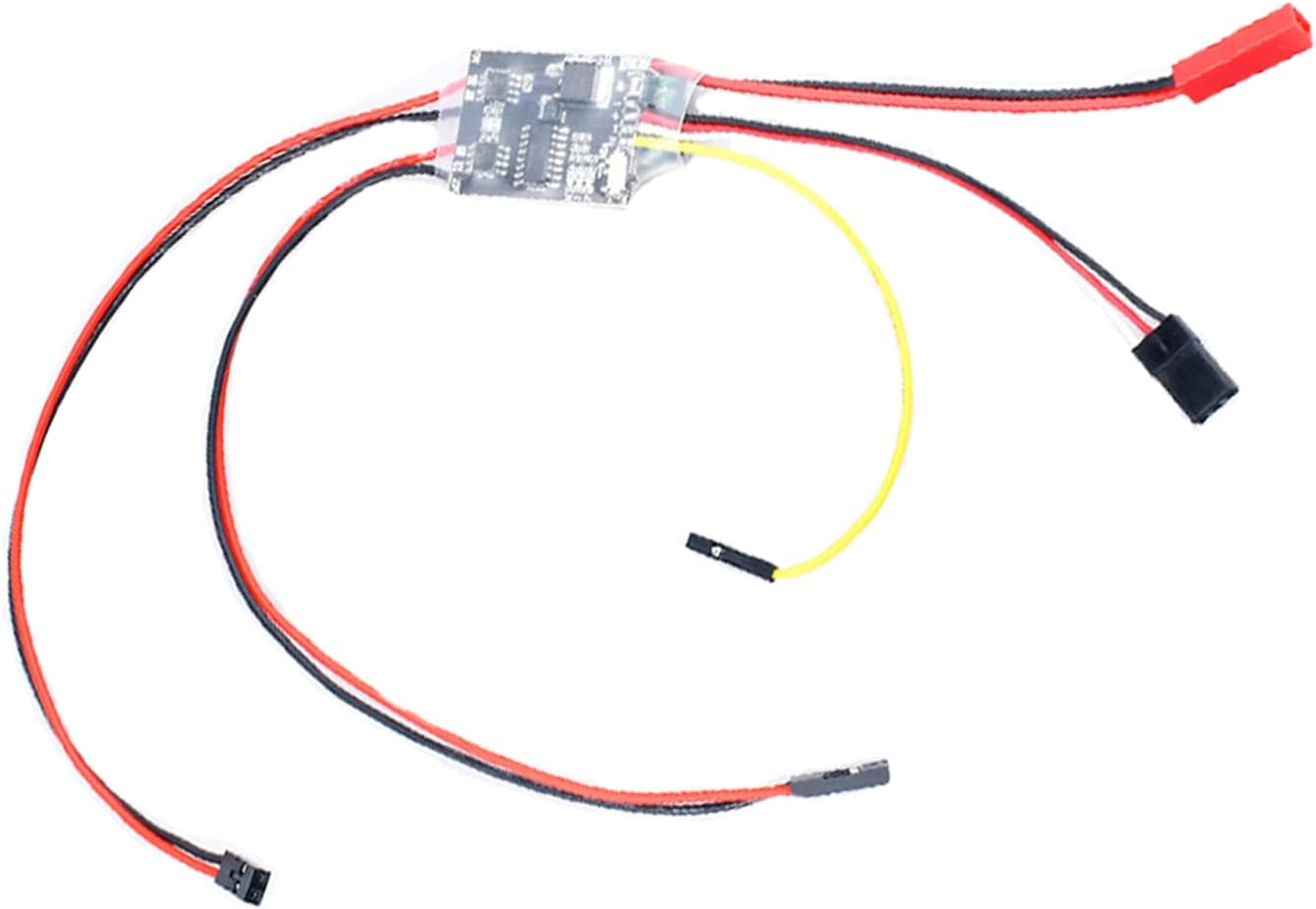
2S-6S 2Ax2 Dual Way Brushed ESC Bidirectional Controller
Dual-channel bidirectional brushed ESC supporting 2S–6S input. Perfect for controlling a winch brushed gear motor — provides smooth bidirectional speed control for precise spool-in and spool-out operations.
View on Zbotic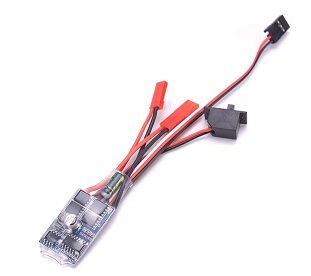
30A Brushed ESC No Brake
High-current 30A brushed ESC suitable for powering winch gear motors and other auxiliary actuators on your payload delivery drone. Compact and reliable for continuous duty cycles.
View on Zbotic5. Flight Controller and Autopilot
A winch drone requires a more sophisticated flight controller than a typical FPV quad. You need a platform that supports:
- GPS-based loiter/position hold (mandatory for stable winch operations)
- Scripted missions (MAVLink scripting or ArduPilot Lua scripts)
- Auxiliary port control (for winch motor and gripper)
- Telemetry downlink to a ground station
ArduPilot on Pixhawk is the platform of choice for payload delivery builds worldwide. ArduPilot (specifically ArduCopter) has native winch support built into the firmware — it can control a winch via servo output, monitor line tension, and integrate winch operations into autonomous missions.
6. Telemetry and Ground Control
Remote monitoring and control is essential for a winch drone operating beyond visual line of sight (BVLOS). You need a reliable two-way telemetry link to monitor battery voltage, GPS position, winch status, and payload tension in real time.

3DR 100mW Radio Telemetry 915MHz for APM PX4 Pixhawk
Industry-standard MAVLink telemetry radio for ArduPilot/Pixhawk builds. Provides reliable bidirectional data link up to 300m in urban environments and further in open terrain — essential for monitoring winch operations from your ground station.
View on Zbotic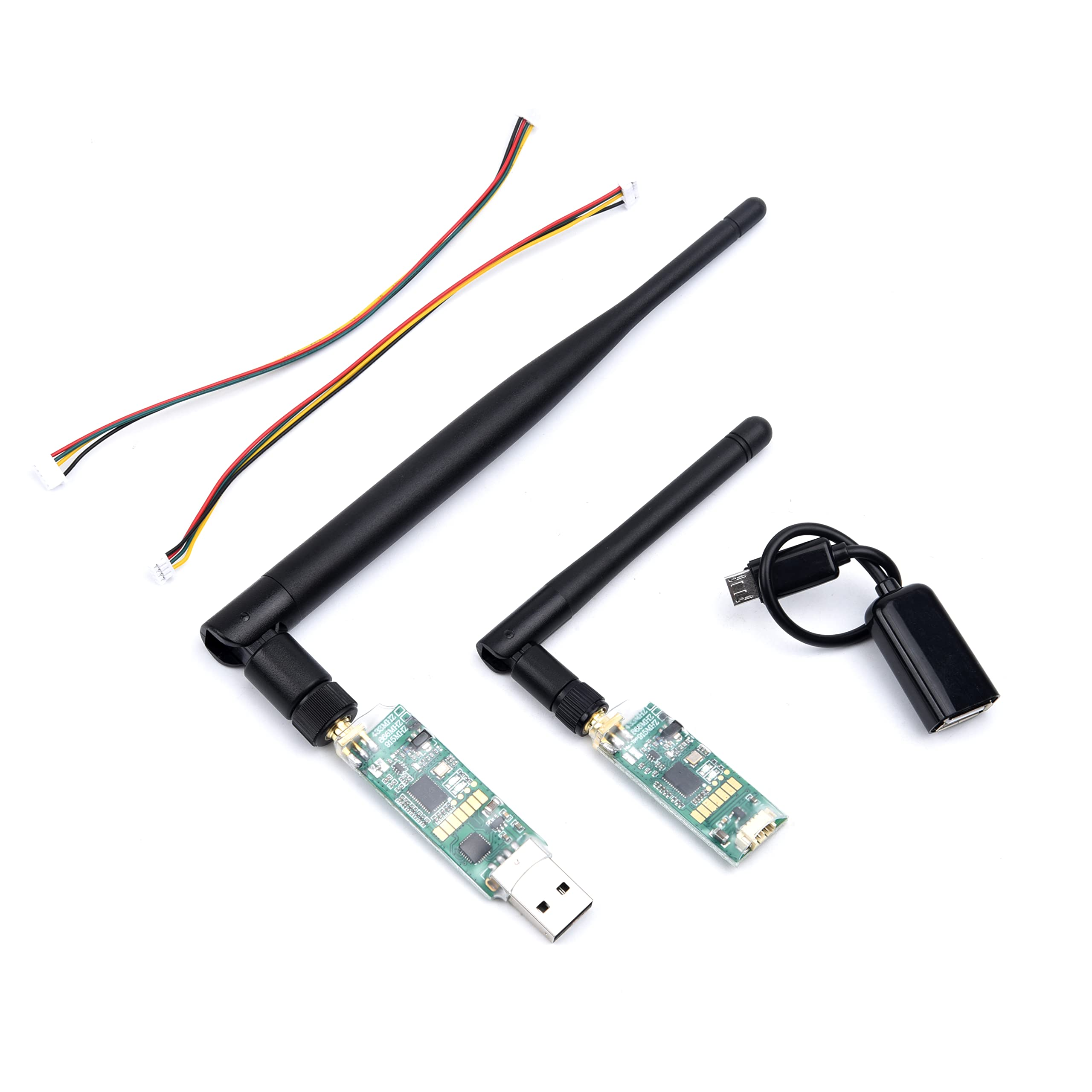
3DR Single TTL MINI Radio Telemetry 433MHz 500mW
High-power 500mW telemetry module operating on the 433MHz band, which is better suited for long-range operations in forested or hilly terrain common in India. Provides longer range than 915MHz in obstructed environments.
View on Zbotic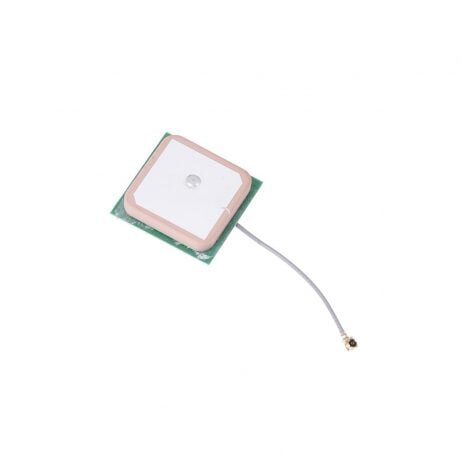
25x25x8mm 28dB High Gain GPS Antenna for NEO-6M/7M/8M
High-gain ceramic active GPS antenna for u-blox NEO series GPS modules. Ensures fast satellite lock and precise positioning — critical for the stable hover required during winch payload operations.
View on Zbotic7. Power System Design
A winch drone requires careful power architecture. You have two distinct power consumers:
Main Propulsion Battery
For a hexacopter capable of carrying 500g payload:
- 6S LiPo (22.2V), 6000–10000mAh capacity
- Mounted close to the centre of gravity — winch operations shift the CoG as payload deploys
- High C-rating (35C+) for handling peak motor current demands during gusty conditions
Winch and Accessories Battery
Running the winch motor, gripper servo, and on-board computer from the main flight battery introduces electrical noise and risks brownouts. Recommended: a separate 3S LiPo (2000–3000mAh) powering the winch ESC and ancillaries through a power module with reverse current protection.
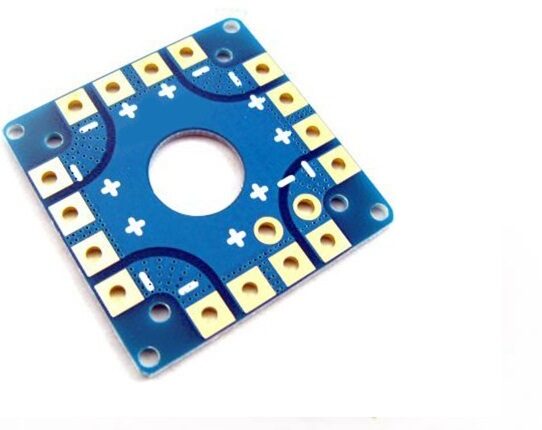
100A Multirotor ESC Power Distribution Battery Board
High-current PDB capable of distributing power to 6 or 8 ESCs plus ancillary systems. The 100A rating provides ample headroom for a fully loaded payload drone during peak current events like take-off with full payload.
View on Zbotic8. Gripper and Release Mechanisms
The business end of your delivery system is the gripper or release mechanism that holds and releases the payload. There are three common designs:
1. Servo-Actuated Gripper
A two or three-fingered claw driven by a servo. Can both pick up and release objects, making it suitable for true pick-and-place operations. Requires sensor feedback to confirm grip. Best for warehouse/industrial applications where payload shape and size are consistent.
2. Electromagnet Release
A metal plate attached to the payload is held by an electromagnet on the winch line. Cutting power to the magnet releases the payload instantly. Simple, fast, and reliable — but only works for payloads attached to a metal hook, and fails if the delivery package is too heavy for the magnet rating.
3. Hook and Latch Release
A spring-loaded hook holds a loop on the payload packaging. A servo pulls the latch open to release. This is the most common design for package delivery drones — it works with any rigid packaging that has a loop or handle, and is mechanically simple with very few failure modes.
9. Software Integration and Scripting
ArduCopter has built-in winch support. Here is the configuration overview:
Parameter Configuration
- WINCH_ENABLE = 1: Enables winch subsystem
- WINCH_TYPE = 1: (Servo-based) or 2 (PWM-based DC motor)
- WINCH_RATE_UP / WINCH_RATE_DN: Spool speed in m/s for retrieval and deployment
- SERVO9_FUNCTION = 88: Assigns AUX output to winch control
Mission Scripting Example
A basic delivery mission in ArduPilot auto mode:
- Take off to 20m AGL
- Navigate to delivery waypoint (GPS coordinates)
- Enter loiter mode — hold position
- Activate winch: pay out line until load cell detects ground contact
- Wait 5 seconds (time for ground crew to detach payload)
- Activate release mechanism
- Reel in winch line
- Return to home / next waypoint
This sequence can be scripted in ArduPilot Lua scripts for full autonomy, or executed via MAVLink commands from Mission Planner for semi-autonomous operation.
10. Testing and Safety Protocols
Never rush testing a payload drone. A drone dropping a heavy payload over people is extremely dangerous. Follow this progressive test plan:
Phase 1: Ground Tests
- Test winch motor and ESC with dummy load (no flight)
- Verify gripper/release function under maximum payload weight
- Confirm telemetry data all reads correctly in Mission Planner
- Test failsafe behaviours (comm loss, low battery) with motors disarmed
Phase 2: Tethered Flight Tests
- Tie a 5m tether from the drone to a ground anchor
- Test hover stability with payload attached to winch line
- Test winch operation with real payload at 2m height
- Test payload release at low altitude over soft surface
Phase 3: Open Area Free Flight
- Fly in open area, minimum 150m from any person or structure
- Test complete delivery sequence with dummy payload
- Verify autonomous return-to-home after payload delivery
- Run 10+ successful deliveries before considering any operation near people
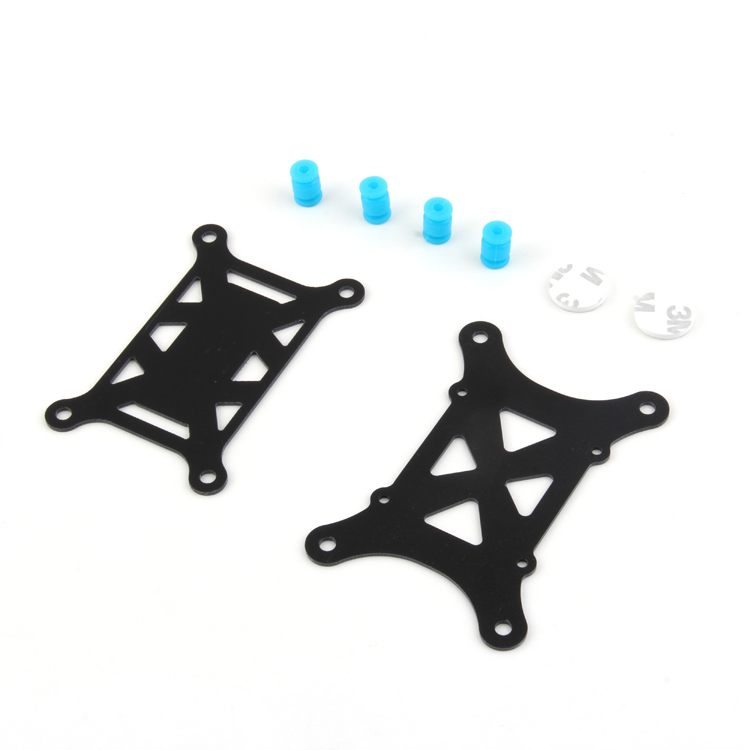
Anti-Vibration Shock Absorber for APM/KK/MWC/PixHawk
Vibration-isolating mount for Pixhawk flight controllers. Isolates the gyros and accelerometers from airframe vibrations, which is especially important on a heavy payload drone where structural resonance can cause false IMU readings.
View on Zbotic11. DGCA Regulations and Delivery Drone Permits in India
India has one of the world’s most progressive drone regulatory frameworks for delivery drones, but navigating the rules requires careful understanding.
BVLOS Permission
Payload delivery drones operating beyond line of sight require a BVLOS (Beyond Visual Line of Sight) exemption from DGCA. As of 2026, DGCA has granted BVLOS permits to several startups and state governments for specific corridors. Applications require detailed technical documentation of the UAV system, detect-and-avoid capabilities, and operational safety case.
Category Classification
Most payload drones fall in the Small category (250g–2kg) or Medium category (2kg–25kg). Small category drones need DGCA type certificate, operator permit, and Remote Pilot Certificate. Operations over populated areas require additional permissions.
Drone Ports and Corridors
DGCA has established drone corridors in some states (Telangana, Uttarakhand, Manipur) for delivery operations. Operating within a designated drone corridor significantly simplifies BVLOS permission applications.
Build Your Payload Delivery Drone with Zbotic
Zbotic stocks the ESCs, telemetry modules, power distribution boards, and frames needed for your winch drone project — all with fast India-wide shipping and GST invoices.
Shop Drone Parts at ZboticFrequently Asked Questions
What is the maximum payload weight for a DIY winch drone?
A well-built hexacopter with 12-inch props and good motors can carry 500g–1kg of payload while maintaining safe hover efficiency (below 50% throttle). Beyond 1kg payload, the drone itself becomes heavy enough to require DGCA Medium category permits and more complex safety systems. Most hobbyist builds target 200–500g payload capacity as a practical sweet spot.
Does ArduPilot support winch control natively?
Yes. ArduCopter has had native winch support since version 4.1. The WINCH_ENABLE parameter activates the subsystem, and winch operations can be integrated into autonomous missions, controlled via RC transmitter switches, or scripted using ArduPilot’s Lua scripting engine. Mission Planner and QGroundControl both display winch status on the ground station HUD.
How do I prevent payload swing (pendulum effect) during winch deployment?
The pendulum effect is minimised by: (1) lowering the payload slowly and smoothly without sudden stops; (2) using a stiff line (Dyneema over nylon) to reduce elongation oscillation; (3) adding a small stabilisation weight above the payload to lower the effective pendulum attachment point; (4) avoiding winch operations in wind above 5m/s; and (5) using a swivel connector between the line and payload hook to prevent rotational coupling.
Is a drone winch system legal in India?
Building and testing a drone winch system is legal in India under the Drone Rules 2021, provided the drone is registered, the pilot has appropriate certification, and operations comply with no-fly zone restrictions. Commercial delivery operations require additional DGCA permissions including BVLOS exemptions for beyond-visual-range delivery. Always operate within the rules and in open areas away from people during testing.
What telemetry system is best for a payload delivery drone in India?
The 3DR-style SiK radio modems (915MHz or 433MHz) are the standard for ArduPilot-based payload drones at ranges up to 2–3km. For longer ranges, consider RFD900x modems (up to 40km line-of-sight). In India, 433MHz is slightly better for forested and hilly terrain due to better obstacle penetration, while 915MHz offers more bandwidth for telemetry-heavy operations in open areas.







Add comment