
Table of Contents
- Introduction: The Drone Boom in India
- DGCA Drone Rules 2021 — Key Points
- Drone Categories and Registration
- No-Fly Zones in India
- Green, Yellow, and Red Airspace Zones
- Using the Digital Sky Portal
- Getting Permission for Drone Photography
- Commercial Drone Photography Rules
- Dos and Don’ts for Drone Photographers in India
- Penalties for Illegal Drone Flying
- State-Specific Restrictions
- Frequently Asked Questions
Introduction: The Drone Boom in India
Over the last five years, drone photography has transformed from a niche professional skill to a mainstream creative pursuit across India. Hobbyists, wedding photographers, real estate agents, filmmakers, news agencies, and agricultural operators are all using drones to capture the country’s breathtaking landscapes, heritage sites, urban skylines, and rural expanse from angles never before possible.
But with this boom has come a complex and evolving regulatory landscape. The Indian government, through the Directorate General of Civil Aviation (DGCA), has implemented drone rules that are among the more comprehensive in Asia. These rules balance enabling legitimate use with national security, privacy, and aviation safety concerns. Flying a drone without understanding these rules can result in serious legal consequences — including fines and criminal charges.
This guide is a comprehensive, up-to-date overview of drone photography laws in India as of 2025. Whether you are a weekend hobbyist, a professional photographer, or a drone enthusiast building your first quad, this is essential reading before you take to the skies.
DGCA Drone Rules 2021 — Key Points
The Government of India’s Ministry of Civil Aviation released the Drone Rules 2021 on August 25, 2021, replacing the earlier, more restrictive UAS Rules 2021. The 2021 rules significantly liberalised drone operations in India. Key highlights:
- No security clearance required: The earlier rules required a security clearance from the Ministry of Home Affairs before registration. This was removed entirely in the 2021 rules.
- Simplified registration: Drone registration is done entirely online via the Digital Sky portal — no paperwork, no visits to government offices.
- Type certificate: Drones must have a type certificate from a DGCA-approved testing centre before they can be registered (except nano drones). This is primarily a manufacturer responsibility.
- No permission for green zones: Flying in designated green zones (below 400 feet) requires no advance permission — just registration.
- Reduced no-fly zones: The buffer around airports was reduced from 45 km to 12 km.
- Drone Conclave Policy: India aims to become the global drone hub by 2030, and the 2021 rules are designed to support this goal.
Drone Categories and Registration
Under the DGCA Drone Rules 2021, drones are classified into five categories based on weight:
| Category | Maximum All-Up Weight | UIN Required? |
|---|---|---|
| Nano | Up to 250 grams | No (except in restricted zones) |
| Micro | 250g to 2 kg | Yes |
| Small | 2 kg to 25 kg | Yes |
| Medium | 25 kg to 150 kg | Yes |
| Large | Above 150 kg | Yes |
Most consumer and hobbyist drones — including DJI Mini 3, DJI Air 3, and custom FPV builds — fall in the Nano or Micro categories. Note that the weight includes the battery and any payload.
UIN (Unique Identification Number): All drones except nano class require a UIN. This is obtained by registering your drone on the Digital Sky portal. The UIN must be displayed on the drone and entered in any flight permit application.
No-Fly Zones in India
India has extensive no-fly zones where drone flying is completely prohibited. These include:
Around Airports
A circular zone of 12 km radius around the perimeter of any airport is restricted airspace (reduced from the earlier 45 km). Within this zone, flying requires Air Traffic Control (ATC) permission and is typically only permitted with specific clearances.
Near International Borders
A 25 km buffer zone along all international borders (Pakistan, China, Nepal, Bangladesh, Bhutan, Myanmar, Sri Lanka) is a no-fly zone for all drones. This is strictly enforced by the Border Security Force and military.
Military and Strategic Installations
Flying over or near military bases, cantonments, weapons depots, radar installations, and strategic facilities is prohibited. This includes areas around the Indian Space Research Organisation (ISRO) campuses, nuclear power plants, and defence research labs.
Vijay Chowk and Parliament Area, New Delhi
The entire Central Vista area, including the Parliament building, Rashtrapati Bhavan, South Block, North Block, and Vijay Chowk, is a permanent no-fly zone.
State Secretariats and High Courts
Many state capitals designate their secretariat complexes and high court buildings as no-fly zones. Specific rules vary by state.
Eco-sensitive Zones and Wildlife Sanctuaries
Flying drones in national parks, tiger reserves, and eco-sensitive zones requires prior permission from the Chief Wildlife Warden of the respective state. Some sanctuaries prohibit drone use entirely to avoid disturbing wildlife.

110cm Fast-Fold Landing Pad / Helipad for RC Drone
A bright, waterproof 110cm landing pad that folds compact for easy transport. Protect your drone’s camera and props during takeoff and landing on rough Indian terrain — ideal for outdoor photography missions in fields, beaches, and hill stations.
Green, Yellow, and Red Airspace Zones
India’s airspace is divided into colour-coded zones based on sensitivity and restriction level:
Green Zones
Green zones are the safest and most accessible areas for drone flying. In green zones below 400 feet AGL (Above Ground Level), no prior permission is required — only UIN registration. Most rural areas, agricultural land, and areas away from airports and sensitive sites fall into green zones. The vast majority of India’s geography is green zone.
Yellow Zones
Yellow zones are areas where flying is permitted but requires advance permission (at least 24 hours) through the Digital Sky portal. Yellow zones typically cover areas near airports (between the 8–12 km boundary), controlled airspace, and areas of moderate security concern. Permission is generally granted quickly for legitimate purposes.
Red Zones
Red zones are areas where drone flying is completely prohibited without explicit clearance from the Ministry of Defence or relevant authority. These include military bases, international borders, and top-security installations. Even with an approved UIN, flying in a red zone without specific permission is a criminal offence.
How to check zones: The Digital Sky portal and app display the zone classification for any point in India in real time. Always check before flying at a new location.
Using the Digital Sky Portal
The Digital Sky portal (digitalsky.dgca.gov.in) is the one-stop platform for all drone-related compliance in India. Here is what you can do on it:
- Register your drone: Get a UIN by submitting drone details, serial number, and proof of purchase.
- Apply for RPAS Operator Permit (ROP): Required for commercial drone operations.
- Apply for flight permissions: For yellow zone flying or any other permission-required operation. Permissions are generally processed within a few hours to 24 hours.
- Check airspace map: The interactive map shows green/yellow/red zone boundaries, airport buffer circles, and temporary flight restrictions (TFRs) in real time.
- Log flights: Some categories of operations require post-flight logging on the portal.
The portal also has a mobile app (Digital Sky) that lets you check zone classifications live using your GPS location — extremely useful when scouting shooting locations.
Getting Permission for Drone Photography
If your photography location is in a yellow zone or near any sensitive area, follow these steps:
- Log in to the Digital Sky portal with your registered account.
- Go to Flight Logs > Apply for Permission.
- Enter the GPS coordinates of your planned flight area, maximum altitude, date, time, and duration.
- Submit the application. For most yellow zones, approval comes within 24–48 hours.
- Carry the printed or digital permission letter during your shoot.
For heritage sites like the Taj Mahal, Red Fort, or Qutub Minar — all of which attract drone photographers — permissions must additionally be obtained from the Archaeological Survey of India (ASI) and sometimes local police. These can take several weeks and may not always be granted.
Commercial Drone Photography Rules
If you are a professional photographer or videographer using drones commercially (for paid assignments — weddings, real estate, events, news, advertising), you must comply with additional requirements:
- RPAS Operator Permit (ROP): Required for any commercial operation. Obtained via the Digital Sky portal.
- Remote Pilot Licence (RPL): Commercial pilots of micro, small, medium, and large drones must hold an RPL. This involves training at a DGCA-approved RPAS training organisation and passing a written exam and practical test.
- Insurance: Third-party insurance for commercial drone operations is mandatory. Several Indian insurers offer specific drone insurance policies.
- No-people rule: Drones must not fly over crowds, gatherings, or densely populated areas even with permissions, unless specific event-based clearance is obtained (rare).
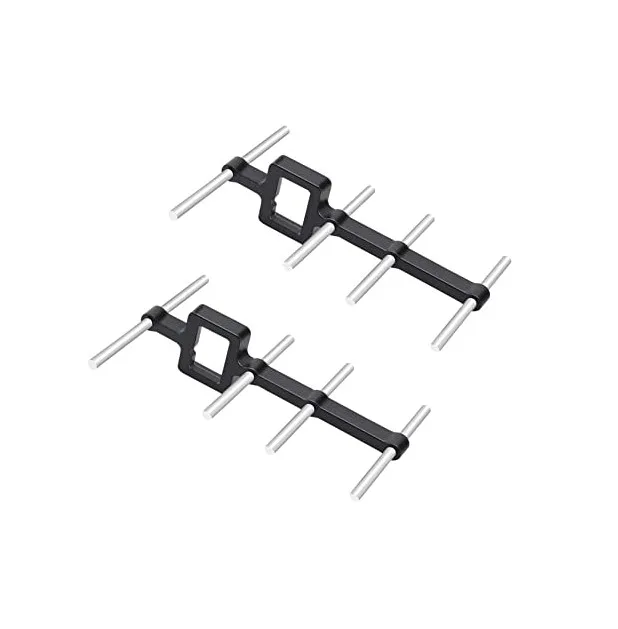
2.4GHz Yagi-UDA Drone Signal Booster
Directional Yagi antenna booster for 2.4GHz RC transmitters. Extends control range for drone photography missions in open landscapes — ideal for long-range aerial photography in India’s rural and coastal regions.
Dos and Don’ts for Drone Photographers in India
Always Do:
- Register your drone on the Digital Sky portal before the first flight.
- Check the airspace zone (green/yellow/red) for every new shooting location.
- Carry a printed or digital copy of your UIN and any flight permissions during shoots.
- Maintain visual line of sight (VLOS) with your drone at all times unless you have BVLOS (Beyond Visual Line of Sight) permission.
- Land immediately if emergency vehicles, manned aircraft, or law enforcement requests you to.
- Inform local police if conducting a commercial shoot — even if it is not legally required, it prevents misunderstandings.
Never Do:
- Fly within 12 km of any airport without ATC permission.
- Fly over crowds, public gatherings, or sporting events.
- Fly above 400 feet AGL without specific permission.
- Fly at night without proper lighting and DGCA night-flying permission.
- Fly over private property without the owner’s consent — drone-captured images of private areas can attract privacy-related legal action.
- Attempt to photograph military or police installations, even from public property.
Penalties for Illegal Drone Flying
The consequences of violating India’s drone regulations are serious. Under the Drone Rules 2021 and the Aircraft Act 1934, penalties include:
- Unregistered drone flying: Fine up to ₹1 lakh for first offence, up to ₹3 lakh for repeat offences.
- Flying in red zones without permission: Criminal charges under the Aircraft Act, imprisonment up to 2 years, fines.
- Flying near sensitive installations: Can attract Official Secrets Act charges — far more serious consequences.
- Flying over crowds causing injury: Liability under IPC for negligence and endangering life.
Several cases across India — particularly near airports in Mumbai, Delhi, and Bengaluru — have resulted in drones being confiscated by police and CISF, with pilots facing FIRs. The safest approach is always full compliance.
State-Specific Restrictions
In addition to central DGCA rules, many Indian states have additional restrictions:
- Jammu & Kashmir: Heavily restricted for drones. Military presence and security concerns mean even green zone flying may be stopped by local authorities. Prior coordination with local police is strongly advised.
- Northeast states (Arunachal Pradesh, Nagaland, Manipur, etc.): Protected Areas Permits (PAP) required for foreigners; drone restrictions apply near the China and Myanmar borders.
- Rajasthan: Additional restrictions near Pokhran (nuclear testing area) and military bases along the Pakistan border.
- Goa: Temporarily restricted drone zones during peak tourist season near popular beaches. Check local police notifications.
- Kerala: Additional wildlife sanctuary restrictions near Western Ghats.

EFT E410P 10L 4-Axis Agricultural Drone Frame
A sturdy 4-axis agricultural drone frame suitable for survey, inspection, and photography missions over farmland and open terrain — all of which are typically in green zones where no prior permission is needed for flights below 400 feet.
Frequently Asked Questions
Q: Do I need a licence to fly a drone in India for personal use?
A: For hobby/recreational use, a Remote Pilot Licence (RPL) is not required. However, you still need to register your drone (if it is above 250g) on the Digital Sky portal and obtain a UIN. Commercial operators and those flying medium/large drones must have an RPL.
Q: Can I fly a DJI Mini 3 (249g) without registration in India?
A: The DJI Mini 3 weighs 249 grams and falls in the nano category. Nano drones (under 250g) do not require UIN registration and can be flown in green zones without permission. However, you must still follow all DGCA operational rules including the 400-foot altitude limit and no-fly zones.
Q: Can I film the Taj Mahal with my drone?
A: The Taj Mahal (Agra) is a heritage site under ASI and also within the Agra airport’s buffer zone. Flying a drone near the Taj Mahal requires permissions from both ASI and the local administration. Unauthorised drone flying near the Taj has resulted in confiscation and FIRs. Apply well in advance through proper channels.
Q: Is it legal to fly a drone at an Indian wedding?
A: Drone photography at weddings is very common in India but is technically subject to regulations. The venue must not be in a yellow or red zone. The operator should ideally have an ROP and RPL if charging commercially. Flying over large indoor/outdoor crowds requires special event permission from local authorities. In practice, enforcement varies widely, but compliance is always advisable.
Q: How do I find out if a specific location is a green zone?
A: Use the Digital Sky app on your smartphone or the online interactive map on digitalsky.dgca.gov.in. Enter your GPS coordinates and the map will show the zone classification instantly. Always check this before going to a new shooting location.
Q: What happens if the police confiscate my drone?
A: If you have valid registration (UIN) and were operating legally, the drone should be returned after verification. If you were operating illegally (in a red zone, without registration, or over restricted areas), confiscation can be permanent and criminal proceedings may follow. Always carry your registration documents during flights.
Conclusion
Drone photography in India is a rewarding pursuit with enormous creative potential — but only when done legally and responsibly. The DGCA Drone Rules 2021 have made the regulatory environment significantly more accessible than before, but the rules still matter and enforcement is increasing as drones become more common across the country.
The key takeaways: register your drone, check the Digital Sky portal before every new location, stay within 400 feet and within green zones unless you have permission, and never fly over crowds or near sensitive installations. With these principles in place, you can explore India from the air safely, legally, and beautifully.
If you are building or upgrading a photography drone, shop for drone frames, GPS systems, landing pads, and accessories at Zbotic — India’s dedicated drone components store.
Shop quality drone frames, GPS modules, landing pads, and more for your aerial photography builds at zbotic.in. Trusted by drone builders and photographers across India.


Add comment