
Table of Contents
- Why the Flight Controller is the Brain of Your Drone
- Types of Flight Controllers: FPV vs Autonomous
- What to Look for in a Budget FC
- Best Budget FPV Flight Controllers
- Best Budget Autonomous Flight Controllers
- Considering AIO Stacks: FC + ESC Combos
- Essential Accessories to Pair with Your FC
- Full Comparison Table
- Where to Buy Flight Controllers in India
- Frequently Asked Questions
Why the Flight Controller is the Brain of Your Drone
In the ecosystem of a multirotor drone, if the motors are the muscles and the battery is the heart, the flight controller (FC) is undeniably the brain. Every fraction of a second, the FC reads data from its onboard gyroscope and accelerometer, runs a complex PID (Proportional-Integral-Derivative) algorithm, and sends corrective throttle commands to each ESC to keep the drone stable in the air.
In India, the drone hobby and industry have grown explosively since the government liberalised drone rules in 2021. Students, hobbyists, agricultural operators, and entrepreneurs are all building drones — but the high cost of imported components (often 50–100% more expensive than international prices due to import duties) makes budget selection critical.
The good news: excellent flight controllers are available well under ₹5,000, and in many cases, a budget FC performs identically to one costing 3x more for typical hobbyist use cases. This guide identifies the best options for both FPV and autonomous builds within the ₹5,000 budget.
Types of Flight Controllers: FPV vs Autonomous
Before comparing specific products, it is important to understand that “flight controller” means very different things depending on your application:
FPV Flight Controllers (Betaflight/Cleanflight)
Designed for manual first-person view flying. These run Betaflight firmware and are optimised for ultra-fast control loops (up to 8kHz gyro sampling, 4kHz PID loop). They typically include:
- Onboard gyroscope + accelerometer (often ICM-42688-P or MPU-6000)
- Onboard OSD (On-Screen Display) chip for HUD overlays on FPV video
- Blackbox logging flash memory
- UART ports for receiver, ESC telemetry, VTX control, GPS
- Barometer (on some models)
FPV FCs do NOT typically include GPS navigation, autonomous waypoint flight, or sophisticated failsafe logic by default.
Autonomous Flight Controllers (ArduPilot/PX4)
Designed for GPS-guided autonomous flight. These run ArduCopter, iNav, or PX4 firmware. They typically include:
- Multiple redundant IMUs (2–3 accelerometers/gyros)
- Barometer for altitude hold
- Compass (magnetometer)
- Extensive I/O: GPS, telemetry, PPM, SBUS, CAN bus, I2C, SPI
- More powerful processors (F4/F7/H7 vs F4 for FPV use)
The Pixhawk ecosystem is the standard for autonomous builds. Budget Pixhawk clones under ₹3,000–4,000 are widely used in India for educational projects and commercial drone development.
What to Look for in a Budget FC
When evaluating flight controllers under ₹5,000, prioritise these factors:
Processor (MCU)
- F4 (STM32F405): The current sweet spot for FPV. Runs Betaflight 4.4 at full 4kHz/8kHz loop rates. Avoid F3 FCs — they are obsolete and unsupported in new Betaflight versions.
- F7 (STM32F7xx): More powerful, faster, better noise immunity. Slightly more expensive but sometimes found under ₹5,000 in AIO stacks.
- STM32F4 (Pixhawk-class): For autonomous builds. Look for FCs with dual IMUs for redundancy.
Gyroscope IC
The gyro is the most performance-critical sensor. Best options in 2026:
- ICM-42688-P: Best gyro currently available. Low noise, very fast, supports 8kHz sampling. Found on premium FCs.
- ICM-20689: Good mid-range option. Reliable and well-supported in Betaflight.
- MPU-6000: Older but proven. Found on many budget FCs. Still very flyable.
Number of UART Ports
Each UART port is a serial communication channel. You need:
- 1 for RC receiver (SBUS/CRSF/ELRS)
- 1 for VTX (video transmitter) SmartAudio/Tramp control
- 1 for GPS (if used)
- 1 for ESC telemetry
Budget FCs often have 4–6 UARTs, which is sufficient. Anything less than 3 UARTs is a compromise.
Mounting Pattern and Stack Compatibility
Standard mounting patterns: 30.5×30.5mm (most common 5-inch builds), 25.5×25.5mm (micro builds), 20×20mm (ultra-micro). Match your FC mounting pattern to your frame and ESC stack.
Best Budget FPV Flight Controllers
1. Betaflight F4 (Generic) — ₹1,800–2,500
Generic F4 FCs from Chinese manufacturers running the stock BETAFLIGHTF4 target are available in India for as little as ₹1,800. They typically include: MPU-6000 gyro, built-in OSD, 4–5 UARTs, SPI flash for blackbox, and 30.5×30.5 mounting. Performance is adequate for beginners. Quality control varies — buy from reputable sellers.
2. SpeedyBee F405 V3 — ₹3,500–4,500
One of the best value propositions in the sub-₹5,000 range. The SpeedyBee F405 V3 features: ICM-42688-P gyro (the best available), Bluetooth for wireless configuration, USB-C connector (far superior to Micro-USB for field use), 8 UARTs, and 30.5×30.5mm mounting. The Bluetooth configuration is genuinely useful for Indian builders who want to adjust settings without a laptop at the flying field.
3. Matek F411 Mini — ₹2,500–3,500
Matek is known for exceptional build quality and firmware support. The F411 Mini targets micro (3-inch) and toothpick builds with its 20×20mm mounting. It features an MPU-6000 gyro, integrated OSD, integrated 5V and 9V BEC outputs, and comprehensive UART selection. For a small build, this is one of the best choices available in India.
4. JHEMCU GH743-AIO — ₹3,000–4,000
An all-in-one FC + 4-in-1 ESC stack at a very competitive price. The H743 processor (F7 class) gives this AIO exceptional processing power at a budget price. Includes ICM-42688-P gyro, 45A per channel ESC, USB-C, 8 UARTs. Ideal for builders who want a no-compromise performance build without individual component sourcing complexity.
Best Budget Autonomous Flight Controllers
5. APM 2.8 Clone — ₹1,500–2,500
The oldest option on this list, APM 2.8 (based on Arduino Mega 2560) runs the earliest ArduCopter firmware versions. Its 8-bit processor severely limits its capabilities — no EKF, no advanced fail-safes, no modern navigation modes. We list it only because it is cheap and widely available. For any serious project, skip APM 2.8 and spend a little more on Pixhawk.
6. Pixhawk 2.4.8 Clone — ₹2,500–4,000
The Pixhawk 2.4.8 clone is the most popular autonomous FC in India by volume. Based on the original 3DR Pixhawk 1 design (now open hardware), it runs ArduCopter 4.x with EKF3, GPS waypoint navigation, advanced failsafes, companion computer integration, and much more. The clone versions available in India for ₹2,500–4,000 are generally reliable for educational and hobbyist builds, though they may lack some build quality features of genuine Pixhawk boards.
Pair with: 3DR telemetry radio, external GPS/compass module, and vibration damping mount.
7. Matek H743-WING / H743-MINI — ₹3,500–5,000
While primarily designed as fixed-wing autopilot, Matek’s H743 boards run ArduCopter (and iNav) excellently. Features dual IMUs, barometer, 13 UARTs, and extensive I/O. This is the most capable FC on this list at the price. Recommended for those who want a genuinely professional autonomous platform without the Pixhawk form factor limitations.

3DR 100mW Radio Telemetry 915MHz for APM/PX4/Pixhawk
Essential companion for any autonomous flight controller. Connects your Pixhawk or APM to Mission Planner for real-time telemetry, mission upload, and remote parameter changes during test flights. 915MHz gives excellent range in Indian open terrain.
Considering AIO Stacks: FC + ESC Combos
An AIO (All-in-One) stack combines the flight controller and 4-in-1 ESC onto a single or dual board. The advantages for Indian builders:
- Cost savings: Buying FC + 4-in-1 ESC as a stack is often 20–30% cheaper than separate components.
- Simplified wiring: Motor wires connect directly to the board. No JST connector chains.
- Reduced weight: Single board replaces 5 separate components (FC + 4 individual ESCs).
- Smaller footprint: Fits into tighter frame builds.
The main disadvantage: if the ESC section fails, you replace the entire expensive stack. Individual components offer easier partial replacement.

35A V2.1 2-5S 4-in-1 Brushless ESC for FPV Racing
Pair this ESC with your budget flight controller for a complete stack build. 35A per channel rating handles aggressive 5-inch racing builds, and the 30.5×30.5mm mounting aligns with most FPV frame stacks. DSHOT and BLHeli_32 compatible for Betaflight integration.
Essential Accessories to Pair with Your FC
A flight controller alone does not fly a drone. Budget for these essential accessories:
For FPV Builds
- RC Receiver: ExpressLRS (ELRS) receivers are available for ₹700–1,500 and offer the best range-to-cost ratio. FlySky FS-A8S for ₹600–800 if you have a FlySky transmitter.
- FPV Camera: ₹800–2,000 for a 700TVL–1200TVL mini camera.
- Video Transmitter (VTX): ₹1,000–2,000 for a reliable 400–600mW VTX.
- FPV Goggles or Monitor: ₹3,000–15,000 range. Start with a box goggle or 7-inch monitor to keep costs low.
For Autonomous Builds
- GPS Module: NEO-M8N with compass — ₹1,500–2,500. Avoid NEO-6M (less sensitive, fewer channels).
- Telemetry Radio: 3DR 915MHz pair — ₹2,000–3,000. Essential for Mission Planner communication.
- Anti-vibration Mount: ₹200–500. Critical for clean IMU data.
- Power Module: ₹500–1,000. Provides current and voltage sensing to ArduPilot for battery failsafe.
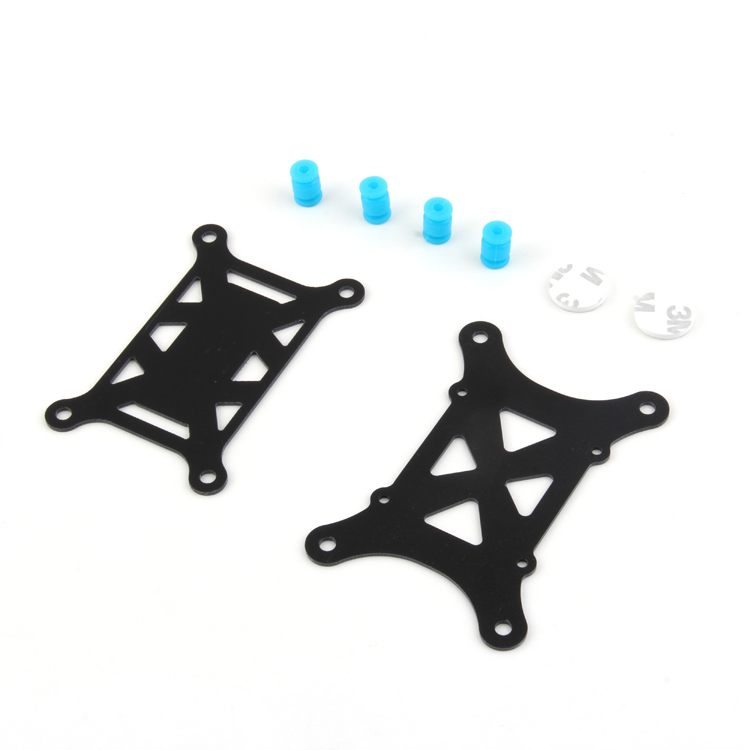
Anti-Vibration Shock Absorber for APM/KK/MWC/PixHawk
Motor vibrations cause sensor noise that degrades autonomous flight performance. These dampening mounts isolate your flight controller from frame vibrations, improving IMU accuracy and ArduPilot EKF stability. Essential for autonomous builds.
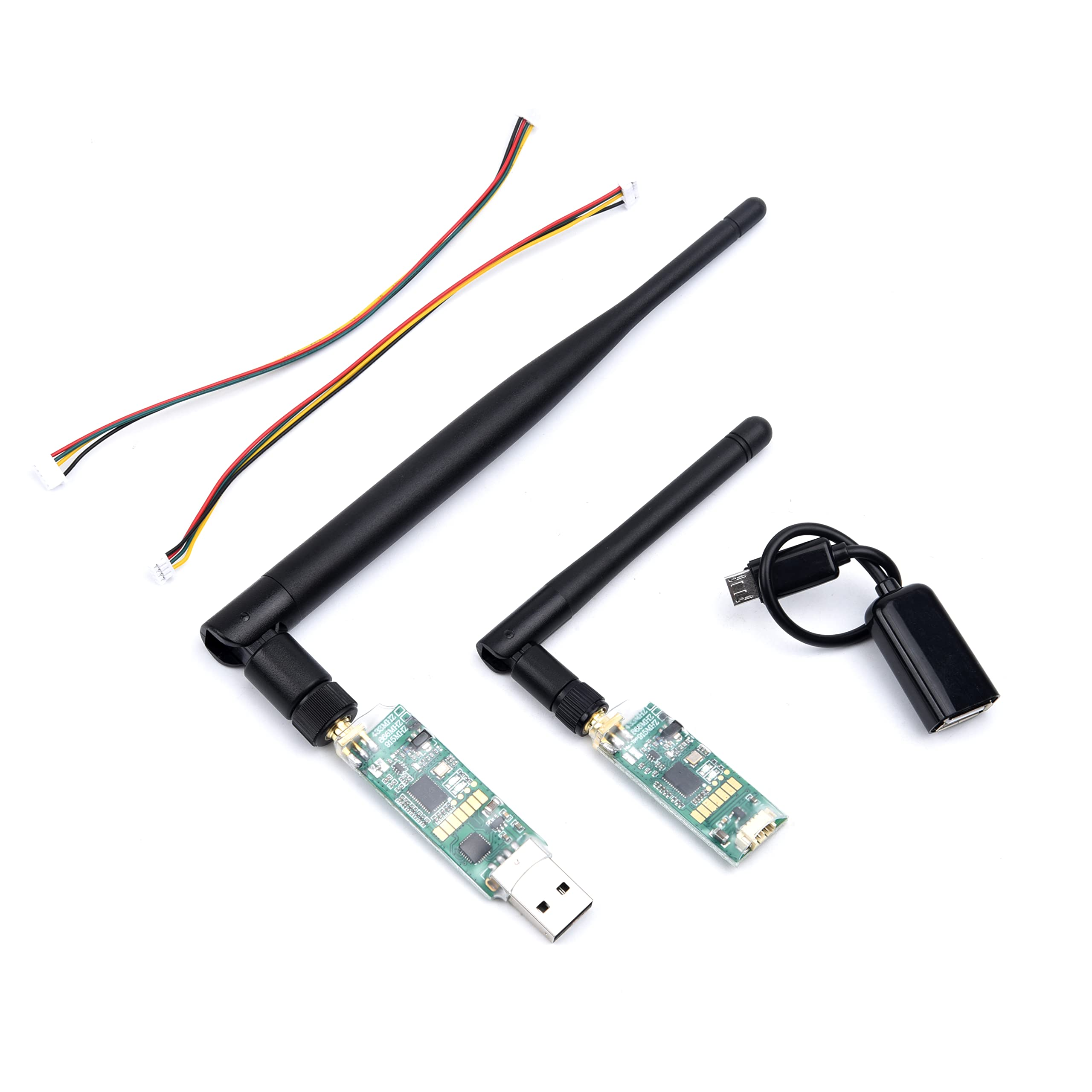
3DR Single TTL MINI Radio Telemetry 433MHz 500mW
Compact telemetry radio that pairs with your autonomous flight controller for real-time ground station connectivity. The 433MHz band is less congested in India and offers reliable range for field testing. Works with APM, Pixhawk, and Matek H7 autopilots.
Full Comparison Table
| FC | Type | MCU | Gyro | UARTs | Price (INR) | Best For |
|---|---|---|---|---|---|---|
| Generic F4 | FPV | F405 | MPU-6000 | 4–5 | ₹1,800–2,500 | Beginners on tight budget |
| SpeedyBee F405 V3 | FPV | F405 | ICM-42688 | 8 | ₹3,500–4,500 | 5-inch builds, best value |
| Matek F411 Mini | FPV | F411 | MPU-6000 | 4 | ₹2,500–3,500 | Micro/toothpick builds |
| APM 2.8 Clone | Autonomous | ATmega2560 | MPU-6000 | 3 | ₹1,500–2,500 | Learning only (not recommended) |
| Pixhawk 2.4.8 Clone | Autonomous | F427 | MPU-6000/ICM | 5+ | ₹2,500–4,000 | Student/hobbyist autonomous builds |
| Matek H743-MINI | Autonomous | H743 | ICM-42688 ×2 | 13 | ₹4,000–5,000 | Professional autonomous builds |
Where to Buy Flight Controllers in India
Sourcing quality drone components in India requires caution. The market has genuine products and counterfeit/substandard copies, often indistinguishable at a glance. Tips for safe buying:
- Buy from specialised drone stores: Zbotic stocks verified drone electronics and is a reliable source for components like ESCs, power boards, GPS modules, and telemetry radios that complement your flight controller.
- Avoid extremely cheap listings: A SpeedyBee F405 V3 cannot be genuine at ₹1,200. If a price is 50%+ below market, it is either a clone, refurbished, or fake.
- Check for warranty: Reputable sellers offer 30–90 day warranty on electronics. This is your protection against the rare DOA (Dead on Arrival) unit.
- Read the reviews: Look specifically for reviews mentioning the gyro quality, USB connection reliability, and UART functionality — these are the most common failure points on budget FCs.
Frequently Asked Questions
Is a ₹2,000 flight controller good enough for FPV flying?
Yes, for a beginner. A generic F4 FC at ₹2,000 runs Betaflight perfectly and will fly as well as a ₹6,000 FC for normal recreational flying. The difference becomes noticeable only when you want features like Bluetooth configuration, better gyro noise performance, or advanced RPM filtering — which require newer gyro ICs found on pricier boards.
Can I use an FPV flight controller for autonomous flight?
Partially. Running iNav firmware on an F4/F7 FPV FC gives you basic GPS waypoint navigation, position hold, and return to home. iNav is more limited than ArduCopter but works well for simple autonomous tasks. For professional autonomous applications (failsafes, companion computer integration, complex mission planning), use a dedicated ArduPilot FC like Pixhawk.
What is the difference between F4 and F7 flight controllers?
F4 (STM32F4xx) and F7 (STM32F7xx) refer to different processor families. F7 is faster (216MHz vs 168MHz), has more RAM, better floating-point performance, and native double-precision floating point. In practice, for Betaflight 4kHz/8kHz loop rates, F4 is sufficient. F7 benefits are most noticeable in processing-heavy autonomous firmware (ArduCopter, iNav) where the extra headroom prevents task overruns.
What happens if I buy the wrong Betaflight target for my FC?
Most features will still work, but some peripherals may not function correctly — specific UART assignments, LED control, buzzer output, or gyro orientation. The drone will often be flyable but some features will be missing or broken. Reflash with the correct target to fix. The FC will not be permanently damaged by a wrong target flash.
Do I need a flight controller with a barometer for FPV?
Not strictly. Most FPV flying is manual with no altitude hold requirement. However, a barometer is useful for Altitude Hold mode (baro hold), which some beginners use to reduce cognitive load while learning. For autonomous/GPS flying, a barometer is essential — ArduCopter uses it as the primary altitude reference.
Conclusion
India’s drone builder community has excellent options across all budgets. Under ₹5,000, the SpeedyBee F405 V3 stands out as the best FPV FC value, while the Pixhawk 2.4.8 clone remains the most accessible entry point for autonomous builds. Pair your FC with genuine ESCs, a quality power distribution board, and proper accessories from Zbotic for a reliable, performant build.
Remember: the flight controller is only as good as the components around it. A budget FC with quality motors, props, and ESCs will outperform an expensive FC in a poorly designed power system every single time. Invest in the whole system, not just the most visible component.






Add comment