
When designing solar-powered IoT nodes, the SSD1306 OLED display’s power consumption can make or break your energy budget. Understanding exactly how much current an SSD1306 OLED draws — compared to a character LCD or TFT backlit display — is critical for achieving days or weeks of autonomous operation in Indian field deployments. This guide gives you real measured numbers, compares the SSD1306 against common LCD alternatives, and provides practical strategies to minimise display power draw in solar IoT builds.
SSD1306 Power Consumption: The Real Numbers
The SSD1306 is a CMOS OLED driver controller manufactured by Solomon Systech. It drives a 128×64 pixel monochrome OLED panel. Power consumption figures from the SSD1306 datasheet and real-world measurements:
| Operating Mode | Typical Current (3.3V) | Notes |
|---|---|---|
| All pixels OFF (display on) | 0.4–0.7 mA | Controller active, no pixels lit |
| Text display (~15% pixels on) | 3–8 mA | Typical sensor reading display |
| 50% pixels lit | 12–18 mA | Mixed graphics content |
| All pixels ON (all-white) | 25–30 mA | Maximum current draw |
| Sleep mode (display off) | <0.01 mA | Nearly zero; use for deep sleep |
The key insight: OLED power draw scales linearly with the number of lit pixels. Black pixels cost nothing. This is fundamentally different from any backlit display where the backlight runs at full power regardless of content.
For typical IoT sensor displays (white text on black showing temperature, humidity, pressure), expect 3–8 mA at 3.3V — roughly 10–26 mW. Over 24 hours at full-on, that is 0.24–0.62 mAh per hour, or 5.8–15 mAh per day.
OLED vs LCD vs TFT: Power Comparison Table
| Display Type | Idle Current | Active Current | Sleep Current | Solar Suitability |
|---|---|---|---|---|
| SSD1306 OLED (0.96″) | 0.5 mA | 3–8 mA | <0.01 mA | Excellent |
| HD44780 LCD 16×2 (no BL) | 1–2 mA | 1–2 mA | 0.5 mA | Good (no BL) |
| HD44780 LCD 16×2 (with BL) | 20–25 mA | 20–25 mA | 0.5 mA (BL off) | Poor (BL on) |
| TFT 1.8″ ST7735 | 40–60 mA | 40–60 mA | 1–5 mA | Poor |
| TFT 2.4″ ILI9341 | 60–80 mA | 60–80 mA | 2–8 mA | Very Poor |
| E-Paper (EPD) | ~0 mA | 10–20 mA (update only) | 0 mA | Best |
Bottom line: For solar IoT nodes where the display shows data intermittently, the SSD1306 OLED is the clear winner in the traditional display category. E-paper is technically superior for pure power budget but costs significantly more and has a slow update rate (2–5 seconds per full refresh) unsuitable for live sensor data.
What Affects OLED Power Draw?
Four main factors determine real-world SSD1306 power consumption in your IoT node:
- Content brightness (pixel count): Always use white text on black background — not inverted (black on white). An inverted display that fills most pixels white will draw 5–8× more power than a dark display with small white text.
- Contrast setting: The SSD1306 contrast register (0x81) controls current through each OLED pixel. Default is 0x7F (medium). Lower it to 0x10–0x20 for darker output with significantly reduced power: roughly 30–50% reduction in pixel current at contrast 0x20 vs 0x7F.
- Display dimensions: A 0.91″ 128×32 OLED draws about half the current of a 0.96″ 128×64 at the same content density, simply because it has fewer pixels. Use the smaller module where display area requirements allow.
- Duty cycle: How long the display is on per measurement cycle. This is your most powerful lever — see the sleep strategies section below.
Sleep and Duty-Cycle Strategies
The most impactful power optimisation is not the display itself — it is how rarely you wake it up. Here are the strategies used in production IoT deployments:
Strategy 1: Display-Off Sleep (Most Effective)
Turn the display off between measurements using the SSD1306 sleep command:
#include <Adafruit_SSD1306.h>

// Turn display OFF (sleep mode, <0.01 mA)
display.ssd1306_command(SSD1306_DISPLAYOFF);

// Wake display back up
display.ssd1306_command(SSD1306_DISPLAYON);
This puts the SSD1306 into hardware sleep mode. Combined with ESP32 deep sleep (5–10 µA), you achieve a node that draws under 0.1 mA between measurement cycles — extending a 1000 mAh LiPo to over 400 days of standby.
Strategy 2: Timed Display Wake
Only activate the display for 5–10 seconds per measurement cycle. For a node sampling every 5 minutes:
- Total cycle: 300 seconds
- Display ON: 8 seconds (draws ~6 mA) = 0.0133 mAh per cycle
- Display OFF: 292 seconds (draws <0.01 mA) = negligible
- Total display energy per day: 288 cycles × 0.0133 mAh = 3.8 mAh/day
Compare this to a TFT always-on: 70 mA × 24 hours = 1,680 mAh/day — a 440× difference.
Strategy 3: Button-Triggered Display
Keep the display off by default. Wake it via an interrupt-attached button press. The ESP32 can wake from deep sleep on a GPIO interrupt. This is ideal for remote sensors where no one is watching continuously.
Strategy 4: Contrast Dimming Over Time
After waking, show data at full brightness for 3 seconds, then ramp down contrast over 7 seconds before display-off. This feels polished and reduces average power during the display-on window.
Designing a Solar IoT Node with SSD1306
Here is a practical reference design for an Indian outdoor sensor node:
Hardware
- MCU: ESP32 (deep sleep capable, WiFi for data upload)
- Display: 0.96″ SSD1306 OLED I2C (128×64)
- Battery: 18650 LiPo, 2600 mAh (single cell, 3.7V)
- Solar panel: 5V 1W mini panel (~200 mA peak)
- Charge controller: TP4056 or CN3791 MPPT module
- 3.3V LDO: AMS1117-3.3 or MIC5219 (60 µA quiescent current)
- Sensors: BME280 (temp/humidity/pressure) + DS18B20 (outdoor temperature)
Power Budget (5-minute sample interval)
| Component | Active (10s/cycle) | Sleep (290s/cycle) | Daily Budget |
|---|---|---|---|
| ESP32 active+WiFi | 160 mA | 0.01 mA | 46.1 mAh |
| SSD1306 OLED | 6 mA | <0.01 mA | 1.7 mAh |
| BME280 sensor | 0.7 mA | 0.0005 mA | 0.2 mAh |
| DS18B20 sensor | 1.5 mA | 0.001 mA | 0.4 mAh |
| Total | ~48.4 mAh/day |
A 2600 mAh battery provides ~53 days of backup without any solar charging. In Indian summer conditions (5–6 peak sun hours), a 1W solar panel generates approximately 200–300 mAh/day — enough to run the node indefinitely with significant surplus.
Real-World Examples for Indian Conditions
Indian IoT deployments face specific environmental challenges that affect display and power design:
Agricultural Soil Monitoring Node (Rural India)
A typical deployment: soil moisture sensor + DHT11 + DS18B20 + SSD1306, transmitting via LoRa to a gateway. The node sits in a field with a 2W solar panel and 3000 mAh LiPo. Display activates for 5 seconds every hour (triggered by farmer’s button press). This node runs completely off-grid in North Indian winters (3–4 peak sun hours) without battery drain.
Urban Air Quality Monitor
MQ-135 gas sensor + BMP280 + SSD1306, WiFi upload to Blynk every 15 minutes. Display shows AQI, temperature, and pressure continuously during business hours (8 hours), then display-off at night. A 5V 2W solar panel charges a 3000 mAh LiPo in 8 peak sun hours — more than enough to cover the 8-hour display-on period.
Remote Weather Station (Himalayan Trek Routes)
ESP32 deep sleep + BME280 + DS18B20 + SSD1306. Wakes every 5 minutes, takes measurements, displays for 8 seconds, transmits to Satellite/LoRa, sleeps. In Himalayan winters with 4 peak sun hours and a 6W panel, the system runs year-round despite below-freezing temperatures (LiPo efficiency drops at 0°C — use a larger 5000 mAh pack and insulate the battery).
Best Sensor Pairings for Low-Power Display Nodes
These sensors are specifically chosen for low quiescent current and I2C compatibility with the SSD1306:
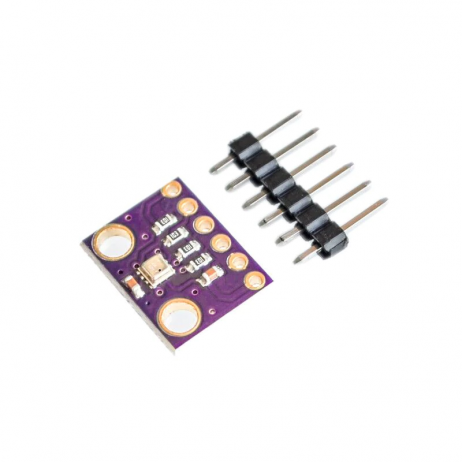
GY-BME280-3.3 Precision Altimeter Atmospheric Pressure Sensor Module
The BME280 draws just 0.7 µA in sleep mode and 3.6 µA during measurements — perfect for solar IoT nodes. Shares the I2C bus with SSD1306, saving pins and wiring complexity.

DS18B20 Programmable Resolution Temperature Sensor
The DS18B20’s parasitic power mode lets it draw power directly from the data line, eliminating its VCC wire. At 9-bit resolution, a measurement takes only 94ms — minimising active time in solar IoT duty cycles.
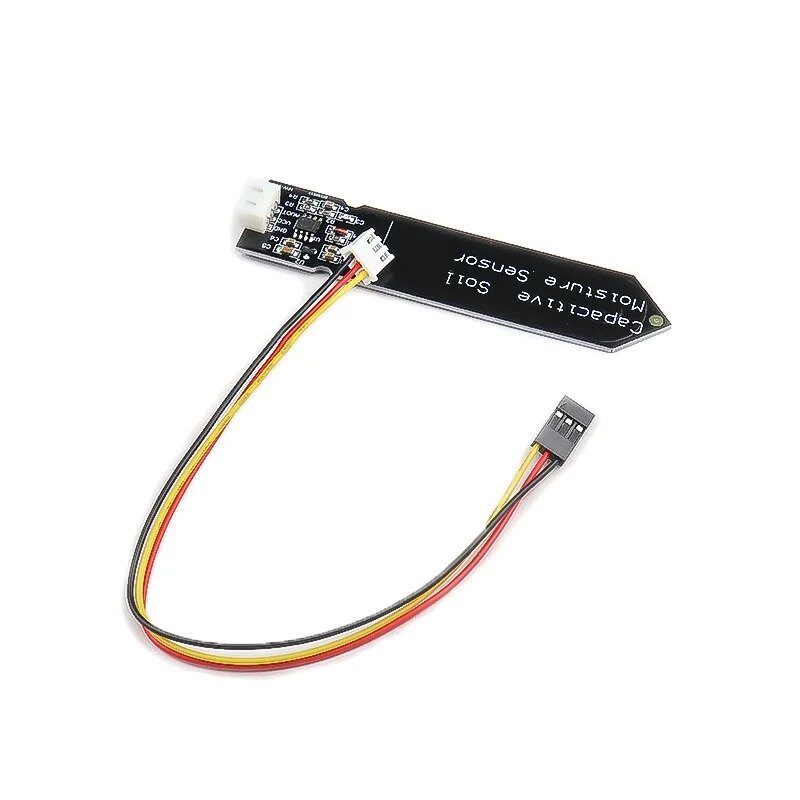
Capacitive Soil Moisture Sensor
Capacitive soil sensors draw far less current than resistive types and are more durable in Indian soil. Combine with SSD1306 OLED for a field-deployable soil monitoring station powered by solar energy.
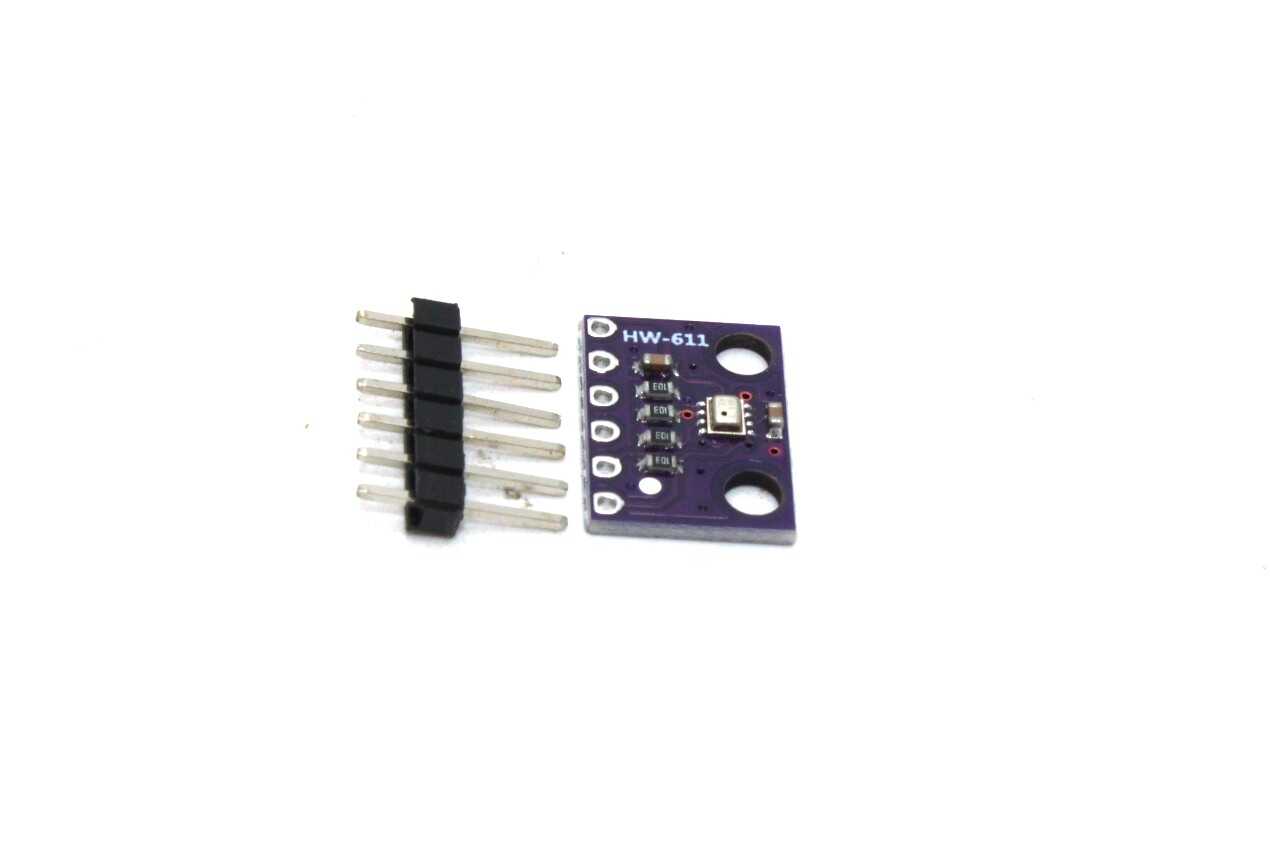
BMP280 Barometric Pressure and Altitude Sensor I2C/SPI Module
The BMP280 offers temperature and pressure measurement with ultra-low power sleep modes. An excellent budget alternative to BME280 when humidity monitoring is not required in your solar IoT node.
Frequently Asked Questions
Can I put the SSD1306 into deep sleep while the ESP32 is also in deep sleep?
Yes, and you should. Call display.ssd1306_command(SSD1306_DISPLAYOFF) before esp_deep_sleep_start(). The SSD1306 retains its display-off state through ESP32 deep sleep and wakes up with the display still off when ESP32 boots again. This avoids a brief flash of old content during wakeup.
Does screen content persist on SSD1306 during ESP32 deep sleep?
The SSD1306 has its own internal RAM (GDDRAM) and continues to display whatever was last written as long as VCC is maintained. During ESP32 deep sleep, if you keep SSD1306 powered (display on, no sleep command), it continues showing the last frame. However, for power saving, always send the display-off command before sleeping.
What solar panel size do I need for a continuously running SSD1306 IoT node in India?
For a typical ESP32 + SSD1306 + sensors node sampling every 5 minutes (total daily budget ~50 mAh), a 0.5W solar panel in a good Indian location (5 peak sun hours, 70% efficiency) generates roughly 175 mAh/day — more than 3× the need. Even in monsoon months with 2 peak sun hours and significant cloud cover (40% efficiency), generation is ~56 mAh/day, still exceeding the 50 mAh budget. A 1W panel gives comfortable margin.
Is an SSD1306 OLED more power-efficient than e-paper for solar nodes?
For static displays that update rarely, e-paper (EPD) wins decisively — it draws zero current to maintain an image. For sensor nodes that update readings every few minutes and show the display for a few seconds, the SSD1306 in sleep mode approaches e-paper efficiency while offering instant refresh. E-paper’s 2–5 second full refresh is a disadvantage for responsive sensor dashboards.
Can I power an SSD1306 directly from a Li-ion battery (4.2V)?
No. The SSD1306 operates from 1.65V to 3.3V (VDD pin) and 7V to 15V for the internal charge pump (VBAT/VCC). Most modules include onboard regulators for 3.3V or 5V input. At 4.2V directly, you risk damaging the module unless it explicitly states 5V tolerance. Always use an LDO regulator (AMS1117-3.3) between a Li-ion cell and the module.
Build Your Solar IoT Node with Zbotic
Get OLED display modules, environmental sensors, and all the components for your solar-powered IoT project from Zbotic — fast delivery across India with genuine components.




Add comment