
When most people start 3D printing they use standard PLA — a shiny, slightly reflective finish that reveals every layer line. But as skills grow, so does the desire for prints that look less like plastic and more like a finished product. Enter Silk PLA and Matte PLA: two filament variants that transform how your prints look, each in a radically different direction.
Silk PLA produces a metallic sheen that makes prints look expensive and reflective. Matte PLA produces a smooth, flat finish that hides layer lines and looks like it was painted or cast. Both are popular — but for completely different reasons and completely different use cases.
This guide compares Silk PLA and Matte PLA on every relevant dimension: finish quality, print settings, post-processing, strength, cost, and which one belongs in your spool holder.
What Is Silk PLA?
Silk PLA is standard PLA filament with added additives — typically low-molecular-weight polymer blends, silicone oils, or special pigments — that give the printed surface a lustrous, metallic-looking sheen. The name comes from the way light plays across the surface: similar to how silk fabric shimmers when moved.
Key characteristics of Silk PLA:
- High gloss, reflective surface finish
- Metallic shimmer effect — popular in gold, silver, copper, and rainbow variants
- Slightly lower melting point than standard PLA in many formulations
- Can be bridgeable and printable in most desktop FDM printers with 0.4mm nozzles
- More brittle than standard PLA — the additives that create the sheen reduce ductility
Silk PLA is particularly popular for:
- Display models (trophies, busts, figurines)
- Cosplay props that need to look metallic
- Decorative objects like vases, bowls, geometric art
- Product prototypes where a premium appearance is needed
What Is Matte PLA?
Matte PLA incorporates filler particles — often micro-chalk, talc, or special matting agents — that scatter reflected light instead of reflecting it directionally. The result is a completely flat, non-reflective surface that looks almost like a painted or powder-coated finish straight off the printer.
Key characteristics of Matte PLA:
- Non-reflective, flat finish — zero gloss
- Hides layer lines much better than standard PLA at the same layer height
- The filler particles give it a slightly higher viscosity — needs higher print temperature
- Generally slightly more brittle than standard PLA due to fillers, but less brittle than Silk
- Available in natural, earthy tones as well as strong colours
Matte PLA is particularly popular for:
- Figurines and miniatures that will be painted
- Enclosures and housing prototypes
- Architectural models
- RC car bodies and drone frames where glare reduction matters
- Any print where you want a professional, finished look without post-processing
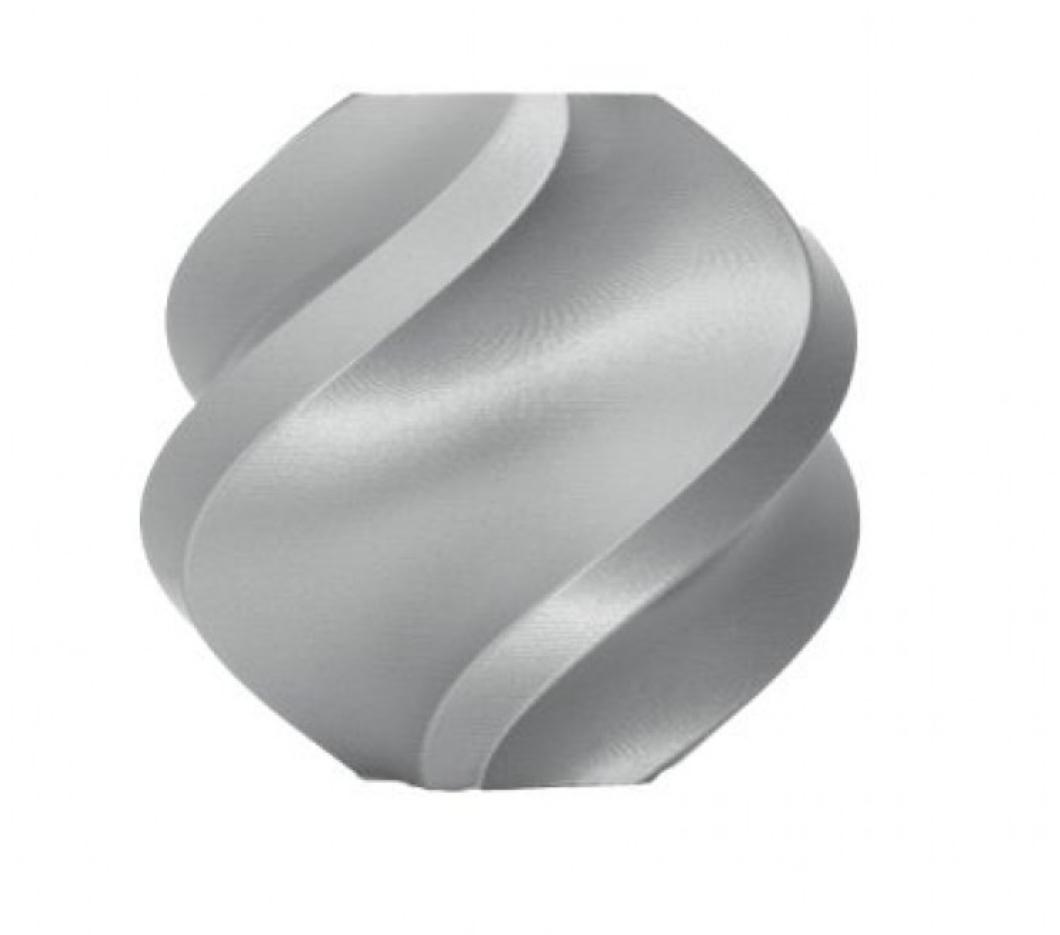
Bambu Lab PLA 3D Printer Filament – Silver 1.75mm with Reusable Spool
Bambu Lab’s silver PLA delivers a premium satin finish — between full silk shimmer and standard matte — ideal for detailed display models and precision prototypes.
Finish Comparison: How They Actually Look
Silk PLA: The Metallic Shimmer
Silk PLA prints have a high-gloss, mirror-adjacent finish. Under direct lighting, gold silk PLA genuinely looks like it could be cast metal. The shimmer effect means the colour changes subtly as you rotate the part — this is part of the appeal. Rainbow silk PLA takes this further with colour shifts across the print itself.
However, the gloss of silk PLA actually amplifies the visibility of layer lines. The reflective surface acts like a spotlight on imperfections. A print that looks acceptable in standard PLA may show obvious layer banding in silk PLA. To make silk PLA prints look their best, you need:
- 0.1–0.15 mm layer height (not the typical 0.2 mm)
- Fine ironing pass on top surfaces (available in Cura)
- Well-tuned e-steps and linear advance/pressure advance to avoid blobs
Matte PLA: The Professional Flat Finish
Matte PLA’s flat finish does the opposite — it hides layer lines. The light-scattering particles fill microscopic surface voids optically, making what is actually a ridged surface look smooth to the eye. A matte PLA print at 0.2 mm layer height often looks better than a standard PLA print at 0.1 mm.
This makes matte PLA much more forgiving — you can print faster (higher layers) and still achieve a professional-looking result. The tradeoff is that matte surfaces do not show the rich colour depth that silk or even standard PLA can achieve. Matte black looks like satin paint. Matte red looks like a car body panel in primer. This can be exactly what you want — or completely wrong for your application.
Print Settings: Silk PLA vs Matte PLA
| Setting | Silk PLA | Matte PLA |
|---|---|---|
| Nozzle Temperature | 210–225°C | 215–230°C |
| Bed Temperature | 55–65°C | 55–65°C |
| Print Speed | 30–50 mm/s (slower for quality) | 40–60 mm/s |
| Layer Height for Best Finish | 0.10–0.15 mm | 0.15–0.20 mm |
| Cooling Fan | 60–80% | 80–100% |
| Retraction | Lower retraction (tends to string less) | Standard PLA retraction |
| Ironing (Cura) | Highly recommended | Optional (already smooth) |
Special note on Silk PLA: Many silk filaments are more prone to clogging because the additives can leave residue in the nozzle. Run a cold pull before switching from silk to another filament. Also, avoid very high temperatures (above 230°C) with silk PLA as the additives can separate, leaving dark streaks.
Layer Line Visibility
This is where the two filaments diverge most dramatically:
- Silk PLA: Layer lines are MORE visible than standard PLA at the same settings. The reflective surface acts as a magnifier for surface defects. You must print at fine layer heights and optimize settings to compensate.
- Matte PLA: Layer lines are LESS visible than standard PLA at the same settings. The light-diffusing surface optically smooths ridges. You can get away with coarser settings while maintaining an appearance of smoothness.
For the typical hobbyist printing at 0.2 mm on an Ender 3-class printer: matte PLA will look noticeably better out of the printer than silk PLA. If you are willing to optimize settings and print at 0.1 mm, silk PLA wins on visual impact for display pieces.
Strength and Durability
Both Silk PLA and Matte PLA are weaker than standard PLA. The additives in both formulations reduce the ultimate tensile strength and layer adhesion compared to plain PLA.
| Property | Standard PLA | Silk PLA | Matte PLA |
|---|---|---|---|
| Tensile Strength | Highest | Lower (–15–25%) | Lower (–10–20%) |
| Impact Resistance | Moderate | Low (brittle) | Low-Moderate |
| Layer Adhesion | Good | Moderate | Moderate-Good |
| Heat Resistance | ~60°C (glass transition) | ~55–58°C (slightly lower) | ~60°C |
The bottom line: neither Silk nor Matte PLA is suited for load-bearing or structural applications. Use standard PLA or PETG for parts under stress. Reserve Silk and Matte PLA for decorative prints, display models, figurines, and non-structural housings.
Post-Processing: Sanding, Painting, Priming
Sanding Silk PLA
Sanding silk PLA is tricky. The surface additives that create the sheen are in a thin outer layer. Sanding removes that layer and reveals plain, dull PLA underneath. Sanding silk PLA to fix defects almost always makes the finish worse. If you need to sand silk PLA, finish with very fine grit (1000–2000) and then apply a gloss top coat to restore the sheen.
Sanding Matte PLA
Matte PLA sands well and behaves similarly to standard PLA. Start with 200–400 grit to remove major layer lines, progress to 600–1000 for smoothing, and finish with 1500–2000 for painting prep. Sanded matte PLA accepts primer and paint beautifully — in fact, most miniature painters prefer matte PLA as a base because its inherent flat finish requires less primer than glossy filaments.
Painting
- Silk PLA: Difficult to paint over without losing the silk effect. Most people leave silk PLA unpainted or apply clear coat only. If painting over silk, apply a filler primer first, but accept that the metallic shimmer will be gone.
- Matte PLA: Excellent paint adhesion. Works with rattlecan acrylics, brush-on acrylics, and lacquers. Prime with grey or white primer for light colours. The flat surface requires less sanding prep than standard PLA.
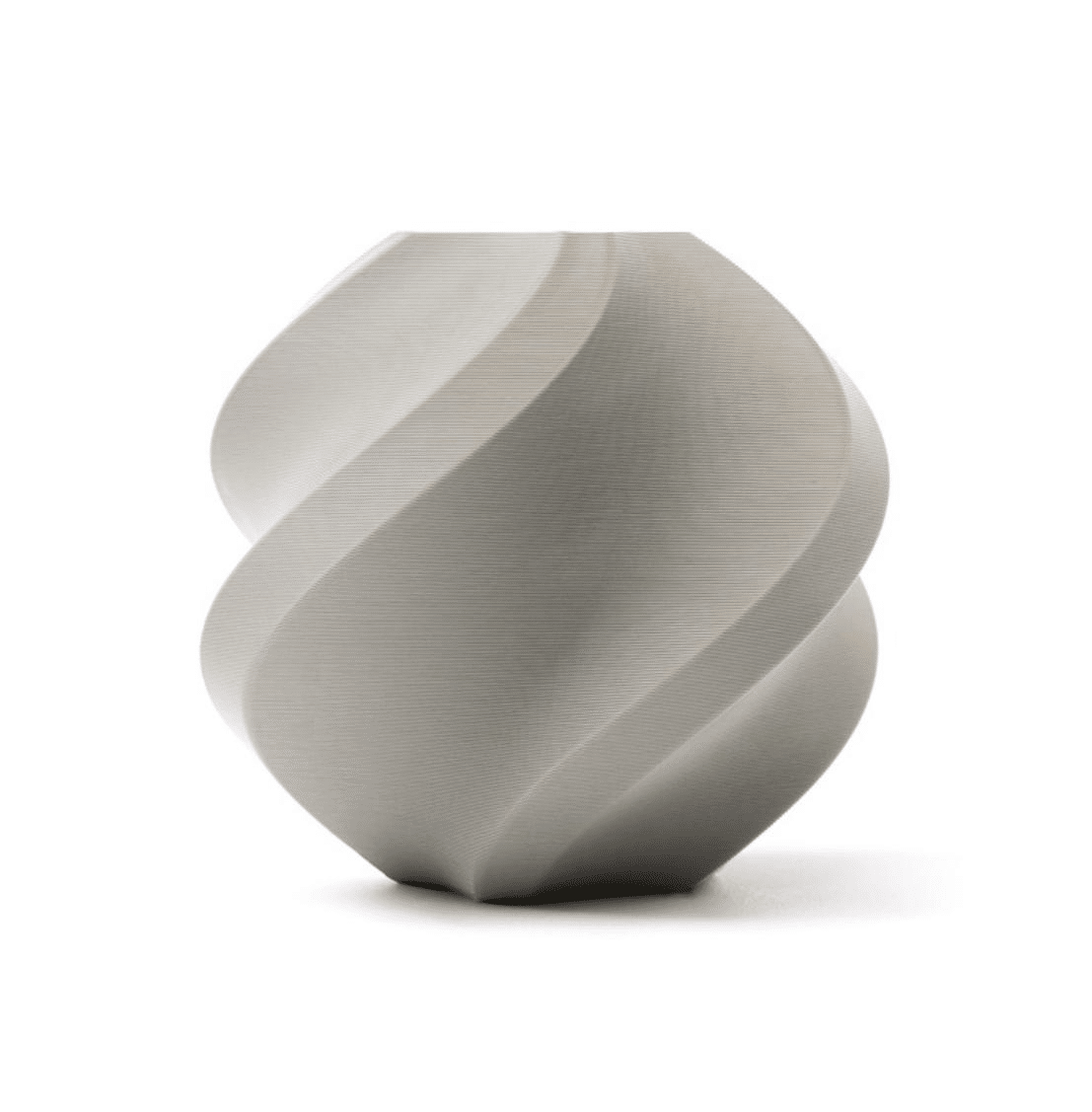
Bambu Lab PLA 3D Printer Filament – Grey 1.75mm with Reusable Spool
Bambu Lab’s precision-manufactured PLA is an excellent base for comparing finish types — consistent diameter ensures fair test comparisons between settings and filament variants.
Best Use Cases for Each
Choose Silk PLA When…
- You want a metallic-looking display piece that will not be painted
- You are printing trophies, awards, or decorative art
- You want the print to look expensive without post-processing
- You are printing cosplay jewellery, armour accents, or props that need a metallic look
- You are willing to print slowly and finely to get the best result
Choose Matte PLA When…
- You want prints that look finished and professional straight off the printer
- You plan to paint the print (especially miniatures or scale models)
- You want to hide layer lines without slowing down your settings
- You are printing functional prototypes where surface glare is undesirable
- You are making multiple parts and need consistent appearance without heavy post-processing
Cost in India (2026)
Both Silk PLA and Matte PLA cost more than standard PLA. The additives and more precise manufacturing required add to the price. In India:
- Standard PLA (economy brand): ₹700–₹900/kg
- Standard PLA (premium brand, e.g. Bambu Lab): ₹1,200–₹1,500/kg
- Silk PLA (mid-range brand): ₹1,000–₹1,400/kg
- Matte PLA (mid-range brand): ₹1,100–₹1,500/kg
- Dual-colour Silk PLA (two-tone shimmer): ₹1,400–₹2,000/kg
Given that both specialty filaments require better settings and often slower speeds, factor in the additional print time. A 200g decorative print might take 6–8 hours with silk PLA vs 4–5 hours with matte PLA at similar visual quality. Over many prints, this time difference adds up.
Our Recommendations
For beginners who want better-looking prints without complexity: Start with Matte PLA. It is more forgiving of settings, hides layer lines naturally, and produces consistently professional results. You will spend less time calibrating and more time printing.
For experienced printers who want visually striking display pieces: Silk PLA is unmatched for the metallic shimmer effect. Gold, copper, and rainbow silk filaments can produce prints that genuinely fool people into thinking they are looking at cast metal or a hand-painted figure. Worth mastering once you understand your printer’s characteristics.
For miniature painting: Matte PLA, no contest. Its flat finish takes primer and paint better than any other filament type.
For cosplay: Silk PLA for metallic armour, accessories, and props. Matte PLA for base armour panels that will be painted. Many cosplayers use both in the same build.
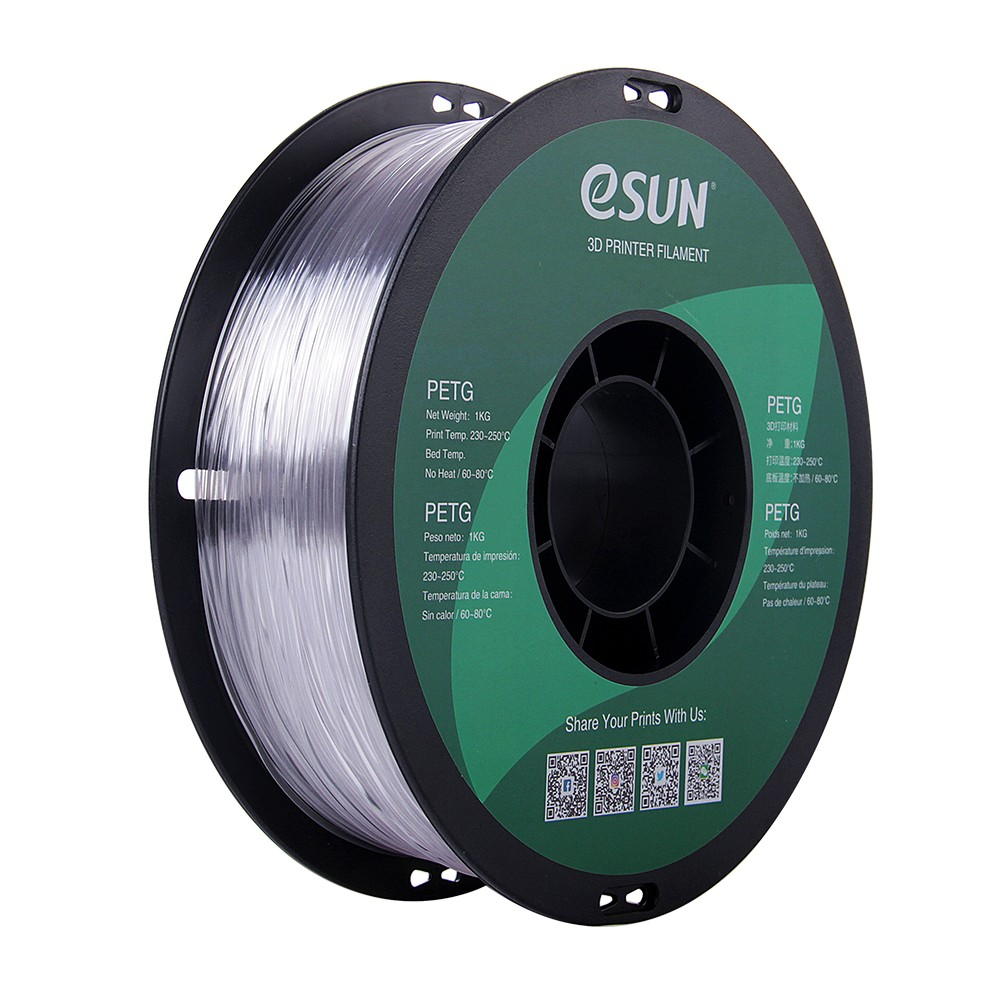
eSUN PETG 1.75mm 3D Printing Filament 1kg – Clear
eSUN is one of the most trusted filament brands in India — their PETG is a perfect complement to PLA specialty filaments when you need more strength or heat resistance.
Frequently Asked Questions
Can I mix Silk PLA and Matte PLA in the same print?
Yes, if you have a multi-material printer (like Bambu Lab X1C with AMS, or a printer with a filament changer). Using silk for accent parts and matte for the main body can produce striking results — for example, a matte black base with silk gold trim on a trophy or figurine. In single-material printers, you would need to do a mid-print filament swap (not recommended for large colour transitions).
Does Silk PLA clog nozzles faster?
It can. The additives in silk PLA — particularly in lower-quality brands — can leave deposits in the nozzle that build up over time. To mitigate this: do a cold pull after every silk PLA print, avoid temperatures above 230°C, and use a stainless or hardened steel nozzle rather than brass for extended silk PLA printing. Keep cleaning needles handy.
Which is better for outdoor use?
Neither. Both Silk PLA and Matte PLA are standard PLA-based and share PLA’s weakness: heat distortion around 55–60°C and brittleness from UV exposure over time. For outdoor use, choose PETG (for general outdoor), ASA (for UV resistance), or ABS in an enclosed environment. The finish question becomes secondary to material properties outdoors.
Is Matte PLA food safe?
No 3D printed part should be considered food safe without extensive testing. Matte PLA fillers include chalk or talc-type additives that have their own safety profiles. Additionally, the layer structure of FDM prints traps bacteria regardless of material. Do not use Silk or Matte PLA for food contact without a food-safe coating.
Why does my Silk PLA have dark streaks?
Dark streaks in silk PLA usually mean the temperature is too high and the additives are burning or separating. Lower your temperature by 5–10°C and clean the nozzle with a cold pull. Some cheap silk filaments have inconsistent additive distribution — switching to a better brand eliminates the problem entirely.
Find the Right Filament for Your Next Project
From premium Bambu Lab PLA to eSUN PETG, Zbotic stocks the filaments, nozzles, and accessories you need to get great prints every time. Shop our 3D printing range today.






Add comment