
3D Printing Electronics: Conductive Filament Projects for Makers and Engineers
The world of 3D printing has always excited hobbyists and engineers alike — but conductive filament is one of those truly game-changing materials that bridges the gap between mechanical prototyping and functional electronics. If you have been wondering how to integrate printed circuits, touch sensors, or even basic resistors into your 3D printed parts, this guide is for you.
Whether you are a student in Mumbai, a hobbyist tinkerer in Pune, or a professional engineer in Bengaluru, conductive filament opens up a whole new universe of possibilities. In this comprehensive guide, we will walk through what conductive filament is, how it works, what projects you can build, and what to keep in mind when printing with it on popular Indian-market printers like the Ender 3 or Bambu Lab machines.
What Is Conductive Filament?
Conductive filament is a special type of 3D printing filament that has been infused with electrically conductive materials — typically carbon black, graphene, or carbon nanotubes — mixed into a standard polymer base such as PLA or TPU. The result is a printable material that can carry electrical current.
It is important to understand that conductive filament is not a replacement for copper wire. The resistivity of conductive PLA typically ranges from 1 to 100 ohm-cm depending on the brand and formulation. Compare that to copper at around 1.7 × 10⁻⁶ ohm-cm and you will quickly understand why conductive filament is better suited for high-resistance applications rather than low-impedance signal or power lines.
In India, the most commonly available conductive filaments are carbon-infused PLA variants. These are available from international brands and can be imported or sourced through online electronics and maker stores. While pure graphene filaments are harder to find, carbon-black PLA variants are quite practical for most beginner and intermediate projects.
How Conductive Filament Works in Practice
The way conductive filament creates an electrical path is by forming a network of carbon particles throughout the printed structure. When you print a trace or object with this filament, current can flow through the carbon matrix from one end to the other.
The resistance of a printed trace depends on:
- Length: Longer traces have higher resistance
- Cross-section: Thicker traces have lower resistance
- Layer adhesion: Poor inter-layer bonding increases resistance dramatically
- Infill percentage: Higher infill means more conductive material and lower resistance
- Print temperature: Higher temperatures generally improve conductivity by improving particle bonding
A practical tip: when designing traces in CAD, keep them short and wide. For a 5V circuit driving an LED, even 100–500 ohms of trace resistance may be acceptable, but for sensor lines or anything requiring signal integrity, keep traces as short as possible.
10 Practical Conductive Filament Projects
1. Touch-Sensitive Buttons and Panels
One of the most popular uses of conductive filament is creating capacitive touch surfaces. You can design a panel in CAD, print the structural layer in PLA, then switch to conductive filament for the touch pad area. Connect the conductive pad to a microcontroller pin (like Arduino or ESP32) and use a simple capacitive sensing library to detect finger touches. This is excellent for custom control panels, DIY keyboards, and musical instruments.
2. Custom Resistors
Need a non-standard resistor value? Print one. By varying the length and cross-section of a conductive filament trace, you can print resistors with fairly predictable resistance values. While tolerance will be high (±20% or more), for non-critical applications like LED current limiting or simple voltage dividers, printed resistors work surprisingly well.
3. Embedded Strain Gauges
Conductive filament changes its resistance when mechanically deformed. This property makes it useful as a basic strain gauge. Print a flexible structure with conductive traces and measure resistance changes as it bends. While far less accurate than commercial strain gauges, this approach is great for robotics feedback and soft robotics research.
4. Antenna Elements
For low-frequency RF applications, conductive filament can be used to print antenna structures. While the resistivity is too high for efficient high-frequency antennas, at 433 MHz or below, experimental results have shown usable performance. This is particularly interesting for custom enclosures with integrated antennas for IoT devices.
5. ESD-Safe Enclosures and Trays
Electronics components are sensitive to electrostatic discharge. Conductive filament can be used to print ESD-safe trays, component holders, and enclosures. The slight conductivity bleeds off static charges slowly without creating a conductive path that would short out components. A great application for Indian labs and workshops where commercial ESD equipment can be expensive.
6. Educational Circuit Boards
Teachers and educators can print multi-material circuit boards where conductive traces connect through-holes for components. Students can push through LEDs, resistors, and jumper wires into printed boards, making electronics education tactile and engaging. This is a wonderful STEM tool for schools and maker spaces across India.
7. Flexible Wearable Circuits
Using conductive TPU (flexible base), you can print circuits that stretch and flex with the human body. Wearable health monitors, smart gloves for VR/AR control, or pressure-sensitive shoe insoles are all achievable. Combine conductive TPU traces with standard TPU for a fully flexible wearable circuit.
8. Soil Moisture Sensor Probes
Print soil probes from conductive filament and use resistance measurement to estimate soil moisture. As water content changes, the resistance between two probe tips changes proportionally. A simple Arduino sketch with an analog pin can read this. Very useful for low-cost agricultural automation, a growing field in India.
9. Multi-Layer Circuit Structures
With a dual-extrusion printer, you can print alternating layers of conductive and insulating filament, creating multi-layer structures similar to a PCB. Each conductive layer can carry different signal lines. Vias can be created by designing vertical columns of conductive filament passing through insulating layers.
10. Heating Elements
High-resistance conductive filament traces, when sufficient current is passed through them, generate heat via Joule heating. This can be used to create printed heating elements for small chambers, heated platforms for experiments, or even simple warmers. Be careful with power ratings and always test in a safe environment first.
Print Settings and Tips for Conductive Filaments
Printing conductive filament requires some adjustments compared to standard PLA. Here are the key parameters to get right:
Temperature
Most conductive PLA filaments print at 200–230°C. Start at 210°C and adjust based on your specific filament. Higher temperatures improve particle bonding and reduce resistance. The bed temperature should be 50–60°C.
Print Speed
Slow down. Print conductive traces at 20–30 mm/s to ensure proper layer bonding and consistent extrusion. Poor layer adhesion between conductive layers dramatically increases resistance.
Infill
For conductive traces, use 100% infill. Any air gaps in the structure create resistance hotspots. For non-trace areas printed in standard filament, your usual infill settings apply.
Layer Height
Use a thinner layer height (0.1–0.15 mm) for the conductive areas to improve inter-layer conductivity. Thicker layers have fewer fusion points per unit height.
Nozzle Considerations
Carbon-infused filaments are moderately abrasive. While they will not destroy a brass nozzle immediately, for frequent use or long runs, consider upgrading to a hardened steel nozzle. Stainless steel nozzles are also a good choice.
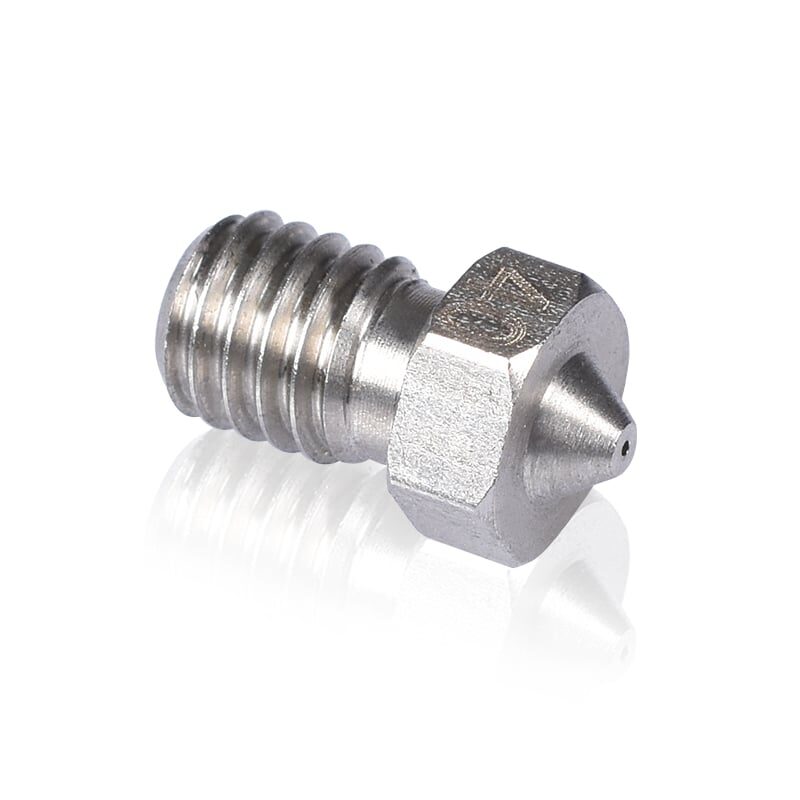
3D Printers Stainless Steel Nozzle 0.4mm
A durable stainless steel nozzle ideal for use with abrasive specialty filaments including conductive and carbon-infused variants. Excellent for Ender 3, CR-10, and V6-compatible hotends.
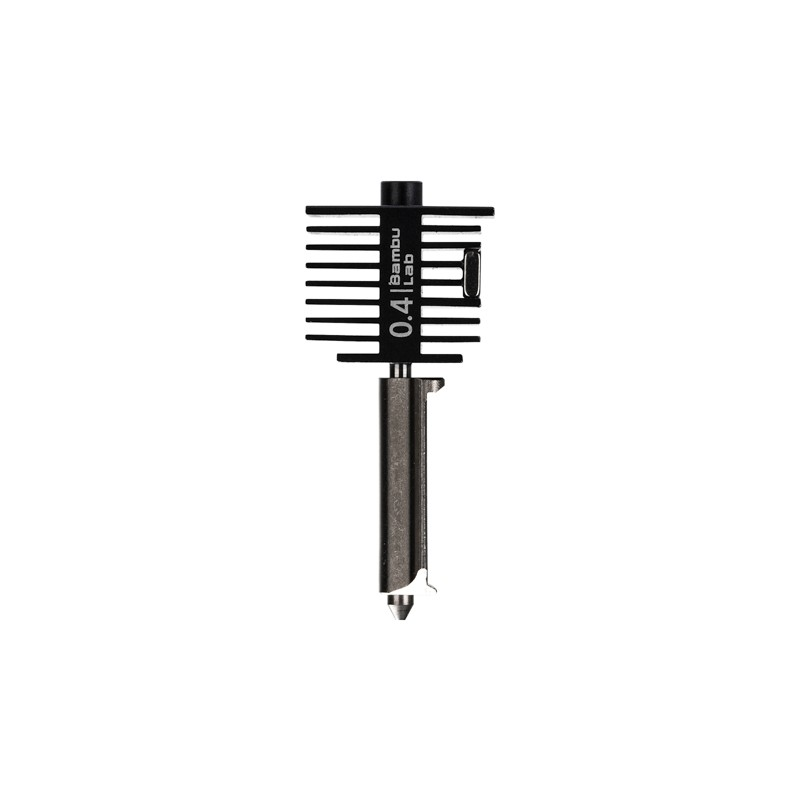
Bambu Lab Hotend with Hardened Steel Nozzle 0.4mm
The official Bambu Lab hotend with hardened steel nozzle — perfect for printing abrasive specialty filaments on Bambu Lab A1, P1P, and P1S printers.
Filament Dryness
Conductive filaments are hygroscopic. Moisture absorbed from the air causes inconsistent extrusion and significantly worse conductivity. Always dry your conductive filament before use — a food dehydrator at 45°C for 4–6 hours works well. Keep it in a sealed box with desiccant during printing.
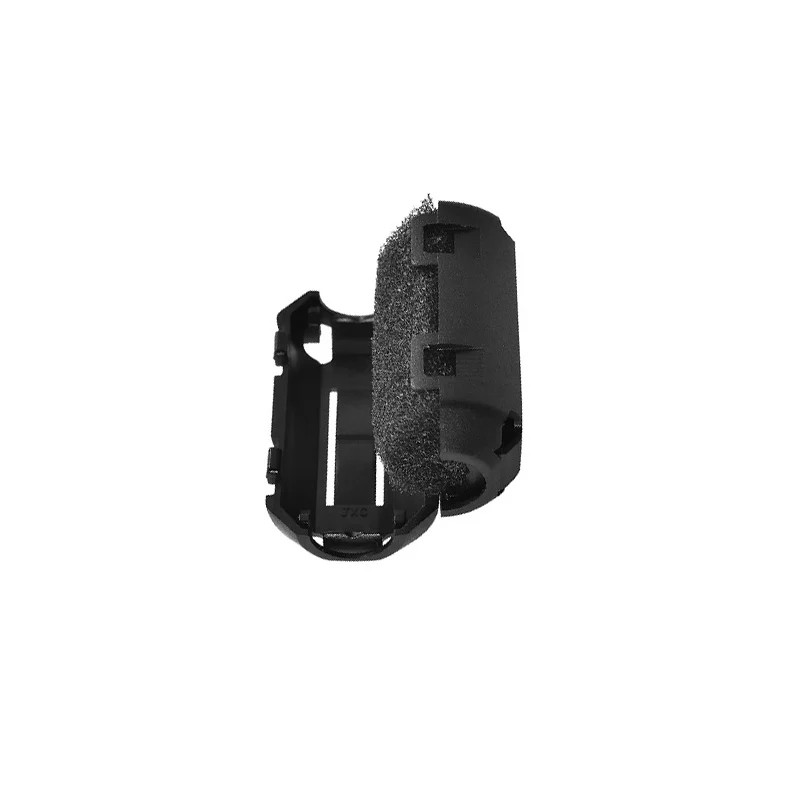
ABS PLA PETG 1.75mm Filament Filter Cleaner
Keep your specialty filament — including conductive variants — clean and dust-free with this inline filament filter. Works with Ender 3, CR-10, Prusa i3, and most FDM printers.
Limitations and What Conductive Filament Cannot Do
It is crucial to go in with realistic expectations:
- High resistance: Conductive filament has resistivity millions of times higher than copper. It cannot replace wire for power delivery or high-speed signals.
- No high-frequency applications: Skin effect and high resistance make it unsuitable for anything above a few MHz.
- Poor current handling: Maximum current is typically 1–5 mA for thin traces. More current causes overheating.
- Tolerance is poor: Unlike a carbon film resistor with ±1% tolerance, your printed resistors may vary ±30%.
- Not waterproof connections: Exposed conductive filament will oxidize over time, increasing resistance further.
- Difficult to solder: Standard solder will not bond to conductive filament. Use conductive adhesive or mechanical connections instead.
Pairing with Standard Filaments (PLA, ABS, PETG)
The real power of conductive filament comes from using it alongside standard materials. Your structural parts can be PLA, ABS, or PETG, while the electrical traces are conductive PLA. This multi-material approach requires either a dual-extrusion printer or careful manual filament changes at specific layers.
For single-extruder printers like the Ender 3, you can pause the print at specific layers, swap filament manually, print the conductive layer, then swap back. It takes patience but is entirely achievable.
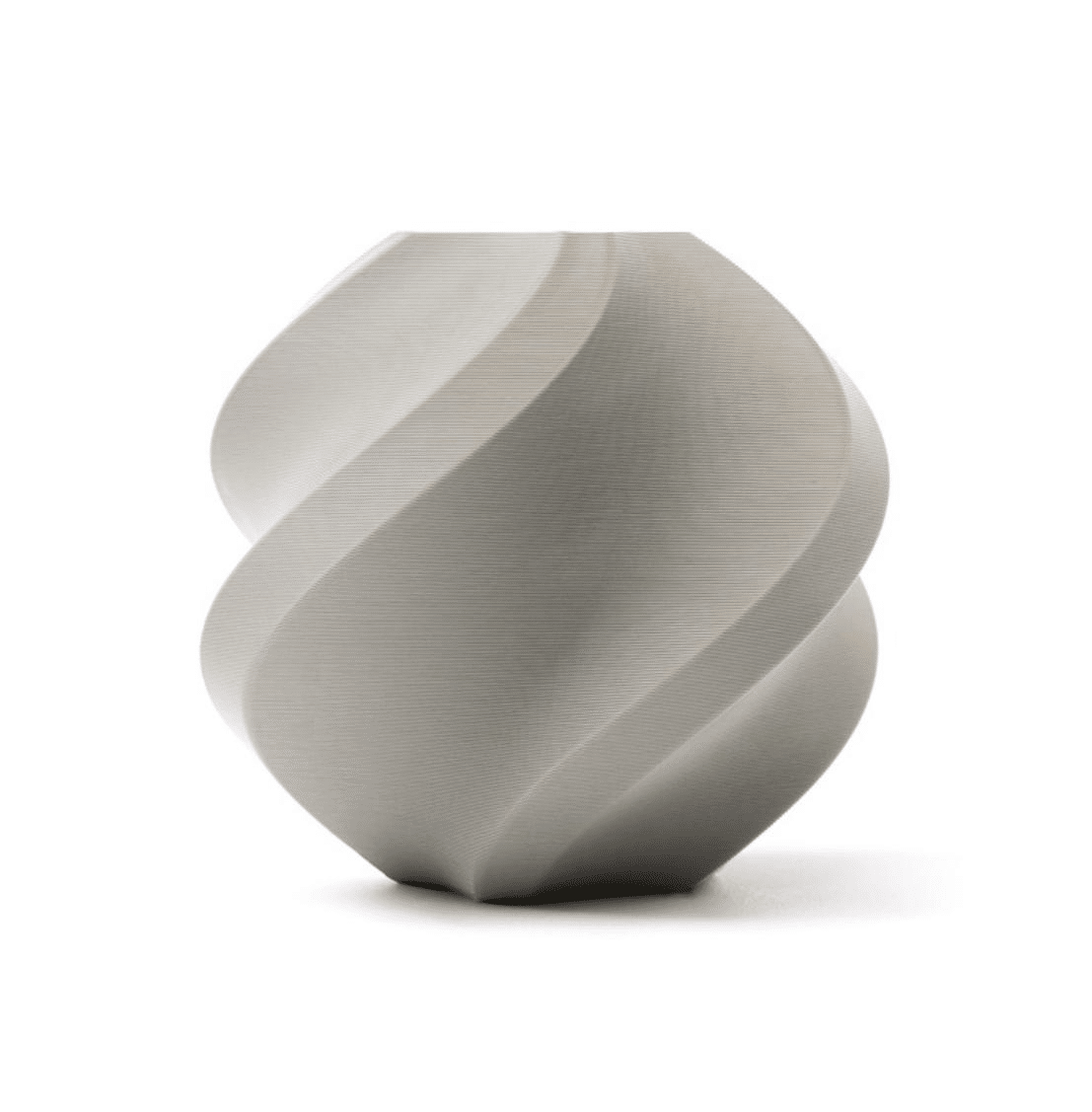
Bambu Lab PLA 3D Printer Filament – Grey 1.75mm
High-quality Bambu Lab PLA filament on a reusable spool. Pairs perfectly with specialty conductive layers in multi-material prints. Excellent layer adhesion and consistent diameter.
Maintaining Your Printer When Using Specialty Filaments
Carbon-infused filaments leave residue in the nozzle and PTFE tube over time. After each conductive print session, purge the nozzle with plain PLA at high temperature to clean out carbon deposits. If you notice a gradual increase in print resistance over successive prints, the nozzle likely has buildup restricting extrusion.
Inspect and clean your nozzle periodically. Use nozzle cleaning needles to clear partial clogs before they become full blockages.
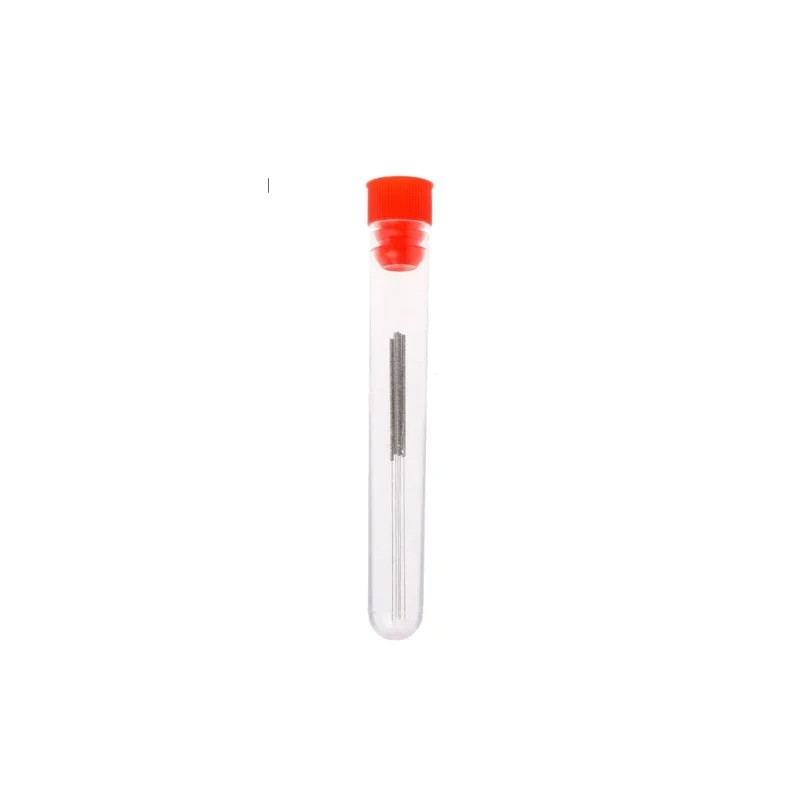
0.4mm Stainless Steel Nozzle Cleaning Needles (Pack of 10)
Essential maintenance tool for clearing nozzle clogs caused by specialty filaments. Pack of 10 sturdy stainless steel needles for 0.4mm nozzles.
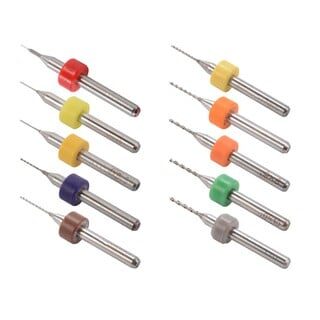
0.1–1.0mm Mixed Nozzle Cleaning Drill Bit Kit (10 Pcs)
A comprehensive 10-piece drill bit set covering 0.1 to 1.0mm nozzle sizes. Ideal for MK7, MK8, and RepRap style hotends — great for clearing carbon deposits from specialty filament use.
Buying Guide for Indian Makers
When sourcing conductive filament in India, look for these characteristics:
- Resistivity spec: Look for filaments advertising less than 15 ohm-cm for best results. Values above 100 ohm-cm may be too resistive for most applications.
- Base polymer: PLA-based is easiest to print. TPU-based offers flexibility for wearables.
- Diameter tolerance: ±0.03mm or better for consistent extrusion
- Moisture packaging: Must come in vacuum-sealed bags with desiccant
Protip for Indian hobbyists: if you cannot source conductive filament locally, you can experiment with creating your own by mixing carbon black powder into PLA pellets — though this is a complex process and results vary significantly.
Frequently Asked Questions
Can conductive filament carry 5V power to an LED?
Yes, but you need to account for the significant resistance in the trace. Calculate the total trace resistance and ensure your power source can compensate. For short traces and low-power LEDs, 5V is perfectly workable.
Is conductive filament safe to handle?
Yes. The carbon particles are encased in plastic and not a health hazard during handling. During printing, like all FDM materials, ensure good ventilation as fumes are released at elevated temperatures.
Can I use conductive filament on my Ender 3?
Absolutely. The Ender 3 handles conductive PLA well with a hardened or stainless nozzle. Set temperatures to 210–220°C and print slowly (20–30 mm/s) for best conductivity.
Why does my printed trace have inconsistent resistance?
This is usually caused by moisture in the filament, inconsistent extrusion, or poor layer adhesion. Dry your filament, reduce print speed, and increase temperature slightly.
Where can I buy conductive filament in India?
Conductive filament is available from international brands via Indian online marketplaces. For all your standard filaments, nozzles, and 3D printing accessories, Zbotic.in is your one-stop shop.
Can conductive filament be used with PETG or ABS?
Most conductive filaments have a PLA base, which bonds best with PLA. Adhesion to PETG or ABS is moderate. For multi-material prints combining conductive PLA with ABS or PETG, test adhesion on a small sample first.
Conclusion
Conductive filament 3D printing is one of the most exciting intersections of additive manufacturing and electronics. While it does not replace traditional PCB manufacturing for production-level electronics, it opens extraordinary doors for rapid prototyping, educational applications, custom sensors, ESD protection, and novel wearable devices.
For Indian makers and engineers, the barriers are low — you likely already have a printer that can handle conductive filament with just a nozzle upgrade. The projects you can create range from simple touch buttons to complex multi-layer printed circuit structures.
Start simple: print a basic resistance test structure, measure it with a multimeter, and build your intuition for how geometry affects conductivity. From there, the possibilities are genuinely limitless.
For all your 3D printing supplies — from quality filaments to hotends, nozzles, and maintenance tools — visit Zbotic.in, India’s trusted electronics and maker components store.







Add comment