
4-in-1 ESC vs Separate ESCs: Which is Better for FPV Racing Drones?
Every FPV pilot who has built more than one quad has faced this question: should you go with a 4-in-1 ESC (all four motor controllers on a single board) or separate individual ESCs (one per motor, wired to a power distribution board)? The answer is not one-size-fits-all — it depends on your build goals, flying style, budget, and how much you like soldering.
This guide breaks down the real-world differences between both approaches, with specific focus on what works best in the Indian FPV context — including heat management during summer flying, crash repairability, and component availability.
1. How ESCs Work in an FPV Drone
An Electronic Speed Controller (ESC) is a power electronics module that converts DC power from your LiPo battery into three-phase AC power to drive a brushless motor. The flight controller sends a digital signal (DShot300/DShot600 or analogue PWM) to each ESC, which then modulates the motor’s speed by varying the pulse width and timing of the three-phase output.
In a quadcopter, you need 4 ESCs — one per motor. These 4 ESCs can either be:
- 4-in-1 ESC: All 4 ESCs integrated onto a single PCB, sharing a common power input and ground plane
- Separate (individual) ESCs: 4 discrete ESC boards, each mounted separately near the motor, connected to a central PDB (Power Distribution Board)
2. 4-in-1 ESC: Architecture and Benefits
The 4-in-1 ESC took over the racing and freestyle FPV market after 2017 and is now the dominant choice for 3″–5″ builds. Here is how they are designed:
PCB Architecture
- Single PCB with 4 MOSFET channels sharing one power stage
- Common input capacitor bank — typically 4×470µF or larger on high-current boards
- Centralised power input (XT30 or solder pads for main battery leads)
- Signal input via a single JST or solder pad connection to the flight controller
- 4 individual output pads for motor phase wires
- Many include current/voltage sensors for telemetry
- Stack mounting: 30×30mm or 20×20mm standard
4-in-1 Advantages
- Compact build: One board replaces four. Significantly reduces volume inside the frame
- Less wiring: One signal cable to FC, one power input — dramatically reduces solder joint count and potential failure points
- Shared capacitance: A larger common capacitor bank smooths voltage spikes better than 4 small individual caps
- Lower weight: Eliminates the PDB and reduces total wiring mass by 15–25g on a 5″ build
- Simpler assembly: Faster to build, especially with a stack-based FC+ESC combo
- Better current sensor: Single integrated current sensor gives accurate total draw for battery monitoring

35A V2.1 2-5S 4-in-1 Brushless ESC for FPV Racing
30×30mm 4-in-1 ESC with 35A continuous rating (45A burst), 2–5S compatible. BLHeli_S with DShot600. Integrated current and voltage sensor. Ideal for 5″ freestyle and racing builds.
View on Zbotic4-in-1 Disadvantages
- Single point of failure: One fried channel means replacing the entire board, not just one ESC
- Heat concentration: All 4 channels on one board — heat from one can affect adjacent channels
- Limited per-channel amperage: Individual channel ratings rarely exceed 60A on compact boards. For 7″+ and large motor builds, separate ESCs can go higher
- Less airflow: Stacked inside the frame with limited air exposure
3. Individual ESCs: Architecture and Benefits
Separate ESCs were the universal standard before the 4-in-1 format took over. They remain relevant for specific use cases, especially larger drones.
Individual ESC Advantages
- Per-ESC repairability: Crash kills one ESC? Replace one ₹500 board, not the whole ₹3,000 4-in-1
- Better thermal distribution: Each ESC is mounted near its motor, spreading heat across the frame
- Higher current ratings available: Individual ESCs rated at 60A, 80A, 100A are common — ideal for 7″, 10″, and heavy-lift builds
- Arm-mount option: ESCs mounted on arms benefit from propeller wash airflow, the best natural cooling available
- Mix and match: Use different ESC brands or ratings per motor if needed
- Easier diagnosis: Isolate a faulty ESC without disturbing others
Individual ESC Disadvantages
- More wiring: 4× power leads from PDB + 4× signal wires from FC + 4× 3-phase motor leads = significant wiring harness
- Higher weight: Four separate PCBs + PDB + wiring typically adds 20–35g vs an equivalent 4-in-1
- More solder joints: More joints = more potential failure points, especially under vibration
- PDB required: Adds cost, weight, and another failure point
- Scattered capacitance: Smaller caps per ESC = less effective voltage spike damping
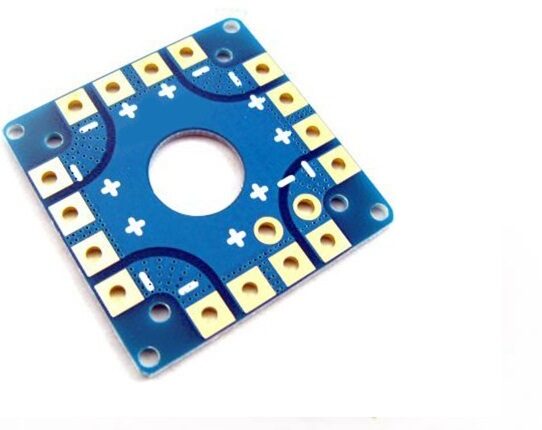
100A Multirotor ESC Power Distribution Battery Board
High-current PDB for multi-ESC setups. Supports up to 6S with integrated voltage and current monitoring. Required when running individual ESCs on larger drones.
View on Zbotic4. Weight and Space Comparison
Here is a typical weight comparison for a 5″ build (approximate figures):
| Component | 4-in-1 Setup | Individual ESC Setup |
|---|---|---|
| ESC(s) | 12–18g | 4×6–10g = 24–40g |
| PDB | — | 8–15g |
| Power wiring | 5–8g | 15–25g |
| Signal wiring | 1–2g | 4–6g |
| Total power system | 18–28g | 51–86g |
Weight saving with a 4-in-1: roughly 30–60g on a 5″ build. On a 250g mini quad, that is a 12–24% weight reduction — massive for racing performance.
5. Heat Management
Heat is the primary cause of ESC failure in India — especially during summer flying in Rajasthan, Gujarat, and the Deccan plateau where ambient temperatures hit 40–45°C. This is where the two approaches differ significantly.
4-in-1 Heat Profile
- All 4 channels on a single PCB creates a heat concentration problem — especially when all motors are at high throttle simultaneously (hover, ascent)
- Stacked inside the frame with limited airflow exposure
- Quality 4-in-1 boards include thermal vias and copper pours to spread heat, but physical dissipation is limited
- Mitigation: Orient FC+ESC stack so ESC faces down (towards prop wash). Some pilots add a small heatsink to the ESC board. Fly at lower throttle averages
Individual ESC Heat Profile
- Each ESC handles only one motor — less per-channel heat generation
- Arm-mounted ESCs sit in the direct slipstream of propeller wash — natural forced-air cooling
- Better thermal performance in sustained high-throttle flight (agricultural/delivery drones)
- Recommendation for India: In sustained-hover agricultural applications above 37°C ambient, individual arm-mounted ESCs are safer from a thermal perspective
6. Wiring Complexity
For a typical 5″ FPV build, here is what wiring looks like for each approach:
4-in-1 Wiring (Simple)
- One XT30 or solder pad: battery positive and negative to ESC power input
- One JST-SH connector: FC UART/signal to ESC signal inputs
- 4× 3-wire motor leads: short 5cm runs from ESC pads to motor
- Total solder joints: ~14–16
Individual ESC Wiring (Complex)
- 4× 14AWG power leads from PDB to each ESC (positive + negative each)
- 4× signal wires from FC to each ESC
- 4× 3-wire motor leads from ESC to motor
- 2× battery leads from XT60 to PDB
- Total solder joints: ~40–50
More solder joints mean more potential failure points — especially problematic with vibration over time. Beginners who are still developing soldering skills will produce a cleaner, more reliable build with a 4-in-1.
7. Crash Repairability
This is where individual ESCs have a genuine advantage, and it is the primary reason experienced pilots sometimes prefer them for heavy-crash-rate situations:
| Scenario | 4-in-1 Cost | Individual ESC Cost |
|---|---|---|
| One ESC fried (one motor) | ₹2,500–4,000 (full 4-in-1 replacement) | ₹400–800 (one ESC) |
| Two ESCs fried | ₹2,500–4,000 (same) | ₹800–1,600 (two ESCs) |
| Power stage shorts | Full replacement + possible FC damage | Isolated to one arm — PDB and other ESCs often safe |
| All 4 channels gone | One ₹3,500 part | 4 × ₹600 = ₹2,400 |
Key insight for Indian pilots: If you are a beginner or fly aggressively and crash often, the “one ESC channel fails, replace the whole board” issue of 4-in-1 ESCs can get expensive quickly. Consider keeping a spare 4-in-1 board — or use individual ESCs to reduce per-crash cost.
8. Performance: Throttle Response and Efficiency
Both approaches support the same digital signal protocols (DShot300, DShot600, DShot1200) and the same firmware (BLHeli_S, BLHeli_32, AM32). From a raw electrical performance standpoint:
- Throttle response: Identical between 4-in-1 and individual ESCs with the same firmware and protocol
- Current efficiency: Slightly better on 4-in-1 due to shared high-quality input capacitors reducing voltage ripple
- Motor sync: No difference — both receive signals from the same flight controller outputs
- Telemetry: 4-in-1 boards typically offer better integrated telemetry (per-ESC temperature, RPM reporting)
The performance difference between 4-in-1 and individual ESCs is effectively zero in practical FPV use. Any pilot who tells you one “feels better” is experiencing placebo effect from a different tune, props, or motor selection.
9. Cost Comparison in India (2026)
| Setup | Components | Estimated Cost (India) |
|---|---|---|
| Budget 4-in-1 (35A) | 1× 4-in-1 ESC | ₹1,800–2,800 |
| Mid-range 4-in-1 (45A) | 1× 4-in-1 ESC | ₹3,000–4,500 |
| Budget individual ESCs | 4× 30A ESC + PDB | ₹2,200–3,500 |
| Mid-range individual ESCs | 4× 40A ESC + PDB | ₹4,000–6,500 |
| High-current individual (80A) | 4× 80A ESC + heavy PDB | ₹8,000–15,000 |
For 5″ racing and freestyle, the 4-in-1 wins on upfront cost and value. For larger builds (7″+), individual high-current ESCs are often the only option, and their cost per-ESC is competitive.
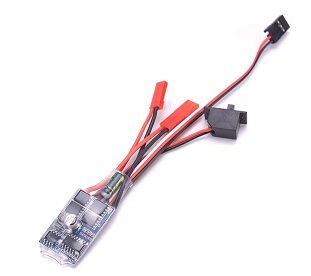
30A Brushed ESC No Brake
Budget individual ESC for brushed motor builds and smaller quads. No-brake mode for smooth deceleration. Good for micro-quad and whoop builds where you want per-motor ESC control.
View on Zbotic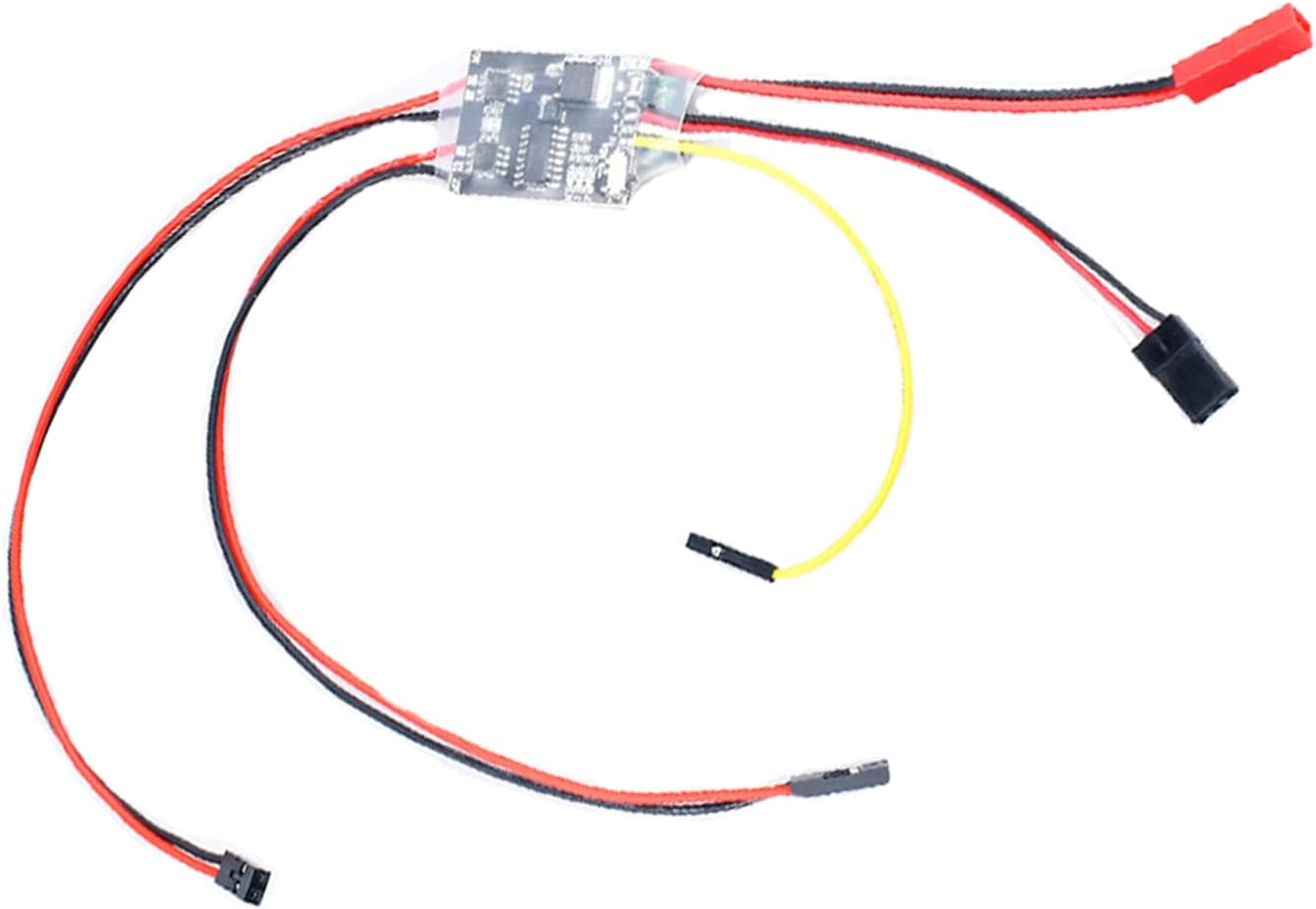
2S–6S 2Ax2 Dual Way Brushed ESC Bidirectional Speed Controller
Dual-channel bidirectional ESC for differential-thrust builds. Useful for rover drones and vectored-thrust VTOL research projects where individual ESC control is mandatory.
View on Zbotic10. The Verdict: Which Should You Choose?
| Use Case | Recommended ESC Type | Reason |
|---|---|---|
| 5″ FPV racing | 4-in-1 | Weight savings critical for lap time |
| 5″ freestyle (beginner) | 4-in-1 | Simpler wiring, faster builds |
| 5″ freestyle (crash-prone) | Individual or 4-in-1 + spare board | Crash repair cost management |
| 7″ long range | Individual (40–60A) | Higher current rating, arm-mount cooling |
| Agricultural / heavy-lift | Individual (80A+) | Thermal management, high sustained current |
| Whoop / micro (under 3″) | 4-in-1 (AIO board) | Space and weight absolutely critical |
FAQs
A: Theoretically yes, by replacing the MOSFET on the failed channel — but this requires SMD soldering skills and the right components. In practice, most pilots replace the entire board. Only attempt individual MOSFET replacement if you have hot-air rework station experience.
A: No. Motor sync is a function of the ESC firmware (BLHeli_32, AM32) and the digital signal protocol (DShot), not the physical board format. A well-tuned 4-in-1 will sync identically to individual ESCs with the same firmware.
A: For most 5″ freestyle builds with 2207-size motors on 6S, 35A continuous with 45A burst is sufficient. Burst draw per motor rarely exceeds 30A in freestyle flight. Aggressive racing at full throttle may push 40–45A bursts — upgrade to a 45A board if you race competitively.
A: Technically yes if you find a high-current 4-in-1 (some 60A+ boards exist), but arm-mounted individual ESCs are strongly recommended for 7″+ builds due to better thermal management and the higher sustained currents involved.
A: For sustained hover in 40°C+ ambient temperatures (agricultural drones, long inspections), arm-mounted individual ESCs with propeller wash cooling are safer. For short FPV sessions (2–5 min), a quality 4-in-1 handles summer heat adequately with proper frame airflow.
Shop ESCs and Power Distribution at Zbotic
4-in-1 ESCs, individual speed controllers, power distribution boards — all available at Zbotic with fast delivery across India.
Shop ESCs and Power Systems






Add comment