
If you have spent any time tuning a 3D printer or building a CNC machine, you already know that stepper motor noise can be maddening. Trinamic’s StealthChop technology changed the game, and two drivers sit at the heart of most modern builds: the TMC2208 and the TMC2209. Choosing between them is not always obvious, so this guide breaks down every specification, feature, and real-world use case to help you make the right call.
What Are Silent Stepper Drivers?
Traditional stepper motor drivers switch current to motor coils in a crude on/off pattern, producing audible buzzing and vibration. Trinamic (now part of Analog Devices) introduced StealthChop, a voltage-mode control technique that varies current sinusoidally, dramatically reducing acoustic noise and motor heating. Both the TMC2208 and TMC2209 use StealthChop2, but they differ in several important ways that matter in practice.
Understanding these differences requires a quick look at two other Trinamic technologies: SpreadCycle (a high-precision chopper mode for faster motion) and StallGuard (back-EMF sensing that detects motor stall without a limit switch). The TMC2209 adds StallGuard4 on top of everything the TMC2208 offers, which is the most important distinction between the two chips.
TMC2208 Overview
Released in 2017, the TMC2208 was the first widely adopted silent driver for desktop 3D printers. It replaced the aging A4988 and DRV8825 on boards like the Creality 3D printer line. Here is what defines it:
- RMS current: 1.4 A continuous (2.0 A peak)
- Supply voltage: 4.75 V to 36 V
- Microstep resolution: Up to 1/256 interpolated from 1/2
- Chopper modes: StealthChop2, SpreadCycle
- Interface: UART single-wire or standalone via trim pot
- StallGuard: Not supported
- CoolStep: Not supported
- Package: QFN-28
In standalone mode, you set the current by adjusting a potentiometer on the breakout board and configure the driver direction and microstep count with logic-level pins. UART mode allows software control of every register from a microcontroller using a single bidirectional wire — useful for boards like SKR Mini and Ender 3 V2 with TMC2208 support baked into Marlin.
The TMC2208 is an excellent silent driver for printers that run at moderate speeds and do not need sensorless homing. For basic Cartesian printers like an Ender 3 where you are happy using physical endstops, it does the job perfectly.
TMC2209 Overview
The TMC2209 arrived in 2018 as a superset of the TMC2208. Every feature from the 2208 is present, plus several important additions:
- RMS current: 2.0 A continuous (2.8 A peak)
- Supply voltage: 4.75 V to 29 V (note: lower max vs 2208)
- Microstep resolution: Up to 1/256 interpolated
- Chopper modes: StealthChop2, SpreadCycle
- Interface: UART single-wire or standalone
- StallGuard4: Yes — sensorless homing and stall detection
- CoolStep: Yes — dynamic current reduction based on load
- Passive braking / freewheeling: Yes
- Package: QFN-28 (pin-compatible with TMC2208 on most breakout boards)
The higher continuous current (2.0 A vs 1.4 A) allows the TMC2209 to drive larger NEMA17 motors that draw more current, like the popular 42HS48 with 1.7 A or 2.0 A rating. CoolStep is particularly useful in CNC routers where load varies — the driver backs off current when the motor is coasting and ramps up when cutting, reducing heat and energy use.
TMC2209 vs TMC2208: Spec Comparison
The table below condenses the most important differences at a glance:
| Feature | TMC2208 | TMC2209 |
|---|---|---|
| Max RMS Current | 1.4 A | 2.0 A |
| Peak Current | 2.0 A | 2.8 A |
| Max Supply Voltage | 36 V | 29 V |
| StealthChop2 | Yes | Yes |
| SpreadCycle | Yes | Yes |
| StallGuard4 | No | Yes |
| CoolStep | No | Yes |
| UART Interface | Yes | Yes |
| Sensorless Homing | No | Yes |
| Passive Braking | No | Yes |
| Typical Price (breakout) | Lower | Slightly higher |
StallGuard4 and Sensorless Homing
This is the killer feature of the TMC2209 and the main reason most 3D printer upgrades have moved to it. StallGuard4 monitors the back-EMF of the motor in real time. When the motor stalls — because the carriage hit a physical boundary — the SG_RESULT register drops, and the driver can signal the microcontroller.
In practice, this means you can eliminate physical endstop switches on X and Y axes entirely. The printer homes by slowly driving the axis until it detects a stall. Benefits include:
- Fewer parts that can fail (no switch to break or misalign)
- Cleaner wiring inside the machine
- Automatic recovery if the carriage is pushed during a print
The downside is that StallGuard4 requires careful tuning of the SGTHRS register (stall threshold) in Marlin or Klipper. Too sensitive and it false-triggers; too loose and the carriage rams the frame. Most modern Klipper configurations have a autotune_tmc macro or TMC autotune plugin to make this easier.
The TMC2208 has no stall detection whatsoever. You must use physical endstops. For most users who already have working endstops, this is not a problem — but it does mean you cannot do sensorless homing upgrades with a 2208.
UART vs Standalone Mode
Both drivers can run in standalone mode where you configure current via a potentiometer on the board and set microstep resolution via MS1/MS2 pins. This is the simplest setup and works with any control board, even vintage 8-bit ones.
UART mode is far more powerful. A single bidirectional wire from the microcontroller lets the firmware read and write every internal register: current, microstep resolution, chopper mode, SpreadCycle vs StealthChop switching threshold, and on the TMC2209, the StallGuard threshold. You also get diagnostic output: the driver reports overtemperature, open load, and short-circuit conditions back to the firmware.
On the TMC2209, UART is mandatory for sensorless homing — the DIAG pin triggers on stall, but you configure the sensitivity via UART. Most modern boards (SKR 1.4, BTT Octopus, Manta M8P) have UART pins wired to every driver socket and default Marlin and Klipper configs for TMC2209 UART mode.
Current Rating and Thermal Performance
The TMC2208 is rated for 1.4 A RMS (2.0 A peak). Most NEMA17 motors used in 3D printers draw 0.8–1.4 A, so the 2208 is adequate but leaves little headroom. Running a motor at 100% of the driver’s rated current means the driver runs hot, and without heatsinks it can throttle or shut down.
The TMC2209’s 2.0 A RMS (2.8 A peak) gives a comfortable margin for motors rated at 1.5–1.8 A. You can run the motor at 85–90% of its rated current, which is the sweet spot for torque without excessive heat. The driver itself has a thermal shutdown at 150 °C with a warning at 120 °C, same as the 2208.
Both drivers benefit from a small heatsink and airflow in enclosed printer enclosures. The TMC2209 actually runs cooler in practice because CoolStep reduces current during low-load phases, even though it is rated for higher current overall.
Noise and Vibration
In StealthChop2 mode, both drivers produce nearly identical noise levels — essentially inaudible to the human ear at normal printing speeds. The difference only appears at high accelerations where both drivers automatically switch to SpreadCycle for better torque control. SpreadCycle is louder but more precise.
The switching threshold (TPWMTHRS register) is configurable via UART. A common Klipper setting is to switch at around 500 mm/s step frequency (roughly 100 mm/s on a standard 80-step/mm printer). Above that threshold, SpreadCycle takes over. Below it, StealthChop2 makes the printer whisper-quiet.
In real-world use, TMC2209 and TMC2208 sound identical during a slow perimeter print. The TMC2209 may show slightly better resonance characteristics because StallGuard4 monitoring gives the driver more dynamic feedback, but this is marginal for printing — it matters more in CNC where vibration at resonance frequencies can chatter a tool.
Firmware Compatibility
Marlin: Both drivers are fully supported. Enable TMC2208 or TMC2209 in Configuration_adv.h, set UART pins, and configure current, microstep resolution, and (for 2209) StallGuard sensitivity. Marlin’s SENSORLESS_HOMING feature only works with TMC2209 (or TMC2130/2240).
Klipper: Both have first-class support. The [tmc2209] section accepts all parameters including diag_pin for sensorless homing. Klipper’s ability to tune StallGuard at runtime via SET_TMC_FIELD makes it far easier to dial in sensorless homing than Marlin.
RepRapFirmware (Duet): Both supported via M569 command. Duet boards often have dedicated TMC driver sockets with UART pre-wired.
GRBL / grblHAL: Standalone mode works for both. UART requires a grblHAL build with TMC plugin support.
Which Driver Should You Choose?
Here is the decision logic, distilled:
- Choose TMC2208 if: You are on a tight budget, you already have physical endstops, your motors draw under 1.2 A, and you are upgrading from a noisy A4988 or DRV8825 on an older board.
- Choose TMC2209 if: You want sensorless homing, you are running motors rated at 1.5 A or higher, you want CoolStep for energy efficiency, or you are building a new machine from scratch where the small price premium is irrelevant.
- Do not choose TMC2209 if: Your power supply is 30–36 V. The TMC2209 is only rated to 29 V; above that you need the TMC2208 or a different driver entirely (TMC2226 or TMC5160).
For most builders in 2024–2025, the TMC2209 is the default choice. The extra current headroom, sensorless homing support, and CoolStep efficiency are worth the marginal price increase. The only compelling reason to pick a TMC2208 today is voltage — if your system runs at 24–36 V and you occasionally spike to 30+ V, the 2208’s higher voltage rating provides safety margin.
Product Recommendations
Pair your stepper driver upgrade with a quality NEMA17 motor for best results:

42HS48-1204A-20F NEMA17 5.6 kg-cm Stepper Motor with Detachable Cable
A high-torque NEMA17 rated at 1.2 A per phase — perfect for the TMC2209’s 2 A headroom. The detachable cable makes installation and replacement easy in 3D printers and CNC machines.

A4988 Stepper Motor Driver Controller Board — RED
If you are just starting out or working on a low-budget build, the A4988 is a proven reliable driver. It is also the benchmark against which TMC silent drivers are compared for noise reduction.
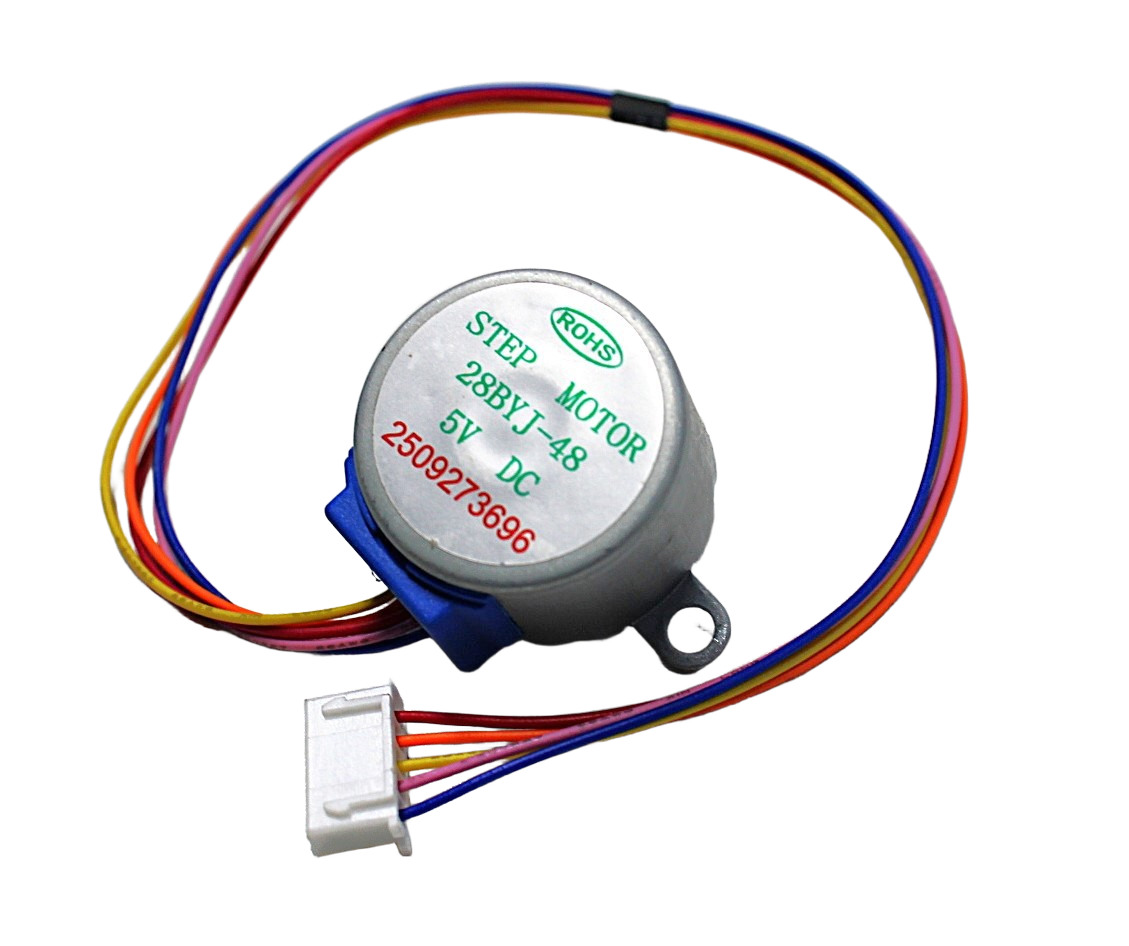
28BYJ-48 5V Stepper Motor
An affordable unipolar stepper perfect for learning, small automation projects, and low-torque applications. Pair it with a ULN2003 driver for easy microcontroller control.
Frequently Asked Questions
Can I drop a TMC2209 into a board designed for TMC2208?
In most cases, yes. The TMC2209 uses the same QFN-28 footprint and is pin-compatible with the TMC2208 on common breakout boards. You will need to update your firmware configuration to TMC2209 and optionally configure StallGuard if you want sensorless homing. Always verify the pinout on your specific board before swapping.
Does the TMC2209 work at 24 V?
Yes, 24 V is well within the TMC2209’s 4.75–29 V operating range. In fact, running at 24 V instead of 12 V generally improves high-speed performance because the higher voltage overcomes back-EMF more effectively at fast step rates.
Is StealthChop2 the same on both drivers?
The StealthChop2 algorithm is identical. Both produce the same near-silent operation at low speeds. The difference in audible noise between the two chips during normal printing is negligible.
Do I need a heatsink on TMC2209?
At currents above 1.2 A or in an enclosed hot printer enclosure (60 °C+), a small stick-on heatsink is strongly recommended. CoolStep helps, but the driver still generates heat under heavy load. Some breakout boards come with a heatsink pre-attached.
What is CoolStep and is it useful for 3D printing?
CoolStep dynamically reduces motor current when the motor is lightly loaded (moving through air) and increases it under load. For 3D printing, the load is fairly constant during a move, so CoolStep’s benefit is modest — maybe 10–15% energy reduction. For CNC routing where cuts vary widely in depth, CoolStep is much more valuable.
Which driver is better for a CoreXY printer?
The TMC2209 is the standard choice for CoreXY builds like the Voron series. Sensorless homing is especially valued on CoreXY because the X and Y carriages share a combined belt system, making physical endstop placement awkward. Klipper + TMC2209 with StallGuard4 is the dominant configuration on Voron 2.4 and Trident builds.
Browse Zbotic’s full range of stepper motors and drivers — from the NEMA17 workhorse to compact unipolar steppers for Arduino projects. Fast shipping across India, technical support included.






Add comment