
Choosing between sub-GHz RF and 2.4GHz for range and penetration is one of the most consequential decisions in any wireless IoT or RC project. Get it wrong and you end up with a sensor that drops out through concrete walls or an RC drone that loses link beyond 50 metres. This comparison covers every dimension Indian makers and engineers care about: physics of propagation, real-world range tests, data rate trade-offs, interference environment, regulatory limits in India, and which modules are worth buying for each band.
The Physics: Why Frequency Determines Range
Radio wave propagation is governed by the Friis transmission equation. The key insight is that lower frequencies lose less energy over distance in free space — a phenomenon described as free-space path loss (FSPL):
FSPL (dB) = 20·log₁₀(d) + 20·log₁₀(f) + 20·log₁₀(4π/c)
Where d = distance in metres, f = frequency in Hz, c = speed of light. The 20·log₁₀(f) term means every time you double the frequency, FSPL increases by 6 dB — equivalent to reducing transmit power by 75% or halving the reliable range.
Concrete numbers for equal conditions (0 dBm TX, -100 dBm receiver sensitivity, 0 dBi antennas):
| Frequency | Free-Space Range | FSPL at 1 km | Typical Module |
|---|---|---|---|
| 433 MHz | ~8 km | 85.1 dB | HC-12, Ra-01 |
| 868 MHz | ~4 km | 91.2 dB | LoRa Ra-01SC |
| 915 MHz | ~3.8 km | 91.7 dB | LoRa Ra-01SH |
| 2.4 GHz | ~1 km | 100.0 dB | nRF24L01, ESP32 |
These are free-space numbers. Real-world range is always shorter due to obstacles, multipath fading, and antenna non-idealities. But the ratios hold: 433 MHz achieves roughly 4–8x more range than 2.4 GHz under equivalent conditions.
Wall & Obstacle Penetration Compared
In Indian homes and offices — with reinforced concrete, brick, and iron grilles — obstacle penetration is often more critical than raw line-of-sight range. Here is how frequencies fare against common Indian building materials:
| Material | 433 MHz Attenuation | 868 MHz Attenuation | 2.4 GHz Attenuation |
|---|---|---|---|
| Hollow brick wall (20cm) | 2–4 dB | 3–6 dB | 6–12 dB |
| Reinforced concrete (20cm) | 10–15 dB | 15–20 dB | 20–30 dB |
| Wooden door | <1 dB | 1–2 dB | 3–5 dB |
| Metal sheet / iron grille | 20–40 dB | 25–50 dB | 30–60 dB |
| Glass window | 1–2 dB | 2–3 dB | 3–5 dB |
The takeaway for Indian deployments: a sensor inside a reinforced concrete basement apartment might work fine on 433 MHz but fail completely on 2.4 GHz. Sub-GHz is the clear winner for any deployment involving multiple concrete walls or underground locations.
Data Rate: Sub-GHz vs 2.4GHz
Here is where 2.4 GHz wins decisively. More bandwidth at higher frequencies enables much higher data rates:
- 433 MHz (HC-12 / LoRa Ra-01 at SF12): 250 bps – 5 kbps (LoRa with spreading factor), up to ~100 kbps (FSK/GFSK raw mode)
- 868/915 MHz LoRa: 250 bps (SF12, long range) to 37.5 kbps (SF7, shorter range)
- 2.4 GHz nRF24L01+: 250 kbps / 1 Mbps / 2 Mbps selectable
- 2.4 GHz Wi-Fi (ESP32): Up to 150 Mbps (802.11n)
- 2.4 GHz BLE 5.0: Up to 2 Mbps (long range coded PHY = 125 kbps)
For most IoT sensor applications (temperature, humidity, GPS coordinates), the data rate does not matter — you are sending tens to hundreds of bytes every few minutes. But for applications like real-time RC control, HD video streaming, or firmware OTA over the air, you need the data rate that only 2.4 GHz can provide.
Interference Landscape in Indian Urban Areas
The 2.4 GHz band in Indian cities — especially in housing societies and apartment blocks — is extremely congested:
- Wi-Fi (802.11b/g/n): channels 1, 6, 11 are fully occupied in most urban areas; dozens of overlapping APs in apartment buildings
- Bluetooth: constant low-level noise in all 80 channels
- Microwave ovens: wide-band noise at 2.45 GHz (overlaps Wi-Fi channels 7–11)
- ZigBee home automation: especially channel 15 (2.425 GHz) and channel 26 (2.480 GHz)
The result: a nRF24L01 module with no interference in the lab may show 50%+ packet loss in a typical Pune or Mumbai apartment at 100 metres. The SX1278/SX1276 LoRa modules in the 865 MHz Indian sub-GHz band see virtually zero interference from consumer devices (no Wi-Fi, Bluetooth, or microwave ovens operate here).
The sub-GHz advantage in interference tolerance is compounded by LoRa’s CSS (Chirp Spread Spectrum) modulation, which can decode signals 19.5 dB below the noise floor — effectively seeing through interference that would completely blind a 2.4 GHz module.
Indian Wireless Regulations (WPC Rules)
All wireless transmitters in India must comply with WPC (Wireless Planning and Coordination) rules. Here is what matters for makers:
- 433 MHz (430–440 MHz): Short-range devices allowed at max 1 mW (0 dBm) EIRP without license. This is very low — most 433 MHz RC remotes and SRD modules technically require WPC approval for higher powers. In practice, modules like HC-12 at 100 mW are widely sold but technically in a regulatory grey area for non-licensed use.
- 865–867 MHz: Indian RFID/IoT band, 1W ERP allowed for RFID. LoRa in this band (Ra-01SC) is commonly used by developers. WPC does not yet have a clear ISM ruling for LoRa specifically in this band; treat it as pilot/experimental until official WPC ISM notification.
- 2.4 GHz (2400–2483.5 MHz): Clearly delicensed ISM band in India. Modules up to 1W EIRP are allowed without license. This is the safest band for commercial products.
- 915 MHz: NOT allocated as ISM in India (it is used by GSM900). Avoid Ra-01SH for commercial deployment in India; use Ra-01SC (868 MHz) instead.
Head-to-Head: Popular Module Comparison
| Module | Freq | Range (LOS) | Data Rate | Best For |
|---|---|---|---|---|
| nRF24L01+ | 2.4 GHz | 100m (stock) / 1km (PA+LNA) | 250 kbps–2 Mbps | RC control, short-range high-speed |
| HC-12 (Si4463) | 433 MHz | 1.8 km | 1.2–100 kbps | UART transparent, simple sensor links |
| Ra-01 / SX1278 | 433 MHz | 3–10 km (SF12) | 250 bps–37.5 kbps | Long-range IoT, rural sensors |
| Ra-01SC / SX1262 | 868 MHz | 5–15 km (SF12) | 250 bps–62.5 kbps | LoRaWAN, smart city IoT |
| Ra-01SH / SX1262 | 915 MHz | 5–15 km (SF12) | 250 bps–62.5 kbps | LoRaWAN (US/AUS/NZ — NOT India) |
| CC2530 ZigBee | 2.4 GHz | 100m (mesh capable) | 250 kbps | Mesh home automation |
Which Band Should You Choose?
Use this decision guide for Indian projects:
Choose Sub-GHz (433/868 MHz) when:
- You need to penetrate multiple concrete walls or floors (apartment buildings, warehouses)
- Range requirement exceeds 200 metres in any real-world environment
- Battery life is critical and you are sending small, infrequent packets (sub-GHz radios use less power per bit at range)
- You are in a 2.4 GHz-congested environment (urban residential)
- Building a LoRaWAN node to connect to a public or private LoRa gateway
- Applications: smart meters, agricultural sensors, asset trackers, smart street lights
Choose 2.4 GHz when:
- Data rate requirements exceed 100 kbps (RC control input, sensor streaming)
- You need to coexist with Bluetooth or Wi-Fi infrastructure (BLE sensors, Wi-Fi provisioning)
- Range is under 100m and the environment is relatively open
- Legal certainty matters (2.4 GHz ISM is clearly delicensed in India)
- You need a mature ecosystem with phone connectivity (BLE GATT, Wi-Fi mobile apps)
- Applications: RC models, wearables, smart home switches, indoor positioning
Recommended Modules at Zbotic
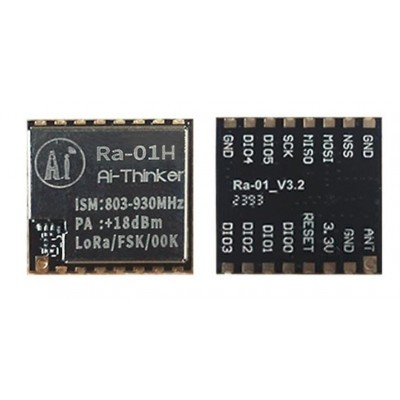
Ai Thinker LoRa Ra-01H Module (433 MHz)
High-power 433 MHz LoRa module based on SX1276 — delivers up to 10 km range with LoRa modulation. Ideal for rural IoT and long-range point-to-point links in India.
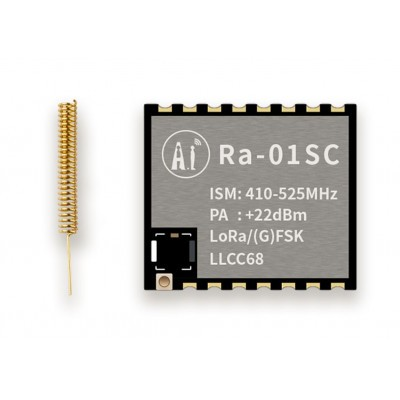
Ai Thinker LoRa Ra-01SC Module (868 MHz)
SX1262-based 868 MHz LoRa module — the recommended choice for Indian LoRaWAN deployments. Better sensitivity and lower power than the older SX1276. Up to 15 km range.
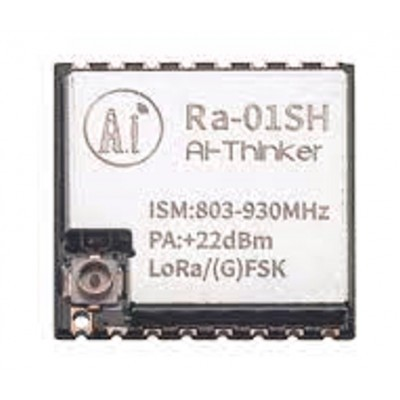
Ai Thinker LoRa Ra-01SH Module (915 MHz)
915 MHz SX1262 LoRa module — designed for US/Australia/New Zealand LoRaWAN networks. Useful for international projects and export devices; use Ra-01SC for India deployments.
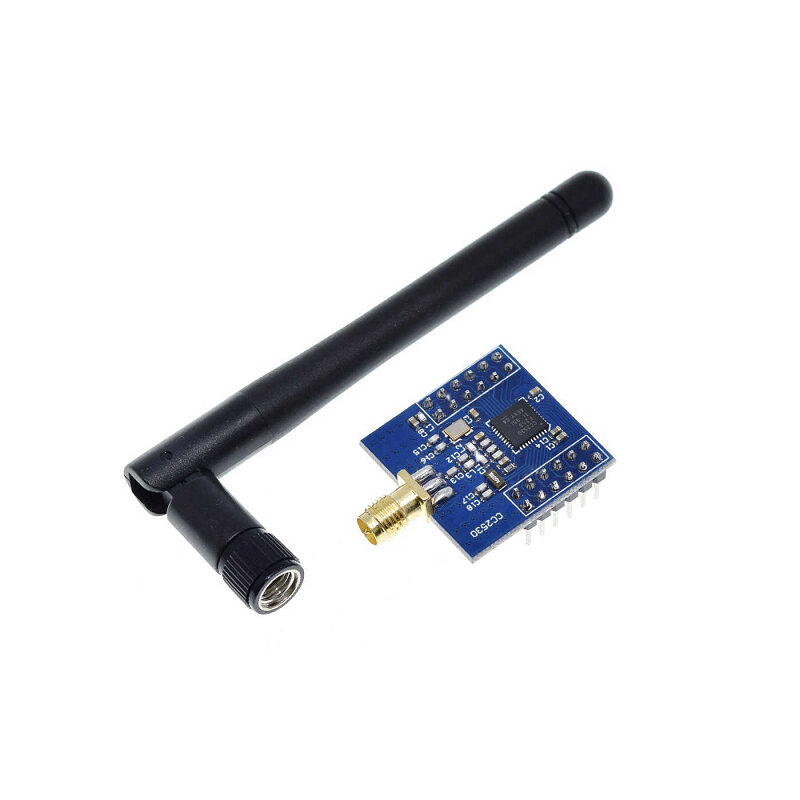
CC2530F256 Zigbee UART Wireless Core Development Board
2.4 GHz ZigBee module on the CC2530 — the industry workhorse for mesh home automation networks. UART transparent mode makes it easy to use with any MCU.
Frequently Asked Questions
Q: Can I use 915 MHz LoRa modules in India?
No. The 915 MHz band in India is allocated to GSM900 (Airtel, Jio, Vi use 890–915 MHz uplink and 935–960 MHz downlink). Transmitting on 915 MHz without a license is illegal and can cause interference to cellular networks. Always use the 865–867 MHz band (Ra-01SC) for LoRa in India. The 433 MHz band is also usable but at very low power levels (1 mW unlicensed).
Q: My nRF24L01 works at 1 metre but fails at 10 metres indoors. What should I do?
The standard nRF24L01 module has a notoriously unreliable 3.3V power rail requirement. First, add a 10µF electrolytic + 100nF ceramic capacitor between VCC and GND right at the module pins. Second, the chip antenna version has about 50m range — upgrade to the nRF24L01+PA+LNA version with the external antenna for 100–200m indoors. If you still have issues, switch channels (try channel 100 = 2.500 GHz, away from most Wi-Fi). For truly reliable indoor links beyond 50m, switch to sub-GHz (HC-12 or LoRa).
Q: What is the maximum legal transmit power for 865 MHz LoRa in India?
The 865–867 MHz band in India is primarily allocated for RFID at 1W ERP. For LoRa, WPC has not yet issued a specific ISM notification, but the band is widely used for LoRaWAN pilot projects. Most Indian LoRa deployments operate at 25–100 mW ERP to stay within a conservative interpretation. Check the latest WPC notifications (dot.gov.in/wpc) before commercial deployment. The Ra-01SC default power is 14 dBm (25 mW) — a safe starting point.
Q: Does a higher spreading factor (SF12) always give better range than SF7?
Yes, SF12 provides the longest range (best link budget: ~20 dB better than SF7), but at a significant cost: airtime increases by 32x (from 7ms to 230ms for a 20-byte packet). This means SF12 uses 32x more power per packet, and with duty cycle limits (1% in European/Indian sub-GHz bands), you can only send one packet every 23 seconds. For most IoT applications, SF9 or SF10 provides a good range/power/duty-cycle balance.
Q: Can LoRa and NB-IoT cover the same use cases? Which is better for India?
Both target low-power, low-data-rate IoT, but differ fundamentally. LoRa requires you to own and deploy gateways (unless using TTN community gateways). NB-IoT uses Jio/Airtel towers as gateways but requires NB-IoT-enabled SIM cards and a monthly data plan. LoRa is cheaper per device if you can place a gateway, NB-IoT is better for wide-area coverage without infrastructure investment. For agricultural IoT in rural India, LoRa with a gateway at each farm cluster is often more cost-effective. For city-wide deployments, NB-IoT with Jio is usually preferred.
Find the Right Wireless Module for Your Project
Browse our full range of sub-GHz and 2.4 GHz wireless modules at Zbotic. Fast shipping across India with expert support for makers and engineers.

Add comment