
Autonomous Underwater Vehicle (AUV): DIY Build Overview India
Building an autonomous underwater vehicle (AUV) DIY India project is one of the most challenging and rewarding endeavours a robotics enthusiast can undertake. Unlike ground robots or drones, an AUV must operate in a dense, corrosive, and pressure-variable medium — water — while maintaining full autonomy without a tether. From IIT research labs to coastal engineering colleges, Indian makers are increasingly exploring AUV development for competition, oceanographic mapping, and underwater inspection. This guide covers everything you need to know to get started: hull design, propulsion, electronics waterproofing, sensor selection, and control architecture.
What Is an AUV and How Does It Differ from an ROV?
An Autonomous Underwater Vehicle (AUV) is a self-propelled underwater robot that operates without a physical tether to the surface. It carries its own power source, computing hardware, and sensor suite, and executes pre-programmed missions or adaptive behaviours using onboard algorithms. An ROV (Remotely Operated Vehicle), by contrast, is tethered and piloted by a human operator in real time.
The key distinction is autonomy. An AUV must handle buoyancy control, heading stabilisation, obstacle avoidance, and waypoint navigation all on its own. This makes it far more complex to build but far more capable for surveys over large underwater areas. Indian makers often start with an ROV before upgrading to AUV-level autonomy — a sensible progression.
Popular AUV applications explored in India include:
- Coral reef mapping for environmental research
- Underwater pipeline and dam inspection
- AUVSI and NIO student competition entries
- Harbour security and mine-detection prototypes
Hull Design and Waterproofing for DIY AUV
The hull is the most critical mechanical component. It must withstand hydrostatic pressure at depth, maintain neutral buoyancy, and house all electronics in a watertight compartment.
Torpedo vs. Open-Frame Design
Most student AUVs use a torpedo-shaped cylindrical hull made from PVC pipe (200–300 mm diameter) or custom 3D-printed ABS sections. The cylindrical form allows easy sealing with O-ring end caps. Open-frame designs (similar to BlueROV2) are easier to build but create more drag.
Sealing Strategy
End caps sealed with double O-rings and silicone grease are the DIY standard. Use Parker O-rings in Buna-N (NBR) material — available from local industrial suppliers in Mumbai, Chennai, and Bangalore. Pressure test at 2× your target depth before the first water trial. A 5-metre depth requires only ~0.5 bar, manageable for PVC pipe joints.
3D Printing for AUV Components
PETG is preferred over PLA for underwater use due to its moisture resistance. Use 4–6 perimeters and 40% infill for structural watertight prints. Coat with XTC-3D epoxy for a smooth, water-shedding finish. Indian FDM printers using 1.75 mm filament handle this well.
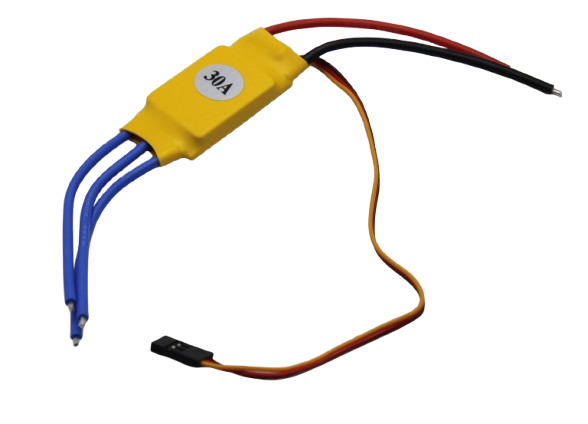
30A BLDC ESC Brushless Electronic Speed Controller
Drive your AUV thrusters precisely with this 30A brushless ESC. Waterproof-coat it with conformal spray for submersion. Handles the high-torque demands of underwater propellers.
Propulsion: Thrusters and Servo Fins
AUV propulsion requires waterproof motors operating in continuous submersion. There are two main approaches for Indian DIY builders:
Brushless Motor Thrusters
Standard hobby brushless motors (2204–2806 size) can be converted to underwater thrusters using waterproof grease-packed bearings and potting the stator windings with epoxy. The propeller must be matched to the water medium — typical AUV props are 2–3 blade, 60–80 mm diameter at low pitch for efficient underwater thrust. Wire exits through the end of the motor shaft using a custom rotating seal or flexible waterproof cable gland.
Many Indian AUV teams use the BlueRobotics T100/T200 thruster design as a reference and machine local equivalents using 2204 gimbal motors.
Servo-Actuated Fin Steering
Torpedo-style AUVs often use 4 control fins (X-configuration) at the rear, each driven by a waterproofed servo. The SG90 servo placed inside the hull actuates external fins via a sealed shaft. This allows pitch, yaw, and roll control independent of thruster vectoring.
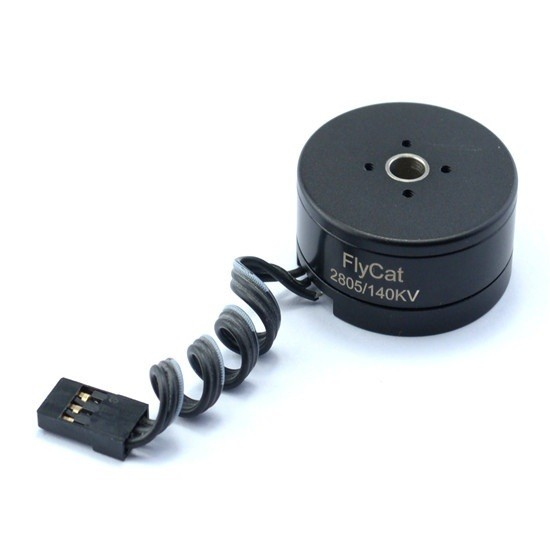
2805 140KV Gimbal Brushless Motor
Low-KV brushless motor ideal for underwater thruster conversion. The 2805 size provides excellent torque at low RPM, perfect for water propulsion where high RPM is counterproductive.
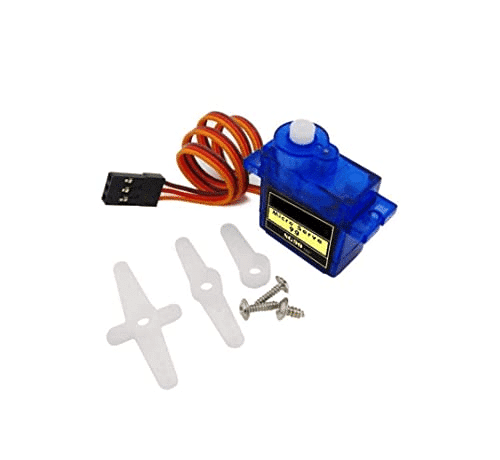
TowerPro SG90 180 Degree Rotation Servo Motor
The classic SG90 servo for fin actuation inside the hull. Sealed shaft passes through the hull wall using a rubber O-ring gland. Lightweight at 9g, ideal for small AUV designs.
Electronics Stack and Waterproof Enclosures
All electronics must live inside a waterproof tube (the “dry section”). The recommended stack for a DIY AUV in India is:
- Flight Controller: Pixhawk 4 Mini or ArduPilot-compatible board running ArduSub firmware
- Companion Computer: Raspberry Pi 4 (4GB) for high-level mission planning, logging, and camera processing
- IMU: Onboard MPU-6050 or ICM-42688 for attitude estimation
- Depth Sensor: MS5837-30BA pressure sensor (0–30 bar) for depth measurement and buoyancy loop
- ESCs: 30A BLHeli_S ESCs, conformal-coated, housed in dry section with motor cables exiting through sealed penetrators
Cable penetrators are critical. Use Blue Robotics-style M10 penetrators or DIY equivalents using M10 nylon glands filled with epoxy. Each motor cable, servo lead, and sensor wire needs its own penetrator, and every single one must be leak-tested before a water run.
Sensors for Navigation and Perception
AUV navigation underwater is fundamentally different from GPS-dependent ground robots. GPS signals do not penetrate water beyond a few centimetres. Indian DIY AUV projects typically use:
Inertial Navigation System (INS)
A 9-DOF IMU (accelerometer + gyro + magnetometer) provides attitude and heading. Dead-reckoning position estimation is possible but drifts over time. Compensate with periodic surfacing for GPS fix or use DVL (Doppler Velocity Log) if budget allows.
Acoustic Positioning
For competition use, USBL (Ultra-Short Baseline) acoustic modems or Water Linked UGPS provide real-time underwater positioning. These are expensive (₹50,000+) but essential for precise missions. Indian teams often rent these or build simplified acoustic ping systems for competition pools.
Vision System
Underwater cameras (acrylic dome port housing a Raspberry Pi camera) are used for gate detection, buoy targeting, and path following in competition tasks. OpenCV on the Pi handles colour-based detection, which works well in pool environments.
Sonar
Ping2 sonar (BlueRobotics) or DIY ultrasonic sensors adapted for water give obstacle avoidance within 30m. For shallow pool AUVs, a simple downward-pointing ultrasonic sensor measures bottom clearance.
Control Software and Autonomy Stack
The most capable open-source AUV software stack available to Indian makers is ArduSub (part of the ArduPilot ecosystem) running on a Pixhawk-compatible flight controller. ArduSub handles:
- Attitude stabilisation (PID-based roll/pitch/yaw hold)
- Depth hold mode using the pressure sensor
- Thruster mixing for various frame configurations (vectored, simple, etc.)
- MAVLink telemetry to the companion computer
On the Raspberry Pi companion computer, the pymavlink library allows Python mission scripts to command the ArduSub autopilot via MAVLink messages. A typical autonomous mission script for pool competition looks like:
- Arm and submerge to target depth (depth hold mode)
- Drive forward by dead-reckoning time
- Use camera vision to centre on a gate
- Pass through gate and execute next task
- Surface, get GPS fix, re-home
For ROS-based teams (common in IIT and NIT labs), the mavros package bridges MAVLink to ROS topics, enabling integration with navigation2, move_base, or custom autonomy nodes.
Power Systems and Battery Selection India
AUVs are power-hungry. Typical DIY designs run 2–4 thrusters drawing 5–15A each, plus computers and sensors. A 4S LiPo (14.8V) 10,000–15,000 mAh pack gives 30–60 minutes runtime depending on thruster duty cycle. In India, TATTU and Gens Ace 4S packs are popular with AUV teams.
Place the battery in a waterproof battery tube (separate from the electronics tube) or use a sealed lipo bag inside the main hull. The battery voltage determines your buoyancy ballast: calculate displaced water weight and subtract your total vehicle weight. AUVs target slightly positive buoyancy so they surface safely if power fails.
Ballasting is done by adding lead fishing weights inside the hull — cheap and infinitely adjustable. Target 10–50 grams of positive buoyancy before adding any ballast, then fine-tune.
Realistic Budget and Sourcing in India
A functional DIY AUV for competition or hobby use in India typically costs ₹25,000–₹80,000 depending on sensor choices:
| Component | Budget Option | Cost (INR) |
|---|---|---|
| Hull (PVC pipe + end caps) | Local hardware store | ₹1,500–3,000 |
| Thrusters (3–4 motors + ESCs) | 2204 brushless + 30A ESC | ₹4,000–8,000 |
| Flight Controller | Pixhawk Mini clone | ₹3,000–6,000 |
| Companion Computer | Raspberry Pi 4 | ₹4,000–6,000 |
| Battery (4S 10Ah LiPo) | TATTU / local brand | ₹4,000–7,000 |
| Sensors (depth, IMU, camera) | MS5837 + Pi Camera | ₹2,500–5,000 |
| Miscellaneous (seals, wires, ballast) | — | ₹3,000–5,000 |
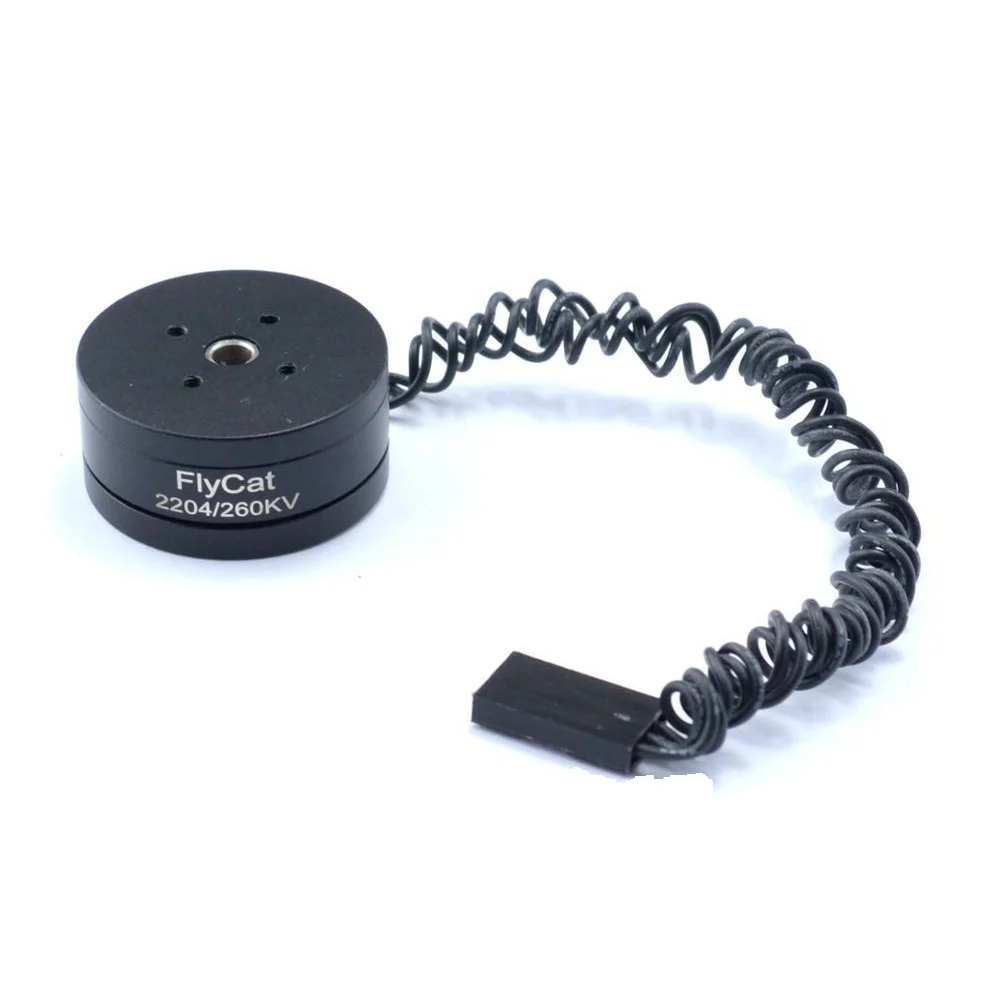
2204 260KV Brushless Gimbal Motor
Compact 2204 brushless motor with 30cm cable — excellent for DIY AUV thruster conversion. Low KV keeps RPM manageable in water; epoxy-pot the windings for waterproofing.
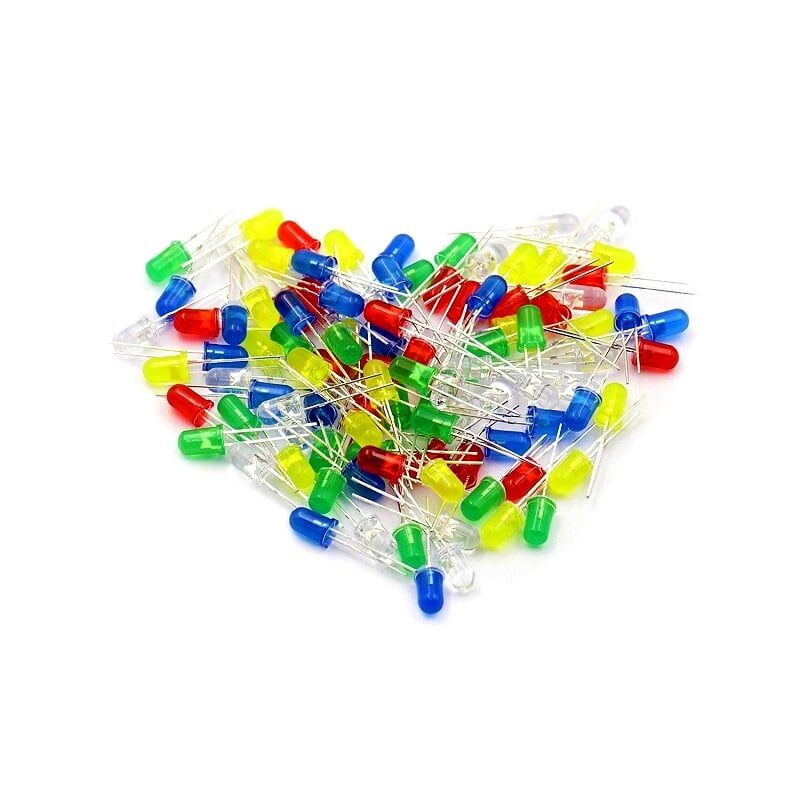
100pcs 5mm Light Assorted Kit DIY LEDs Set
Use these LEDs inside your AUV hull as status indicators — battery level, depth hold active, mission state. Waterproof your indicator windows with clear epoxy.
Frequently Asked Questions
Can I build a functional AUV for under ₹30,000 in India?
Yes, a basic AUV capable of depth hold and simple waypoint following is buildable for ₹25,000–35,000 using PVC hull, converted brushless thrusters, a Pixhawk clone, and a Raspberry Pi 4. Acoustic positioning adds significant cost; pool-based competition AUVs often skip this in favour of dead-reckoning navigation.
What is the maximum depth a DIY PVC AUV can handle?
A properly sealed 200mm Schedule 40 PVC pipe with O-ring end caps can withstand 10–20 metres of depth (1–2 bar). Most student AUV competitions are held in swimming pools (2–5m depth), so PVC is perfectly adequate. For deeper operations, switch to aluminium cylinders or thick-walled acrylic tubes.
Is ArduSub suitable for a first AUV project?
ArduSub is the most accessible open-source AUV firmware available. It handles stabilisation and depth hold out of the box, has excellent documentation, and supports Pixhawk-family hardware widely available in India. The companion computer (Raspberry Pi) + pymavlink approach lets you write simple mission scripts in Python without needing ROS.
Where can I source waterproofing materials for AUV electronics in India?
Conformal coating spray (MG Chemicals 422B or Electrolube SCC3) is available from electronics distributors in major cities. Two-part epoxy (Araldite Standard or MG Chemicals EP21) for potting motor windings is available at hardware stores nationwide. O-rings are best sourced from industrial rubber suppliers or via Amazon India in Parker-equivalent grades.
Which Indian competitions feature AUV categories?
AUVSI RoboSub (Singapore/international) is the premier AUV student competition and several Indian teams (IIT Bombay, IIT Kharagpur, BITS Pilani) participate. Domestically, NIO Goa has hosted underwater robotics challenges. IIT Madras and NIT Trichy have internal robotic competitions with ROV/AUV categories.
Ready to Build Your AUV?
Zbotic stocks all the motors, ESCs, servos, and electronic components you need for your autonomous underwater vehicle project. From brushless gimbal motors suited for thruster conversion to servo brackets and LED indicators, everything is available for fast delivery across India.






Add comment