
SIM800L vs SIM7600: GSM vs 4G LTE Module Comparison India
Choosing between the SIM800L and SIM7600 is one of the most common dilemmas Indian makers face when building IoT and GSM-based projects. In this SIM800L vs SIM7600 comparison India guide, we break down every key difference — from data speeds and power consumption to price and availability — so you can pick the right module for your next Arduino or Raspberry Pi project without wasting money on the wrong hardware.
Module Overview: SIM800L and SIM7600
The SIM800L is a compact, ultra-low-cost GSM/GPRS module from SIMCom that has been a staple in the Indian maker community for nearly a decade. It operates on 2G networks and supports voice calls, SMS, and GPRS data — more than enough for basic IoT telemetry and remote control projects. You can find it for as little as ₹150–₹250 at most online electronics stores.
The SIM7600 (and its variants like SIM7600E for Europe/Asia, SIM7600G for global) is SIMCom’s flagship 4G LTE Cat-1 module. It supports LTE, WCDMA (3G), and GSM fallback, giving you multi-band flexibility. With real 4G data speeds and voice support over LTE, it’s aimed at developers building commercial-grade IoT solutions — dashcams, fleet trackers, industrial remote monitoring, and similar applications.
Both modules communicate via UART using the familiar Hayes AT command set, making firmware migration between them relatively straightforward for experienced developers.
Technical Specifications Compared
| Feature | SIM800L | SIM7600E/G |
|---|---|---|
| Network Generation | 2G GSM/GPRS | 4G LTE Cat-1 / 3G / 2G |
| Max Download Speed | 85.6 kbps (GPRS) | 10 Mbps (LTE) |
| Max Upload Speed | 42.8 kbps | 5 Mbps (LTE) |
| Operating Voltage | 3.4V – 4.4V | 3.3V – 4.3V |
| Current (Transmit Peak) | Up to 2A | Up to 3A |
| Sleep Current | ~1 mA | ~2.5 mA |
| Voice Calls | Yes (2G) | Yes (VoLTE / 2G fallback) |
| SMS | Yes | Yes |
| GPS | No (separate module needed) | Built-in GNSS (variant-dependent) |
| SIM Type | Micro SIM | Nano SIM |
| Interface | UART, I2C, SPI | UART, USB, PCM, I2C |
| Approx. India Price | ₹150 – ₹300 | ₹1,500 – ₹3,500 |
Network Compatibility in India
This is arguably the most critical factor for Indian hobbyists and engineers in 2024. Here’s the hard truth: 2G networks are being phased out rapidly in India. Reliance Jio never had a 2G network to begin with, and Airtel shut down most of its 2G infrastructure in metro areas. BSNL and Vodafone-Idea still maintain 2G coverage in rural India, but for how long is uncertain.
The SIM800L, being a 2G-only module, is becoming increasingly unreliable in urban areas. If you’re deploying a project in tier-1 or tier-2 Indian cities, you’ll frequently encounter no-signal or dropped connection issues that have nothing to do with your code. For prototyping and rural deployments where BSNL/Vi 2G coverage is strong, the SIM800L still works. But for production deployments in 2024 and beyond, it’s a gamble.
The SIM7600E (the Asia/Europe variant) supports the following LTE bands relevant to India:
- LTE FDD: B1 (2100 MHz), B3 (1800 MHz), B5 (850 MHz), B8 (900 MHz)
- LTE TDD: B40 (2300 MHz), B41 (2500 MHz) — critical for Jio and Airtel
- WCDMA: B1, B5, B8
- GSM: 850/900/1800/1900 MHz
This multi-band support means the SIM7600E works with all major Indian operators: Jio, Airtel, and Vi.
Power Consumption and Supply Requirements
Power supply is where many beginners stumble with both modules — but for different reasons.
SIM800L power challenges: Despite being a simple 2G module, the SIM800L draws burst currents of up to 2A during GSM transmission. This is notoriously problematic because most Arduino boards (including Uno and Nano) cannot supply this current through their 5V or 3.3V pins. The fix is always a dedicated LiPo battery or a high-current-capable 4V supply (Li-ion 18650 cells work perfectly) with 100–470µF capacitors across VCC and GND. Never power the SIM800L from an Arduino 3.3V pin directly.
SIM7600 power challenges: The SIM7600 is even more power-hungry — up to 3A peak. It typically operates at 3.3V–4.3V and almost always requires a dedicated power supply or at minimum a LiPo with a proper regulator. Breakout boards for the SIM7600 often include onboard regulators, but verify the current rating before powering from USB.
In sleep mode, the SIM800L wins hands-down at ~1mA versus the SIM7600’s ~2.5mA. For battery-operated IoT sensors that sleep most of the time and wake for occasional data transmission, the SIM800L’s sleep efficiency is a genuine advantage — where 2G coverage exists.
Which Module for Which Use Case?
Choose SIM800L if:
- You need a simple SMS alert system (temperature alerts, door open notifications)
- Budget is very tight (student projects, hackathons)
- Your deployment area has confirmed, reliable 2G coverage (check with a 2G-only phone)
- Data transfer needs are minimal (GPRS for sending a few bytes of sensor data)
- You’re learning GSM/AT-command programming for the first time
- Low sleep current is critical for solar/battery devices
Choose SIM7600 if:
- You’re building a commercial or semi-commercial IoT product
- Your deployment area is urban or semi-urban India (Jio/Airtel territory)
- You need to stream video, upload images, or transfer large data payloads
- You want integrated GNSS/GPS in a single module
- Future-proofing matters — 4G will outlast 2G by decades
- You need VoLTE quality calls
Price and Availability in India
The SIM800L module (bare chip or breakout board) is available from ₹150 to ₹300 on Indian e-commerce platforms and local component shops. The SIM800L EVB (evaluation board with USB, power regulation, and antenna) costs ₹400–₹600. The Adafruit FONA 808 — which combines GSM with GPS — is a premium option at around ₹2,500–₹3,000 but eliminates the need for a separate GPS module in tracking projects.
The SIM7600 breakout boards typically start at ₹1,500 and go up to ₹3,500+ depending on whether they include GNSS, USB support, and onboard power regulation. For prototyping, the SIM7600 is definitely a bigger investment, but for commercial projects the superior connectivity makes it worth every rupee.
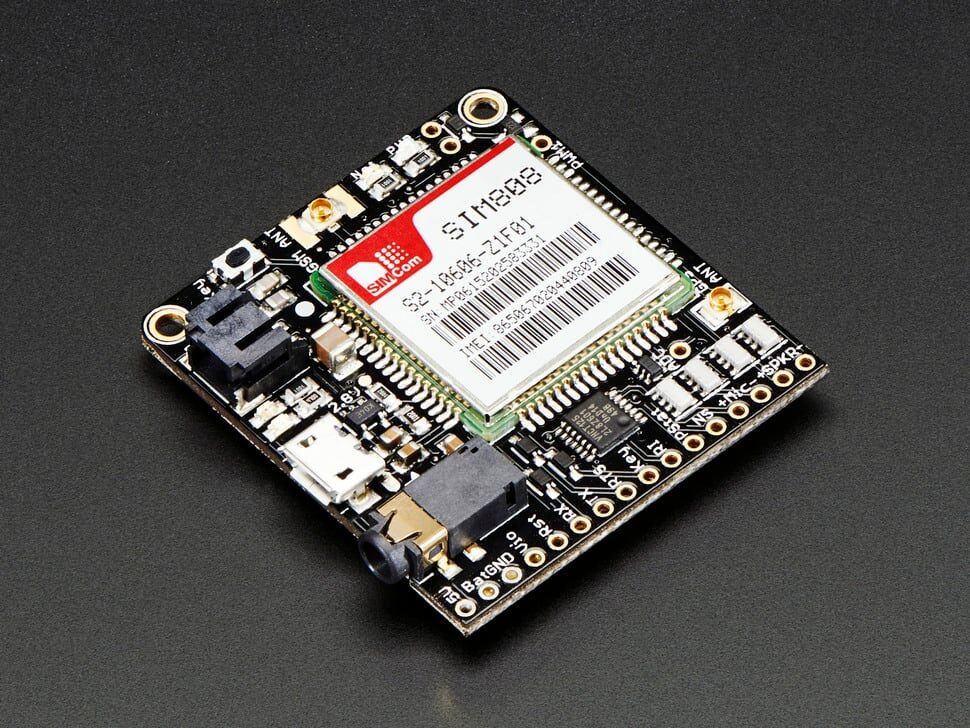
Adafruit FONA 808 – Mini Cellular GSM + GPS Breakout
All-in-one GSM + GPS breakout ideal for vehicle trackers and asset monitoring. Works with Jio, Airtel, and Vi SIMs. Perfect for projects that need both cellular and location data without a separate GPS module.
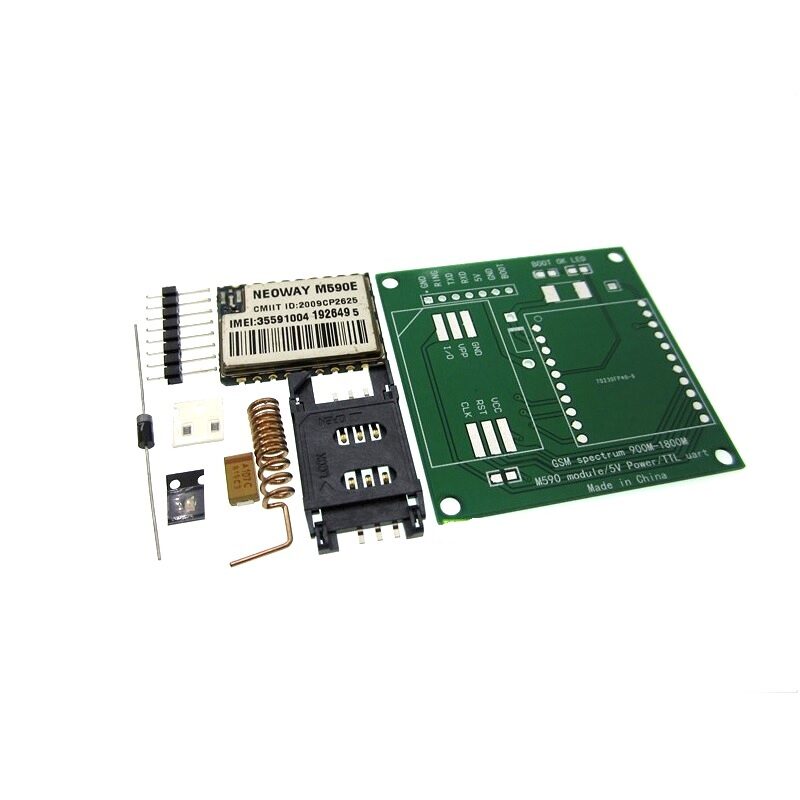
DIY GSM/GPRS M590E Module Kit
Budget-friendly GSM/GPRS module kit for SMS-based projects and basic IoT telemetry. Great starting point for learning AT commands and cellular communication on Arduino.
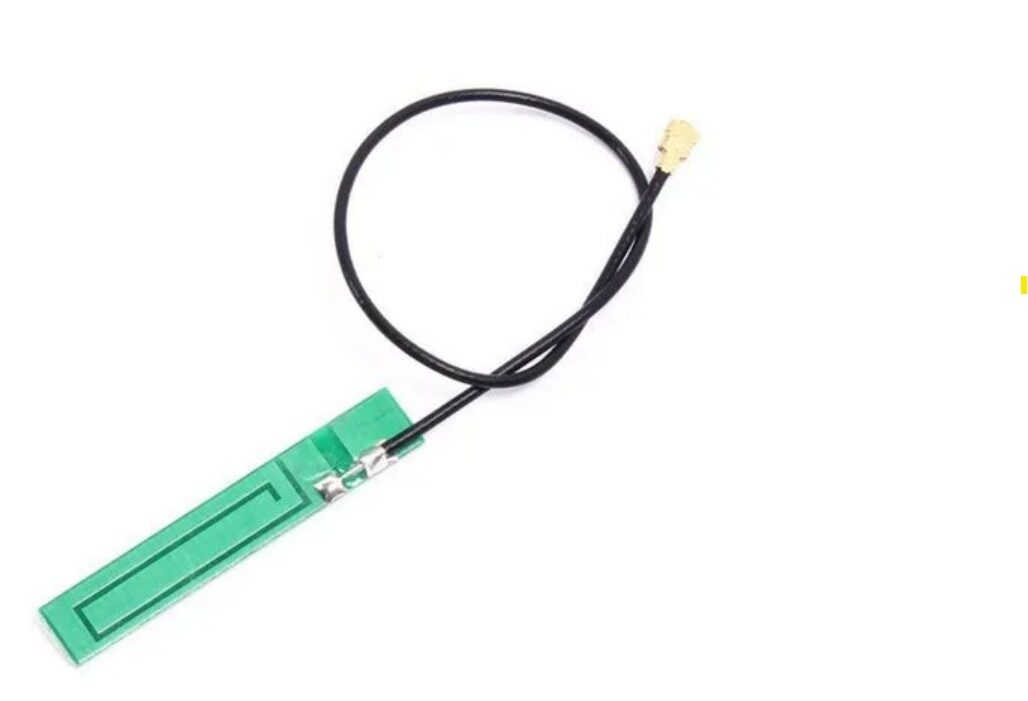
15cm 3DBI GSM/GPRS/3G PCB Antenna with IPEX Connector
High-gain 3dBi antenna compatible with SIM800L, SIM7600, and other GSM/3G modules. Improves signal strength significantly in areas with weak coverage.
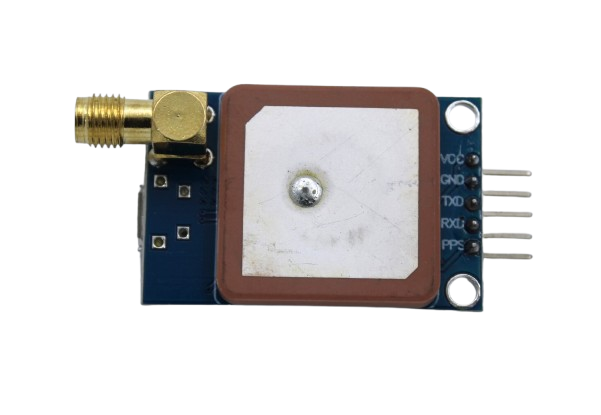
GPS NEO-6M Satellite Positioning Module for Arduino
Pair this GPS module with SIM800L for a complete vehicle tracker or asset monitoring solution. Fast satellite lock, UART interface, compatible with Arduino and STM32.
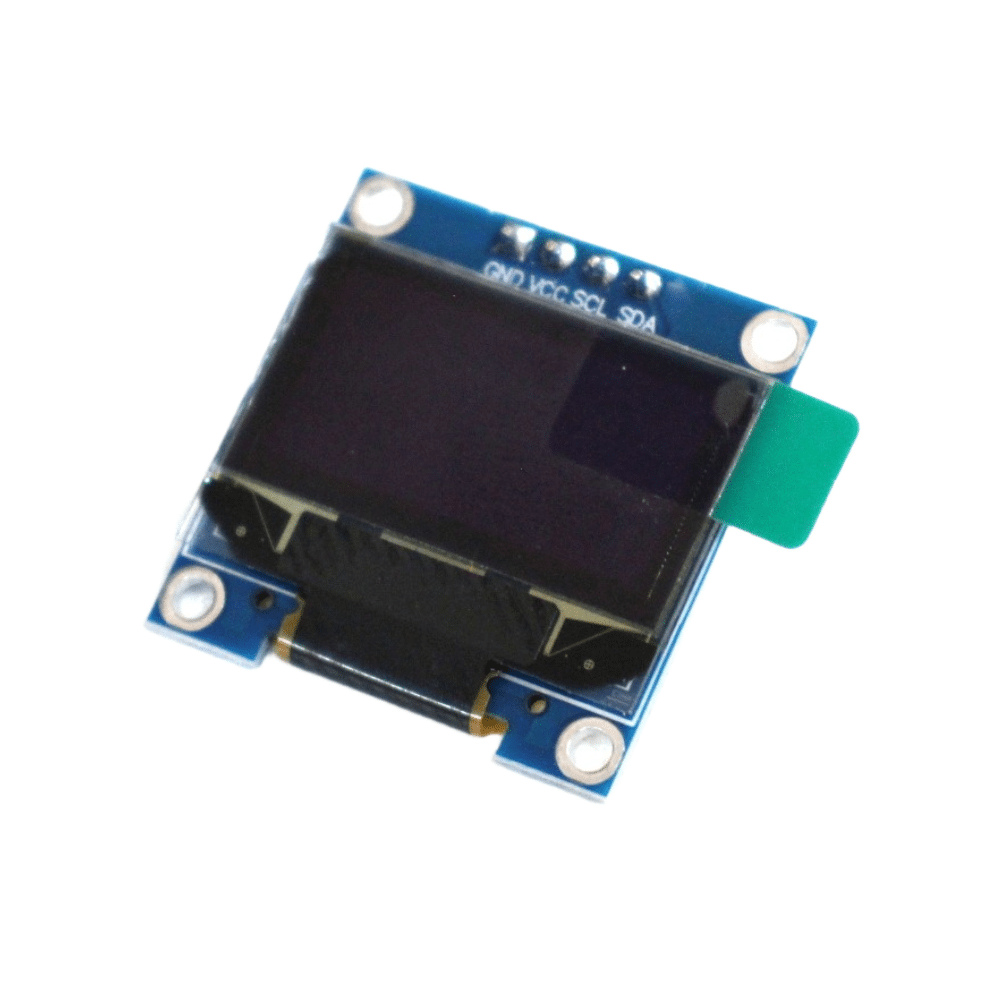
0.96 Inch I2C OLED LCD Module SSD1306
Display network status, signal strength (RSSI), and data in real-time on this compact OLED screen. Perfect companion for GSM/4G projects needing a status display.
Getting Started: AT Commands and Libraries
Both modules use AT commands for communication. Here are the essential ones you’ll use with either module:
AT— Test communication (response: OK)AT+CPIN?— Check SIM card statusAT+CSQ— Signal quality (0–31, higher is better)AT+CREG?— Network registration statusAT+CMGF=1— Set SMS text modeAT+CMGS="+919876543210"— Send SMSAT+SAPBR— Configure GPRS bearer (SIM800L)AT+CGDCONT— Set APN for data (SIM7600)
For Arduino, the popular TinyGSM library supports both the SIM800L and SIM7600, making it easy to switch between modules with minimal code changes. The SIM7600 AT Command Manual is available for download from SIMCom’s official website and is essential reading for advanced configurations.
Common APN settings for Indian operators:
- Jio:
jionet - Airtel:
airtelgprs.com - Vi (Vodafone-Idea):
portalnmms - BSNL:
bsnlnet
Frequently Asked Questions
Does SIM800L work with Jio SIM in India?
No, SIM800L does NOT work with Jio SIM. Jio is a VoLTE-only network with no 2G infrastructure. The SIM800L is a 2G-only module. For Jio compatibility, you need a 4G LTE module like the SIM7600E.
Can I use the SIM7600 with a Jio or Airtel SIM?
Yes, the SIM7600E supports LTE bands used by Jio (B40/B41) and Airtel (B1/B3/B5/B8/B40). Use a nano SIM adapter if needed. Standard APN: Jio uses “jionet”, Airtel uses “airtelgprs.com”.
Why does my SIM800L keep resetting or not registering to the network?
This is almost always a power supply issue. The SIM800L needs up to 2A during transmission bursts. Power it from a 3.7V LiPo battery with a 470µF capacitor across VCC and GND. Never power it from an Arduino 3.3V pin.
Which is better for a vehicle tracker in India — SIM800L or SIM7600?
For vehicle tracking deployed across India (including cities), the SIM7600 is the better choice due to 4G LTE support with Jio and Airtel. Pair it with an NEO-6M GPS module for a complete tracker. If your vehicle only operates in rural BSNL/Vi areas, the SIM800L + NEO-6M combination at lower cost can work.
Is it easy to migrate code from SIM800L to SIM7600?
Yes, if you use the TinyGSM Arduino library, switching from SIM800L to SIM7600 requires changing just one #define at the top of your code. Most AT commands are compatible, though SIM7600 has additional LTE-specific commands. The main hardware change is the power supply requirement.
Ready to Start Your GSM or 4G LTE Project?
Whether you’re building an SMS alert system with SIM800L or a full 4G IoT device with SIM7600, Zbotic has all the modules, antennas, GPS modules, and accessories you need — shipped fast across India.





Add comment