
When planning a battery-powered DIY project, two rechargeable chemistry types come up again and again: NiMH (Nickel-Metal Hydride) and Li-Ion (Lithium-Ion). Both are rechargeable, both are widely available in India, and both have genuine strengths. This NiMH vs Li-Ion battery comparison breaks down the key differences across voltage, energy density, safety, cost, and suitability for Indian hobby and maker applications, so you can make the right choice the first time.
Chemistry Basics: How They Work
NiMH batteries use a hydrogen-absorbing alloy as the negative electrode and nickel oxyhydroxide as the positive electrode. They evolved from older NiCd (Nickel-Cadmium) batteries, replacing toxic cadmium with the more environmentally friendly metal hydride. The familiar AA and AAA form factor rechargeable batteries in most Indian households are NiMH.
Li-Ion batteries use a lithium compound as the positive electrode (cathode) and graphite as the negative electrode (anode). Lithium ions shuttle between the electrodes during charge and discharge through a liquid electrolyte. The 18650 cylindrical cell (used in laptop batteries, power banks, and flashlights) is the most common Li-Ion format for hobbyists.
Both chemistries are mature, proven technologies. The differences lie in their electrical and physical characteristics, which determine which is right for your specific application.
Voltage Comparison
This is one of the most important practical differences for electronics projects:
| Characteristic | NiMH | Li-Ion |
|---|---|---|
| Nominal cell voltage | 1.2V | 3.6V – 3.7V |
| Fully charged voltage | 1.4V – 1.45V | 4.2V |
| Discharged cutoff voltage | 1.0V | 3.0V – 3.3V |
| Voltage flatness during discharge | Gradual decline | Very flat (drops sharply at end) |
For Arduino and other 5V microcontroller projects, NiMH’s 1.2V per cell means you need at least 4 cells (4.8V) to power an Arduino via VIN, and 5 cells (6V) for more headroom. Li-Ion’s 3.7V per cell gives you 5V after a boost converter from a single cell, or 7.4V from two cells — very convenient.
The flat Li-Ion discharge curve is also a significant advantage: your circuit operates at nearly the same voltage from 100% to 20% battery level. NiMH voltage dips noticeably as the battery depletes, potentially causing resets or erratic behaviour in voltage-sensitive circuits.
Energy Density and Weight
Li-Ion wins decisively here:
- NiMH: ~60–120 Wh/kg, ~150–300 Wh/L
- Li-Ion: ~150–265 Wh/kg, ~250–730 Wh/L
In practical terms, a standard AA NiMH cell (1.2V, 2500mAh = 3Wh) weighs about 28–31 grams. A 18650 Li-Ion cell (3.7V, 2500mAh = 9.25Wh) weighs about 45 grams — roughly 1.5× heavier but delivers 3× the energy. For any weight-sensitive project like a drone, robot, or portable device, Li-Ion is the clear winner.
The one exception: if your circuit already uses AA or AAA slots (standardised form factor products, camera grips, remote controls), NiMH slips right in without any modification. No BMS, no charger circuitry, no boost converter required.
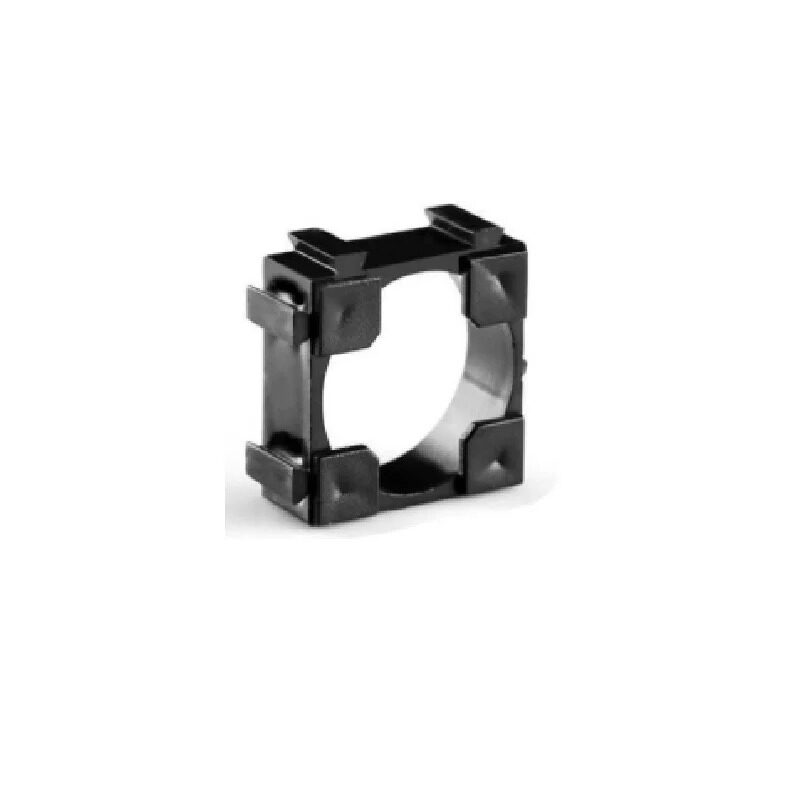
1×18650 Battery Holder with 18.4MM Bore – Pack of 4
Secure, reliable holders for 18650 Li-Ion cells with solder-tab contacts. Essential for building DIY battery packs in your hobby and maker projects.
Self-Discharge Rate
Self-discharge is how quickly a battery loses charge while sitting unused — a critical factor for projects that are stored between uses.
- Standard NiMH: 20–30% per month. A fully charged AA NiMH left for a month will be noticeably depleted.
- Low-self-discharge NiMH (LSD-NiMH): 1–3% per month. Sanyo Eneloop and similar LSD cells retain 70% charge after a year — nearly matching Li-Ion.
- Li-Ion: 1–3% per month. Excellent shelf life, though the exact rate depends on state of charge during storage.
For Indian hobbyists who build projects for occasional use (festival lighting, seasonal RC operation), Li-Ion and LSD-NiMH (Eneloop-type) are equally good. Standard NiMH is frustrating for infrequent-use applications — you will almost always need to recharge before use.
Safety and Handling
NiMH is the safer chemistry. Overcharging, over-discharging, and even short-circuiting a NiMH cell is less dangerous than with Li-Ion. The worst outcome with a NiMH abuse scenario is heat, leakage of a mild alkaline electrolyte, and battery damage — not a fire.
Li-Ion requires more careful handling:
- Overcharging above 4.2V causes electrolyte decomposition, swelling, and can lead to thermal runaway (fire)
- Over-discharging below 2.5V causes internal short circuits and permanently reduces capacity
- Physical puncture or crush can trigger thermal runaway
- Charging requires a CC/CV charger (like the TP4056 for single cells) or a proper balance charger for packs
This does not mean Li-Ion is unsafe for hobbyists — millions of people use 18650 cells safely every day. But it does mean you should use appropriate protection circuits (BMS), quality chargers, and handle the cells with care. NiMH is more forgiving for beginners and for school-level projects where proper supervision is a concern.

ISDT A4 Air Smart Battery Charger – NiMH, NiCd, Li-Ion, LiFePO4 with Bluetooth
The ideal charger for mixed chemistry workshops. Handles NiMH AA/AAA cells, 18650 Li-Ion cells, and LiFePO4 in one unit. Bluetooth connectivity for monitoring via smartphone.
Cost in India
Both chemistries are available in India, but their market pricing reflects different use cases:
- NiMH AA (2000–2500mAh): ₹100–200 per cell for branded (GP, Duracell, Panasonic Eneloop). Widely available at electronics shops and online.
- 18650 Li-Ion (2000–3000mAh): ₹150–400 per genuine cell. Beware of grey-market cells with inflated capacity claims. Buy from reputable Indian suppliers like Zbotic.
On a per-Wh basis, Li-Ion is actually cheaper: a ₹250 genuine 18650 at 2600mAh delivers ~9.6Wh, while a ₹150 AA NiMH at 2400mAh delivers only ~2.9Wh. Li-Ion delivers 3× more energy for 1.7× the price — significantly better value.
However, NiMH wins on system cost when you factor in the charger. A basic AA NiMH charger costs ₹300–600. A proper Li-Ion charger with BMS and protection starts at around ₹500–1500. For a simple torch or RC car that accepts standard AA cells, NiMH is the more economical system choice.
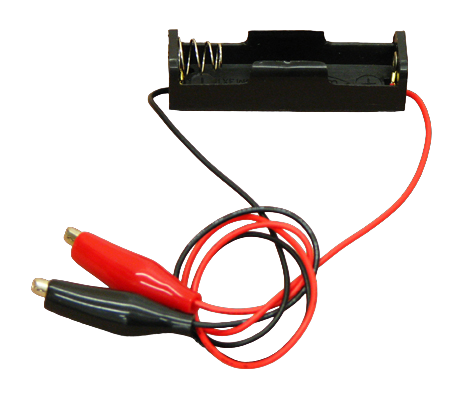
1×AA Battery Holder Box with Alligator Clips
Quick-connect AA battery holder with alligator clips for prototyping and testing NiMH cells in your DIY circuits. No soldering required.
Charging Requirements
NiMH charging is simpler in concept but trickier in practice. Standard NiMH cells are charged at C/10 (10% of capacity current) for 14–16 hours. Fast chargers detect the slight voltage drop (delta-peak) at full charge to terminate. Overcharging at low rates (C/10) is less harmful to NiMH than to Li-Ion. Many cheap AA chargers in India simply trickle charge indefinitely — this is not ideal but NiMH tolerates it better than Li-Ion would.
Li-Ion charging requires a strict CC/CV (constant current / constant voltage) profile. For single cells, the TP4056 handles this perfectly. For multi-cell packs, you need a balance charger that charges each cell individually to exactly 4.2V. Over-voltage, even briefly, damages Li-Ion cells permanently and creates safety hazards.
Cycle life comparison:
- NiMH: 500–1000 cycles to 80% capacity (varies widely by brand and charging quality)
- Li-Ion: 300–500 cycles to 80% capacity (quality cells last 800+ cycles)
Despite fewer rated cycles, Li-Ion’s higher energy per cycle often means it delivers more total energy over its lifespan due to the higher capacity per cycle.
Which Is Better for Your Project?
Use this framework to make your decision:
Choose NiMH when:
- Your device already uses standard AA/AAA/C/D format batteries
- Project users are beginners, children, or school students (safer chemistry)
- You need drop-in replacement for alkaline batteries without circuit modification
- Budget is tight and you cannot afford BMS/protection circuitry for Li-Ion
- Low ambient temperatures — NiMH performs better in cold (Li-Ion loses significant capacity below 0°C)
Choose Li-Ion when:
- Weight and energy density matter (drones, wearables, portable devices)
- You need a flat discharge voltage curve for stable circuit operation
- Long shelf life between uses is important
- You are building a custom PCB and can integrate the charging circuit (TP4056) on-board
- High discharge current is needed — 18650 cells routinely deliver 5–10A; AA NiMH cells are typically limited to 2–3A safely
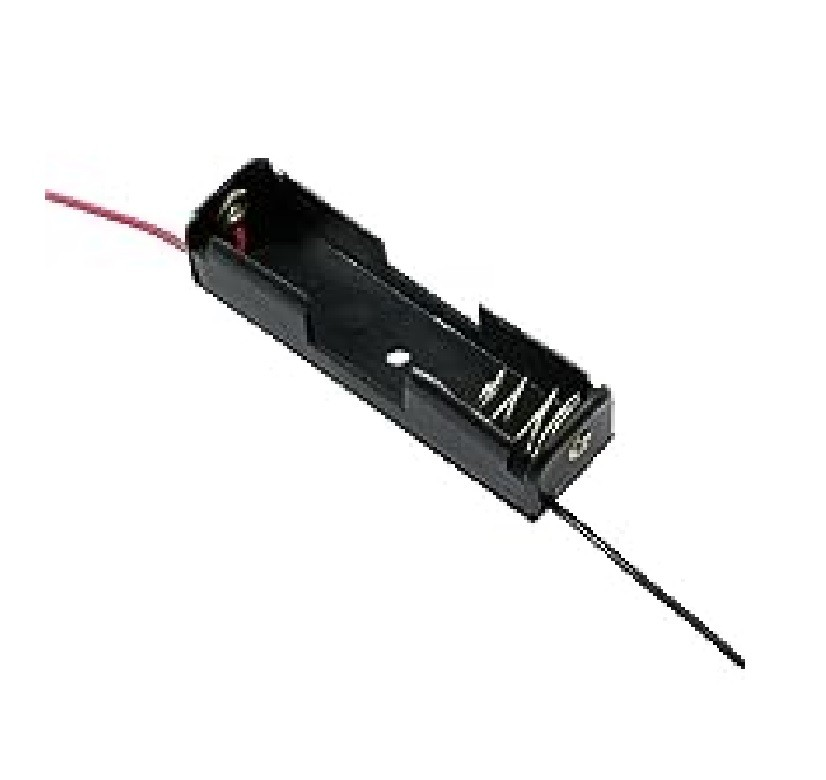
1×AAA Battery Holder Box with Wire – Pack of 2
Compact AAA NiMH holder for small sensor and IoT projects. Wired output for easy integration into any circuit. Pack of 2 for multi-cell series/parallel configurations.
Frequently Asked Questions
Can I use NiMH batteries in a device designed for Li-Ion?
Generally no. Devices designed for Li-Ion (3.7V nominal) operate at a voltage that 3 NiMH cells (3.6V) approximate, but the charging circuits are fundamentally different. Using a Li-Ion charger on NiMH cells — or vice versa — can damage the cells or create safety hazards. Always use chemistry-matched chargers.
Are Li-Ion batteries legal to ship within India?
Yes, Li-Ion batteries can be shipped domestically within India via surface transport with proper labelling. Air transport has restrictions — batteries above 100Wh require airline approval. For small hobby cells (18650 at ~10Wh each), domestic courier services typically accept them with UN3480/UN3481 classification.
What happens if I mix old and new NiMH cells?
Mixing cells of different ages or capacities in a series pack causes the weaker cell to be reverse-charged by the stronger cells during discharge, permanently damaging it. Always use matched cells (same brand, age, and capacity) in any multi-cell configuration — applies to both NiMH and Li-Ion.
Is LiFePO4 better than both NiMH and Li-Ion for hobby use?
LiFePO4 (lithium iron phosphate) offers better safety and longer cycle life (1000–2000+ cycles) than standard Li-Ion, at the cost of lower energy density and a lower voltage (3.2V nominal per cell). For projects prioritising longevity and safety over weight (e.g., solar power systems, stationary robotics), LiFePO4 is an excellent choice. For weight-sensitive applications, standard Li-Ion or LiPo remains superior.
How should I dispose of old NiMH and Li-Ion batteries in India?
Both types are classified as hazardous waste. In India, e-waste collection points (mandated under the E-Waste Management Rules 2016) should accept both types. Some electronics stores also have drop-off programs. Never dispose of Li-Ion in regular household waste — even a dead cell can cause fires in compaction trucks.
Shop 18650 cells, battery holders, chargers and BMS boards at Zbotic — quality-checked and fast-shipped across India.

Add comment