
When building IoT projects, choosing the right MQTT vs HTTP IoT data transfer protocol best suited for your application is one of the most critical architectural decisions you’ll make. Whether you’re deploying a simple home automation sensor or an industrial monitoring system across hundreds of devices, the protocol you choose can make or break your project’s reliability, battery life, and scalability. In this comprehensive guide, we’ll break down both MQTT and HTTP protocols, compare them head-to-head, and help you decide which one fits your specific IoT use case in India and beyond.
- What is MQTT? A Lightweight Messaging Protocol
- What is HTTP? The Web’s Communication Standard
- MQTT vs HTTP: Head-to-Head Comparison
- When to Use MQTT for IoT Projects
- When to Use HTTP for IoT Projects
- Implementation Guide: MQTT on ESP32
- Real-World Use Cases in Indian IoT Deployments
- Frequently Asked Questions
What is MQTT? A Lightweight Messaging Protocol
MQTT (Message Queuing Telemetry Transport) is a publish-subscribe messaging protocol originally designed by IBM in 1999 for monitoring oil pipelines via satellite. Today, it has become the de facto standard for IoT communication thanks to its extremely low overhead and efficient use of bandwidth.
At its core, MQTT uses a broker-based architecture. Devices (clients) connect to a central MQTT broker — such as Mosquitto, HiveMQ, or the AWS IoT Core broker — and either publish messages to topics or subscribe to topics to receive messages. This decoupled architecture means devices don’t need to know about each other; they just talk to the broker.
Key characteristics of MQTT:
- Header size: Minimum 2 bytes (compared to hundreds of bytes for HTTP)
- Connection type: Persistent TCP connection
- Communication model: Publish-subscribe (async)
- QoS levels: 0 (at most once), 1 (at least once), 2 (exactly once)
- Protocol port: 1883 (TCP), 8883 (TLS/SSL)
- Last Will and Testament (LWT): Devices can register a message to be sent when they disconnect unexpectedly
For microcontrollers like the ESP32 or ESP8266 running on battery power or connected via a 2G/3G network in rural India, MQTT’s low overhead is enormously valuable. A typical MQTT publish packet for a sensor reading might be under 50 bytes, while an equivalent HTTP POST request could easily be 500–1000 bytes just in headers alone.
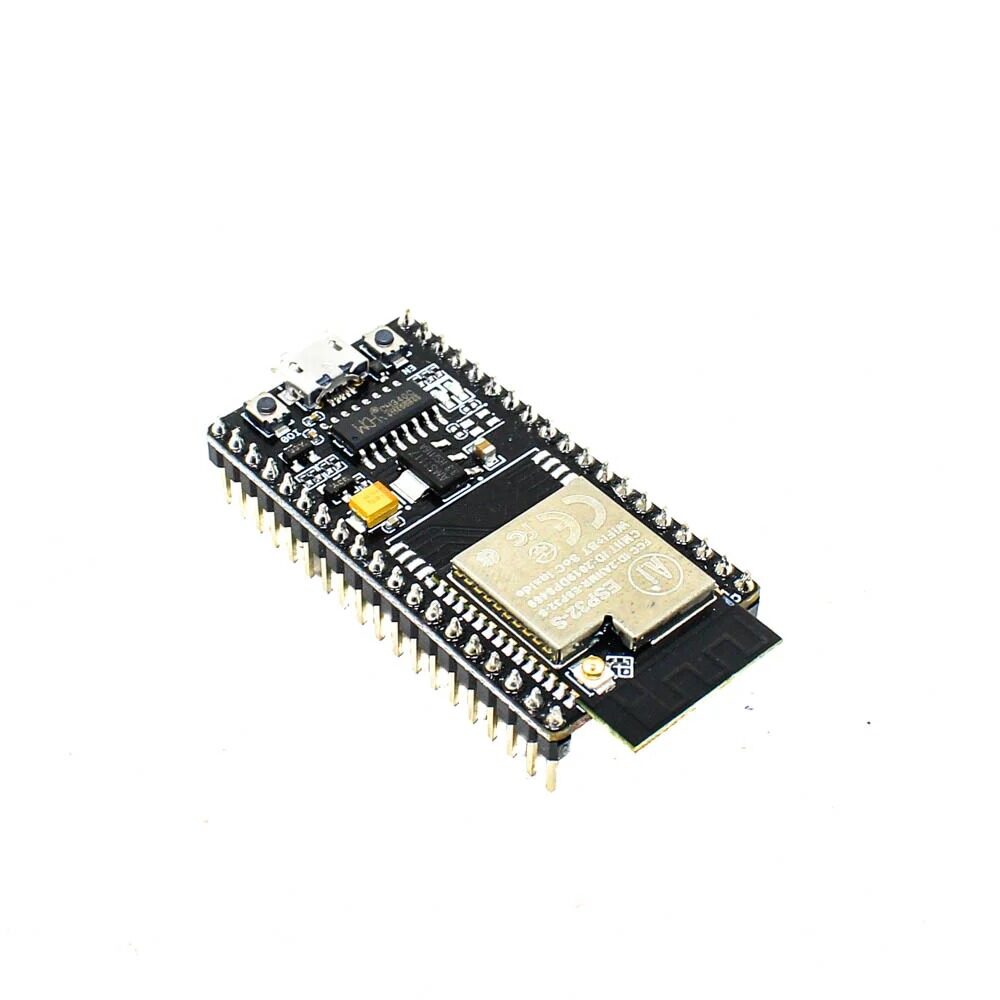
Ai Thinker NodeMCU-32S-ESP32 Development Board – IPEX Version
A powerful dual-core ESP32 board perfect for MQTT-based IoT applications. The IPEX antenna connector allows external antenna attachment for better range in large deployments.
What is HTTP? The Web’s Communication Standard
HTTP (HyperText Transfer Protocol) is the foundation of data communication on the World Wide Web. It is a request-response protocol where a client sends a request to a server and waits for a response. HTTP/1.1, HTTP/2, and now HTTP/3 (built on QUIC) are the current versions in use.
In IoT context, devices use HTTP to send sensor data to cloud APIs or REST endpoints. This is called the HTTP RESTful approach — the device makes a POST or GET request to a URL, attaches data as JSON or form data, and the server responds with a status code and optionally some data.
Key characteristics of HTTP in IoT:
- Header size: 200–800 bytes minimum per request
- Connection type: Stateless (new connection per request, unless using HTTP Keep-Alive or HTTP/2)
- Communication model: Request-response (synchronous)
- Protocol port: 80 (HTTP), 443 (HTTPS)
- Widely supported: Every server, framework, and cloud platform supports HTTP natively
- REST APIs: Easy integration with services like ThingSpeak, Blynk, Firebase, and custom backends
HTTP’s greatest strength is its universal adoption. If you’re building a device that needs to interact with a web backend, REST API, or cloud service that doesn’t support MQTT, HTTP is the obvious choice. Libraries like Arduino’s HTTPClient and ESP32’s built-in WiFiClientSecure make HTTPS integration straightforward.
MQTT vs HTTP: Head-to-Head Comparison
Let’s compare the two protocols across the metrics that matter most for IoT deployments:
| Feature | MQTT | HTTP |
|---|---|---|
| Protocol Overhead | 2–5 bytes header | 200–800 bytes header |
| Connection Model | Persistent TCP | Stateless (new per request) |
| Communication Pattern | Publish / Subscribe | Request / Response |
| Battery Consumption | Low (keeps-alive idle) | Higher (reconnect cost) |
| Real-time Push | Yes (broker pushes to subscribers) | No (polling required) |
| Reliability (QoS) | QoS 0/1/2 built in | Retry logic must be custom |
| Firewall Friendliness | Port 1883/8883 (may be blocked) | Port 80/443 (always open) |
| Scalability | Excellent (millions of devices) | Good (but more server load) |
| Ease of Setup | Requires MQTT broker | Direct to any web server |
| Library Support (ESP32) | PubSubClient, AsyncMQTT | HTTPClient, WiFiClientSecure |
The bottom line: MQTT wins on efficiency, real-time capability, and scalability. HTTP wins on simplicity, universal support, and firewall friendliness.
When to Use MQTT for IoT Projects
MQTT is the better choice when:
- You need real-time bidirectional communication: In smart home automation, when you press a button in an app to toggle a light, MQTT delivers that command within milliseconds. HTTP would require polling.
- Bandwidth is constrained: IoT devices on 2G/GPRS networks in rural India, or devices using SIM cards with per-KB pricing, benefit enormously from MQTT’s tiny packets.
- Battery life is critical: MQTT’s persistent connection with a tiny keep-alive ping (configurable to minutes or hours) consumes far less power than repeatedly establishing new HTTP connections.
- Many devices talk to many subscribers: A temperature sensor publishing to
home/bedroom/temperaturecan be received simultaneously by a dashboard, a database logger, and an alarm system — all subscribed to that topic. - Offline/intermittent connectivity: MQTT’s LWT (Last Will and Testament) feature lets you detect when a device goes offline, and QoS 1/2 ensures messages aren’t lost when connections drop briefly.
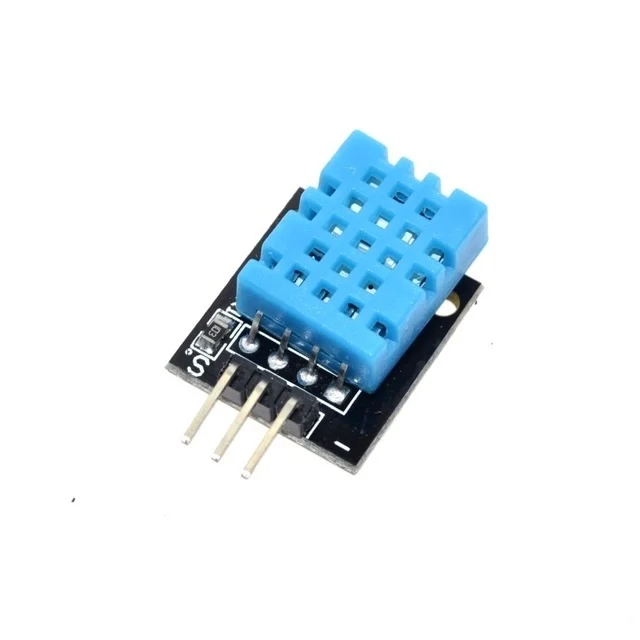
DHT11 Digital Relative Humidity and Temperature Sensor Module
A classic sensor for publishing temperature and humidity data via MQTT to your IoT dashboard. Works seamlessly with ESP32 and ESP8266.
MQTT is widely used in industrial IoT deployments in India, particularly in manufacturing plants monitoring temperature, pressure, and vibration across dozens of sensors. Platforms like Node-RED, Home Assistant, and AWS IoT Core all natively support MQTT.
When to Use HTTP for IoT Projects
HTTP is the better choice when:
- You’re integrating with existing web APIs: Services like ThingSpeak, OpenWeatherMap, Google Sheets via Apps Script, and custom REST backends all speak HTTP. No broker needed.
- Firewall restrictions apply: In corporate networks and ISP-filtered connections common in India, ports 1883 and 8883 may be blocked. HTTP on port 443 (HTTPS) is almost never blocked.
- One-way data logging suffices: If your device only needs to send data to a cloud database every few minutes and doesn’t need to receive commands, HTTP polling or HTTP POST is perfectly adequate.
- You need human-readable debugging: HTTP requests can be tested with curl, Postman, or a web browser. MQTT requires a broker and subscription client to debug.
- Building a simple web server: When the ESP32 itself hosts a web server for local configuration or control, HTTP is the natural protocol to use.
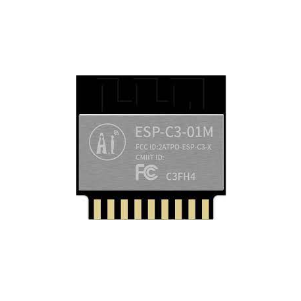
Ai Thinker ESP32-C3-01M Wi-Fi + BLE Module
A compact, cost-effective ESP32-C3 module ideal for HTTP-based IoT data logging to cloud platforms. Low cost and low power for production deployments.
Implementation Guide: MQTT on ESP32 with PubSubClient
Here’s how to implement MQTT on an ESP32 using the popular PubSubClient library. This example publishes a DHT11 sensor reading and subscribes to a command topic:
#include <WiFi.h>
#include <PubSubClient.h>
#include <DHT.h>

const char* ssid = "YourWiFi";
const char* password = "YourPassword";
const char* mqtt_server = "broker.hivemq.com"; // Free public broker

WiFiClient espClient;
PubSubClient client(espClient);
DHT dht(4, DHT11); // DHT11 on GPIO4

void reconnect() {
  while (!client.connected()) {
    if (client.connect("ESP32Client", nullptr, nullptr,
        "home/sensor/status", 1, true, "offline")) { // LWT
      client.subscribe("home/control/relay");
      client.publish("home/sensor/status", "online", true);
    } else {
      delay(5000);
    }
  }
}

void callback(char* topic, byte* payload, unsigned int length) {
  String message = "";
  for (int i = 0; i < length; i++) message += (char)payload[i];
  if (String(topic) == "home/control/relay") {
    digitalWrite(2, message == "ON" ? HIGH : LOW);
  }
}

void setup() {
  WiFi.begin(ssid, password);
  while (WiFi.status() != WL_CONNECTED) delay(500);
  client.setServer(mqtt_server, 1883);
  client.setCallback(callback);
  dht.begin();
}

void loop() {
  if (!client.connected()) reconnect();
  client.loop();
  // Publish every 10 seconds
  static unsigned long lastMsg = 0;
  if (millis() - lastMsg > 10000) {
    lastMsg = millis();
    float temp = dht.readTemperature();
    float hum = dht.readHumidity();
    char payload[64];
    snprintf(payload, 64, "{"temp":%.1f,"hum":%.1f}", temp, hum);
    client.publish("home/sensor/dht11", payload);
  }
}
For HTTP, the equivalent code using HTTPClient would be:
#include <WiFi.h>
#include <HTTPClient.h>

void sendData(float temp, float hum) {
  HTTPClient http;
  http.begin("https://api.thingspeak.com/update");
  http.addHeader("Content-Type", "application/x-www-form-urlencoded");
  String payload = "api_key=YOUR_KEY&field1=" + String(temp) + "&field2=" + String(hum);
  int httpCode = http.POST(payload);
  http.end();
}
Real-World Use Cases in Indian IoT Deployments
Understanding which protocol Indian makers and engineers are actually using in production helps clarify the decision:
MQTT use cases in India:
- Smart irrigation systems: Farmers in Maharashtra and Punjab deploying ESP32-based soil moisture sensors across fields. MQTT with QoS 1 ensures no irrigation trigger message is lost even with spotty mobile data.
- Industrial energy monitoring: MSME manufacturing units monitoring power consumption of machinery. Dozens of current transformer sensors publish to a local Mosquitto broker on a Raspberry Pi.
- Cold chain monitoring: Temperature loggers in pharmaceutical cold storage facilities publishing readings every 30 seconds. LWT alerts when a sensor goes offline.
HTTP use cases in India:
- Air quality stations: Devices posting PM2.5, NO2, and CO2 readings to a Django REST API every 5 minutes. Simple HTTP POST to a server endpoint.
- Smart parking: Ultrasonic sensor nodes sending occupancy status to a central web server. HTTP is used because the backend team only knows web development.
- Attendance systems: ESP32-based RFID readers POSTing card scans to a PHP backend for logging and reporting.
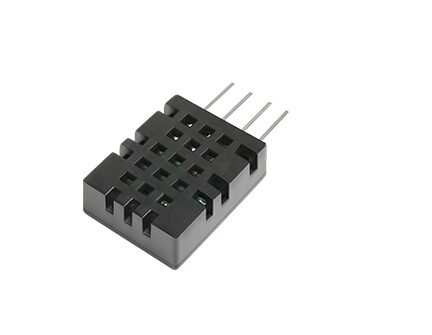
DHT20 SIP Packaged Temperature and Humidity Sensor
The DHT20 offers improved accuracy over DHT11 and is perfect for both MQTT and HTTP IoT deployments. I2C interface simplifies wiring in multi-sensor setups.
Frequently Asked Questions
Can I use both MQTT and HTTP in the same IoT project?
Absolutely! A common hybrid architecture is: devices communicate with a local MQTT broker via MQTT, and a bridge service (like Node-RED or a Python script) forwards data to cloud HTTP APIs. This gives you MQTT’s efficiency on the device side and HTTP’s compatibility on the cloud side.
Is MQTT secure for production IoT systems?
Yes, when properly configured. Use MQTT over TLS (port 8883), enable username/password authentication on your broker, and use per-device client IDs. For highest security, use X.509 client certificates — this is what AWS IoT Core uses by default.
Does the ESP8266 support MQTT?
Yes! The PubSubClient library works perfectly on both ESP8266 and ESP32. However, the ESP8266’s limited RAM (around 36KB available) means you should keep MQTT payloads small and use QoS 0 or 1 (avoid QoS 2 on memory-constrained devices).
What is MQTT over WebSocket and when should I use it?
MQTT over WebSocket (port 9001 or 443 with WSS) allows MQTT messages to flow through firewalls that block port 1883. It’s used when browser-based dashboards need to receive real-time MQTT data directly, or when port restrictions are a concern.
Which protocol uses less battery — MQTT or HTTP?
MQTT generally uses less battery for frequent updates because it maintains a persistent connection (no TCP handshake per message) and uses tiny keepalive pings. However, for infrequent updates (once per hour), HTTP can be more power-efficient if the device sleeps between requests.
Build Your IoT Project with the Right Hardware
Whether you choose MQTT or HTTP, the right development board makes all the difference. Browse Zbotic’s complete range of ESP32, ESP8266, and IoT sensors to get started with your next project.







Add comment