
If you’ve ever built a power bank, an e-bike battery pack, or a portable electronics project, you’ve almost certainly encountered the 18650 lithium ion battery. This cylindrical cell — named after its 18 mm × 65 mm dimensions — is the workhorse of modern rechargeable power. Understanding 18650 lithium ion battery specifications and buying guide essentials before you purchase will save you money, prevent project failures, and keep you safe. In this comprehensive guide, we’ll walk through everything an Indian maker or hobbyist needs to know.
Table of Contents
- What Is an 18650 Battery?
- Key Specifications Explained
- Capacity vs. Discharge Rate: Finding the Balance
- Protected vs. Unprotected Cells
- Flat-Top vs. Button-Top
- Top Brands Available in India
- Common Applications for Indian Hobbyists
- Buying Tips and Red Flags
- Frequently Asked Questions
What Is an 18650 Battery?
The 18650 cell is a standardised lithium-ion battery format originally popularised by laptop manufacturers in the 1990s. Today it powers everything from Tesla electric vehicles to headlamps, vaping devices, and DIY spot-welded battery packs. The “18650” designation simply describes the physical size: 18 mm in diameter and 65 mm in length (the trailing 0 indicates a cylindrical shape).
Unlike alkaline AA or AAA batteries, 18650 cells are rechargeable with a nominal voltage of 3.6 V to 3.7 V, a fully-charged voltage of 4.2 V, and a discharge cut-off of 2.5 V to 3.0 V. They are available in capacities ranging from around 1,500 mAh in budget cells all the way up to 3,600 mAh in premium cells like the Panasonic/Sanyo NCR18650GA.
For Indian hobbyists, the 18650 format is ideal because holders, chargers, and BMS boards are widely available, and the cells themselves can be salvaged from old laptop battery packs or purchased new from electronics stores.
Key Specifications Explained
When comparing 18650 cells, you will encounter a range of technical terms. Here is what each one means in practice:
Nominal Voltage
Most lithium-ion 18650 cells have a nominal voltage of 3.6 V or 3.7 V. This is the average voltage during discharge under typical load conditions. When fully charged the cell sits at 4.2 V; when discharged it drops to roughly 2.5–3.0 V before the BMS or protection circuit cuts it off. LiFePO4 variants (a different chemistry sometimes housed in 18650 form) are 3.2 V nominal and 3.65 V fully charged.
Capacity (mAh)
Capacity tells you how much energy a cell can store. A 3,000 mAh cell can theoretically deliver 3,000 mA (3 A) for one hour, or 1 A for three hours. For a power bank project, higher capacity means more phone charges. Expect genuine 18650 cells to fall in the 2,000–3,600 mAh range; anything advertised above 3,600 mAh is almost certainly counterfeit or re-wrapped.
Continuous Discharge Current (CDR)
Expressed in amperes, CDR is the maximum current the cell can sustain without overheating. High-drain cells like the Samsung 25R or Sony VTC6 are rated at 15–25 A CDR and are preferred for power tools, RC vehicles, and high-power LED drivers. High-capacity cells often sacrifice CDR — a Panasonic 3,400 mAh cell may only tolerate 6–8 A continuous.
Internal Resistance (IR)
Measured in milliohms (mΩ), lower internal resistance means less heat generation and better performance under load. Fresh, genuine cells typically measure below 30 mΩ. Cells above 50–100 mΩ are degraded or counterfeit. A milliohm meter or a good battery analyser can measure this.
Cycle Life
This is the number of charge/discharge cycles the cell can complete before its capacity drops to 80% of original. Quality cells from Panasonic, Samsung, LG, or Murata (formerly Sony) are rated for 300–500 cycles to 80% capacity. Budget cells may fail after 100–150 cycles.
Energy Density
Measured in Wh/kg or Wh/L, energy density determines how much energy you get per unit weight or volume. This matters for wearable projects or drones where every gram counts. Premium cells achieve around 240–265 Wh/kg.
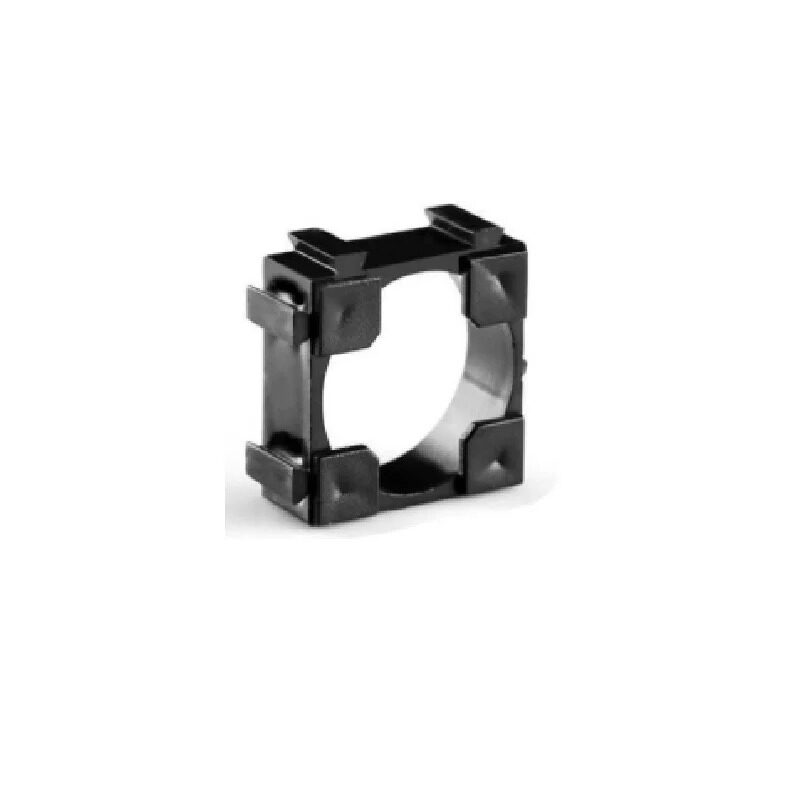
1 x 18650 Battery Holder with 18.4MM Bore Diameter – Pack of 4
A sturdy single-cell 18650 holder with a generous 18.4 mm bore — fits most 18650 cells including button-top and slightly oversized protected cells. Pack of 4 for multi-cell prototype builds.
Capacity vs. Discharge Rate: Finding the Balance
One of the biggest misconceptions among beginners is that you should always buy the highest-capacity cell. In reality, choosing the right cell depends on your application’s current draw:
- Low-drain applications (flashlights, GPS trackers, IoT sensors, power banks): Choose a high-capacity cell like the Panasonic NCR18650B (3,400 mAh) or LG MJ1 (3,500 mAh). These deliver excellent runtime at currents under 5 A.
- High-drain applications (RC cars, power tools, e-bikes, high-power LEDs): Choose a high-CDR cell like the Samsung 25R (2,500 mAh / 20 A CDR) or Sony VTC5A (2,600 mAh / 25 A CDR). Pushing a low-drain cell at 15–20 A will cause rapid temperature rise, voltage sag, and premature degradation.
- Balanced applications (e-cigarettes, portable power stations, medium-drain drones): Cells like the Samsung 30Q (3,000 mAh / 15 A CDR) hit a sweet spot.
A useful rule of thumb: never draw more than the cell’s rated CDR, and for longest life, keep continuous draw under 50% of CDR.
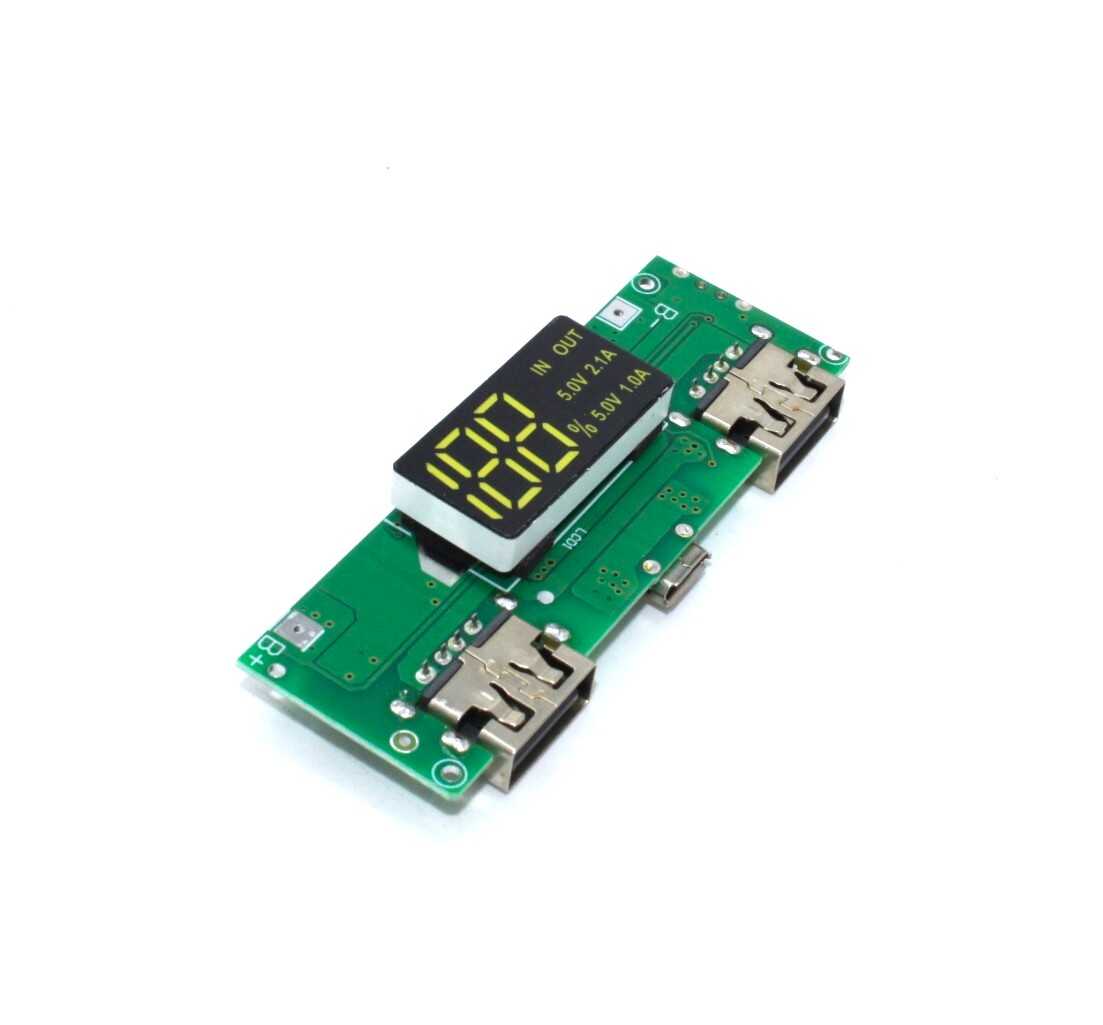
18650 5V 1A/2A Lithium Battery Digital Display Charging Module – Dual USB Output
All-in-one DIY power bank module for 18650 cells. Features dual USB output, digital capacity display, and an integrated boost converter — perfect for portable charger projects.
Protected vs. Unprotected Cells
A protected 18650 cell has a small PCB circuit attached to the negative terminal that prevents overcharge (above 4.2 V), over-discharge (below 2.5–3.0 V), and short-circuit. The PCB adds roughly 2–3 mm to the cell’s length, making some protected cells too long (67–68 mm) for tight holders designed for standard 65 mm cells.
An unprotected cell lacks this PCB and relies entirely on external protection — usually a Battery Management System (BMS) board in the pack. Unprotected cells are slightly shorter and cheaper, and are the preferred choice when you’re building a multi-cell pack with a dedicated BMS.
When to use protected cells: Single-cell flashlights, single-cell devices without a BMS, or whenever you want belt-and-suspenders safety in a simple circuit.
When to use unprotected cells: Multi-cell packs with a proper BMS, RC vehicles, power tools — anywhere the external BMS handles protection.
Flat-Top vs. Button-Top
18650 cells come with either a flat positive terminal or a raised button-top. Most genuine cells from Panasonic, Samsung, and LG are flat-top. Button-top cells have a small protruding nipple that ensures contact in spring-loaded battery holders. If you’re using a standard holder (like the ones we stock), flat-top cells work fine — the spring inside the holder makes direct contact. Button-top cells are generally needed only in devices with recessed positive contacts or series spring holders.
Top Brands Available in India
Counterfeit cells are a serious problem in India’s online marketplaces. Here are the genuine manufacturers and what to look for:
- Panasonic / Sanyo: NCR18650B (3,400 mAh), NCR18650GA (3,450 mAh). Excellent for power banks and flashlights. Slightly lower CDR.
- Samsung SDI: INR18650-25R (2,500 mAh / 20 A), INR18650-30Q (3,000 mAh / 15 A). Widely counterfeited — buy only from reputable suppliers.
- LG Chem: MJ1 (3,500 mAh / 10 A), HG2 (3,000 mAh / 20 A). Popular in e-bike packs.
- Murata (formerly Sony): VTC5A (2,600 mAh / 25 A), VTC6 (3,000 mAh / 15 A). Premium high-drain cells.
- Molicel: P26A and P42A — newer cells that offer excellent balanced performance.
Avoid cells from unknown brands claiming capacities above 3,600 mAh or unrealistic CDR figures. If a cell claims “5,000 mAh 18650” it is 100% counterfeit — the energy density physics simply don’t allow it in this form factor yet.
Common Applications for Indian Hobbyists
The 18650 format is incredibly versatile. Here are the most popular use cases among Indian makers:
- DIY Power Banks: String 2–4 cells in parallel with a TP4056 charger module and a 5V boost converter for USB output. Total cost: ₹150–300 in parts.
- E-Bike / E-Scooter Packs: 36V packs use 10 cells in series (10S); 48V packs use 13 cells in series (13S). Add parallel groups (e.g., 10S4P = 40 cells) for higher capacity.
- High-Power Flashlights: Single or dual 18650 cells power budget flashlights of 1,000–3,000 lumens. Widely popular in India for security, outdoor, and utility use.
- Portable Solar Generators: 18650-based packs paired with MPPT solar charge controllers make excellent off-grid power systems for rural areas.
- Arduino/ESP32 Projects: A single 18650 with a TP4056 + protection board + 3.3V regulator makes a compact rechargeable power supply for microcontroller projects.
- RC Vehicles: While LiPo is more common for high-power RC, 18650 packs are used in many touring cars and boat applications.
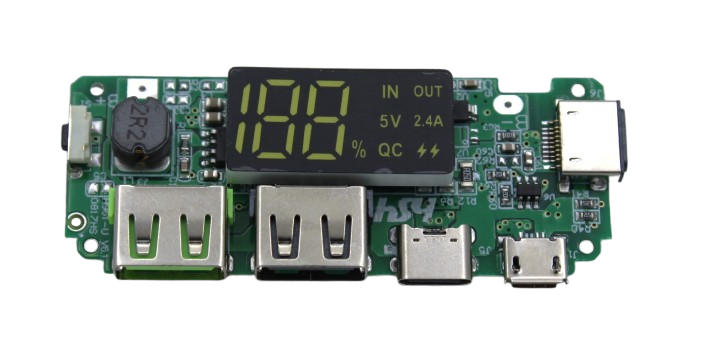
18650 5V 2.4A Lithium Battery Digital Display Charging Module – Dual USB
Higher-output 2.4A version of the 18650 power bank module — charges modern smartphones and tablets at full speed with dual USB ports and a digital display.
Buying Tips and Red Flags
Buying 18650 cells in India requires some vigilance. Here’s how to avoid counterfeits and get the most value:
Buy from Reputable Sources
Zbotic, Robocraze, and established electronics distributors source cells from genuine supply chains. Avoid marketplace listings from unknown sellers offering prices significantly below market rates.
Check the Weight
Genuine 18650 cells weigh between 42–50 grams. Counterfeit cells filled with padding weigh considerably less — sometimes under 30 grams. Always weigh cells if you suspect fakes.
Measure Capacity Independently
Use a battery analyser or charge/discharge tester to verify claimed capacity. A cell claiming 3,000 mAh should deliver at least 2,700–2,800 mAh at a 0.2C discharge rate. Significant shortfall means counterfeit or degraded cells.
Check Internal Resistance
Fresh genuine cells should measure under 30 mΩ IR. Use a battery tester that includes IR measurement — this is the single best quick indicator of cell quality.
Avoid Rewrapped Cells
Many budget sellers rewrap old or low-grade cells in counterfeit Samsung/Panasonic wrappers. Signs include misaligned printing, wrinkled heat-shrink, or labels that peel too easily.
Buy in Small Quantities First
When trying a new supplier, test a small batch (4–10 cells) before committing to a large order. Check capacity and IR on all cells before using them in a high-value project.

1S 18650 Li-ion Lithium Battery BMS Charger Protection Board for 3.7V Battery
Essential single-cell protection board for 18650 projects. Guards against overcharge, over-discharge, and short-circuit — a must-have when using unprotected cells in DIY builds.
Frequently Asked Questions
Q1: Can I replace my laptop battery cells with new 18650 cells?
Yes, provided you use cells with matching or higher capacity and the same discharge characteristics. You’ll need a spot welder to attach nickel strips, and you must rebuild/reuse the original BMS board. This is a common DIY project and can restore an old laptop battery for a fraction of the cost of a new pack.
Q2: How do I store 18650 batteries safely?
Store cells at approximately 40–60% charge in a cool, dry place away from direct sunlight. Avoid temperatures above 45°C (common in Indian summers — don’t leave cells in cars). Use a fireproof LiPo bag or a metal container as an extra precaution for long-term storage.
Q3: Can I charge 18650 batteries with a phone charger?
Not directly — you need a dedicated charger or a TP4056 charging module. Never charge bare 18650 cells with an unregulated power supply; overcharging beyond 4.2 V can cause thermal runaway and fire.
Q4: What is the difference between INR, IMR, ICR, and IFR 18650 cells?
These designations refer to the cathode chemistry. INR (NMC — Nickel Manganese Cobalt) and IMR (NMO — Nickel Manganese Oxide) cells are high-drain, stable, and the most common choice today. ICR (LiCoO2 — Cobalt Oxide) cells are high-capacity but less thermally stable. IFR (LiFePO4 — Iron Phosphate) cells are the safest and have the longest cycle life but lower voltage (3.2 V nominal).
Q5: How many 18650 cells do I need for a 12V DIY power station?
You need 3 cells in series (3S) for a nominal 11.1 V (3 × 3.7 V) pack, or 4 cells in series (4S) for 14.8 V. For 12 V applications like camping lights or CCTV backup power, a 3S2P (6 cells) configuration is a popular choice — 11.1 V nominal, up to 6,000–9,000 mAh depending on cells used.
Ready to Build Your 18650 Project?
The 18650 lithium-ion battery is one of the most versatile, well-documented, and maker-friendly power sources available today. Whether you’re building a solar-charged lantern for your village, a long-range RC vehicle, or a high-capacity power bank, understanding the specs and choosing genuine cells from a trusted supplier makes all the difference.
Zbotic stocks 18650 battery holders, BMS protection boards, charging modules, and all the accessories you need to build safe, reliable battery packs. Browse our Batteries, Power & Charging category and start building today!



Add comment