
The ESP32-C3 vs ESP32 comparison is one of the most searched questions among Indian IoT developers and hobbyists in 2026. Both chips come from Espressif Systems and share the same ESP-IDF ecosystem, but they serve quite different purposes. Whether you are building a low-power sensor node, a Wi-Fi camera, or a full-fledged smart home hub, picking the right variant can save you time, money, and headache.
Quick Overview: ESP32 vs ESP32-C3
Before diving into the technical details, here is a bird’s-eye view of the two chips. The original ESP32 (Xtensa LX6 dual-core) launched in 2016 and remains one of the most popular microcontrollers in the world. The ESP32-C3, launched in 2020, takes a different direction: it uses a single RISC-V core, costs less to manufacture, and focuses on tight security with Wi-Fi 4 + BLE 5. In 2026, both are actively produced and supported.
For Indian makers, the price gap between an ESP32-C3 module (around ₹80–120) and a full ESP32 module (₹150–250) matters. But cost is only one dimension. Understanding the architectural trade-offs helps you pick a chip that will not need to be replaced six months into your project.
| Feature | ESP32 (Xtensa) | ESP32-C3 (RISC-V) |
|---|---|---|
| CPU | Dual-core Xtensa LX6, 240 MHz | Single-core RISC-V, 160 MHz |
| Wi-Fi | 802.11 b/g/n (2.4 GHz) | 802.11 b/g/n (2.4 GHz) |
| Bluetooth | BT 4.2 + BLE | BLE 5.0 only |
| Flash | 4–16 MB (external) | 4 MB (typical) |
| RAM | 520 KB SRAM | 400 KB SRAM |
| GPIO | Up to 34 | Up to 22 |
| Security | Flash encryption, Secure Boot v1 | Flash encryption, Secure Boot v2, RSA-3072, AES-128 |
| Deep sleep current | ~10 µA | ~5 µA |
| Price (module) | ₹150–250 | ₹80–120 |
CPU Architecture Differences
The most fundamental difference between the two chips is the CPU architecture. The classic ESP32 uses Xtensa LX6 cores designed by Cadence. These are VLIW (Very Long Instruction Word) processors that are excellent for signal processing tasks, audio playback, and parallel workloads. The dual-core setup means one core can handle Wi-Fi/BT stack while the other runs your application, completely independently.
The ESP32-C3 replaced Xtensa with a 32-bit RISC-V core. RISC-V is an open instruction set architecture (ISA) with no licensing fees, which is why Espressif adopted it. For IoT workloads — reading sensors, processing MQTT packets, running HTTP clients — the single RISC-V core at 160 MHz is usually sufficient. However, for tasks that benefit from parallelism (like running a web server while simultaneously doing BLE scanning), the dual-core ESP32 wins comfortably.
From a developer perspective, both chips use the same ESP-IDF framework and support Arduino IDE. If you switch from ESP32 to ESP32-C3, your existing code compiles with minimal changes. The main thing to watch is that the ESP32-C3 does not support Bluetooth Classic (only BLE 5.0), and it has fewer GPIO pins.
Wi-Fi, Bluetooth and Security Features
On the connectivity front, both chips are remarkably similar at the Wi-Fi level — both support 802.11 b/g/n at 2.4 GHz with similar RF performance. Neither supports 5 GHz Wi-Fi, which is common across the entire ESP32 family (the ESP32-S3 and ESP32-C5 also stay on 2.4 GHz for now).
Bluetooth is where a key difference emerges. The original ESP32 supports both Bluetooth Classic (BR/EDR) and BLE up to version 4.2. Bluetooth Classic is needed for applications like audio streaming, hands-free profiles, or connecting to legacy Bluetooth keyboards. The ESP32-C3 drops Bluetooth Classic entirely and implements BLE 5.0, which brings longer range, higher throughput in LE mode, and LE Audio (via BLE Audio). If your project only uses BLE — which covers the vast majority of IoT use cases in 2026 — the ESP32-C3’s BLE 5.0 is actually superior to the ESP32’s BLE 4.2.
Security is the area where the ESP32-C3 leaps ahead significantly. It implements Secure Boot v2 (which is more robust than v1 on the original ESP32), hardware-accelerated AES-128/256, SHA-2, RSA-3072, ECC, and a true random number generator (TRNG). This makes the ESP32-C3 suitable for production IoT devices that need to meet security certifications. For hobbyist projects or prototypes, the security difference rarely matters, but for commercial deployments — especially with the upcoming EU Cyber Resilience Act affecting Indian exporters — the ESP32-C3’s stronger security posture is a genuine advantage.
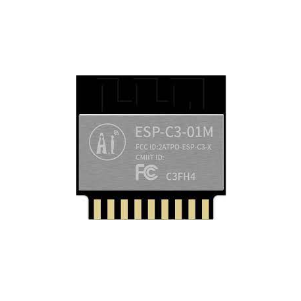
Ai Thinker ESP32-C3-01M Wi-Fi + BLE Module
The ESP32-C3-01M is an ultra-compact module with integrated antenna — perfect for space-constrained IoT products that need Wi-Fi + BLE 5.0 at low cost.
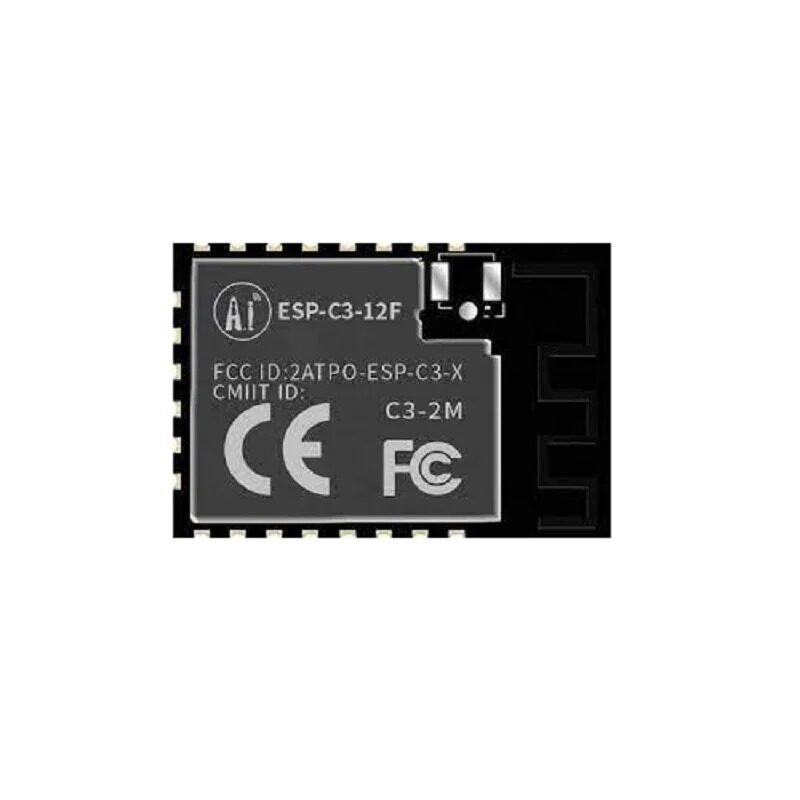
Ai-Thinker ESP32-C3-12F Wi-Fi + BLE Module
The ESP32-C3-12F comes with a PCB antenna and 4 MB flash, making it a direct drop-in for projects that previously used ESP-12F but now need BLE 5 capability.
GPIO, Peripherals and Memory
The original ESP32 is the clear winner for peripheral count. It provides up to 34 GPIO pins (though some are input-only), two SPI controllers, two I2C buses, three UART ports, one I2S, one SDMMC host, a 12-bit ADC with 18 channels, two 8-bit DAC channels, and capacitive touch sensing on 10 pins. This makes the ESP32 ideal for projects that need to talk to many different sensors and actuators at the same time.
The ESP32-C3 cuts this down considerably: 22 GPIO pins, one SPI, one I2C, two UART, one I2S, a 12-bit ADC with 6 channels, and no DAC or touch sensing. For most sensor-based IoT projects, these peripherals are more than enough. You will only hit the limit if you are building a complex data acquisition system or a multi-channel audio device.
Memory-wise, the ESP32 has 520 KB SRAM and supports external PSRAM (up to 8 MB via ESP-PSRAM64H), which is critical for applications that handle images or large JSON payloads. The ESP32-C3 has 400 KB SRAM and does not natively support external PSRAM. For most MQTT and HTTP use cases this is fine, but if you are processing camera images or large web pages on the device itself, the original ESP32 (or the ESP32-S3 which supports 512 MB PSRAM) is a better fit.
Power Consumption and Battery Life
This is where the ESP32-C3 really shines, especially for battery-powered Indian IoT projects. The typical deep sleep current for an ESP32 module is around 10–15 µA (chip only, not counting the voltage regulator and flash). The ESP32-C3 achieves around 5 µA in deep sleep. When active with Wi-Fi transmitting, both chips draw roughly 200–300 mA peak, but the ESP32-C3’s average current is lower because its single-core design has a smaller power envelope during light workloads.
For a sensor node waking every 5 minutes to send a reading via MQTT, an ESP32-C3 running on two AA batteries (roughly 3000 mAh) can theoretically last 18–24 months, compared to 12–15 months for an equivalent ESP32 node. In a country like India where many IoT installations are in remote areas without easy maintenance access, this difference is commercially significant.
The ESP32-C3 also boots faster from deep sleep because it has fewer subsystems to initialise. Wake-up times for GPIO triggers are in the sub-millisecond range, and a typical Wi-Fi MQTT publish-and-sleep cycle can complete in under 2 seconds, which is excellent for battery budgeting.
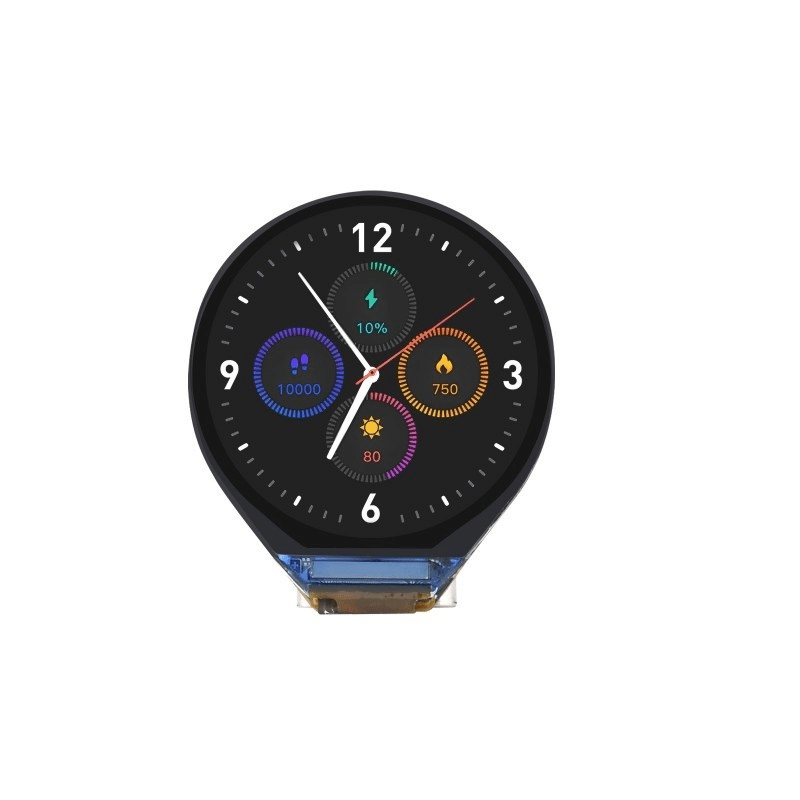
Waveshare ESP32-C3 Round Display Development Board
A compact ESP32-C3 dev board with a 0.71-inch round display — ideal for prototyping compact wearable or status-indicator IoT devices.
Use Cases: When to Choose Which
Choose ESP32-C3 when:
- Your device is battery-powered and needs long runtime (sensor nodes, tags, beacons)
- You only need BLE 5.0 (no Bluetooth Classic required)
- Bill of materials (BOM) cost is a priority for mass production
- Your project needs strong hardware security (commercial/certified products)
- The application is simple: read sensor → publish to cloud → sleep
- Form factor is critical (ESP32-C3 modules are smaller)
Choose ESP32 when:
- You need Bluetooth Classic (audio streaming, legacy BT peripherals)
- Your project requires many GPIO pins or dual-core parallelism
- You need external PSRAM for image processing or large data buffers
- You are using the ESP32-CAM module (built around the ESP32)
- You need both a web server and a BLE client running simultaneously
- Existing libraries you depend on have not yet been ported to RISC-V
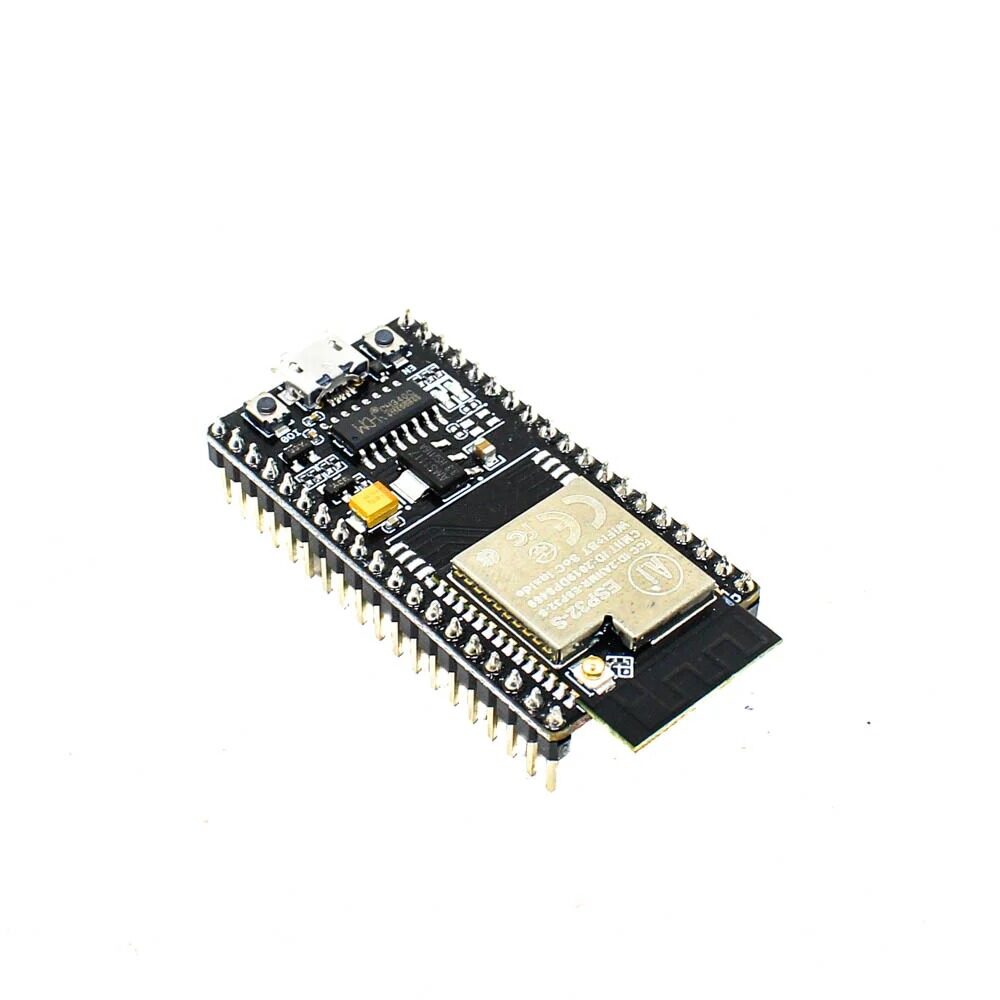
Ai Thinker NodeMCU-32S ESP32 Development Board – IPEX Version
The NodeMCU-32S is a full-featured ESP32 dev board with the IPEX antenna connector, giving you the flexibility to attach an external antenna for better range in complex RF environments.
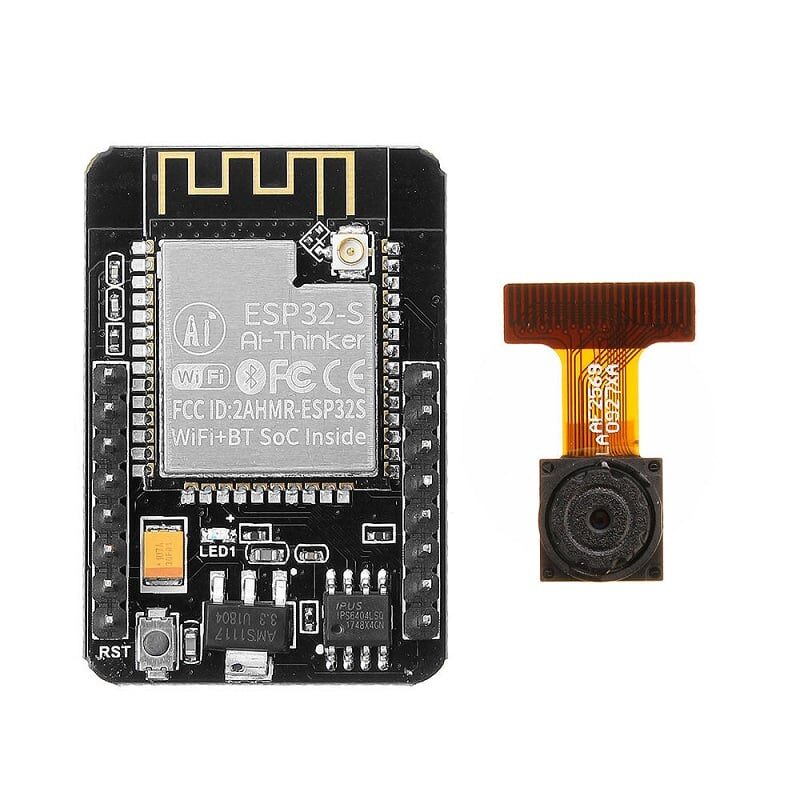
Ai Thinker ESP32 CAM Development Board WiFi+Bluetooth with AF2569 Camera
The ESP32-CAM is the go-to board for image streaming and face recognition projects — uses the full dual-core ESP32 with PSRAM to handle camera frames efficiently.
Frequently Asked Questions
Is ESP32-C3 compatible with ESP32 Arduino libraries?
Most popular Arduino libraries (WiFi, MQTT, HTTPClient, ArduinoJson) work fine on the ESP32-C3 since the Arduino ESP32 core supports both. However, libraries that use Xtensa-specific assembly code or Bluetooth Classic will not work. Always check the library’s GitHub issues for RISC-V/ESP32-C3 compatibility before committing to a design.
Can I use ESP-IDF with ESP32-C3?
Yes, ESP-IDF fully supports the ESP32-C3 from version 4.3 onward. In fact, Espressif recommends ESP-IDF 5.x for all new projects in 2026. The development experience is nearly identical to working with the original ESP32 — same CMake build system, same component manager, same debugging via OpenOCD.
Does ESP32-C3 support Matter and Thread?
Yes! The ESP32-C3 is one of Espressif’s primary chips for Matter (formerly CHIP) certification. Espressif’s ESP-Matter SDK officially supports it. However, Thread requires an 802.15.4 radio — neither ESP32 nor ESP32-C3 has that built in. You would need to pair it with an external 802.15.4 module (like the ESP32-H2) for Thread support.
Which chip is better for Indian summer conditions?
Both chips are rated for -40°C to 85°C operation. However, the ESP32-C3’s lower power consumption means it generates less heat, which can be advantageous in tight enclosures during Indian summers where ambient temperatures regularly exceed 40°C. Less heat means longer component life and fewer thermal throttling events.
Is the ESP32-C3 available from Indian suppliers?
Yes. Both the ESP32-C3-01M and ESP32-C3-12F modules from Ai Thinker are readily available in India through Zbotic.in with fast shipping. You can also find them on local marketplaces, though quality and authenticity can vary — always buy from authorised distributors for production projects.
Conclusion
In 2026, the ESP32-C3 vs ESP32 decision is clearer than ever. The ESP32-C3 is the right chip for cost-sensitive, battery-powered, security-conscious IoT nodes that only need BLE 5.0 and Wi-Fi. It is Espressif’s answer to the growing demand for Matter-certified, low-power IoT devices. The classic ESP32 remains irreplaceable for applications that need Bluetooth Classic, many GPIOs, external PSRAM, or dual-core processing power.
For Indian makers who are just starting out, the ESP32 is still the more versatile and better-documented choice — the community is enormous and examples are everywhere. But if you are designing a product for production and battery life matters, seriously consider the ESP32-C3. It is cheaper, draws less power, and has stronger hardware security out of the box.



Add comment