
Drone Night Flying in India: Lights, Settings, and DGCA Rules Explained
Flying your drone at night unlocks a completely different world. City lights stretch out below like a circuit board, stars fill the sky above, and your LED-illuminated quad traces glowing lines through the darkness. Night flying produces some of the most stunning FPV footage and photography possible — but it also introduces unique challenges and legal obligations that Indian pilots must understand before taking off after dark.
This guide covers everything: the current DGCA (Directorate General of Civil Aviation) rules for night drone operations in India, the physical lighting requirements for your aircraft, camera settings for night photography, Betaflight configuration for night FPV, and a comprehensive safety checklist. Whether you are a hobbyist wanting to capture your city from above or an FPV freestyle pilot looking to expand your flying sessions into the cooler evening hours, this is your complete resource.
1. DGCA Rules for Night Drone Flying in India (2024–2025)
India’s drone regulations are managed by the DGCA under the Drone Rules 2021 (amended 2022). Here is the current situation for night flying:
General Prohibition on Night Flying
Under Drone Rules 2021, all UAS (Unmanned Aircraft Systems) are required to operate only during daylight hours as a default. Night flying — defined as any operation after official sunset or before official sunrise — requires special permission under most categories.
Nano Category (Under 250g)
Nano drones enjoy the most relaxed rules. In uncontrolled airspace (Green Zones), they may fly without permission during the day. Night operations in the Nano category technically still require operating within line of sight and avoiding controlled airspace, but enforcement is less strict. That said, attaching lights for visibility remains strongly advisable and courteous.
Micro and Above (250g – 25 kg)
All Micro, Small, Medium, and Large category drones require:
- A valid Remote Pilot Certificate (RPC) from DGCA
- Prior permission via the Digital Sky Portal (UTM) for each flight
- For night operations specifically: application for a waiver or special permission under Rule 31
- Liability insurance coverage
Commercial Night Operations
Survey, surveillance, cinematography, and agricultural operations at night require a full UAOP (UAS Operator Permit) along with specific night operation waivers. These are granted case-by-case. Film productions and wedding photographers increasingly obtain these for dramatic aerial shots.
Restricted and No-Fly Zones
Regardless of time of day, Red Zones (airports, defence installations, important government buildings) require specific defence ministry clearance. Yellow Zones (8–12 km from airports) require ATC permission. Night flying near any of these without permission carries severe penalties including drone confiscation.
Important: Rules change. Always verify current rules on the Digital Sky DGCA Portal before any night flying operation.
2. Lighting Requirements: What Your Drone Needs
Lighting for drones serves two purposes: safety visibility for other aircraft and observers, and orientation assistance for the pilot. Here is what is needed:
Navigation Lights (Anti-Collision)
Professional and commercial drones should follow aviation lighting conventions:
- Red: Port side (left arm/motor)
- Green: Starboard side (right arm/motor)
- White/Strobe: Rear and top (for anti-collision visibility)
LED Strips for FPV Drones
FPV drones most commonly use addressable WS2812B LED strips. These can be programmed through Betaflight’s LED Strip feature to display:
- Arm status (solid vs flashing)
- Battery warning (changes colour at low voltage)
- Flight mode indicator
- Orientation indicators (different colours front vs rear)
Minimum Brightness
Your lights must be visible from at least 500 metres in clear conditions — this is the standard used in most international frameworks and is a sensible guideline for India as well. Cheap LED strips that look bright up close may be nearly invisible at 200 metres. Choose high-lumen LEDs for meaningful visibility.
Strobe Lights
Strobes (flashing at 40–90 flashes per minute) are far more visible at distance than steady-state lights. Many FPV pilots add a small dedicated strobe module for night operations in addition to their LED strips.
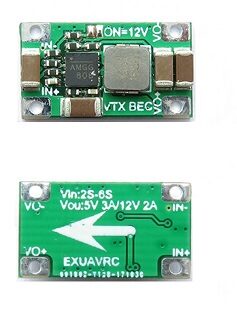
2-6S 5V 5A BEC For Quadcopter Drone
Provides clean 5V power for LED strips and accessories — essential for stable, flicker-free night lighting on your drone.
View on Zbotic3. Night FPV: Camera Settings and OSD Configuration
The biggest challenge for FPV night flying is camera performance in low light. Most FPV cameras are designed for daylight and use small sensors that struggle in darkness. Here is how to get the most from your setup:
Camera Settings for Night FPV
- Shutter Speed: Set to Auto or as slow as your camera permits (1/60 minimum for PAL to avoid interlacing artefacts). Slower shutter = more light but more motion blur.
- Gain/ISO: Increase Auto Gain to maximum — noise is far preferable to not seeing where you are flying.
- WDR (Wide Dynamic Range): Turn WDR OFF for night flying. WDR brightens shadows but at the cost of highlight recovery. At night, everything is shadows — WDR processing makes the image worse.
- Saturation: Reduce slightly. Night footage with over-saturated LED glare looks unnatural.
- Lens: Use your widest available lens (1.8mm or 2.1mm) rather than narrow lenses. More light gathered = better image.
OSD for Night Flying
Your OSD (On Screen Display) is more important at night than in daytime because you cannot see landmarks as easily. Essential night OSD elements:
- Battery voltage (critical — you cannot spot the quad by sight if battery dies)
- Home arrow and distance
- Altitude (AGL)
- GPS satellites + fix status
DVR Recording
Always run DVR (Digital Video Recorder) on your goggles during night flying. If you lose orientation or the quad goes somewhere unexpected, the recorded footage may be the only way to figure out where it landed.

1/3″ CMOS 700TVL Mini FPV Camera 2.1mm Lens
Wide-angle 2.1mm lens FPV camera — the wider field of view and good low-light sensitivity make it a strong choice for night FPV flying.
View on Zbotic4. Betaflight Night Settings and LED Strip Configuration
Enabling LED Strip in Betaflight
- Go to Configuration tab → enable LED Strip feature
- Navigate to LED Strip tab
- Assign LED positions on the quad layout (front, rear, left, right)
- Configure functions: Arm state, battery, flight mode, orientation
Useful LED Strip Configurations for Night Flying
# Front LEDs: White (high brightness for orientation)
# Rear LEDs: Red (identify direction of travel)
# Battery warning: Yellow at 3.6V, Red flash at 3.4V
# Arm indicator: Solid = armed, slow flash = disarmed
Turtle Mode (Flip Over After Crash)
Night crashes are harder to spot. Enable Turtle Mode (flip over after crash) in Betaflight to self-right after a crash landing. Assign it to a switch on your transmitter:
# In Modes tab:
# Add FLIP_OVER_AFTER_CRASH to a switch
# The quad will briefly spin up motors to flip right-side up
GPS Rescue Mode (Essential for Night Flying)
If you lose video feed at night, you have essentially no way to navigate the quad home visually. GPS Rescue Mode is your safety net — it automatically navigates the quad back to its home point if triggered or if RC link is lost. This feature is so important for night flying that we have a dedicated article on setting it up (see Topic 654 in this series).
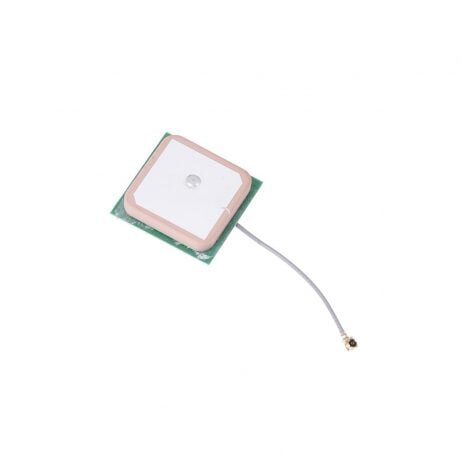
25x25x8mm 28dB High Gain Ceramic GPS Antenna
High-gain active GPS antenna for NEO-6M/7M/8M modules — reliable satellite lock for GPS Rescue during night operations.
View on Zbotic5. Maintaining Orientation at Night
Losing orientation — not knowing which way the drone is pointing — is the leading cause of night flying crashes. Several strategies help maintain spatial awareness:
Use Colour-Coded LEDs
Assign distinct, bright colours to front vs rear of your quad. The classic convention is white/blue at front and red at rear. This lets you instantly identify the drone’s heading from far away.
Fly in FPV-First Mode
At night, always treat your FPV feed as your primary reference — more so than visual line of sight. Your camera sees roughly the same view as if you were on the drone. If your camera is pointing forward, the drone is moving away from you.
Higher Altitude Helps
Paradoxically, flying higher at night is often safer than flying low. At altitude, you have more time to correct mistakes and the quad’s LED lights are visible over a larger area against the dark sky.
Hover Checks
Every 3–4 minutes, bring the quad to a stable hover, verify its position relative to yourself, confirm it is pointing in the direction you expect, and check your OSD readings. This resets your situational awareness before continuing.
6. Drone Photography at Night: Aerial Shots That Impress
For aerial photography drones (not FPV), night shooting opens up entirely different creative opportunities:
Camera Settings for Aerial Night Photography
- ISO: 400–1600 depending on your sensor
- Aperture: f/2.8 or widest available
- Shutter speed: 2–8 seconds for light trail effects; 1/15s+ for sharp cityscape shots
- RAW format: Always shoot RAW at night to give yourself maximum post-processing latitude
- White Balance: Manual 3200K for warm city lighting; 4500K for mixed environments
Shot Types That Work Well at Night
- City skylines from 100–150 metres altitude — the classic establishing shot
- Moving traffic creating light trails (requires 3–6 second exposure)
- Industrial facilities, ports, and construction sites (check permissions)
- Festivals and events (Diwali from above is spectacular — check no-fly zones)
- Coastlines with city lights reflected in water
Stability is Critical
Long exposures require a perfectly stable hover. Even small GPS drift or wind buffeting creates blur. Fly in calm conditions (wind under 10 km/h) and use GPS-assisted hover rather than manual mode for photography.
7. Battery Management at Night
Batteries behave differently at night, particularly in cooler weather:
- Warm batteries before flying: Cold batteries (below 15°C) lose significant capacity. Pre-warm LiPo batteries inside for 10 minutes before outdoor flying in cool weather. Indian winters in northern states can easily drop to 8–12°C at night.
- Conservative cutoffs: Set voltage warnings 0.1–0.2V higher than daytime because battery recovery from sag is slower when cold.
- Shorter sessions: Plan for 20% less flight time at night than equivalent daytime sessions. Landing early is far preferable to a forced landing in darkness.
- Never fly on last battery: Keep one fully charged battery at the flying field as an emergency reserve only.
8. Night Flying Safety Checklist
Run through this checklist before every night flight:
Legal:
- DGCA permissions obtained if required
- Zone confirmed as Green or Yellow with permission
- Liability insurance active (for commercial operators)
Equipment:
- All navigation/orientation LEDs functioning
- GPS lock confirmed (6+ satellites) before arming
- GPS Rescue Mode enabled and home point recorded
- OSD displaying battery voltage, altitude, GPS distance
- DVR recording active in goggles
- All props inspected for damage
- Batteries pre-warmed if cold
Environment:
- Wind below 15 km/h
- Clear visibility (no fog or low cloud)
- Flying area confirmed clear of people and obstructions
- Ground observer present
- Torch/flashlight available for emergency searches
9. Best Locations for Night Flying in India
India offers incredible night flying opportunities, but location selection is everything:
Urban Periphery
The outskirts of major cities — beyond the 8 km airport exclusion zone — offer stunning city-light backdrops. Areas like Lonavala near Mumbai, Bangalore’s outer ring road corridor, or the outskirts of Hyderabad’s tech district provide striking city-glow backgrounds in the sky.
Coastal Areas
Goa’s northern beaches, Kerala’s coast, and Tamil Nadu’s coastal stretches (away from fishing boat traffic lanes) offer dramatic sea + sky combinations at night, especially around moonrise.
Hill Stations
Munnar, Ooty, and Coorg provide dark skies with minimal light pollution — excellent for long-exposure starscape photography using aerial platforms.
Avoid During These Events
- Republic Day (January 26) and Independence Day (August 15) — airspace restrictions nationwide
- Major IPL matches near stadiums
- Any state/national security events
- Religious gatherings with crowd density (safety issue)
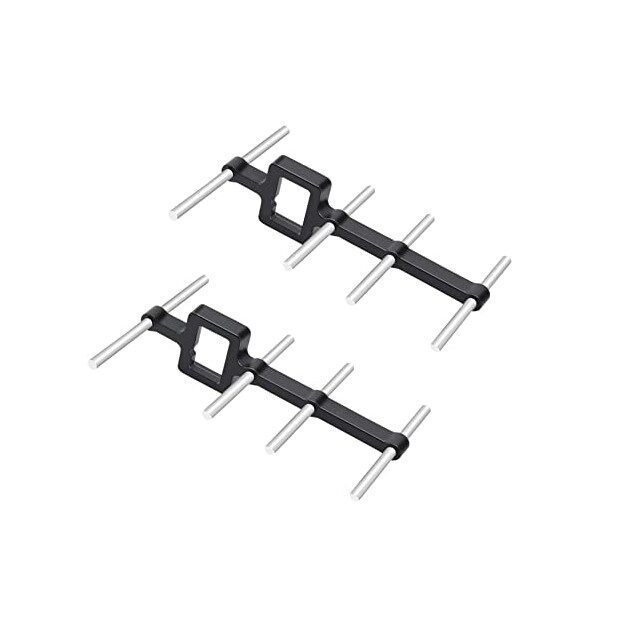
2.4Ghz Yagi-UDA Drone Signal Booster
Long-range signal booster for 2.4GHz control link — extends RC range at night when flying at higher altitudes for photography.
View on Zbotic
3DR 100mW Radio Telemetry 915MHz for APM PX4 Pixhawk
Telemetry radio for real-time data monitoring — lets you check drone status from a ground station during night operations.
View on Zbotic11. Frequently Asked Questions
Q: Is drone night flying legal in India without any permissions?
A: Nano drones under 250g have the most flexibility, but even they should adhere to Green Zone restrictions. Micro and larger drones require DGCA registration and permissions for night operations. Flying without permissions, especially in Yellow or Red zones, can result in fines and drone confiscation.
Q: What lights are required on my FPV drone for night flying?
A: No specific Indian standard mandates exact light colours for hobby FPV drones, but you should have front/rear orientation lights (at minimum), a flashing anti-collision strobe visible from 300–500 metres, and your LEDs should clearly distinguish the front from the rear of your quad.
Q: My FPV camera produces very noisy/grainy footage at night. How do I improve it?
A: Increase auto gain, disable WDR, and use the slowest shutter speed your camera supports without introducing excessive motion blur. For significantly better night performance, look at cameras with large sensor sizes and native WDR. Adding LED lighting on the ground below your flight area also helps.
Q: My drone disappeared in the darkness. How do I find it?
A: If GPS Rescue was enabled, check your transmitter or ground station for the last known GPS coordinates. Walk to that position with a torch. A loud buzzer activated via Betaflight mode is invaluable — enable it to sound when disarmed (many builds have this configured). Check your DVR footage for landmarks near the crash site.
Q: Is night flying safe at indoor venues or farmhouses?
A: Indoor night flying with FPV is a niche but enjoyable activity that does not require DGCA permissions (indoor = not in airspace). However, ensure the space is large enough, well-ventilated, and that spectators maintain safe distance. Nano/micro class drones are most appropriate for indoor night flying.
Equip Your Drone for Safe Night Flights
Zbotic stocks GPS modules, BEC regulators, FPV cameras, and all the components you need for reliable night drone operations in India.
Shop Drone Parts at Zbotic



Add comment