
Common IC Numbers and Their Functions: Quick Reference
If you’ve ever browsed an electronics parts list or read a schematic, you’ve likely come across puzzling part numbers like NE555, LM741, or SN7400. Knowing common IC numbers and their functions is essential for every hobbyist, student, and engineer. Integrated circuits (ICs) pack entire circuits — amplifiers, timers, logic gates, regulators — into a single small chip. This guide is your quick reference to the most widely used ICs in Indian electronics projects, with function summaries, typical applications, and tips for identifying them on old PCBs.
How to Read IC Part Numbers
IC part numbers follow a semi-standardised convention. Understanding the naming pattern helps you quickly identify what a chip does without needing a datasheet:
- Manufacturer prefix: NE (Signetics/Philips), LM (National Semiconductor/TI), SN (Texas Instruments), CD (RCA CMOS), UC, MC, etc. The prefix is often interchangeable — NE555 and LM555 and NA555 are all the same circuit.
- Functional number: The core digits identify the function (555, 741, 7805, 7400).
- Suffix: Package type and temperature range. N = DIP (through-hole), P = DIP, D = SOIC (SMD), T = TO-220 (for regulators). C = commercial temp (0–70°C), I = industrial (−40–85°C).
So LM741CN = LM brand, 741 op-amp function, commercial temp, DIP package. Simple once you know the pattern.
Linear / Analogue ICs
These ICs work with continuous (analogue) signals rather than discrete binary values.
| IC Number | Function | Common Applications |
|---|---|---|
| LM741 | Single op-amp (operational amplifier) | Amplifiers, comparators, filters, oscillators |
| LM358 | Dual op-amp, single supply | Sensor signal conditioning, voltage comparators |
| LM324 | Quad op-amp, single supply | Multi-channel signal processing, audio mixers |
| LM386 | Low-voltage audio amplifier | Small speaker amplifiers, battery radios |
| LM35 | Precision temperature sensor IC | Temperature measurement, thermostat circuits |

LM35 Temperature Sensors
The classic LM35 linear IC outputs 10mV per degree Celsius, making it one of the easiest analogue temperature sensors to use with any microcontroller ADC. No calibration needed.
Timer ICs
NE555 / LM555 — The Most Popular IC Ever Made
The 555 timer is arguably the most well-known IC in the world, with billions produced since 1972. It operates in three modes:
- Monostable (one-shot): Outputs a single timed pulse when triggered. Used in debounce circuits, delay switches, timed actuators.
- Astable (oscillator): Continuously oscillates at a frequency set by two resistors and a capacitor. Used in LED flashers, PWM, tone generators.
- Bistable (flip-flop): Acts as a latch — sets and resets with trigger/reset pins.
The 555 works on 4.5V to 15V and can source or sink up to 200mA directly — enough to drive a small relay or LED array without a transistor. The astable frequency formula is: f = 1.44 ÷ ((R1 + 2R2) × C).
NE556 — Dual 555
Two independent 555 timers in a single 14-pin DIP package. Useful when you need two independent timing circuits in the same project.
Logic Gate ICs (7400 Series)
The 74xx series (TTL) and 4000 series (CMOS) are the building blocks of digital logic. Every gate, flip-flop, and counter you’ll ever need exists in one of these families.
| IC Number | Gates / Function | Key Notes |
|---|---|---|
| 7400 | Quad 2-input NAND gates | Universal gate — can build any logic function |
| 7402 | Quad 2-input NOR gates | Also a universal gate |
| 7404 | Hex inverter (NOT gates) | Signal inversion, oscillator feedback |
| 7408 | Quad 2-input AND gates | Logic masking, enable/disable control |
| 7432 | Quad 2-input OR gates | Signal combining |
| 7486 | Quad 2-input XOR gates | Parity checking, adder circuits |
| 7474 | Dual D-type flip-flop | Data latching, frequency divider |
| 7490 | BCD decade counter | Counts 0–9, drives 7-segment displays |
| 74HC595 | 8-bit shift register with latch | GPIO expansion for microcontrollers |
TTL vs CMOS versions: The prefix 74 = TTL (5V, faster), CD4xxx = CMOS (3–15V, lower power). The 74HC and 74HCT subfamilies are high-speed CMOS, work at both 3.3V and 5V, and are the most commonly used today.
Voltage Regulator ICs
These ICs maintain a stable output voltage regardless of input variations or load changes.
| IC Number | Output Voltage | Max Current | Notes |
|---|---|---|---|
| LM7805 | +5V | 1.5A | Most widely used regulator, TO-220 package |
| LM7812 | +12V | 1.5A | Relay and motor power from high-voltage supply |
| LM7809 | +9V | 1.5A | Legacy designs, battery replacement |
| LM7905 | −5V | 1.5A | Negative rail for dual-supply op-amp circuits |
| LM317 | 1.25V–37V (adj.) | 1.5A | Adjustable positive regulator, variable PSU |
| AMS1117-3.3 | 3.3V | 1A | Low dropout (LDO), used in ESP8266/ESP32 boards |
Op-Amp ICs in Detail
Operational amplifiers are the backbone of analogue electronics. Here are the key specifications to check when selecting one:
- Supply voltage range: Single-supply (e.g., LM358: 3–32V) vs. dual-supply (LM741: ±5V to ±18V)
- Gain-bandwidth product (GBW): LM741 = 1MHz; LM318 = 15MHz. Higher = faster signal processing.
- Input offset voltage: How close to zero the output is when inputs are equal. Lower is better for precision.
- Rail-to-rail: Whether the output can swing all the way to the supply rails. Essential for single-supply designs.
Driver and Interface ICs
These ICs act as the glue between microcontrollers and high-power or communication devices.
| IC Number | Function | Common Use |
|---|---|---|
| L293D | Dual H-bridge motor driver | Control 2 DC motors, direction + speed |
| ULN2003A | 7-channel Darlington transistor array | Relay driving, stepper motor coils, LED arrays |
| MAX232 | RS-232 / TTL level shifter | Serial communication between MCU and PC |
| SN74HC595 | 8-bit serial-in, parallel-out shift register | Expand Arduino outputs using 3 SPI pins |
| PCF8574 | I2C 8-bit I/O expander | I2C LCD backpacks, GPIO expansion |
How to Test Unknown ICs
Found an unmarked IC in a salvaged PCB? Here’s how to identify and test it:
- Read the markings: Clean the top with isopropyl alcohol. Use a magnifying glass or phone camera to read the part number. Search the number + “datasheet” online.
- Count the pins: 8-pin DIP = likely 555, op-amp, or small regulator. 14-pin = 741 op-amp, logic gate, or 556 dual timer. 16-pin = shift register, quad logic, or memory.
- Use an LCR transistor tester: A graphical LCR tester can identify transistors, capacitors, inductors, resistors, and some diodes in seconds. Handy for salvaged component identification.
- Apply power carefully: Start with a current-limited supply. Check supply pin voltages (VCC and GND) to confirm the IC is receiving power correctly.
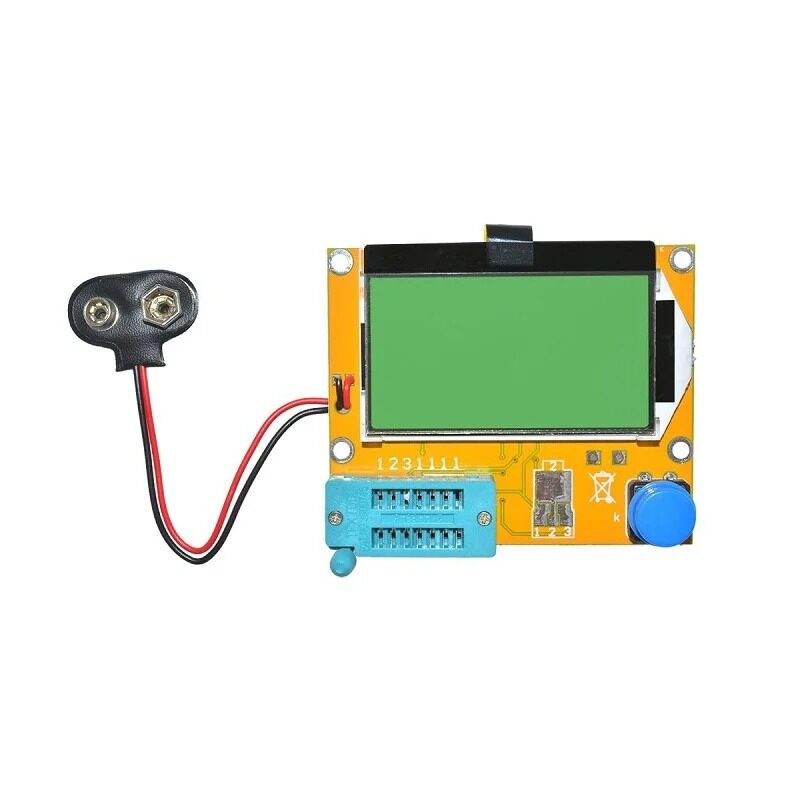
9V Battery Operated LCR-T4 12864 LCD Graphical Transistor Tester
Auto-detect and test transistors, diodes, MOSFETs, capacitors, resistors, and inductors from salvaged boards. Displays pinout and parameters instantly on its graphical LCD screen.
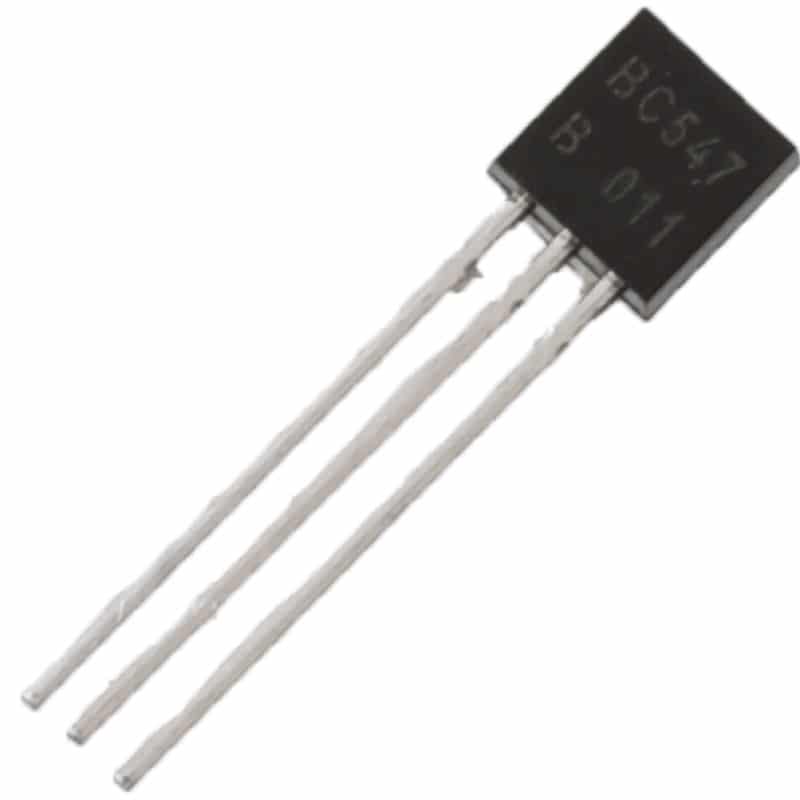
BC547 NPN 100mA Transistor TO-92 (Pack of 10)
The BC547 is one of the most common general-purpose NPN transistors used alongside ICs like ULN2003 and 555 for switching, relay driving, and LED control in hobbyist circuits.
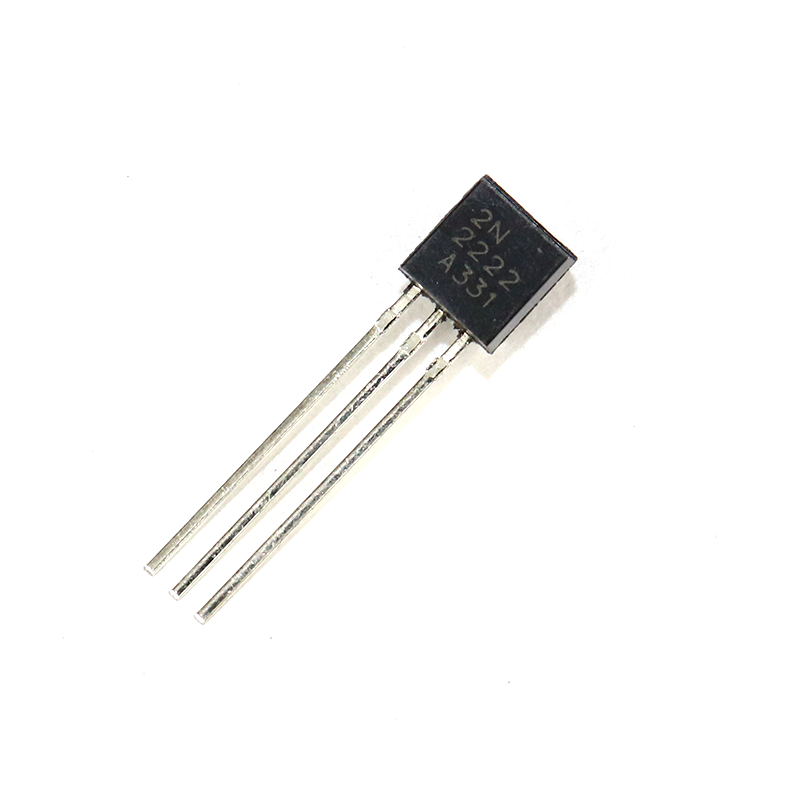
2N2222 NPN Transistor (Pack of 20)
The 2N2222 is a classic NPN transistor that pairs with op-amp and 555 timer IC outputs for driving loads up to 600mA. Essential in any electronics component kit.
Frequently Asked Questions
Q: Can I substitute an LM741 for an LM358 in my circuit?
Not always. The LM741 requires a dual (bipolar) power supply (e.g., ±12V) and its output cannot swing close to the supply rails. The LM358 works on a single supply and is rail-to-rail on the output. Check your circuit’s supply configuration and output swing requirements before substituting.
Q: What is the difference between TTL (74xx) and CMOS (CD40xx) logic families?
TTL ICs (74xx) operate at exactly 5V, have fast switching speeds, and can source/sink more current. CMOS (CD4000 series) works over a wide voltage range (3–15V), consumes much less power at low frequencies, and is more noise-immune. For modern designs, use 74HC (high-speed CMOS) — it combines both benefits and works at both 3.3V and 5V.
Q: How do I know which pin is pin 1 on a DIP IC?
Look for a notch or dot on one end of the IC package. Pin 1 is to the left of the notch (when the notch faces you and the IC is oriented with pins down). Numbering goes anti-clockwise around the package.
Q: Why is the NE555 so popular?
The 555 timer is popular because of its versatility, wide supply voltage range (4.5–16V), ability to drive loads directly (up to 200mA), and its availability in virtually every electronics shop in India for under ₹5. It’s been in continuous production since 1972 and remains the fastest way to generate timing pulses or square waves without a microcontroller.
Q: What does the “HC” in 74HC mean?
HC stands for High-speed CMOS. The 74HC series is a CMOS implementation of the classic TTL 74xx pinout. It runs on 2–6V (compatible with both 3.3V and 5V systems), consumes very little standby power, and switches at speeds comparable to TTL. 74HCT (the T suffix) adds TTL-compatible input thresholds for mixing with older 5V TTL logic.
Build Your IC Component Library
From transistors and temperature sensor ICs to full component starter kits, Zbotic.in stocks the ICs and discrete components Indian makers need. Order online with fast shipping across India.

Add comment