
Stepper motors are celebrated for their simplicity: send pulses, get predictable rotation. No feedback required. But this simplicity hides a fundamental limitation — a stepper motor has no idea whether it actually moved. Under heavy load, at high acceleration, or when something physically jams the shaft, stepper motors miss steps. The controller keeps counting, the motor falls behind, and your CNC machine cuts in the wrong place or your 3D printer layers shift without warning.
Closed loop stepper motors solve this by adding an encoder to the shaft and closing the feedback loop — just like a servo motor. The result is a system that has the wiring simplicity of a stepper but the reliability of a servo. This guide explains exactly when this matters, how it works, and whether your project needs it.
Open Loop Stepper: Where It Breaks Down
A standard open loop stepper system consists of a stepper driver (A4988, DRV8825, TMC2208) and a stepper motor. The driver sends current pulses to the motor coils in sequence; the motor rotates one step per pulse. The controller trusts that every step commanded equals one step executed — there is no confirmation.
Step Loss Causes
- Torque overload: If the required torque exceeds the motor’s holding torque at the current speed, the rotor skips to the next stable position instead of stepping to the commanded one. Each skip is a lost step — typically 1.8° (or 0.1125° in 1/16 microstepping) of unaccounted error.
- High acceleration: A stepper motor can only accelerate as fast as its torque ramps allow. Too aggressive an acceleration profile causes the rotor to fall behind the magnetic field.
- Resonance: At certain speeds, the stepper’s natural mechanical resonance combines with the step frequency, causing violent oscillation and potential stalling. This is why 3D printers often have peculiar speed profiles — tuned to avoid resonance bands.
- Supply voltage spikes: Electrical noise can cause the driver to miscount or the motor to briefly lose sync.
- Mechanical interference: A jam or unexpected resistance in the mechanism — the motor tries to step, can’t, and the controller doesn’t know.
Consequences of Step Loss
In a 3D printer, a few missed steps shift all subsequent layers — creating a visibly banded print. In a CNC router, missed steps mean the toolpath drifts and the workpiece is ruined. In a pick-and-place machine, missed steps cause placement errors. In all cases, the operator only discovers the problem after the damage is done because the controller has no feedback to report the error.
How Closed Loop Steppers Work
A closed loop stepper adds an encoder on the motor shaft and feeds the actual position back to the driver or controller. The driver continuously compares:
- Commanded position: Where the controller thinks the motor shaft should be
- Actual position: Where the encoder says the shaft actually is
The difference is the position error. The driver responds to this error in one of two ways:
Mode 1: Error Correction (Hybrid Servo)
The driver generates additional steps to correct the position error in real-time. If the motor falls 2 steps behind, the driver commands 2 extra steps on top of the normal profile until the error is zero. This keeps the motor in sync even when it experiences brief overloads. Result: zero step loss, just like a servo motor.
Mode 2: Stall Detection and Alarm
The driver monitors position error and triggers an alarm (digital output) when the error exceeds a threshold (e.g., 3 full steps). The machine halts and alerts the operator. Simpler than full correction, but still far better than silent failure in open loop systems.
Hybrid Servo Drives Explained
“Hybrid servo” or “closed loop stepper” are marketing terms for the same concept: a stepper motor + encoder + smart driver that implements the above feedback loop. These systems are sold as drop-in replacements for open loop steppers in CNC machines, 3D printers, and automation equipment.
How Hybrid Servos Differ from True Servos
- True AC servo: Uses a brushless motor optimised for smooth continuous rotation across all speeds. The driver uses FOC. Cost: ₹8,000–₹50,000+ for a complete axis.
- Hybrid stepper servo: Uses a standard NEMA17 or NEMA23 stepper motor with an encoder added. The driver primarily uses open-loop step/direction control but switches to correction mode when error is detected. Cost: ₹2,000–₹10,000 for a complete axis (motor + driver).
Hybrid servos are not quite as smooth as AC servos at very high speeds (the stepper winding structure still causes some resonance), but they are dramatically more reliable than open loop steppers at a fraction of the cost of true servo systems. For most CNC and industrial automation applications in India, hybrid servos are the sweet spot.
Which Encoders Are Used
Closed loop stepper systems typically use one of two encoder technologies:
Optical Encoders (1000–4000 PPR)
High-resolution optical encoders give 4000–16000 counts/revolution in quadrature, providing position resolution of 0.022°–0.09°. This far exceeds the stepper’s 1.8° full step (or 0.1125° in 1/16 microstepping), meaning the encoder detects even sub-step errors.
Most commercial hybrid servo kits (e.g., CL57T driver + NEMA23) use optical encoders — either built into the motor rear plate or retrofitted as a separate module.
Magnetic Encoders (12–14 bit)
For DIY closed loop builds, magnetic encoder ICs like the AS5600 (12-bit, 4096 positions/rev) or AS5048A (14-bit, 16384 positions/rev) are popular because they are cheap (₹100–₹400), compact, and don’t require precise mechanical disc alignment like optical encoders. The AS5600 outputs an analog voltage or I²C/PWM digital signal directly readable by Arduino or the stepper driver.
Resolution: AS5600 provides 4096 steps/rev = 0.088° resolution — finer than a 1/16 microstep (0.1125°).
When Encoder Feedback Actually Matters
Closed loop is not always necessary. Here are the specific conditions where encoder feedback makes a significant difference:
1. High-Torque Variable Loads
If your machine’s load torque varies dramatically during operation (e.g., a CNC router plunging into wood vs. air-cutting, a filament extruder with varying filament diameter, or a conveyor with variable payload), step loss becomes likely in open loop. Closed loop handles these variations by correcting in real-time.
2. High-Speed Operation
Stepper torque drops sharply with speed. Above ~500 RPM for a NEMA17 at 12V (or ~1200 RPM at 24V), torque can fall to 30–50% of low-speed torque. If your application requires sustained high-speed operation (rapid traverse in CNC, high-throughput pick-and-place), closed loop prevents the step losses that would occur in this low-torque high-speed region.
3. Unattended or Automated Production Runs
If the machine runs overnight or produces hundreds of parts per day, even occasional step loss causes scrapped parts. Closed loop with stall alarm eliminates silent failures — the machine stops and alerts the operator rather than producing defective output for hours.
4. Resonance-Prone Applications
Between ~200–500 RPM, stepper motors typically have a mid-frequency resonance zone where they can stall even at low loads. Closed loop drivers detect and correct this. Some drivers also use active anti-resonance algorithms (common in Trinamic TMC drivers with stallGuard/coolStep) even without a position encoder.
5. Long-Duration Holding Under Load
When a stepper holds a position under gravity or spring load for extended periods, thermal expansion and magnetic drift can cause the rotor to slowly creep. A closed loop system detects and corrects creep; open loop has no awareness of it.
When Open Loop is Fine
Do not over-engineer your system. Open loop steppers work perfectly for:
- 3D printers running at moderate speed with known filament — the motors are appropriately torque-derated for the load and resonance is managed by firmware acceleration profiles.
- Camera sliders and plotters — light loads, slow speeds, and the cost of occasionally re-homing is acceptable.
- Educational robots and automation demos — exact position accuracy is secondary to simplicity.
- Applications with physical end-stops — if you home the motor against a switch at startup, a few occasional missed steps between homes are acceptable for non-critical tasks.
- Any application where torque is <40% of rated motor torque at the operating speed — step loss is extremely rare in this operating region.
Step Loss Detection Without Full Closed Loop
An intermediate option is to add an encoder purely for stall detection and alarm, without full error correction. This is simpler to implement and adds safety without the complexity of a hybrid servo drive.
Implementation with Arduino
// Stall detection: compare commanded steps vs encoder counts
// Encoder on INT0/INT1, stepper driver on pins 3 (STEP) and 4 (DIR)

volatile long encoderPos = 0;
long commandedPos = 0;
const int MAX_ERROR_STEPS = 5; // Alarm if >5 steps lost

void encoderISR() {
  int a = digitalRead(ENC_A);
  int b = digitalRead(ENC_B);
  encoderPos += (a == b) ? 1 : -1;
}

void stepMotor(bool dir, int steps) {
  digitalWrite(4, dir);
  for (int i = 0; i < steps; i++) {
    digitalWrite(3, HIGH); delayMicroseconds(500);
    digitalWrite(3, LOW);  delayMicroseconds(500);
    commandedPos += dir ? 1 : -1;
  }
  // Check for step loss
  long err = abs(commandedPos - encoderPos);
  if (err > MAX_ERROR_STEPS) {
    Serial.println("STALL DETECTED — Motor halted");
    // Trigger alarm output, stop motion
    while(1); // Halt
  }
}
DIY Closed Loop with Arduino + A4988
Building a full DIY closed loop stepper with error correction on Arduino is feasible but requires careful timing. The basic approach:
- Mount an AS5600 magnetic encoder on the stepper motor rear shaft (requires a small coupler and diametrically magnetised disc magnet)
- Connect AS5600 SDA/SCL to Arduino I²C (pins A4/A5 on Uno)
- Read angle position from AS5600 at high frequency (use wire.requestFrom in loop)
- Calculate error between commanded position and encoder position
- Generate correction steps via the A4988 STEP pin when error exceeds 1/4 step threshold
This approach works for slow-to-moderate speeds. For high-speed closed loop (>300 RPM), use a dedicated closed loop driver IC or a faster MCU (STM32, ESP32).
Commercial Closed Loop Stepper Drivers
For serious CNC and automation applications, purpose-built closed loop stepper drivers are far more reliable than DIY implementations:
- CL57T (JMC): NEMA23 compatible, 5A, 24–80VDC, built-in 1000 PPR encoder on included motor. The workhorse of Chinese CNC builds. ₹3,000–₹6,000 for motor + driver kit.
- EM542S (Leadshine): Higher performance, 4.2A, advanced anti-resonance. ₹5,000–₹10,000.
- AM882 (Leadshine): NEMA34 sized, for heavy-duty gantry machines. ₹8,000–₹15,000.
- Odrive + NEMA17 + AS5048A: Open-source FOC controller. More flexible but requires tuning. ₹6,000–₹15,000 for a 2-axis setup.
Recommended Products from Zbotic

NEMA17 5.6 kg-cm Stepper Motor (D-Type Shaft)
The standard stepper for 3D printers and CNC machines — the D-type shaft makes it easy to mount an AS5600 encoder magnet for a closed loop upgrade.

A4988 Stepper Motor Driver
Start with the A4988 for open loop operation — add an AS5600 encoder and Arduino interrupt handling to build your own closed loop stall detection layer.
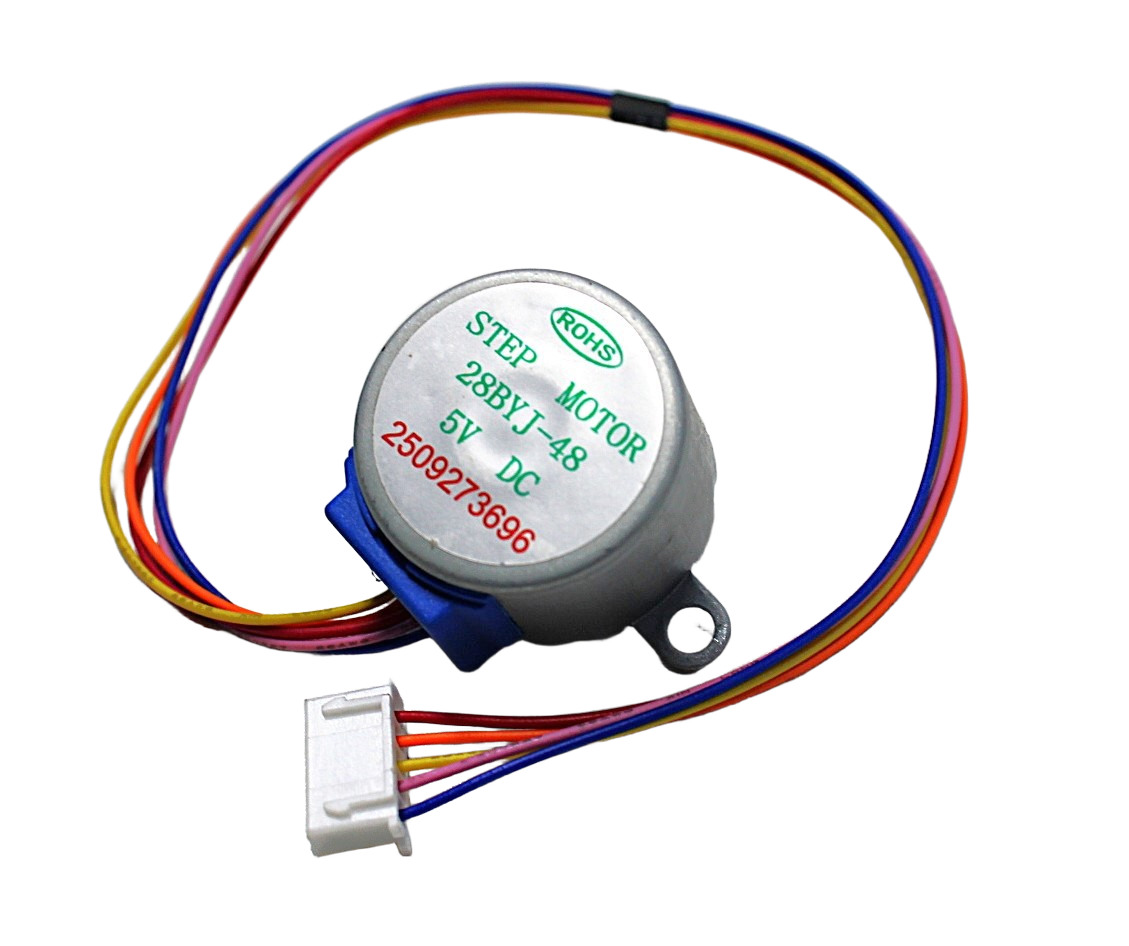
28BYJ-48 5V Stepper Motor
Excellent for learning stepper motor concepts and practising closed loop firmware before committing to an expensive NEMA17 setup.
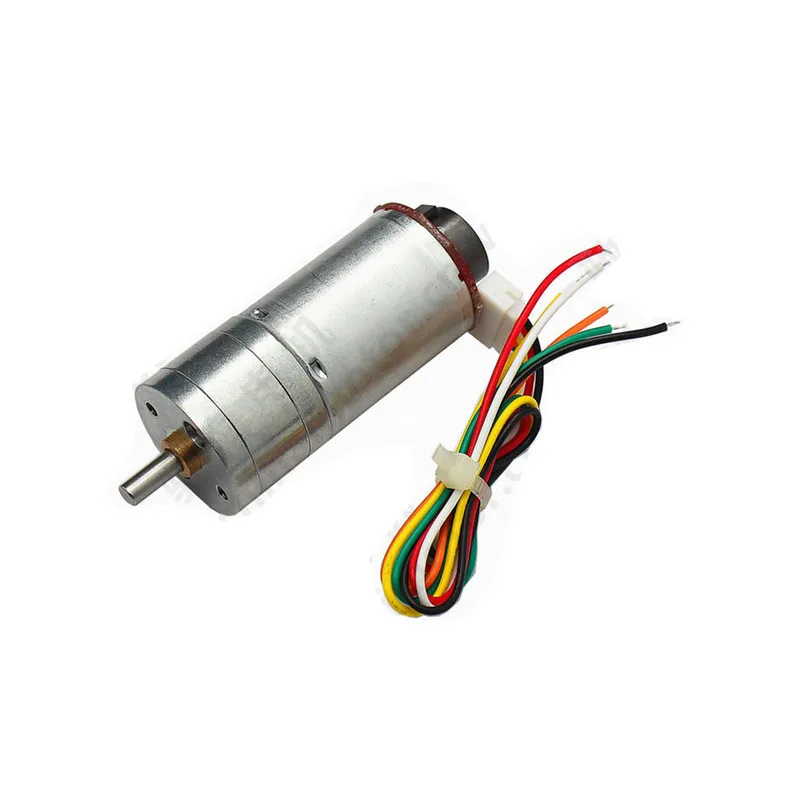
25GA-370 DC Gear Motor with Encoder
A DC gear motor with built-in optical encoder — an alternative to stepper motors for closed loop position control where smooth continuous rotation is preferred.
FAQ
Does a closed loop stepper require homing at startup?
It depends on the encoder type. Incremental encoders (most closed loop steppers) lose position at power-off and require homing to a known reference at startup — just like open loop steppers. Absolute encoders (AS5048A, multi-turn absolute encoders) retain position through power cycles, eliminating homing. Most commercial hybrid servo kits use incremental encoders for cost reasons.
Is a closed loop stepper better than a servo motor?
It depends on the application. Closed loop steppers cost less and drop in as replacements for standard stepper systems. AC servo motors offer higher top speed, better efficiency at speed, and superior smooth motion for video/precision applications. For most Indian CNC and automation projects under ₹50,000 budget, closed loop steppers (hybrid servos) offer the best price-to-performance ratio.
What resolution encoder do I need for closed loop stepper control?
At minimum, the encoder needs higher resolution than the driver’s microstepping resolution. For 1/16 microstepping on a 200-step motor = 3200 microsteps/rev = 0.1125°/step. An AS5600 at 4096 steps/rev (0.088°/step) barely exceeds this; an AS5048A at 16384 steps/rev is more comfortable. For commercial hybrid servo kits, 1000 PPR (4000 counts/rev in quadrature) is the industry standard.
Can I add closed loop feedback to my existing 3D printer?
Yes. Projects like the BIGTREETECH S42B (closed loop controller that mounts on the back of NEMA17) retrofit closed loop feedback to standard 3D printer stepper motors. These work with any 3D printer firmware (Marlin, Klipper) and use their own built-in position correction without needing firmware changes. Available from Indian suppliers for ₹800–₹2,000 per axis.
My stepper skips steps only under heavy load — will closed loop fix this?
Yes, this is exactly the use case for closed loop. The driver detects the step loss and issues correction steps immediately. However, if the load is consistently above the motor’s rated torque, corrections will also fail — you need either a larger motor or closed loop to trigger a fault and protect the machine from damage.
What happens if closed loop correction fails (error too large)?
Most commercial hybrid servo drivers have a configurable error alarm threshold (e.g., 3 full steps = 5.4°). When the position error exceeds this threshold, the driver asserts an alarm output (usually an open-collector pin), which can be wired to the controller’s emergency stop input. The machine halts safely instead of continuing with an incorrect position.
Building a precision CNC or automation project? Start with quality stepper motors and drivers from Zbotic. Shop Stepper Motors and Drivers at Zbotic — fast delivery across India.




Add comment