
Finding the right robotics kits for engineering students in India can be the difference between a forgettable college project and a prize-winning competition entry. With so many options flooding the market — from cheap toy kits to professional-grade platforms — choosing the correct one for your skill level, budget, and academic goals is genuinely challenging. This guide cuts through the noise and presents the best picks for 2026, curated specifically for B.Tech, B.E., and diploma students across India.
What to Look for in a Robotics Kit
Not all robotics kits are equal. Before spending your pocket money or convincing your college lab to order a kit, evaluate these five factors:
- Controller board: Is it Arduino-compatible, ESP32-based, or Raspberry Pi? ESP32 kits offer built-in Wi-Fi and Bluetooth — critical for IoT projects that score highly in competitions.
- Expandability: Can you add sensors, actuators, and communication modules? A kit that locks you into proprietary add-ons gets expensive fast.
- Documentation quality: Good kits come with circuit diagrams, example code, and assembly guides. Poorly documented kits waste hours of lab time.
- Spare parts availability: Motors, wheels, and gears break. Check if replacement parts are available in India before buying.
- Community support: Active forums, YouTube tutorials, and GitHub repositories save the day when you hit a wall at 2 AM before a submission deadline.
Best Beginner Kits for Year 1–2 Students
First-year engineering students need kits that teach fundamentals without overwhelming complexity. The ideal beginner kit includes a clear chassis, basic motors, and a well-documented controller — no soldering required.
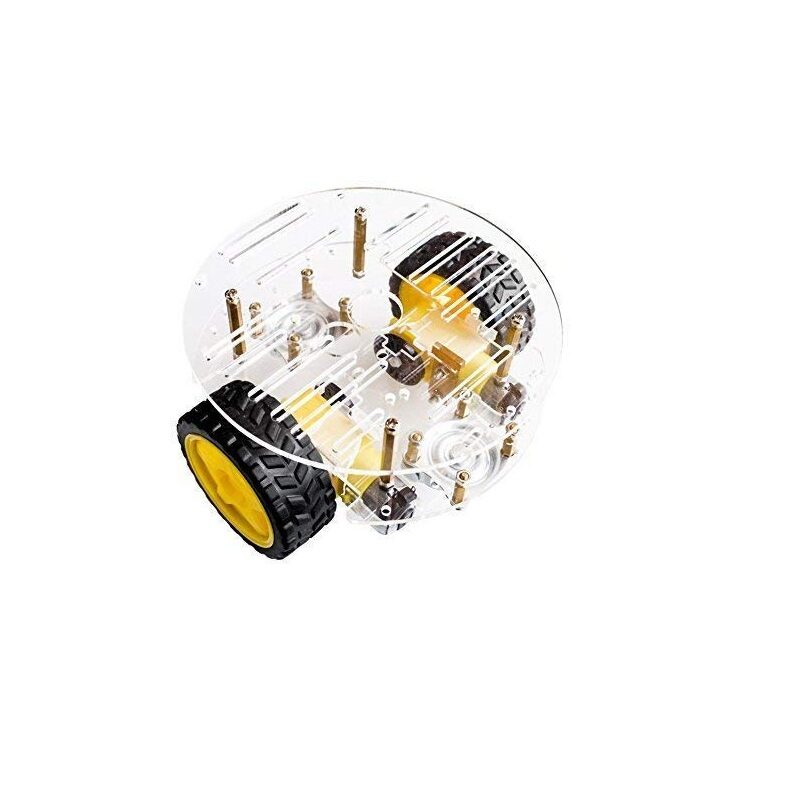
2WD Mini Round Double-Deck Smart Robot Car Chassis DIY Kit
The classic entry-level chassis for college robotics. Dual-deck acrylic frame fits Arduino Uno and a motor shield, with room for sensors on the upper deck. Ideal for line follower and obstacle avoidance projects.
The 2WD round chassis is the most popular beginner robotics platform in Indian colleges for a reason: it’s cheap, flexible, and well-documented across hundreds of YouTube tutorials. Add an L298N motor driver, HC-SR04 ultrasonic sensor, and IR sensors from Zbotic and you have a fully functional autonomous robot for under ₹800.
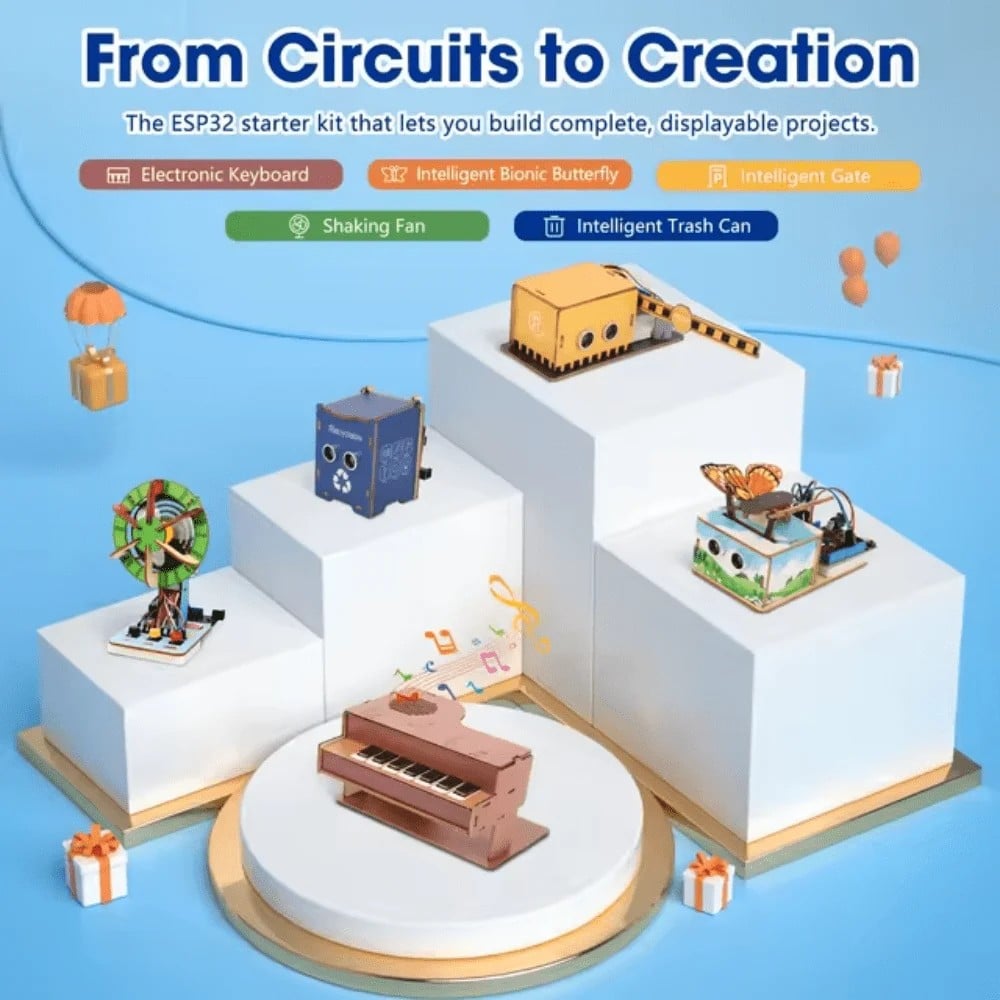
ACEBOTT ESP32 Basic Starter Kit (QE201)
A complete ESP32-based starter kit covering electronics fundamentals and programming. Includes breadboard, sensors, LEDs, and detailed project tutorials. Wi-Fi/Bluetooth built-in — perfect for IoT college projects.
The ACEBOTT QE201 is ideal for students who want to learn both hardware interfacing and wireless communication. Its ESP32 controller board is compatible with MicroPython, Arduino IDE, and even CircuitPython — giving you flexibility across different courses.
Best Intermediate Kits for Year 2–3 Students
By second year, engineering students need kits that challenge them with real-world problems: PID control, sensor fusion, multi-DOF motion, and wireless communication. These kits are perfect for mini-project submissions and tech-fest competitions like Technothlon and Robocon qualifiers.
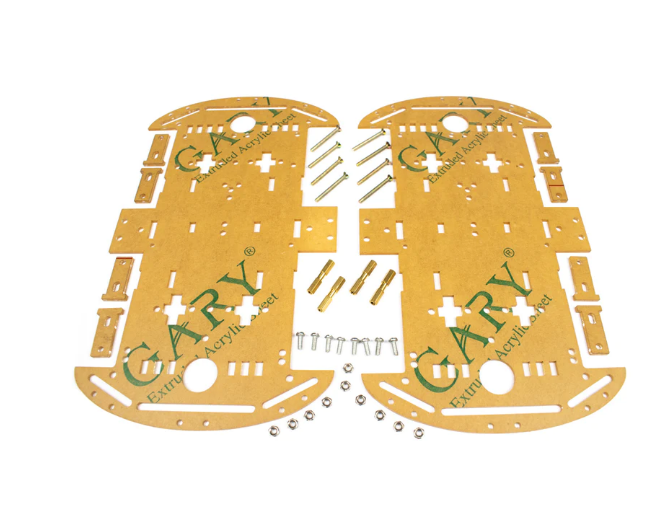
4 Wheels Car Chassis Acrylic Frame
Sturdy 4WD acrylic chassis that supports heavier payloads — great for carrying Raspberry Pi, LiPo batteries, and sensor arrays. Suitable for autonomous navigation and remote-controlled competition robots.
The 4WD chassis opens the door to mecanum wheel upgrades, encoder-based odometry, and omnidirectional movement. Pair it with a Raspberry Pi 4 for computer vision projects — one of the hottest topics in final-year project evaluations.
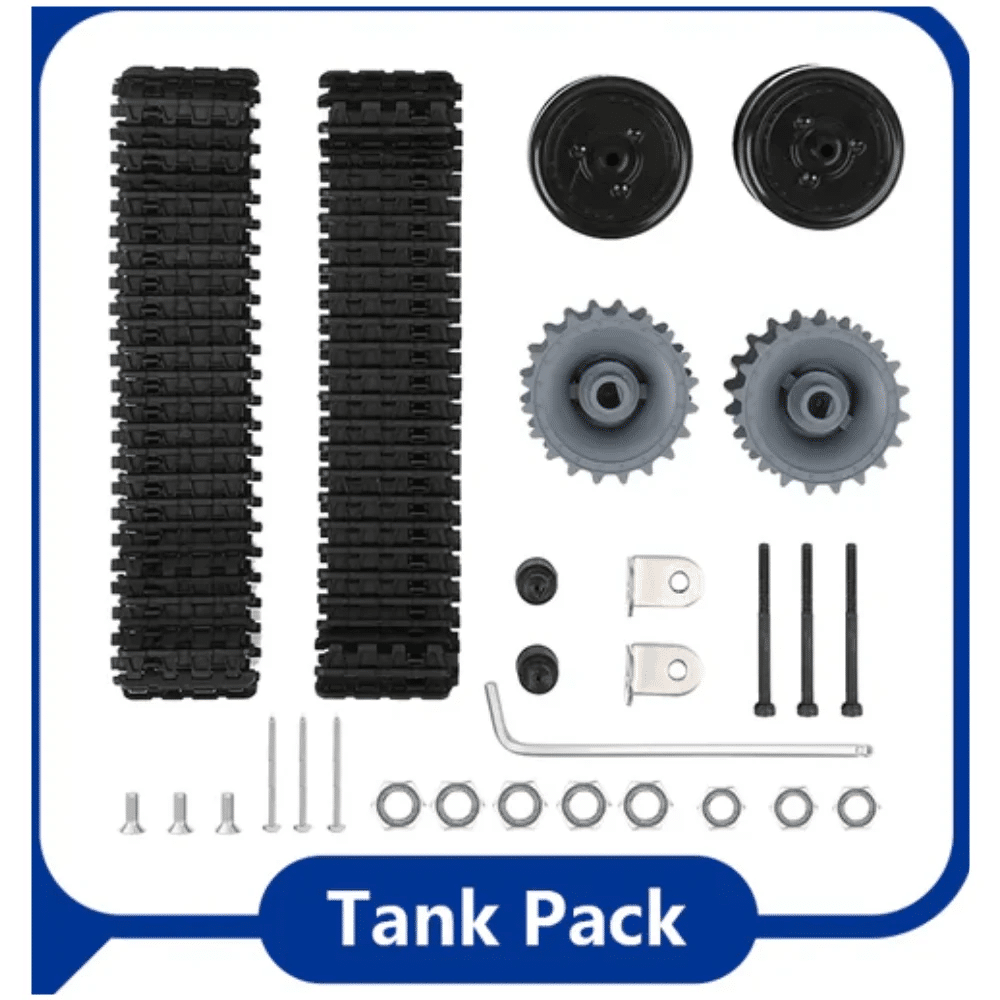
ACEBOTT ESP32 Tank Robot Car Expansion Pack (QD001–QD004)
Tank-track chassis expansion with ESP32 control. Handles rough surfaces and inclines better than wheeled robots. Great for terrain-navigation and line-follower competition builds with built-in Wi-Fi control.
Best Advanced Kits for Year 3–4 & Competitions
Final-year students, Robocon participants, and those aiming for GATE/internship portfolios need kits that demonstrate real robotics engineering competence. These advanced kits cover multi-DOF manipulation, servo control, and programmable behaviour trees.
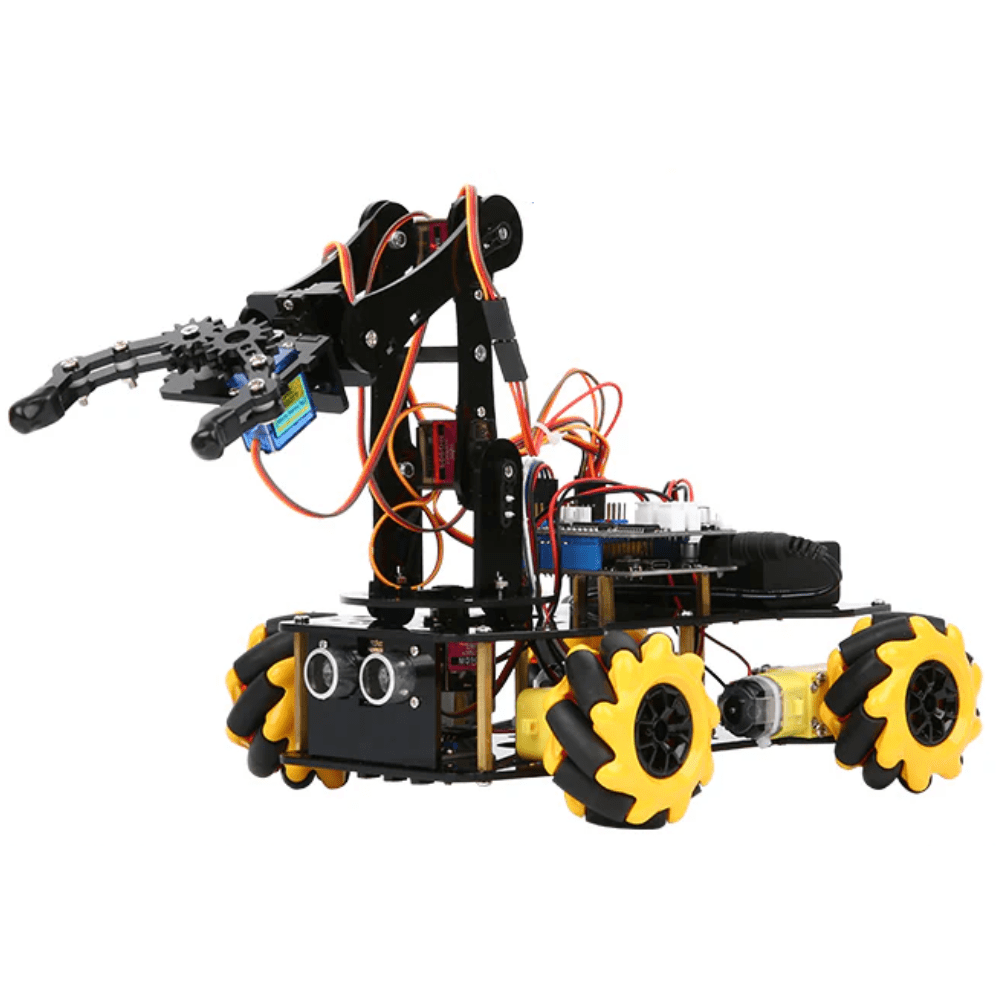
ACEBOTT ESP32 5-DOF Robot Arm Kit (QD001–QD007)
Five-degree-of-freedom robot arm controlled by ESP32. Programs inverse kinematics via block coding or C++. Excellent for final-year projects in industrial automation, pick-and-place systems, and competitive robotics.
Specialised Kits: Arm, Biped & Programmable Robots
Specialised robot kits let you explore niche robotics domains that are increasingly valued in industry and research:
- Biped robots — demonstrate balance control, ZMP algorithms, and gait planning (relevant for humanoid research).
- Robot arms — directly applicable to industrial automation, pick-and-place, and collaborative robotics careers.
- Programmable all-in-one kits — best for students who want rapid prototyping without custom PCBs.
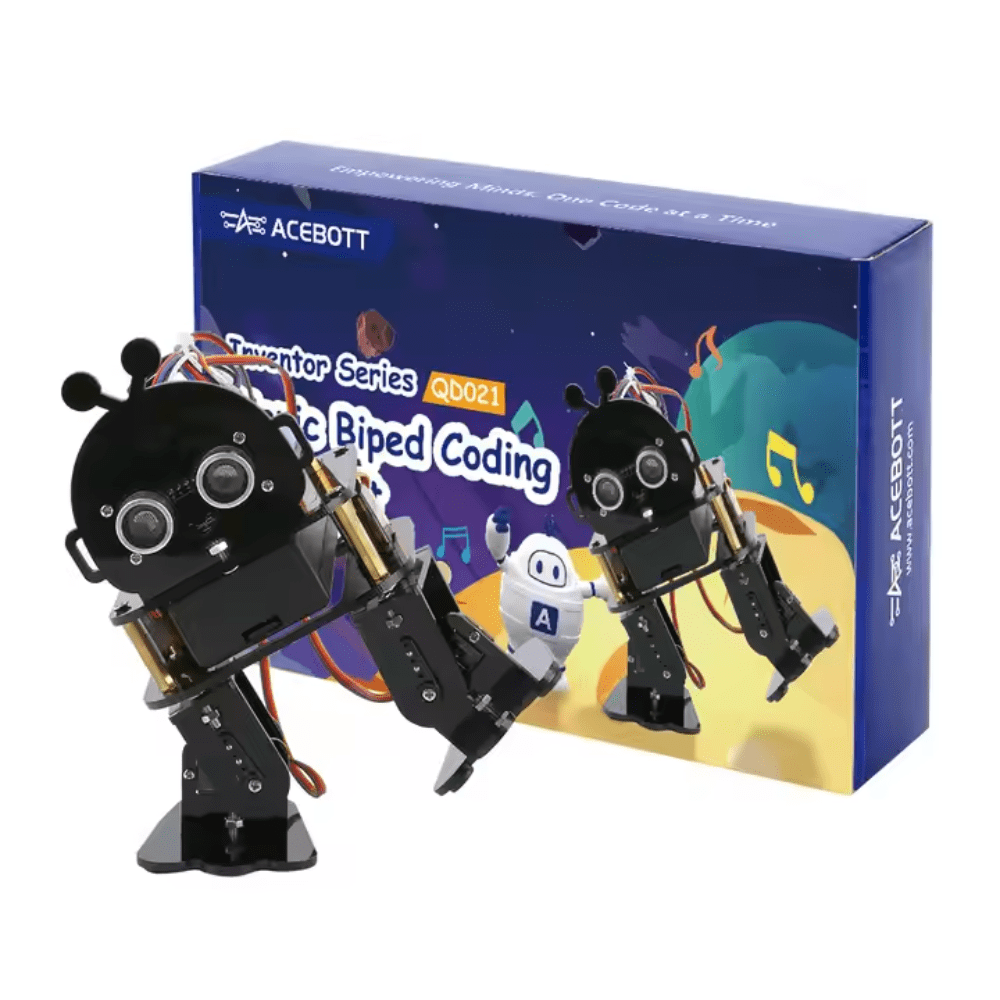
ACEBOTT Biped Robot Kit – QD021
A walking biped robot kit with servo-driven legs and ESP32 brain. Great for demonstrating inverse kinematics and gait algorithms in college presentations. Includes structured assembly guide and programming examples.
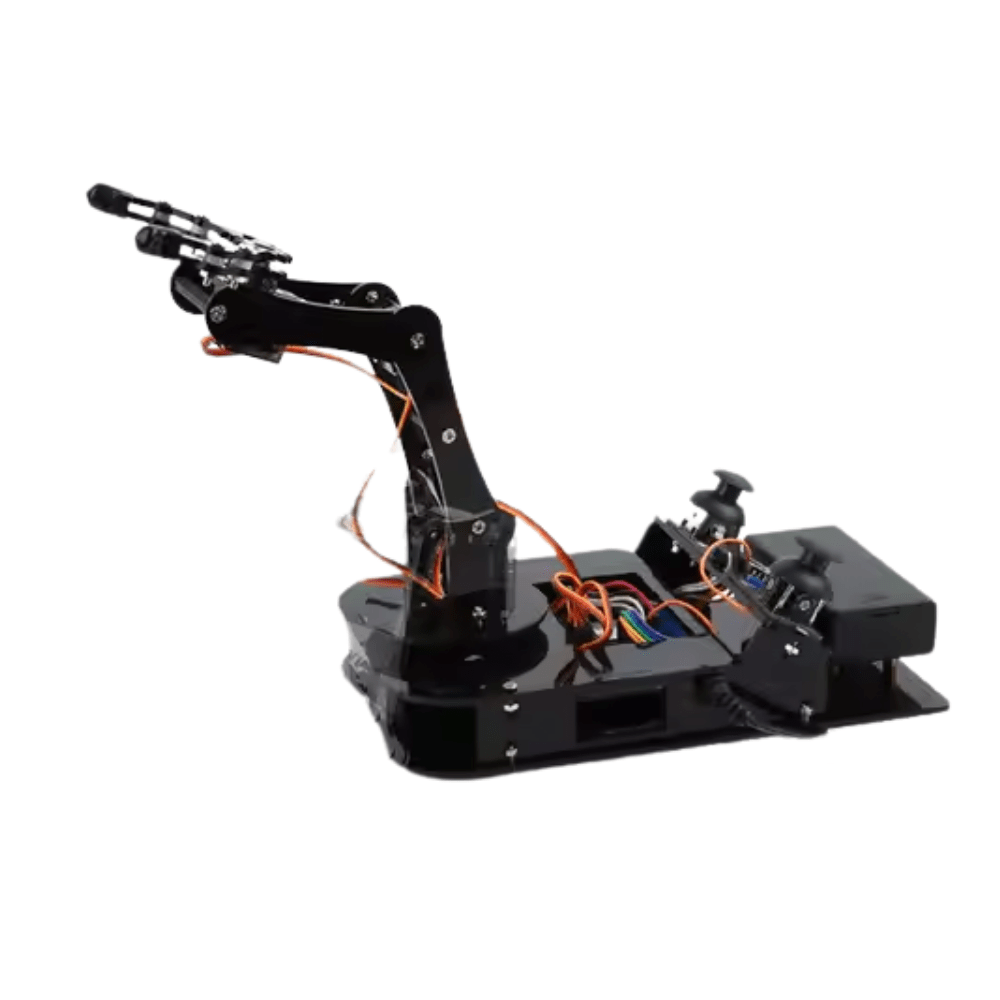
ACEBOTT ESP32 Programmable Robot Arm for Beginners – QD022
Beginner-friendly robot arm with step-by-step coding tutorials in both block-based and C++ programming. Ideal for first-time arm builders or students bridging the gap between starter and advanced kits.
Buying Guide: Budget vs Value for Indian Students
Here is a quick budget breakdown to help you decide:
| Budget | Recommended Kit | Best For |
|---|---|---|
| Under ₹1,000 | 2WD Round Chassis + L298N + HC-SR04 | First semester, line follower |
| ₹1,000–₹3,000 | ACEBOTT ESP32 Starter Kit (QE201) | Mini-project, IoT experiments |
| ₹3,000–₹6,000 | 4WD Chassis + Raspberry Pi + Camera | Computer vision project, competition |
| ₹6,000+ | ACEBOTT 5-DOF Arm or Biped Kit | Final year, Robocon, portfolio |
Pro tip for Indian students: Check if your college lab already stocks some components. Focus your budget on the unique kit components (chassis, specialised sensors) and source common parts (resistors, capacitors, LEDs) separately to save 30–40%.
Project Ideas Mapped to Each Kit
Choosing a kit is easier when you know what you’ll build. Here are project ideas sorted by difficulty, all suitable for Indian engineering college evaluations:
Beginner Projects (2WD Chassis / ESP32 Starter Kit)
- Line-following robot with PID control
- Obstacle-avoiding robot (ultrasonic sensor)
- Bluetooth-controlled car via smartphone app
- IoT temperature monitor with Wi-Fi dashboard (QE201)
Intermediate Projects (4WD / Tank Chassis)
- SLAM (Simultaneous Localisation and Mapping) with ROS Lite
- Voice-controlled robot using Google Assistant + IFTTT
- Mecanum wheel omnidirectional rover
- Fire-fighting robot (ties in perfectly with our flame sensor guide)
Advanced Projects (5-DOF Arm / Biped Kit)
- Pick-and-place arm with computer vision colour sorting
- Biped gait optimisation using reinforcement learning
- Collaborative robot (cobot) safety demonstration
- Sign language interpreter using servo-driven hand
Frequently Asked Questions
Which robotics kit is best for a complete beginner in India?
The 2WD Round Double-Deck Chassis paired with an Arduino Uno and L298N motor driver is the best starting point. It’s affordable (under ₹1,000 for the kit), backed by thousands of tutorials, and teaches fundamental concepts like PWM motor control and sensor integration.
Is ESP32 better than Arduino for robotics projects?
For most college projects in 2026, yes. ESP32 offers dual-core processing, Wi-Fi, Bluetooth, and more GPIO pins than the Arduino Uno — all at a similar or lower price point. The Arduino ecosystem has better beginner documentation, but ESP32 is increasingly the preferred platform.
Can I use these kits for Robocon India?
The ACEBOTT advanced kits and 4WD chassis are suitable for building Robocon-style competition robots. However, Robocon typically requires custom mechanical design — use these kits to learn the fundamentals before fabricating competition-specific frames.
What software do I need to program these robots?
Arduino IDE (free) covers most kits. For ESP32-based kits, you can also use VS Code with the PlatformIO extension for better project management. Block-coding software (like those included with ACEBOTT kits) is great for absolute beginners.
Are robotics kits available for fast delivery across India?
Yes. Zbotic.in ships robotics kits and components to all major Indian cities including Mumbai, Delhi, Bengaluru, Chennai, Hyderabad, Pune, and Kolkata, typically within 2–5 business days.
Browse India’s top robotics kit selection at Zbotic! From beginner 2WD chassis to advanced 5-DOF robot arms, we stock everything engineering students need to build, learn, and compete. Shop Robotics & DIY Kits →







Add comment