
Table of Contents
- Why Build Your Own Electric Bike?
- Types of Motors Used in DIY E-Bikes
- How Much Power Do You Actually Need?
- Torque Calculations: From Wheel to Motor
- Understanding KV Rating and Voltage
- Gear Ratio Selection for Maximum Efficiency
- Battery Sizing and Range Estimation
- Controller Selection for Your Motor
- E-Bike Legality in India
- Recommended Products from Zbotic
- Frequently Asked Questions
Why Build Your Own Electric Bike?
The DIY electric bike community in India is growing rapidly as petrol prices climb and more people seek sustainable, economical urban transport. Building your own e-bike gives you something no commercial product can offer: complete control over performance, battery capacity, and cost. A self-built conversion can cost ₹15,000–40,000 compared to ₹60,000–1,50,000 for a comparable commercial e-bike, with the added benefit of being fully repairable and upgradeable.
But the single most consequential decision in any e-bike build is motor selection. Choose a motor that is too weak and the bike struggles on inclines; choose one that is too powerful and you waste battery capacity, overheat components, or create a machine that exceeds legal speed limits. This guide provides the engineering framework to size your motor correctly for your specific requirements — rider weight, terrain, desired speed, and daily range.
We will focus particularly on EV gear motors (geared brushless hub motors and geared DC drive motors) because they offer the best torque-per-weight ratio for urban Indian riding conditions where stop-and-go traffic and moderate inclines are common.
Types of Motors Used in DIY E-Bikes
Before diving into sizing calculations, it is important to understand the motor topologies available to Indian DIY builders:
Geared Hub Motors
A geared hub motor fits inside the wheel hub and uses internal planetary gears to multiply torque. The motor spins at a higher RPM internally and the gearbox reduces speed while increasing torque. These motors are typically lighter than direct-drive hubs, produce better low-speed torque for hill climbing, and allow the wheel to freewheel when unpowered (no regenerative braking drag while coasting).
Best for: Urban commuting in hilly terrain, lightweight builds, bicycles where efficiency matters more than top speed.
Direct Drive Hub Motors
In a direct-drive hub motor, the motor rotor is the wheel hub itself — there are no gears. This makes them mechanically simpler and nearly silent but requires a larger, heavier motor to produce adequate low-speed torque. They also enable effective regenerative braking since the motor acts as a generator when the wheel spins unpowered.
Best for: High-speed builds (>40 km/h), flat terrain, throttle-only operation, heavy riders.
Mid-Drive Motors
Mid-drive motors mount at the bicycle’s bottom bracket (pedal axle) and drive through the existing bicycle chain and gear system. This lets the motor benefit from the bike’s multiple gears, dramatically improving hill climbing efficiency and range compared to hub motors of the same power rating.
Best for: Mountain bikes, heavy loads, maximum range, PAS (Pedal Assist System) builds.
Chain/Gearbox Drive DC Motors
High-power DC brushless motors (like the MY1020 500 W) with an external chain-drive system are popular for go-karts, scooters, and custom e-bike builds. They offer flexibility in placing the motor anywhere on the frame and allow gear ratio adjustment by changing sprocket sizes.
Best for: Custom frames, scooter conversions, go-karts, high-power builds where hub motor size would be impractical.
How Much Power Do You Actually Need?
The power required to maintain a target speed on flat ground is determined by rolling resistance and aerodynamic drag. For a typical Indian urban e-bike scenario:
Power Formula
P = F_total × v
Where F_total = rolling resistance force + aerodynamic drag force, and v = target speed.
Practical Power Estimates for Indian Conditions
| Rider + Bike Weight | Target Speed (flat) | Recommended Motor Power | Good for Hills? |
|---|---|---|---|
| 90–110 kg total | 25 km/h | 250 W | Mild slopes only |
| 90–110 kg total | 35 km/h | 500 W | Yes, moderate hills |
| 90–110 kg total | 45 km/h | 1000 W | Yes, steep hills |
| 120+ kg total | 35 km/h | 750–1000 W | Yes |
These are continuous power requirements. The motor must be capable of 2–3× this power for short bursts (hill climbing, acceleration from standstill). A 500 W motor with a 1000 W peak rating is common in this segment.
Hill climbing power: Add approximately 100 W per % gradient per 100 kg of total weight. For a 100 kg total weight on a 10% gradient: extra 100 W needed. A 500 W motor on a 10% hill effectively has only 400 W available for forward motion after overcoming gravity.
Torque Calculations: From Wheel to Motor
Power tells you how fast you can go; torque tells you whether you can move from standstill and climb hills. For e-bikes, wheel torque is the critical quantity.
Required Wheel Torque
T_wheel = F_total × r_wheel
For a 90 kg rider on a 20 kg bike with 28-inch wheels (radius = 0.356 m), starting from standstill on a 10% incline:
- Gravity component: (90+20) × 9.81 × sin(5.7°) = 110 × 9.81 × 0.0993 ≈ 107 N
- Rolling resistance: 110 × 9.81 × 0.015 ≈ 16 N
- Total F ≈ 123 N
- Required wheel torque: 123 × 0.356 ≈ 44 N·m
A 500 W BLDC motor with 24 V input and 80% efficiency produces approximately:
- Motor RPM at no load ≈ KV × V = 20 KV × 24 V = 480 RPM (example low-KV motor)
- Motor torque = (P × η) / ω = (500 × 0.8) / (480 × 2π/60) ≈ 8 N·m at the motor shaft
To get from 8 N·m at the motor to 44 N·m at the wheel, you need a gear reduction ratio of approximately 5.5:1. This is exactly what the internal planetary gears in a geared hub motor provide, or what a sprocket chain arrangement delivers in a chain-drive system.
Understanding KV Rating and Voltage
KV is perhaps the most misunderstood specification in the BLDC motor world. KV is not kilo-volts — it is the motor’s velocity constant, expressed in RPM per Volt. A motor with KV = 100 spins at approximately 100 RPM per volt of applied voltage at no load.
KV Selection Logic
- High KV (1000+): High RPM, low torque at a given voltage. Suitable for drone propellers, model aircraft — not for e-bikes directly (needs significant gear reduction).
- Medium KV (200–500): Balance of speed and torque. Common in e-bike geared hub motors.
- Low KV (20–100): Low RPM, high torque. Used in gimbal motors and large direct-drive hub motors where no gearing is needed.
Voltage and Speed
For a typical 26-inch wheel (circumference ≈ 2.07 m) with a 250 KV motor running at 36 V and 5:1 final gear ratio:
- Motor RPM = 250 × 36 = 9000 RPM (no load)
- Wheel RPM = 9000 / 5 = 1800 RPM
- Speed = 1800 × 2.07 / 60 = 62 km/h (theoretical, unloaded)
- Under load at 80% speed: ≈ 50 km/h — which may exceed legal limits in India (25 km/h for legally exempt e-bikes)
This example shows why motor KV and voltage selection must account for the full drivetrain — using a 250 KV motor at 48 V would push speeds even higher, requiring throttle-limited top speed to remain street-legal.
Gear Ratio Selection for Maximum Efficiency
The optimal gear ratio keeps the motor operating near its peak efficiency point — typically at 70–80% of maximum RPM and 50–70% of maximum torque. Operating too far from this point wastes energy as heat.
Calculating the Ideal Ratio
- Determine your target cruising speed: e.g., 30 km/h
- Calculate required wheel RPM: 30 km/h × 1000 / 60 / (wheel circumference in m) = 30000/60/2.07 ≈ 241 RPM
- Motor runs at peak efficiency at roughly 75% of no-load RPM. For a 250 KV / 36 V motor: peak efficiency RPM ≈ 0.75 × 9000 = 6750 RPM
- Gear ratio = 6750 / 241 ≈ 28:1
This high ratio seems unusual, but it is what internal geared hub motors achieve through their compact planetary gear stages. Chain-drive systems on scooter conversions typically use 5:1 to 10:1, paired with much lower KV motors.
Battery Sizing and Range Estimation
Range = Battery Energy (Wh) / Power Consumption (W/km)
Typical power consumption for a 500 W e-bike in Indian urban conditions: 15–25 Wh/km (including stop-and-go, moderate hills). For 30 km range at 20 Wh/km:
- Required energy: 30 × 20 = 600 Wh
- At 36 V: 600 / 36 ≈ 16.7 Ah battery capacity needed
- Typical choice: 36 V 20 Ah lithium pack (adds ~4–5 kg weight, ₹8,000–15,000 cost)
Discharge rate (C rating): Your battery must supply peak current without voltage sag. For a 500 W motor at 36 V, average current = 500/36 ≈ 14 A. Peak current (acceleration, hills) = 30–40 A. A 20 Ah battery discharging at 40 A is a 2C rate — well within lithium ion’s safe range (most cells support 3–5C continuously).
In India, 18650-cell lithium packs from CATL, LG, or Samsung cells are available through battery assemblers. Avoid ultra-cheap packs that use counterfeit cells — they fail rapidly and can be a fire hazard.
Controller Selection for Your Motor
The motor controller (also called the ESC or motor controller unit in the e-bike context) must match your motor’s voltage, current, and phase count. Key specifications to match:
- Voltage: Must support your battery voltage with some headroom (e.g., 48 V controller for a 36 V battery = safe; 36 V controller for 36 V battery = no headroom)
- Current rating: Must exceed your motor’s peak current. For a 500 W / 36 V motor: peak ≈ 40 A; use a 45–60 A controller.
- Sensored vs sensorless: Controllers for geared hub motors should support Hall sensors for smooth low-speed starts. Sensorless controllers often produce a jerky start at low speed.
- PAS support: If you want pedal-assist, the controller must accept a PAS (Pedal Assist Sensor) input.
E-Bike Legality in India
Under Indian law (AIS 041 standard and Motor Vehicles Act), an electric bicycle is exempt from registration, insurance, and driving licence requirements if:
- Maximum speed does not exceed 25 km/h
- Motor power does not exceed 250 W continuous
- The motor provides only pedal assistance (not purely throttle-driven)
Any e-bike exceeding these limits is classified as a Low Speed Electric Vehicle (LSEV) or electric motorcycle and requires registration, third-party insurance, and a valid driving licence. Many DIY builders operate legally grey-area builds — be aware of the regulations in your state as enforcement varies.
Recommended Products from Zbotic
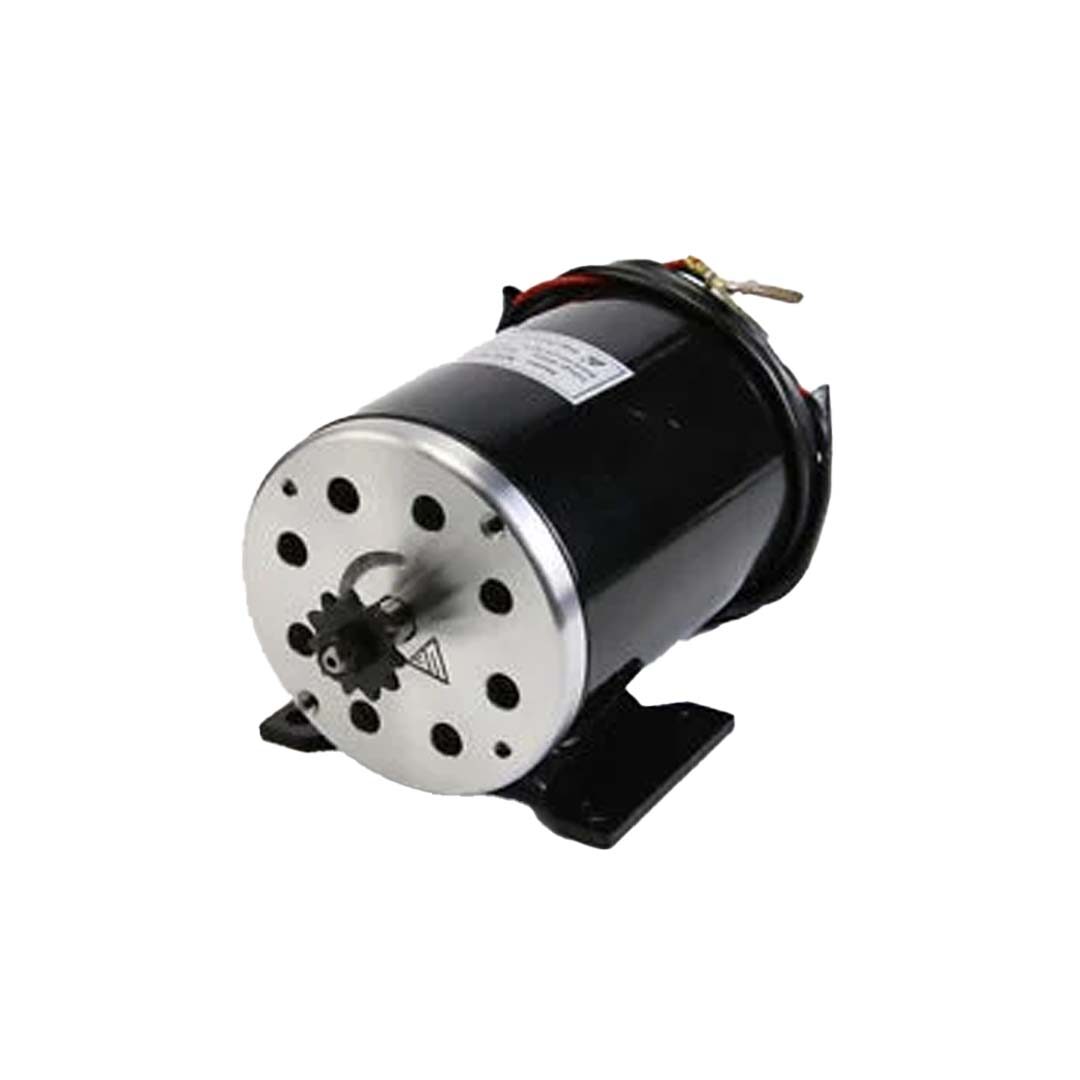
Ebike 500W 24V DC 2500 RPM Motor (MY1020)
The MY1020 is one of the most popular motors for DIY e-bike and go-kart conversions in India. 500 W at 24 V with 2500 RPM, chain-drive compatible, and widely supported by off-the-shelf controllers.
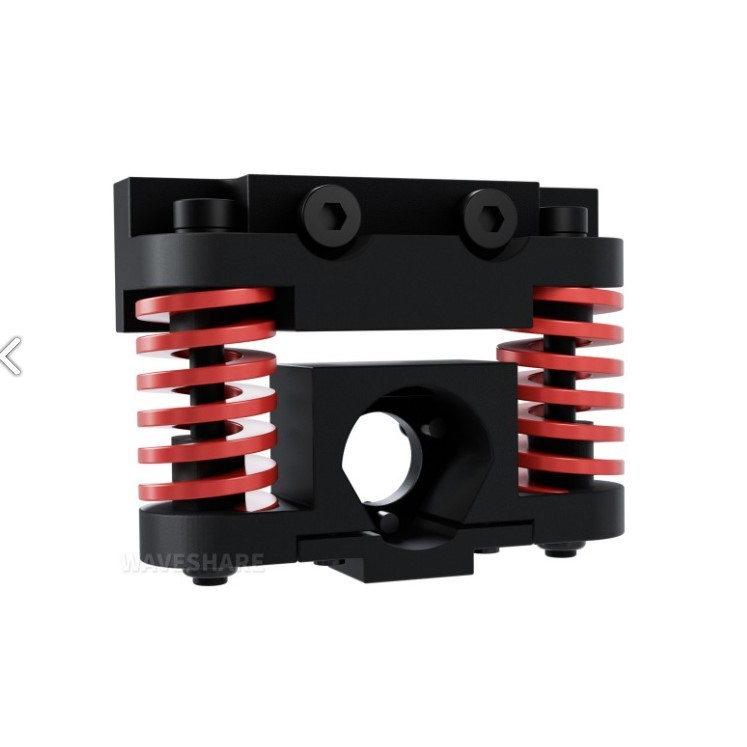
Waveshare All-Metal UGV Suspension (for DDSM115 Hub Motor)
High-strength spring suspension designed for DDSM115 hub motors with 7.5 kg load capacity — an excellent starting point for a compact electric vehicle or research robot build.
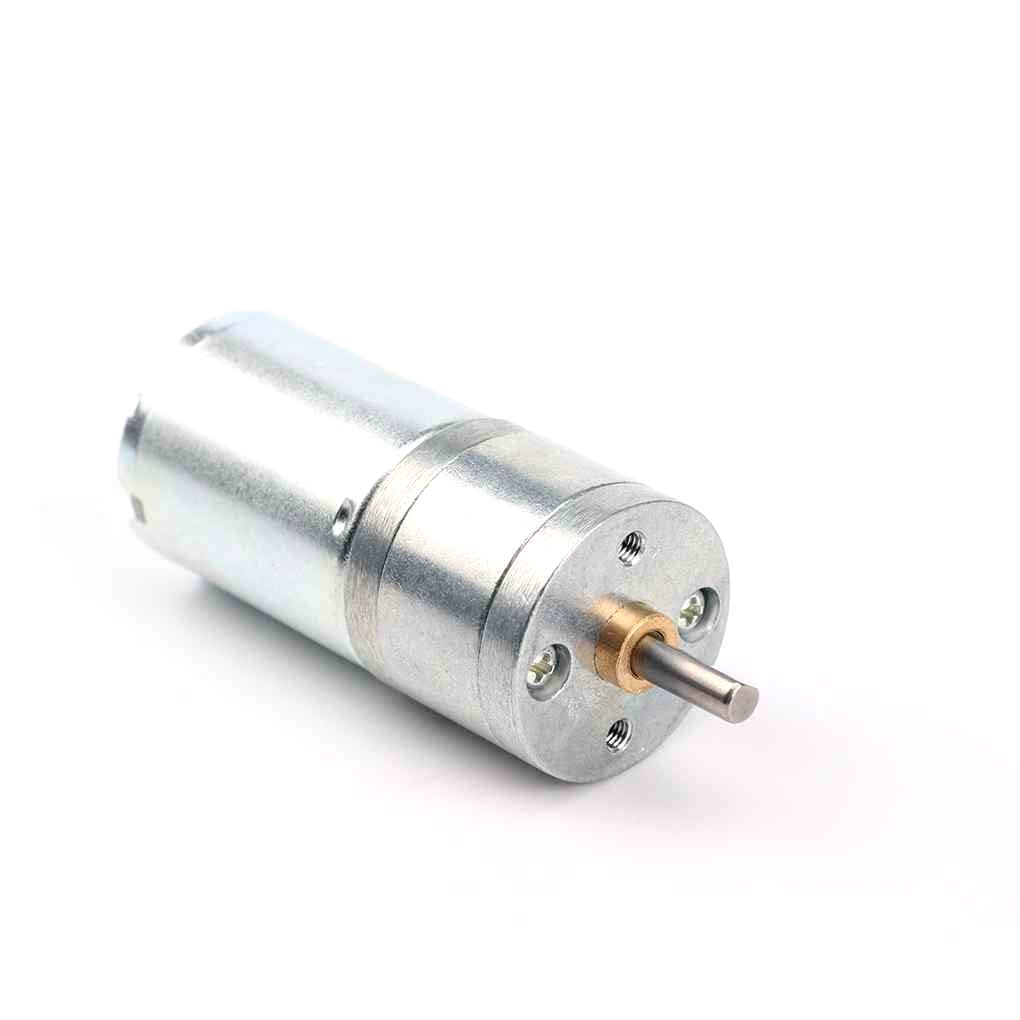
25GA-370 12V 12RPM DC Reducer Gear Motor
A compact high-reduction DC gear motor for small EV prototypes, robot wheels, and educational e-bike models. Excellent choice for proof-of-concept builds before committing to a full-size motor.
Frequently Asked Questions
What is the cheapest way to build an electric bicycle conversion in India?
The most cost-effective approach is a rear-wheel geared hub motor kit (250–350 W), a 36 V lithium battery, and a matching controller. Kits available online range from ₹8,000–15,000 for the motor, controller, throttle, and PAS sensor. Add ₹8,000–12,000 for a decent battery and you have a functional e-bike for under ₹25,000 total.
Can I use a 48 V motor on a 36 V battery to save money?
Yes, running a 48 V motor at 36 V is safe — the motor simply produces about 75% of its rated power and runs cooler. Maximum speed will be proportionally lower. This is a valid cost-saving approach when you find a good deal on a higher-voltage motor.
How long does a DIY e-bike battery last?
Quality lithium ion cells (LG, Samsung, CATL) last 500–800 charge cycles before dropping to 80% capacity. At one charge per day this is 1.5–2 years. Budget cells may last only 200–300 cycles. Avoid deep discharge (below 20%) and extreme heat to maximise battery life.
Is it difficult to add regenerative braking to a DIY e-bike?
Regenerative braking is only possible with direct-drive hub motors (not geared hub motors, which freewheel). You also need a controller that supports regeneration. It is more complex to implement correctly but recovers 5–15% of energy on hilly terrain.
What tools do I need to build a DIY e-bike?
Basic tools: wheel truing stand (or bike shop assistance), spoke wrench, wire crimping tools, heat shrink and soldering iron, multimeter, and basic bike tools. Motor lacing onto a rim (for hub motor builds) is the trickiest mechanical step and is worth outsourcing to a local bike shop on your first build.
My motor runs hot after 10 minutes of riding. Is this normal?
Slightly warm is normal; hot to the touch (>60°C) is a concern. Check if you are running the motor above its rated current, if the motor is sized correctly for your weight and terrain, and whether the controller’s current limit is set appropriately. Hub motors have limited thermal mass and can overheat quickly on sustained steep climbs.
Start Building Your Electric Bike Today
India’s electric mobility revolution is happening right now, and DIY builders are leading the charge. Zbotic stocks EV motors, gear motors, and drive system components to power your electric vehicle project. Fast delivery across India, expert support from fellow makers.






Add comment