
If you are just starting out with electronics and want to understand how a 12V lead acid battery charger circuit works, you are in the right place. Lead acid batteries are everywhere in India — in inverters, UPS systems, electric bikes, solar setups, and even old vehicles. Knowing how to charge them safely and efficiently is an incredibly practical skill. In this guide, we break down the circuit design step by step in plain language, so even a complete beginner can follow along and build one at home.
What Is a Lead Acid Battery and Why Does It Need a Special Charger?
A lead acid battery is one of the oldest and most reliable rechargeable battery technologies. It uses lead plates submerged in a dilute sulphuric acid electrolyte to store and release energy. You will find them in the 12V form factor in home inverters, electric rickshaws, solar street lights, and emergency UPS units across India.
Unlike a simple alkaline cell, a lead acid battery cannot just be plugged into a raw DC source. Overcharging damages the plates and causes excessive gassing (hydrogen release, which is flammable). Undercharging leads to sulphation — a condition where lead sulphate crystals build up on the plates, permanently reducing capacity. A proper 12V lead acid battery charger circuit controls the voltage and current precisely throughout the charging cycle to avoid both problems.
A fully charged 12V lead acid battery actually reads about 12.7V (open circuit). The charger must supply slightly higher voltage — typically 13.8V to 14.4V — to push current into the battery. This difference in voltage is what forces charge into the cells.
Understanding the 3-Stage Charging Process
Professional chargers (and a well-designed DIY circuit) follow three stages:
Stage 1: Bulk Charge
The charger delivers maximum current (typically C/10 rate, so 1A for a 10Ah battery) until the battery voltage reaches about 14.4V. This is the fastest phase and restores roughly 70–80% of capacity.
Stage 2: Absorption Charge
Voltage is held constant at 14.4V while current gradually tapers off as the battery fills up. This phase takes longer but ensures the remaining 20–30% of capacity is restored without overheating.
Stage 3: Float Charge
Once fully charged, the voltage drops to around 13.5–13.8V. This trickle voltage keeps the battery topped up without overcharging. Most inverter-connected batteries live permanently in float mode.
A simple transistor-based DIY circuit typically handles only bulk charging with a crude cutoff. For a proper 3-stage charger, you need an IC like the LM317, LM338, or a dedicated chip like the UC3906.
Components You Need for a Basic 12V Charger Circuit
Here is what you need to build a simple but functional 12V lead acid battery charger circuit:
- Step-down transformer: 230V AC to 15V–18V AC, rated at least 2A (5A is better for faster charging)
- Bridge rectifier: Four 1N5408 diodes (3A rating) or a pre-made bridge rectifier module (KBPC1510 or similar)
- Filter capacitor: 2200µF / 50V electrolytic capacitor — smooths the rectified DC
- Voltage regulator IC: LM317 (up to 1.5A) or LM338 (up to 5A) for adjustable output
- Resistors: R1 = 240Ω, R2 = 2.2kΩ (potentiometer) to set output voltage
- Heat sink: Mandatory for LM317/LM338 — they dissipate significant heat
- LED indicator + 1kΩ resistor: Shows when charging is active
- Fuse: 2A fuse on the AC input side for protection
- Connecting wires, alligator clips, and a project box
Total component cost in India is typically ₹150–₹350 from a local electronics shop or online. The transformer is the most expensive part.
Circuit Design: Step-by-Step Explanation
Here is how the circuit works from mains to battery terminals:
- AC Input → Transformer: 230V AC enters through a fused switch and is stepped down to 15V–18V AC by the transformer. Using a 15V transformer gives you about 21V peak DC after rectification, which is sufficient headroom for the LM317 to regulate down to 14.4V.
- Transformer → Bridge Rectifier: The four diodes in a bridge configuration convert AC to pulsating DC. The output is fully-wave rectified — both positive and negative half-cycles are used.
- Rectifier → Filter Capacitor: The 2200µF capacitor smooths the pulsating DC into a relatively steady DC voltage. You will still see some ripple, but the LM317 handles that.
- Capacitor → LM317 Voltage Regulator: Connect the LM317’s input pin to the positive DC rail, the adjust pin to the R1-R2 voltage divider, and the output pin to the positive battery terminal. The LM317 formula is: Vout = 1.25 × (1 + R2/R1). Set R2 to get 14.4V output for bulk charging.
- Battery Connection: Positive charger output to battery positive, negative (common ground) to battery negative. The current flows until the battery voltage rises close to the charger output voltage, at which point current naturally tapers — this is the absorption stage happening automatically.
Important: Always connect the battery before turning on the charger, and disconnect the charger before removing the battery. This prevents voltage spikes that can damage the LM317.
Using IC-Based Charger Circuits (LM317 and LM338)
The LM317 is a classic choice for beginner charger circuits. It provides up to 1.5A of output current and allows precise voltage setting via a simple two-resistor divider. For a 12V 7Ah battery (common in home inverters), a 1A charge rate is perfectly acceptable — it will charge fully in about 7–10 hours from a discharged state.
If you want faster charging for larger batteries (like a 12V 26Ah or 100Ah battery), use the LM338, which handles up to 5A. The circuit is identical — just swap the IC and use a beefier heat sink and transformer.
For even smarter charging, the UC3906 IC is specifically designed for lead acid batteries and implements all three charging stages automatically. It monitors both voltage and current and transitions between stages without any manual intervention. It costs around ₹60–₹100 from specialty shops and is worth it if you want a semi-professional charger.
Another popular approach for small batteries is to use a dedicated DC-DC buck converter module (like the XL4016-based boards available for ₹80–₹150) with voltage and current adjustment potentiometers. Set the voltage to 14.4V and current limit to your desired charge rate, and you have an instant constant-current constant-voltage (CC-CV) charger without building from scratch.
Safety Tips Every Beginner Must Follow
Working with mains voltage (230V AC) and lead acid batteries requires respect for safety. Follow these rules without exception:
- Never work on a live circuit. Build and verify all connections with power off. Only power up once everything is properly insulated and secured.
- Always fuse the AC input. A 2A fuse prevents fire if something shorts internally.
- Charge in a ventilated area. Lead acid batteries release hydrogen gas during charging. A spark near the battery can cause an explosion. Avoid charging in enclosed spaces.
- Use insulated wires rated for the current. Thin wires overheat. Use at least 18 AWG (1mm²) wire for the battery connections.
- Monitor temperature. The LM317/LM338 IC should be warm but not burning hot. If it is too hot to touch briefly, add a larger heat sink or reduce the charge current.
- Never short the battery terminals. Even a small lead acid battery can deliver hundreds of amps into a short circuit, instantly melting wires and causing burns or fire.
- Check polarity before connecting. Reverse polarity will destroy the LM317 instantly.
Recommended Products from Zbotic
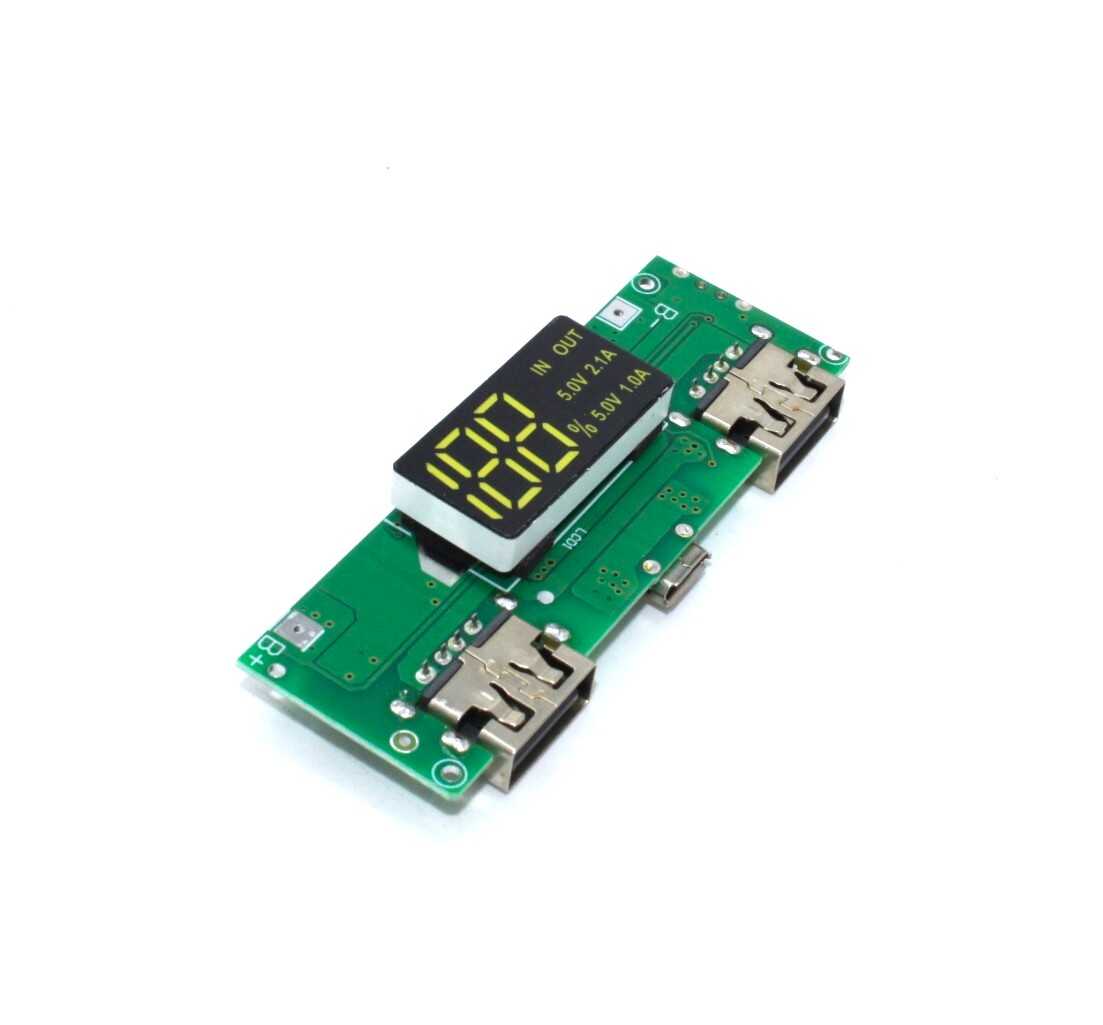
18650 5V 1A/2A Lithium Battery Digital Display & Charging Module
A dual USB output booster module with digital display — perfect for building portable power banks and learning battery charging fundamentals alongside your lead acid project.
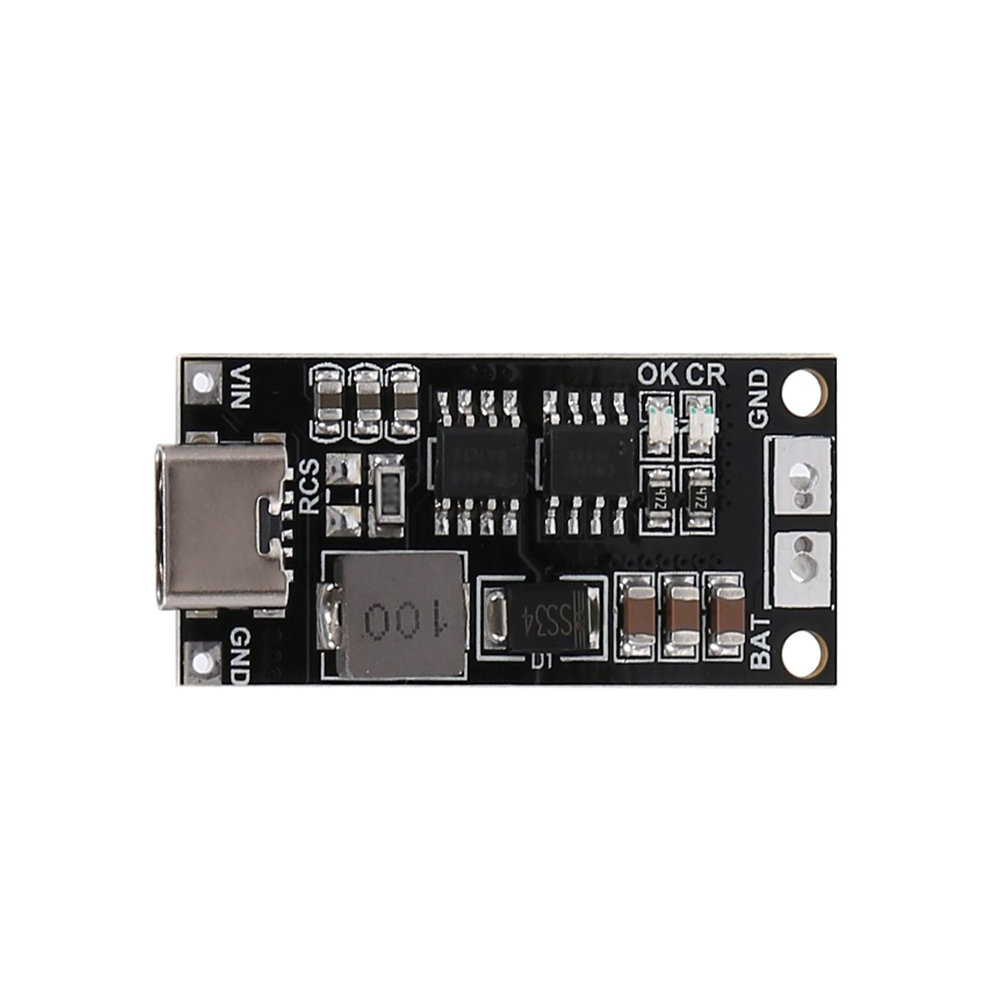
18650 Polymer Lithium Ion Charger Type C to 3S 12.6V 2A Booster Module
A compact Type-C input charger that boosts up to 12.6V — useful for experimenting with multi-cell lithium charging circuits, complementary to lead acid knowledge.
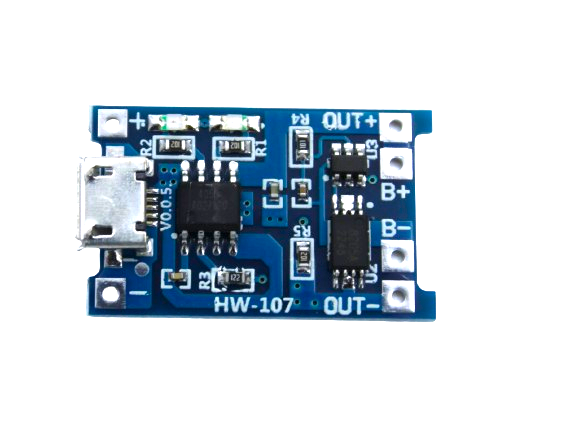
TP4056 1A Li-Ion Battery Charging Board Micro USB with Current Protection
The most popular beginner charging module in India. While designed for Li-Ion cells, studying the TP4056’s CC-CV architecture gives great insight into how battery charging circuits work in general.
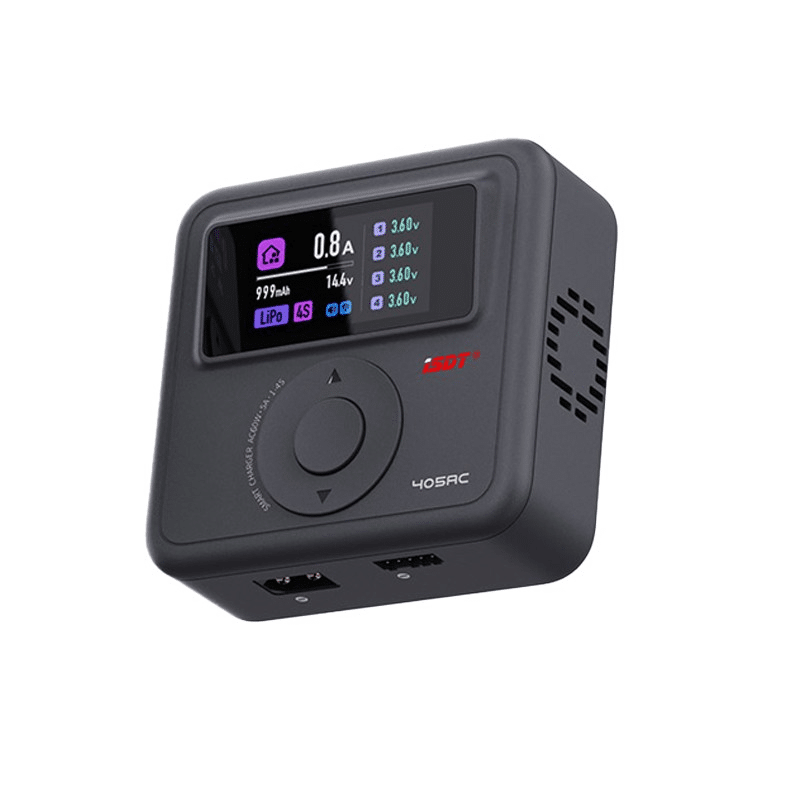
ISDT 405AC 60W AC GaN Smart Charger (XT60 Output)
A professional-grade GaN smart charger supporting multiple battery chemistries. See what a finished, well-engineered charger product looks like as a benchmark for your DIY builds.
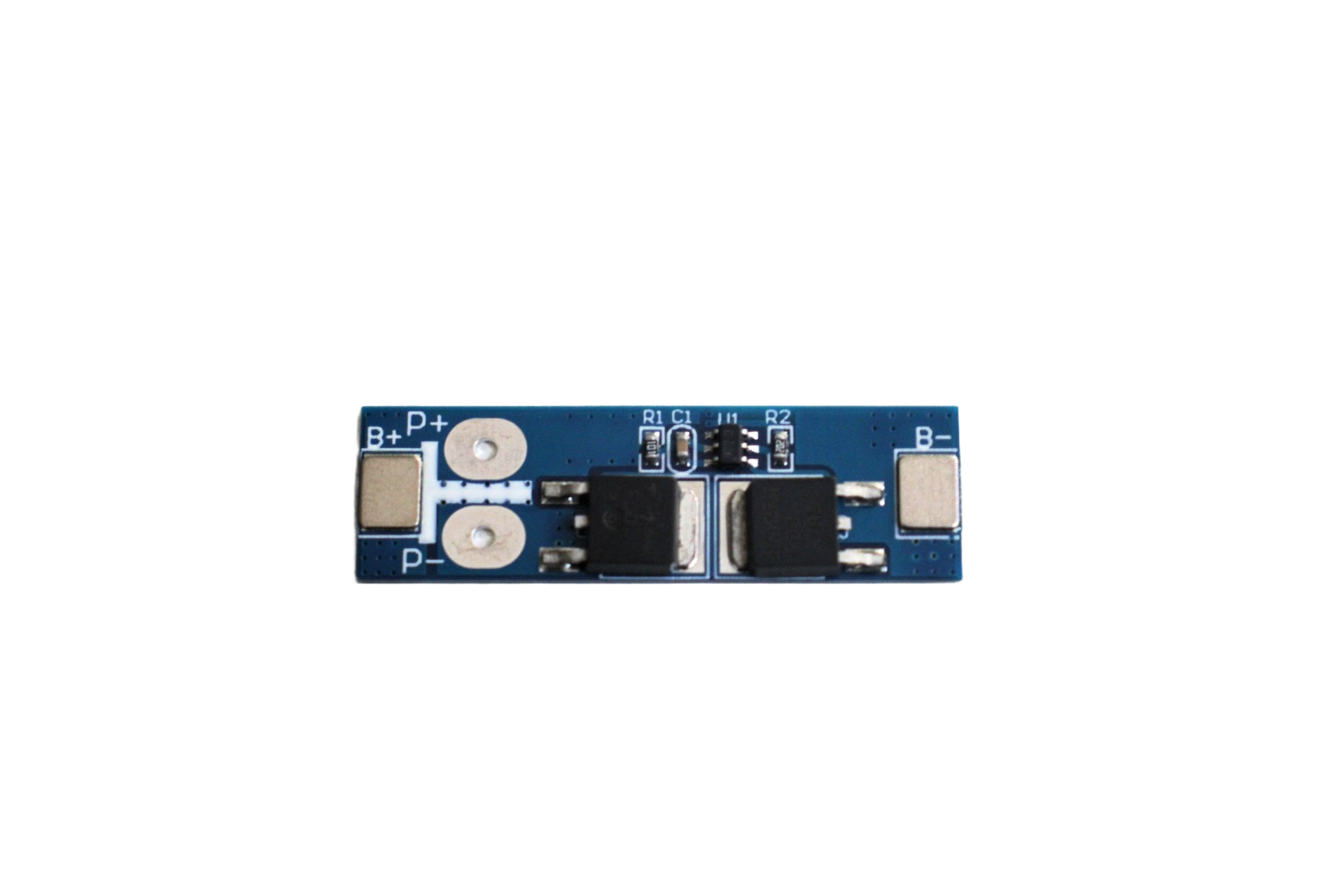
1S 12A 3.6V BMS Battery Protection Board for Li-Ion Cell
A battery management and protection board — understand how BMS circuits protect cells from overcharge and overdischarge, a concept directly applicable to lead acid protection design.
Frequently Asked Questions
Can I charge a 12V lead acid battery directly from a 12V power adapter?
No. A standard 12V adapter outputs exactly 12V, which is not enough voltage to push current into a 12V battery (which itself reads 12–12.7V when partially charged). You need at least 13.8V–14.4V to charge effectively. Using a 12V adapter will result in no charging or extremely slow, incomplete charging.
How long does it take to fully charge a 12V 7Ah lead acid battery?
At a 700mA (0.1C) charge rate, a fully discharged 7Ah battery takes roughly 10–14 hours to reach full charge. At 1A, it takes about 7–9 hours. The absorption stage slows things down near the end even if the bulk phase is fast.
What voltage should I set my LM317-based charger to?
Set bulk/absorption voltage to 14.4V for sealed lead acid (SLA/AGM) batteries. For flooded (wet cell) batteries, 14.7V is acceptable. Float voltage should be around 13.5–13.8V. If you are building a simple single-stage charger with an auto-cutoff transistor, 14.4V is the right target.
My battery gets very hot while charging — is that normal?
A slightly warm battery is normal during bulk charging. A battery that is too hot to touch is being charged too fast or has an internal fault. Reduce the charge current or check the battery for dead cells. Charging a deeply sulphated battery can also generate more heat than usual.
Can I use this same circuit to charge a sealed AGM or gel battery?
Yes, but gel batteries require slightly lower voltage — maximum 14.1V for bulk and 13.5V for float. Exceeding these limits damages gel batteries. AGM batteries tolerate 14.4V. Always check the battery manufacturer’s datasheet for exact voltage specifications.
Ready to Build Your Battery Charger?
Explore our full range of charging modules, BMS boards, and power components at Zbotic. We stock everything an Indian maker needs — delivered fast across India.






Add comment