
XL6009 Boost Converter: Adjustable Output Voltage Guide
The XL6009 boost converter module is one of the most popular step-up power conversion boards in the Indian maker community — and for good reason. Whether you need to power a 12 V sensor array from a 3.7 V lithium cell, run a 9 V Arduino from two AA batteries, or create an adjustable lab supply from a USB power bank, this inexpensive module delivers. This XL6009 boost converter adjustable output voltage guide walks through every aspect of the module: from understanding the IC itself to tuning the output voltage, to real-world project integration tips.
What Is the XL6009 and How Does It Work?
The XL6009 is a 400 kHz, 4 A switching boost controller IC manufactured by XLSEMI. It operates on the same fundamental principle as all boost (step-up) converters: it uses a switching transistor, an inductor, and a diode to transfer energy in packets, raising voltage while proportionally reducing current (respecting conservation of energy, minus efficiency losses).
Here is the working cycle in simple terms: when the switch closes, current ramps up through the inductor, storing energy in its magnetic field. When the switch opens, the inductor resists the sudden change and the stored energy collapses — generating a voltage spike that, combined with the input voltage, exceeds the input and drives current through the diode to the output capacitor and load. The switching happens 400,000 times per second, so the output appears as stable DC with only small ripple.
The module sold in Indian markets typically pairs the XL6009 IC with: a 4.7 uH to 10 uH power inductor, an adjustable feedback resistor network with a trimmer potentiometer, a Schottky diode for high-frequency rectification, and input and output electrolytic capacitors. The whole assembly fits on a board roughly 44 mm x 21 mm and costs between Rs. 30 and Rs. 80 depending on the supplier.
Unlike its smaller predecessor the MT3608 (which uses a 2 A switch and 1.2 MHz switching frequency), the XL6009 uses a 4 A internal switch at a lower switching frequency. This higher switch current capability makes it better suited for higher power applications, though it requires a larger inductor for the same ripple performance.
Key Specifications and Capabilities
Here are the specifications that matter for project planning:
- Input voltage range: 3 V to 32 V
- Output voltage range: 5 V to 35 V (must be higher than input)
- Maximum output current: 4 A (IC switch rating) — however, practical module current depends on thermal management and input/output voltage differential
- Switching frequency: 400 kHz (fixed)
- Conversion efficiency: Up to 94% under optimal conditions (typically 85-90% at typical loads)
- Output ripple: Approximately 50-100 mV under typical conditions
- Enable pin: Yes — the XL6009 has a chip enable pin that can be used to turn the converter on and off with a microcontroller signal
- Built-in soft start: Yes — reduces inrush current at startup
- Over-temperature protection: Yes — thermal shutdown at approximately 150 degrees C junction temperature
Practical note for Indian hobbyists: the “4 A” rating is the IC switch current, not the sustained output current. At typical boost ratios (e.g. 5 V to 12 V), you can realistically draw 1-1.5 A from the output before the module gets uncomfortably hot. For sustained 2 A output, proper heatsinking or active cooling is needed.
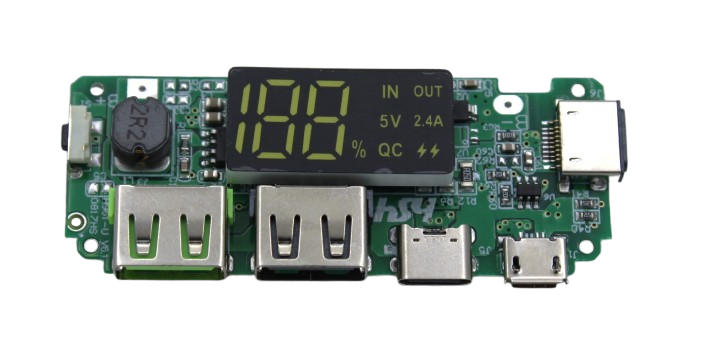
18650 5V 2.4A Lithium Battery Digital Display Charging Module Dual USB Output
Pair this 18650 charging and boost module with your XL6009 project for a complete portable power solution with digital voltage display.
How to Adjust the Output Voltage
The output voltage of the XL6009 module is set by the ratio of two feedback resistors connected to the FB pin. The typical formula is:
Vout = Vref x (1 + R1/R2)
where Vref = 1.25 V (the internal reference voltage of the XL6009). On most ready-made modules, R2 is fixed and R1 is implemented as a combination of a fixed resistor and a trimmer potentiometer in series. Turning the trimmer changes R1, which changes the feedback ratio and therefore the output voltage.
Step-by-Step Adjustment Procedure
- Connect input power. Apply your input voltage (e.g. 3.7 V from a lithium cell, or 5 V from USB). The input must be stable — connect input capacitors or use a bench supply if your source has high internal resistance.
- Connect a multimeter to the output terminals. Set it to DC voltage mode, 20 V range.
- Do NOT connect your load yet. Adjust the output voltage with no load first to avoid overshooting and damaging sensitive components.
- Turn the trimmer potentiometer. On most modules, clockwise rotation increases output voltage. Turn slowly — the trimmer is often quite sensitive, especially near higher voltages. Some modules use a multi-turn trimmer for finer adjustment.
- Set the output slightly higher than your target. Under load, the output voltage will drop slightly due to regulation limitations and wiring resistance. Set to target + 0.1-0.2 V no-load, then verify under load.
- Connect your load and verify. Attach the intended load and check that the voltage remains within your acceptable range. If the voltage drops significantly under load, the input source may have insufficient current capability or the boost ratio is too high for the load current required.
Common Output Voltage Targets
- 5 V from 3.7 V LiPo: Turn trimmer to set output to 5.1-5.2 V no-load. Under load it will settle near 5 V. This is one of the most common uses.
- 9 V from 5 V USB: Set to 9.1-9.2 V no-load. Useful for powering 9 V Arduino boards from a power bank.
- 12 V from 5 V USB: Set to 12.1-12.2 V. Power demand must be modest (under 500 mA) since the input current from a 5 V source at 1 A load is approximately 2.4 A — close to USB current limits.
- Variable 5-30 V bench supply: Feed from a 5 V stabilized source and use the trimmer as your adjustment knob. Add a voltmeter display on the output for a minimal adjustable bench supply.
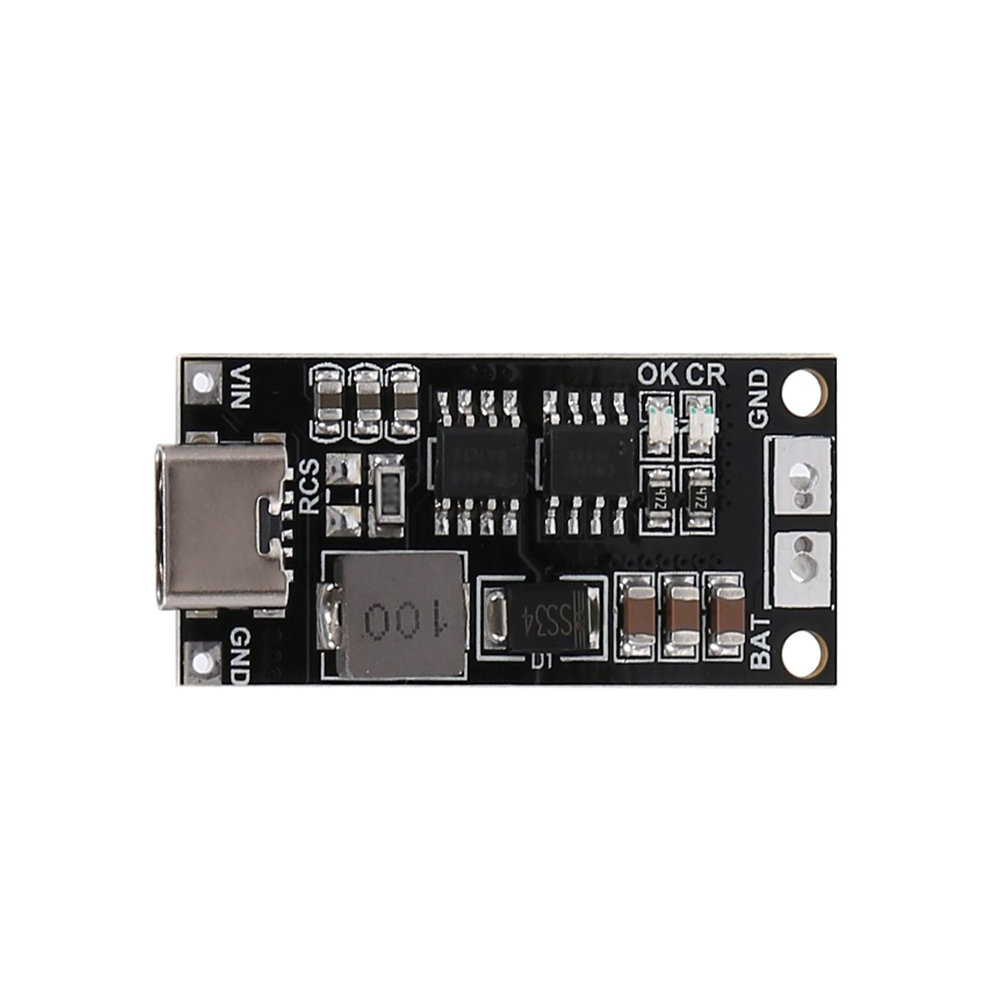
18650 Polymer Lithium Ion Charger Type C to 3S 12.6V 2A Booster Module
Need a fixed 12 V boost from 18650 cells? This Type-C module charges 3S packs and boosts output to 12.6 V at 2 A — great for fixed-voltage 12 V projects.
Efficiency, Heat and Derating
Efficiency is critical because inefficiency means wasted energy and wasted energy becomes heat. At 90% efficiency and 1 A output at 12 V (12 W output), the module dissipates 1.33 W as heat. At 85% efficiency the dissipation rises to 2.12 W. These numbers might seem small, but concentrated on a tiny module with no heatsink they translate to significant temperature rises.
Factors That Reduce Efficiency
- High boost ratio: Boosting from 3.7 V to 12 V (3.24x ratio) is less efficient than boosting from 5 V to 9 V (1.8x ratio). Higher ratios mean longer switch on-time, more inductor current, more conduction losses.
- Light load: Below about 10% of rated load, the converter enters discontinuous conduction mode (DCM) where efficiency drops significantly. This matters for battery-powered sensors that draw very little current most of the time.
- Inductor quality: The inductor on budget modules is often the weak link. A low-quality inductor with high DC resistance wastes power as heat. Upgrading to a higher-quality shielded inductor can improve efficiency by 2-5 percentage points on budget modules.
- Diode forward voltage: The Schottky diode has a forward voltage drop of approximately 0.3-0.5 V. At high currents this drops measurable power. Some advanced boost topologies use synchronous rectification to eliminate this loss, but the XL6009 module does not.
Thermal Management Tips
If you are running the module at 1.5 A or more output current continuously:
- Stick a small aluminium heatsink on the XL6009 IC using thermal adhesive tape
- Ensure airflow over the module (even a small 5 V fan nearby helps dramatically)
- Consider mounting the module on a copper-clad board instead of a plastic enclosure
- Monitor the module temperature with your fingertip after 5-10 minutes at load — if it is too hot to touch, reduce the load or improve cooling
XL6009 vs MT3608: Which Boost Converter to Choose?
Both modules appear on Indian electronics sites at similar prices. Here is when to choose each:
| Feature | XL6009 | MT3608 |
|---|---|---|
| Switch current | 4 A | 2 A |
| Switching frequency | 400 kHz | 1.2 MHz |
| Input voltage min | 3 V | 2 V |
| Practical output current | 1-2 A | 0.5-1 A |
| Module size | Larger | Compact |
| Best for | Higher power loads, motor drivers, solenoids | Low-power sensors, microcontrollers, ESP32 projects |
Choose the XL6009 when you need more than 500 mA output or are boosting to 12 V or higher. Choose the MT3608 for compact, lightweight, low-power applications where board space and weight matter more than power delivery.
Practical Project Ideas and Wiring Examples
Project 1: 18650 to 12 V Portable Supply
Power: 1x 18650 cell (3.7 V nominal, 4.2 V full) into XL6009 module → 12 V output. Maximum useful output at this boost ratio is approximately 500-800 mA. Wire a BMS protection board in series with the 18650 cell on the input side to prevent over-discharge. Add a voltmeter display on the output. This makes a pocket-sized 12 V supply for debugging automotive circuits or powering small 12 V sensors in the field.
Project 2: USB Power Bank to 9 V Guitar Pedal Power
Many guitar pedals and other audio effects require 9 V DC. Power banks output 5 V. Wire a USB-A connector to the XL6009 input, set the output to 9 V, add a 2.1 mm barrel jack on the output — instant USB-powered 9 V supply. Current demand of most guitar pedals is under 200 mA, well within the module’s capability from a 5 V input.
Project 3: Solar Panel to 12 V Battery Trickle Charger
A 6 V solar panel (Voc around 8-9 V, Vmp around 6.5 V) feeds the XL6009. Set the output to 13.8 V (appropriate for trickle charging a 12 V sealed lead-acid battery). Add a diode on the output to prevent reverse current at night. Note: this is a simple trickle charger, not a proper MPPT controller — it will not track the maximum power point. Suitable only for very small panels (under 5 W) and float-charging batteries that are already mostly full.
Project 4: Adjustable Bench Supply
Feed 5 V from a USB charger into the XL6009 input. Connect a precision multiturn potentiometer to replace the standard trimmer (requires desoldering the onboard trimmer). Add banana jacks on the output and a voltmeter display. You now have an adjustable bench supply from approximately 6 V to 30 V at up to 1 A output — all powered from a standard USB charger. Perfect for a compact travel workbench supply.
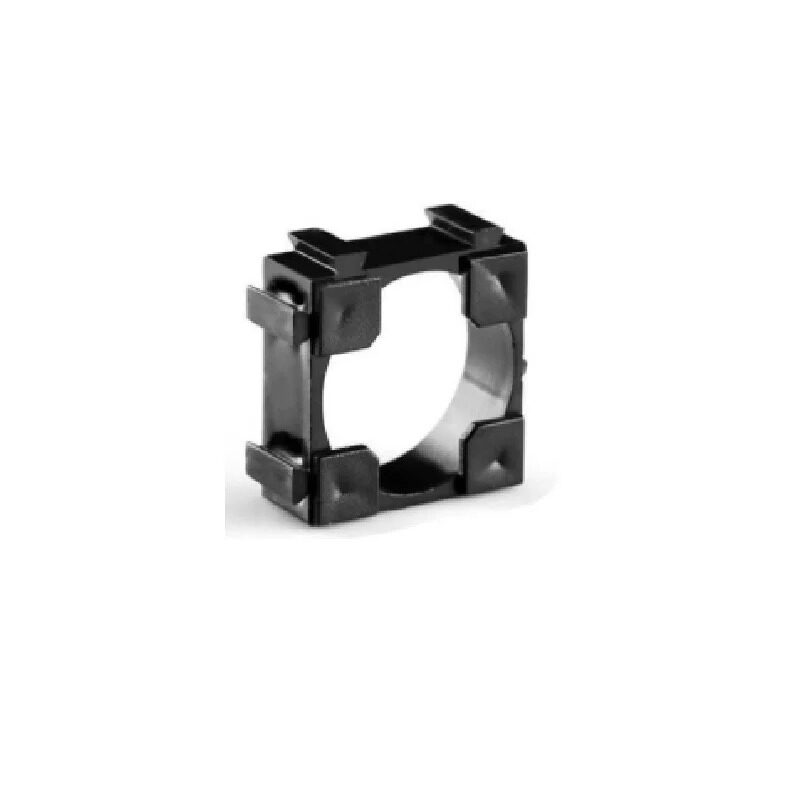
1 x 18650 Battery Holder with 18.4MM Bore Diameter (Pack of 4)
Build a portable 18650-powered supply to feed your XL6009 project. Solid spring contacts and convenient wire leads make assembly quick and reliable.
Common Mistakes and How to Avoid Them
- Adjusting output voltage above the IC maximum (35 V): The XL6009 has a 40 V absolute maximum voltage rating on the switch. The module output is typically limited to 35 V. Exceeding this destroys the IC instantly. Always verify output with a multimeter before connecting any load.
- Connecting input and output with wrong polarity: Reverse polarity on the input can destroy the input capacitor and the IC in milliseconds. Add a Schottky diode or P-channel MOSFET on the input for reverse polarity protection if the input connector is not clearly marked.
- Overloading the module without heatsinking: Running at 2 A output without any thermal management will trigger the over-temperature shutdown or permanently degrade the IC over time. Either add a heatsink and airflow, or derate the module to 1 A maximum for unattended operation.
- Using with capacitive loads directly: Connecting large output capacitors or capacitive loads without a soft-start resistor causes high inrush current that can damage the diode or IC. The XL6009’s built-in soft-start helps, but very large capacitive loads (over 1000 uF) may still cause issues.
- Ignoring input current: When boosting from 5 V to 12 V at 1 A output, the input must supply approximately 2.4 A (plus losses). A USB 2.0 port rated at 500 mA will be badly overloaded. Always calculate the required input current before connecting to a source.
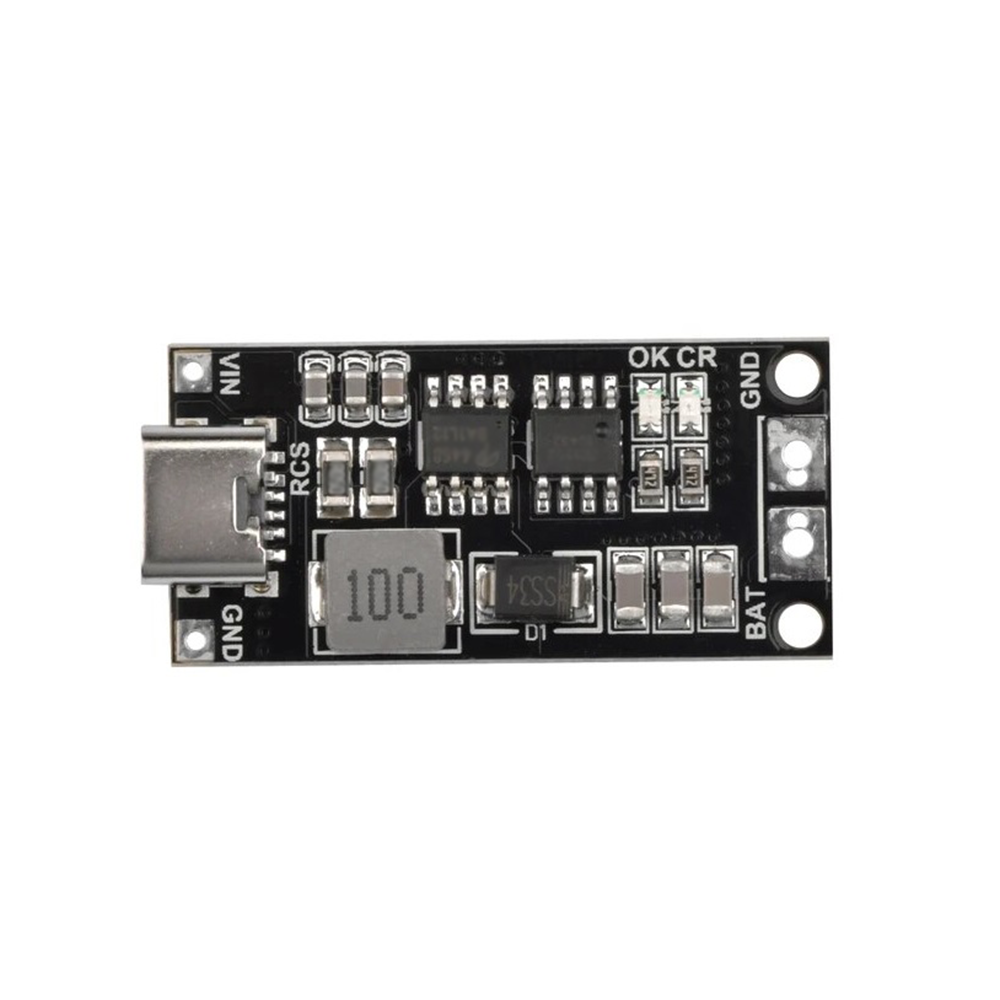
18650 Polymer Lithium Ion Charger Type C to 3S 12.6V 4A Booster Module
Need higher sustained 12 V current than the XL6009 can manage? This 4A booster module handles heavier loads while charging your 3S 18650 pack via USB-C.
Frequently Asked Questions
Can the XL6009 module work as a buck (step-down) converter?
No. The XL6009 is a boost-only converter. The output voltage must always be higher than the input voltage. If you connect a higher input than your output setpoint, the output will simply follow the input minus a small diode drop — the regulation will not work correctly and the module may be damaged.
Can I use an XL6009 module directly from a 3.7 V LiPo to charge a 5 V device via USB?
Yes, this is one of the most common uses. Set the output to 5.1-5.2 V, connect a USB-A female connector to the output, and you have a basic boost power bank circuit. However, the XL6009 module alone provides no overcharge, over-discharge, or short-circuit protection. Add a TP4056 module with protection on the input side for a complete and safe power bank design.
Why does my output voltage drop when I connect a load?
Output voltage sag under load is normal and has two causes: (1) the output capacitor cannot fully compensate for high current steps, and (2) the regulation loop takes a finite time to respond to load changes. For steady loads, the voltage should stabilize within a few milliseconds. If the sag is large (more than 500 mV) and does not recover, the load is drawing too much current for the module at that boost ratio — reduce load or increase input voltage.
Can I connect two XL6009 modules in parallel for higher output current?
Parallel operation of boost converters is non-trivial without proper current sharing control. Without matching output resistances or active current sharing, one module will supply most of the current and overheat while the other is nearly idle. Better solutions: use a single higher-rated boost module, use a dedicated multi-phase controller IC, or distribute the load between two independent boost converter circuits each powering a different sub-system.
What is the maximum boost ratio I can reliably achieve?
Practically, boost ratios up to about 5:1 (e.g. 5 V to 24 V) are achievable with good efficiency. Beyond this, the switch duty cycle approaches 80-90% and the inductor current becomes very high, increasing conduction losses dramatically. At very high boost ratios (above 6:1), efficiency may fall below 70% and thermal management becomes critical. For ratios above 5:1 consider using a two-stage approach or a flyback topology instead.
Start Your Boost Converter Project Today
The XL6009 module is just the beginning. Pair it with the right battery holder, protection board, and charging module from Zbotic for a complete, safe portable power system. All components are stocked and ship quickly across India.





Add comment