
Table of Contents
- Why TPU for Wearable 3D Printed Parts
- Understanding TPU Filament
- Types of 3D Printable Hinges
- Designing Living Hinges for FDM
- TPU Print Settings for Wearable Parts
- Wearable Project Ideas for Indian Makers
- Post-Processing TPU Wearable Parts
- Common Mistakes and How to Avoid Them
- Frequently Asked Questions
- Conclusion
Wearable technology is one of the most exciting intersections of 3D printing and electronics. From fitness trackers to custom orthotics, smart textiles to cosplay armour, the ability to print flexible, body-conforming parts opens up a world of personalised functional objects. And at the heart of most wearable designs is a flexible hinge — the mechanism that allows a rigid structure to flex, fold, or conform to the human body.
In this comprehensive guide, we explore how to design and print flexible hinges for wearable applications using TPU (Thermoplastic Polyurethane) filament, share real project ideas, and walk through the specific print settings that make the difference between a professional wearable part and a frustrating failure.
Why TPU for Wearable 3D Printed Parts
Traditional 3D printing materials like PLA and ABS are rigid. They are excellent for structural parts, enclosures, and prototypes, but they are fundamentally unsuited for wearable applications where parts need to flex, stretch, or absorb impact without breaking. TPU fills this gap perfectly.
TPU (Thermoplastic Polyurethane) is a flexible elastomeric filament that behaves like soft rubber or hard silicone depending on its Shore hardness rating. It is:
- Flexible: Can bend and flex repeatedly without fatigue cracking
- Impact-resistant: Absorbs shock instead of shattering
- Skin-safe: Appropriate for direct skin contact (check manufacturer specifications)
- Chemical-resistant: Handles sweat, water, and mild cleaning agents
- Dimensionally stable: Retains its shape at Indian ambient temperatures up to 50°C+
For wearable hinges specifically, TPU allows you to create living hinges — single-piece structures that bend at a thin section without any mechanical joint, pin, or fastener. This is ideal for wristbands, knee braces, phone cases with fold-out stands, watch straps, and orthotic insoles.
Understanding TPU Filament
Shore Hardness
TPU comes in various Shore A hardness ratings. Lower numbers are softer, higher numbers are firmer:
| Shore A Rating | Feel | Best For |
|---|---|---|
| 85A – 90A | Flexible but firm (like shoe sole) | Phone cases, hinged enclosures |
| 95A | Semi-flexible (like hard rubber) | Functional hinges, wrist straps |
| 98A – Shore D | Near-rigid with slight flex | Structural wearable frames |
For living hinges in wearable parts, 95A is the sweet spot — flexible enough to bend comfortably but stiff enough to hold its shape when unbent. For grips, gaskets, and padding, 85A–90A gives a more rubbery feel.
TPU vs Other Flexible Filaments
You may also encounter TPE (Thermoplastic Elastomer) and TPC (Thermoplastic Copolyester) filaments. TPU is the most printable and most widely available in India. It offers the best balance of flexibility, printability, and physical properties for wearable applications.
Types of 3D Printable Hinges
1. Living Hinge (Single-Print, No Fasteners)
A living hinge is a thin section of material that acts as the pivot point. In TPU, living hinges can be 0.8–2.0mm thick at the bend zone and survive thousands of flex cycles. The key is to orient the print so layers run perpendicular to the bending axis (parallel to the hinge line) — this maximises inter-layer bonding in the flex zone.
2. Pin Hinge (Printed in Place)
A pin hinge is a mechanical joint printed in a single print using clearance gaps between the barrel and pin. With TPU, you can design pin hinges with tighter tolerances because the material compresses slightly during removal. Typical clearance: 0.3–0.4mm for TPU (vs 0.15–0.20mm for PLA).
3. Snap-Fit Living Hinge Hybrid
A sophisticated approach: a rigid base (PLA or PETG) with a TPU living hinge overmoulded or printed as a separate element and assembled. This gives you the rigidity of the hard material where needed and the flexibility of TPU at the hinge. Multi-material printers can do this in one pass.
4. Interlocking Chain Links
For applications like wristbands and watch straps, a chain of interlocked links printed in TPU creates a flexible, articulating band. Each link is a small C or O shape that clips into the next. Very durable and body-conforming.
Designing Living Hinges for FDM
Critical Dimensions
The following dimensions are tested and verified for TPU living hinges on FDM printers:
- Minimum hinge thickness: 0.8mm (= 2 walls at 0.4mm nozzle)
- Recommended hinge thickness: 1.2–1.6mm for durability
- Hinge width: Minimum 5mm, ideally 10mm+ for wearable loads
- Relief radius: Add a 0.5–1.0mm radius at each edge of the thin section to reduce stress concentration
- Taper transition: Gradually reduce from full part thickness to hinge thickness over 2–3mm (avoid sharp transitions)
Layer Orientation Rule
This is the single most important design rule for TPU living hinges: the layers must run parallel to the hinge axis, not perpendicular to it. In other words, when you look at the hinge from the side, the layer lines should run horizontally (along the hinge line), not vertically. Printing the part lying flat achieves this automatically for most hinge designs.
If layers run perpendicular to the bend direction, the hinge will delaminate at the layer boundaries after only a few flex cycles, regardless of infill or wall settings.
Reinforcement Zones
The rigid sections on either side of the hinge should have 3–4 walls and 30–40% infill to provide good resistance to the forces transmitted through the hinge. The hinge zone itself can be 2 walls solid (no infill) for clean, consistent flex behaviour.
Design Tools
Fusion 360, FreeCAD, and OpenSCAD all support the parametric design of living hinges. For beginners, Tinkercad can create basic living hinge geometry. Fusion 360’s Simulation workspace lets you virtually flex the hinge before printing to check stress concentration areas.
TPU Print Settings for Wearable Parts
TPU is notoriously challenging to print on some machines, but with the right settings it is very reliable. Here are optimised settings for wearable hinge parts:
Temperature
- Nozzle: 220–235°C (start at 225°C, adjust for your brand)
- Bed: 30–50°C (unheated bed works too for most TPU grades)
- Enclosure: Not required (unlike ABS)
Speed
TPU must be printed slowly. Fast printing causes the soft filament to compress and buckle in the extruder, especially on Bowden setups.
- Bowden extruder: 20–30mm/s maximum
- Direct drive extruder: 30–50mm/s
- Hinge zone specifically: Reduce to 15–20mm/s for the thin sections
Retraction
Retraction is problematic with TPU. Excessive retraction stretches the soft filament instead of pulling it back. Use:
- Bowden: 3–5mm retraction distance, 25mm/s retraction speed
- Direct drive: 1.0–2.0mm retraction, 30mm/s
- Or: disable retraction entirely and use coast and wipe instead
Infill Pattern and Density
- Rigid sections: Gyroid or Concentric at 25–35%
- Hinge zone: No infill, solid walls only (2–3 walls)
- Flexible grips or padding: Concentric or Cross 3D at 15–20% for best flex feel
Bed Adhesion
TPU can be tricky to adhere on glass beds. Use a thin layer of glue stick, hairspray, or a PEI sheet for best results. TPU tends to stick very well to PEI — often too well, so a slight flex of the sheet is needed to release the part after cooling.
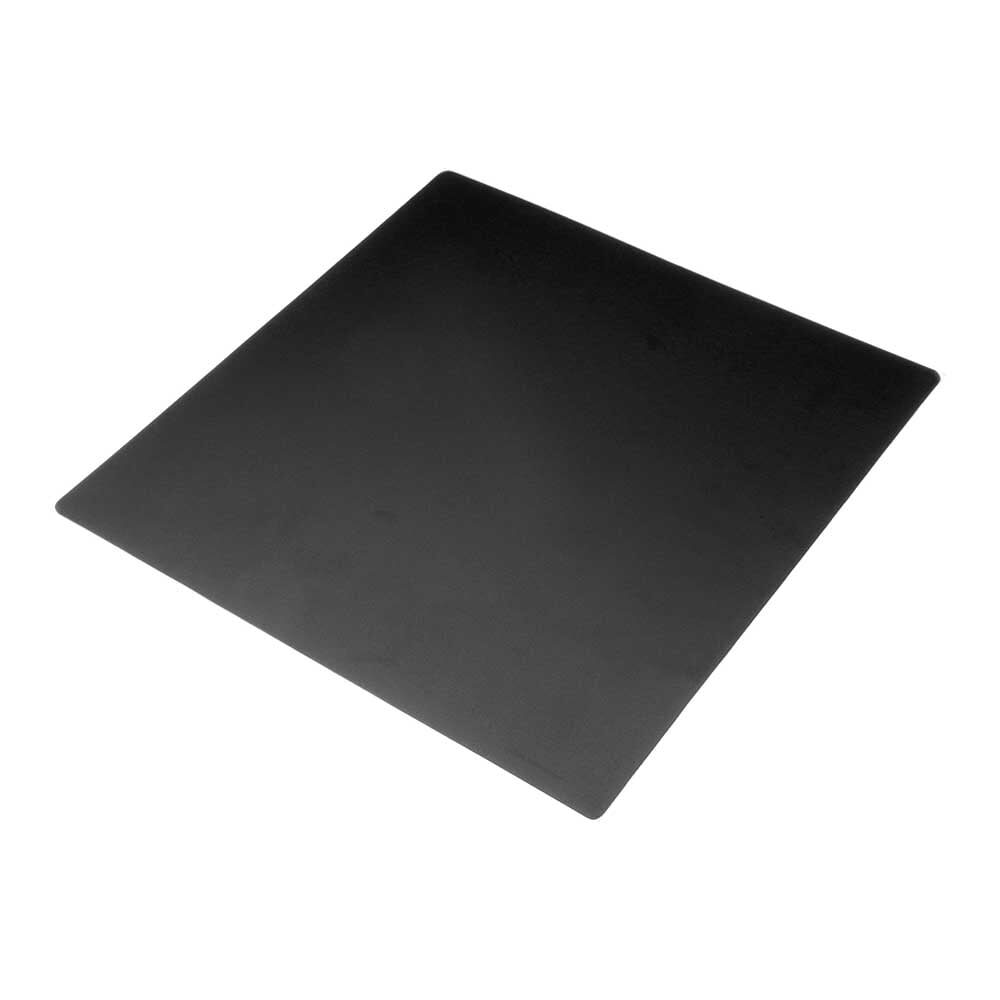
Frosted Heated Bed Sticker Build Plate Tape – 220×220mm with Adhesive Backing
Excellent adhesion for TPU and flexible filaments — frosted surface provides mechanical grip without glue.
Wearable Project Ideas for Indian Makers
1. Custom Watch Strap
Print a watch strap in TPU 95A with a chain-link design customised to your wrist size. India’s hot and humid climate makes sweat-resistant TPU straps far superior to leather or fabric alternatives. Design parameter: link width 8mm, wall thickness 2.5mm, pin diameter 2.8mm.
2. Ergonomic Keyboard Wrist Rest
A wrist rest that flexes slightly with hand movement reduces repetitive strain. Print in TPU 85A with 15% Concentric infill for a soft, supportive cushion. Add a honeycomb vent pattern to reduce heat buildup — perfect for long programming sessions in Indian summers.
3. Smart Wristband Enclosure for Arduino/ESP32
Wearable IoT projects are hugely popular among Indian engineering students. Design a wristband with a rigid central module housing (PLA or PETG) and TPU strap sections connected via living hinges. The flexible straps conform to the wrist while the electronics stay protected in the rigid core.
4. Protective Knuckle Guard for Sport
Indian martial artists and gym goers can benefit from custom 3D printed knuckle guards. A TPU 95A shell with integrated living-hinge finger articulation provides protection without restricting movement. Design each finger section as an independent panel connected by thin TPU living hinge strips.
5. Orthotic Insole Base
Custom insole design based on foot scan data (a simple phone scan app like Qlone can generate a usable mesh). Print in TPU 85A with variable infill — higher density (40%) at heel and forefoot for support, lower density (15%) at arch. Add a concentric infill pattern for even flex distribution.
6. Cosplay Armour Joints
Indian cosplay and convention communities are growing rapidly. Rigid armour panels printed in PLA and connected with TPU living hinge segments allow a cosplay suit to flex naturally with the wearer’s movement. The hinge pieces can be post-processed (painted, dyed) to match the armour aesthetic.
Bambu Lab ABS 3D Printer Filament – Black 1.75mm
Strong ABS for rigid wearable frames and enclosures — pair with TPU for hybrid rigid-flexible wearable designs.
Post-Processing TPU Wearable Parts
Finishing the Surface
TPU cannot be sanded or acetone-smoothed like ABS. For a smoother surface finish:
- Reduce layer height to 0.1mm in the cosmetic sections
- Increase wall count to 4–5 for a more solid outer surface
- TPU-specific smoothing spray products exist but are expensive and hard to find in India
- A heat gun on low setting (50–60°C) can slightly reflow surface layer lines on some TPU grades
Colouring TPU
TPU can be dyed with fabric dyes. RIT dye works well for soft TPU. Brush-on flexible paint (sold as rubber coating) creates a uniform colour and can add grip texture to the surface. Acetone will dissolve some TPU grades — avoid it.
Bonding TPU to Other Materials
For hybrid wearables (rigid + flexible), bonding TPU to PLA requires careful choice of adhesive:
- Cyanoacrylate (superglue): Works for low-stress joints but may crack with flex
- Contact cement (Fevicol SH or similar): Flexible bond, good for panel joints
- Mechanical interlocking features: Most reliable — design the joint geometry to interlock without adhesive
Common Mistakes and How to Avoid Them
Mistake 1: Printing TPU Too Fast
The most common error. Fast printing (above 40mm/s on Bowden, 60mm/s on direct drive) causes the soft filament to buckle and create inconsistent extrusion. Always slow down. The print will take longer but the result will be far superior.
Mistake 2: Wrong Layer Orientation on Hinge
Printing the hinge so layers are perpendicular to the bend direction creates a weak part that delaminate quickly. Always ensure layers run parallel to the bending axis.
Mistake 3: Hinge Too Thin
A 0.4mm hinge (single-line width) will snap immediately under real-world loading. Minimum 0.8mm (2 lines) for any load-bearing hinge, and 1.2–1.6mm for wearable daily-use parts.
Mistake 4: Printing in Humid Conditions Without Drying Filament
TPU is hygroscopic and absorbs moisture from air. In Indian cities with high humidity (Mumbai, Chennai, Kolkata), unpacked TPU can absorb enough moisture in 4–6 hours to cause significant printing issues — popping, stringing, and weak parts. Always dry TPU at 50°C for 4–6 hours before printing after storage.
Mistake 5: Using a Bowden Setup Without Adjustments
Bowden extruders struggle with TPU because the soft filament can buckle inside the tube. If you have a Bowden printer, ensure the PTFE tube has no gaps at the hot end (especially important at the Bowden coupling), keep the tube as short as possible, and print very slowly.
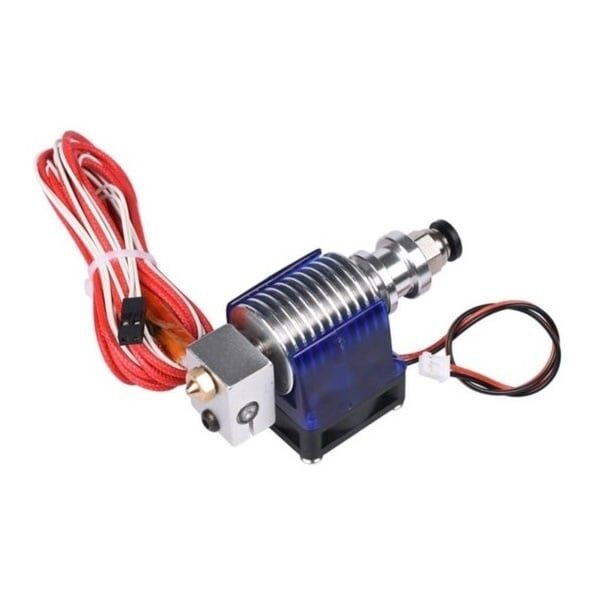
All Complete Bowden V6 with Fan Cable 30cm – for 1.75mm Filament
Upgrade your hotend for better TPU performance — all-in-one V6 kit with proper PTFE path reduces flexible filament jams.
Frequently Asked Questions
Can TPU be used for skin-contact wearables?
Most TPU filaments are considered safe for skin contact, but you should check the manufacturer’s datasheet for skin-safe certification. Avoid filaments with pigments that contain heavy metals. After printing, a light sanding to remove surface layer lines reduces skin irritation potential.
How many flex cycles can a 3D printed TPU hinge survive?
A well-designed TPU living hinge (1.2–1.6mm thick, correct layer orientation) can survive 50,000–100,000 flex cycles in testing. For reference, a daily-use wristband hinge flexes about 100–200 times per day — giving several years of life expectancy.
Can I print TPU on an Ender 3 or similar budget printer?
Yes, but it requires patience. The Ender 3’s Bowden extruder can handle TPU at 20–25mm/s with low retraction (3–4mm at 25mm/s). Many users upgrade to a direct drive extruder kit for better TPU results — a worthwhile upgrade if you plan to print flexible filaments regularly.
What is the best infill for a TPU wristband?
Concentric infill at 20–25% gives the most natural and even flex feel for wristbands. Gyroid at 15% is also excellent. Avoid Grid and Honeycomb as they create stiff zones inside the flexible band.
Is TPU filament available in India?
Yes, various TPU grades are available in India through electronics and 3D printing stores. Availability has improved significantly since 2023, with both domestic brands and imported options like eSun TPU now accessible. However, TPU tends to be 30–50% more expensive than equivalent PLA/ABS.
Conclusion
Wearable 3D printed parts represent one of the most rewarding intersections of design, engineering, and personal customisation. With TPU filament and careful attention to hinge design principles — particularly layer orientation, hinge thickness, and print speed — you can create wearable parts that are durable, comfortable, and genuinely functional.
The key insights to take away: print slowly, orient layers correctly at the hinge, use Concentric or Gyroid infill for flexible zones, dry your filament in India’s humid climate, and design hinge thickness to at least 1.2mm for wearable durability. Once you have these fundamentals right, TPU is one of the most versatile and useful materials in any Indian maker’s filament drawer.
Explore our range of 3D printing accessories and filaments at Zbotic to get started on your next wearable project.
Hotends, bed surfaces, nozzles, and filaments for FDM printers — everything you need for perfect flexible prints.







Add comment