
Choosing the right distance sensor can make or break your electronics project. Whether you are building a robot that avoids obstacles, a smart parking system, or a level monitor for a water tank, the sensor you pick determines how reliably your system works in the real world. Three technologies dominate the hobbyist and industrial maker space: ultrasonic sensors, infrared (IR) sensors, and laser (LiDAR/ToF) sensors. Each has a distinct operating principle, sweet spot for range, and set of trade-offs.
This in-depth comparison will walk you through how each sensor works, their key specifications, strengths, weaknesses, and ideal applications — so you can pick the right one for your next build.
1. How Ultrasonic Distance Sensors Work
Ultrasonic sensors operate on the same principle as bat echolocation. A piezoelectric transducer emits a short burst of sound waves at a frequency typically between 25 kHz and 400 kHz — well above human hearing. The sound travels through air, bounces off an object, and returns to the receiver. The sensor measures the elapsed time (Time of Flight) and divides by two (since the pulse travels both ways) to calculate distance using the speed of sound (~343 m/s at 20°C).
The most widely used module for makers is the HC-SR04, which works between 2 cm and 400 cm with approximately ±3 mm accuracy. More rugged variants like the JSN-SR04T use a waterproof probe, making them suitable for outdoor liquid-level sensing.
Key Ultrasonic Specs
- Frequency: 25 kHz–400 kHz (most hobbyist modules: 40 kHz)
- Range: 2 cm to 4–5 m (standard); up to 10 m (industrial)
- Beam angle: 15°–30° cone (wide — can cause false readings from nearby walls)
- Update rate: ~40 Hz for HC-SR04
- Interface: Trigger/Echo GPIO pulses
- Power: 5 V, ~15 mA
2. How Infrared Distance Sensors Work
Infrared distance sensors shine an IR LED at an object and measure the angle at which reflected light hits a position-sensitive detector (PSD). This triangulation method lets them estimate distance without timing signals. Sharp’s GP2Y series popularised this approach in the early 2000s and it remains the go-to solution for short-range sensing.
A separate category of IR sensors — proximity/reflectance modules like the TCRT5000-based boards — simply output a HIGH or LOW signal when something is detected within a threshold, without giving an actual distance value. These are used for line following and obstacle detection rather than ranging.
Key IR Specs (Ranging Type, e.g. Sharp GP2Y0A21)
- Range: 10 cm to 80 cm (model-dependent; some go to 150 cm)
- Output: Analogue voltage (requires ADC pin)
- Beam angle: Very narrow (~5°) — less cross-talk from adjacent surfaces
- Update rate: ~25 Hz
- Power: 5 V, ~35 mA (IR LED draws more current)
- Limitation: Readings shift with target surface colour and reflectivity
3. How Laser / Time-of-Flight Sensors Work
Laser distance sensors use a Class 1 (eye-safe) VCSEL (Vertical Cavity Surface Emitting Laser) to emit modulated pulses of near-infrared light. The sensor measures how long individual photons take to return — a true Time-of-Flight (ToF) measurement at the photon level, rather than the sound-wave approach of ultrasonics. This produces sub-millimetre precision over ranges extending several metres.
The VL53L0X (up to 2 m) and VL53L1X (up to 4 m) from ST Microelectronics are the most popular I2C ToF sensors in the maker community. LiDAR modules like Benewake’s TF-series push this to 12 m or more, with some automotive-grade models reaching hundreds of metres.
Key Laser ToF Specs (VL53L1X)
- Range: 4 cm to 4 m (long-distance mode)
- Accuracy: ±1% at short range; ±5% at long range
- Beam angle: 27° FWHM (full-width at half-maximum)
- Update rate: Up to 50 Hz
- Interface: I2C (address 0x29, re-configurable)
- Power: 2.6–3.5 V core; 5 V tolerant with on-board regulator
4. Head-to-Head Comparison Table
| Feature | Ultrasonic (HC-SR04) | IR (Sharp GP2Y0A21) | Laser ToF (VL53L1X) |
|---|---|---|---|
| Operating Principle | Sound wave echo | IR triangulation | Photon time-of-flight |
| Typical Range | 2 cm – 4 m | 10 cm – 80 cm | 4 cm – 4 m |
| Accuracy | ±3 mm (close range) | ±5–10% (non-linear) | ±1–5% |
| Affected by Light | No | Yes (sunlight interference) | Minor (IR filter built-in) |
| Affected by Surface Colour | Slightly | Yes (major impact) | Minimal |
| Works with Glass/Clear Surfaces | Yes | Poorly | Poorly |
| Interface | Trigger/Echo (GPIO) | Analogue (ADC) | I2C |
| Approx. Cost (India) | ₹40–₹80 | ₹150–₹300 | ₹250–₹600 |
| Library Support | Excellent | Good | Good (Pololu library) |
| Best For | Robotics, level sensing | Line following, short-range | Precise ranging, drones |
5. Accuracy and Range Deep Dive
Ultrasonic sensors deliver consistent accuracy across their full range but suffer from a minimum blind zone (typically 2–4 cm) where the transducer is still ringing from the transmitted burst. Temperature also affects accuracy: every 1°C change shifts the speed of sound by ~0.6 m/s, introducing ~0.17% error per degree. At room temperature variations in India (15–40°C) this can amount to 4–7 cm of drift on a 4 m measurement without compensation.
IR sensors produce a non-linear voltage–distance curve. Most libraries use a lookup table or inverse polynomial to convert ADC readings to centimetres. The accuracy degrades significantly outside the rated range — below 10 cm objects can suddenly appear further away (the curve doubles back on itself). Black or dark surfaces absorb IR light, causing the sensor to report a longer distance than reality; shiny metallic surfaces can cause specular reflections that throw readings off entirely.
Laser ToF sensors are the most accurate of the three. The VL53L1X maintains ±1 mm resolution at close range. At longer distances (3–4 m) errors rise to 5–8% depending on target reflectance. Unlike IR sensors, ToF performance is relatively colour-independent because it measures arrival time, not intensity. However, highly transparent objects like glass pass the laser through rather than reflecting it, causing readings with no valid target detected.
6. Environmental Sensitivity
Ultrasonic: Temperature and Wind
Sound speed changes with air temperature, humidity, and pressure. Wind can deflect the beam, especially outdoors. Foam, fabric, and soft surfaces absorb sound and may not return a measurable echo. Multiple sensors nearby can crosstalk unless triggered sequentially.
IR: Lighting and Surface Properties
Direct sunlight flooding a sensor can saturate the photodetector and render it completely blind. Indoor fluorescent and LED lighting rarely cause issues, but outdoor use is problematic without shielding. IR-transparent plastics (most clear plastics pass near-IR) can cause phantom readings. Dark-coloured cloth and hair are known problem materials.
Laser ToF: Ambient Light and Reflectance
The VL53L1X includes an ambient light cancellation circuit that handles indoor lighting well. Strong sunlight still degrades maximum range — you might get only 1–1.5 m outdoors in bright conditions versus 4 m indoors. Fog, smoke, and dust scatter the laser and reduce effective range. Retroreflective targets (road signs, safety tape) can actually boost range beyond spec.
7. Cost and Availability in India
For budget-conscious Indian makers, ultrasonic sensors win hands down. An HC-SR04 costs ₹40–₹80 and is stocked by virtually every electronics supplier. IR ranging modules start around ₹150 for basic reflectance types and ₹250–₹400 for Sharp GP2Y0A-series analogue sensors.
Laser ToF modules vary widely — basic VL53L0X breakout boards start around ₹250 while the longer-range VL53L1X sits at ₹400–₹600. Industrial LiDAR like Benewake’s automotive-grade units cost ₹2,000–₹10,000+ depending on range and accuracy class.
For prototyping, the ultrasonic sensor is the right starting point unless you specifically need the accuracy or small form factor of a ToF sensor.
8. Best Use Cases for Each Sensor
When to Choose Ultrasonic
- Robot obstacle avoidance (beginner to intermediate)
- Water or liquid level monitoring in tanks
- Parking distance indicators
- Detecting large objects like walls, boxes, or people
- Any application where budget is tight and ±1 cm accuracy is acceptable
When to Choose IR
- Line-following robots (reflectance sensor variant)
- Detecting close-range objects (5–80 cm) indoors
- Compact enclosures where ultrasonic mounting is not practical
- Edge detection on automated conveyors
- Low-power proximity triggers (simple threshold, not precision ranging)
When to Choose Laser ToF
- Drone altitude hold and terrain following
- Precise positioning in robotic arms
- Gesture and presence detection (VL53L1X zone detection)
- Mobile robots requiring accurate map building
- Any application needing sub-centimetre precision and I2C bus integration
9. Quick Arduino Wiring Overview
HC-SR04 (Ultrasonic)
HC-SR04  →  Arduino Uno
VCC      →  5V
GND      →  GND
TRIG     →  Pin 9
ECHO     →  Pin 10 (use voltage divider or 3.3V Arduino)
Code snippet:
digitalWrite(TRIG, HIGH);
delayMicroseconds(10);
digitalWrite(TRIG, LOW);
long duration = pulseIn(ECHO, HIGH);
float distance = duration * 0.0343 / 2;
Sharp IR (Analogue)
GP2Y0A21  →  Arduino Uno
VCC (Red) →  5V
GND (Blk) →  GND
Out (Wht) →  A0
Use SharpIR library: SharpIR sensor(SharpIR::GP2Y0A21YK0F, A0);
VL53L1X (I2C ToF)
VL53L1X  →  Arduino Uno
VIN      →  5V
GND      →  GND
SDA      →  A4
SCL      →  A5
Use Pololu VL53L1X library. Call sensor.startContinuous(50); for 50 ms measurement period.
10. Recommended Products from Zbotic
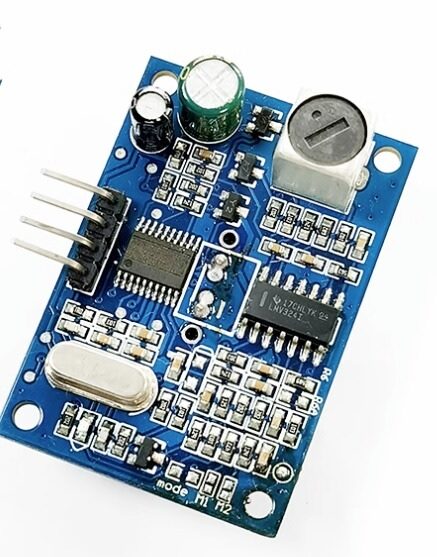
JSN-SR04T Waterproof Ultrasonic Rangefinder Module v3.0
Ideal for outdoor tank-level monitoring and liquid sensing. Waterproof probe works in harsh environments where standard HC-SR04 would fail.
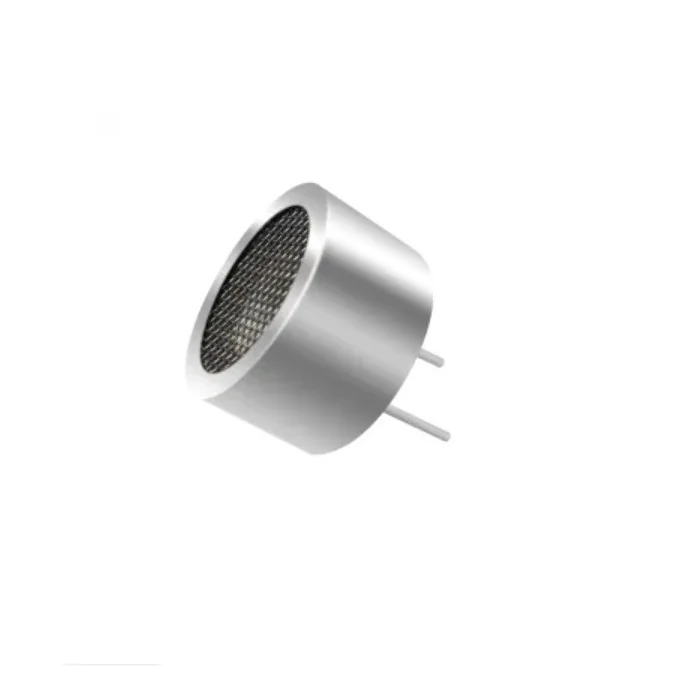
25 kHz Ultrasonic Sensor Receiver T25 16mm
High-sensitivity ultrasonic receiver for custom ranging circuits. Pairs with the T25 transmitter for DIY long-range sonar builds.
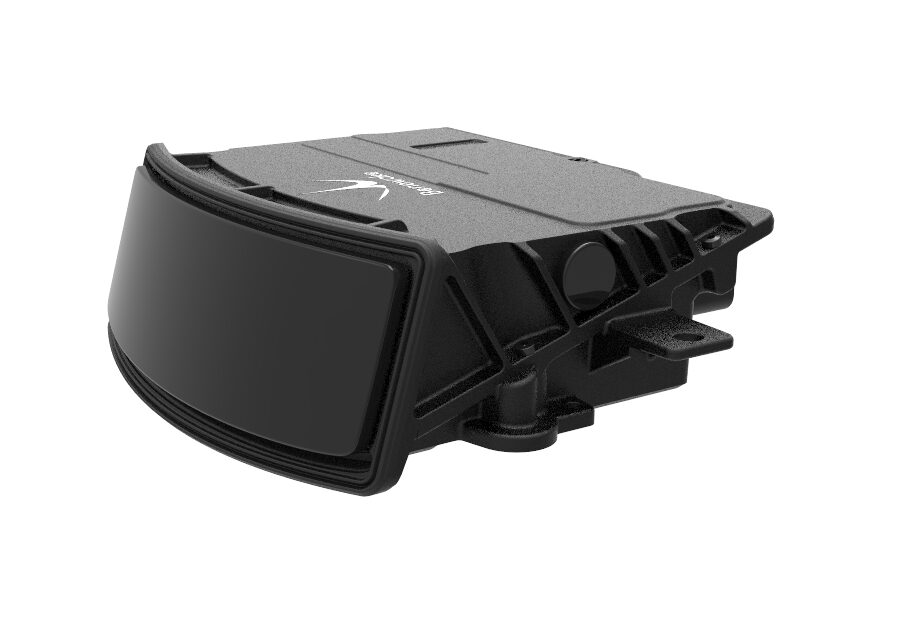
Benewake AD2-S-X3 High-Performance Automotive-Grade LiDAR
Professional-grade 3D LiDAR for autonomous driving, robotics, and advanced ranging applications requiring millimetre-level precision.
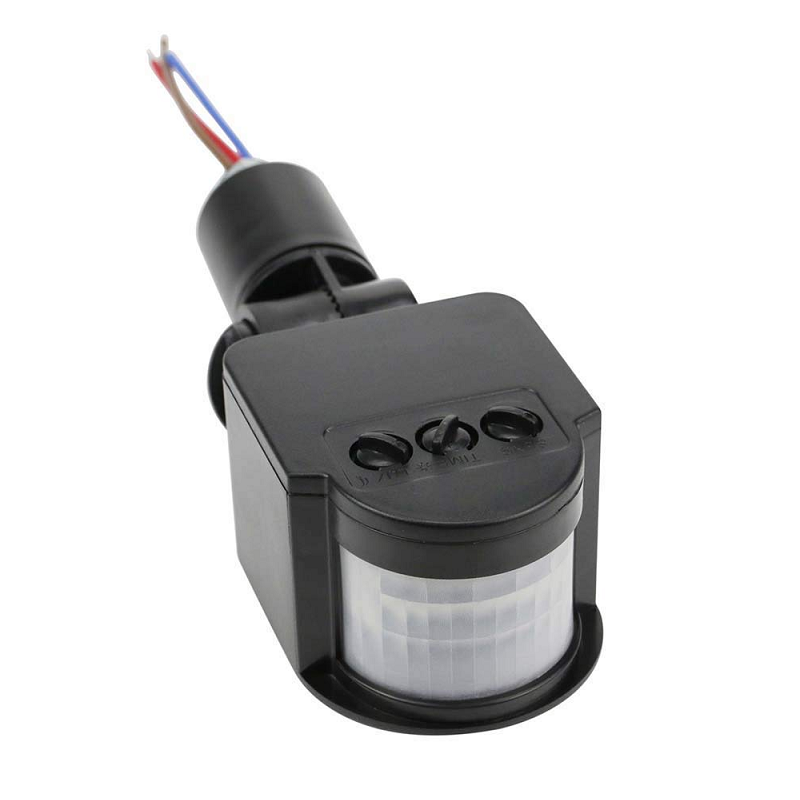
AC 220V Security PIR Human Body Motion Sensor Detector
Pyroelectric IR sensor for presence detection in security and lighting automation. Works directly at mains voltage.
11. Frequently Asked Questions
Which distance sensor is best for an Arduino beginner?
The HC-SR04 ultrasonic sensor is the best starting point. It is cheap, widely documented, requires no ADC, and the wiring is straightforward with two digital GPIO pins. Dozens of beginner tutorials and libraries are freely available.
Can I use an ultrasonic sensor underwater?
Standard HC-SR04 modules are not waterproof. The JSN-SR04T has a waterproof probe that can be submerged to measure liquid depth. Do not submerge the controller board — only the probe tip enters the liquid.
Why does my IR sensor give wrong readings for dark objects?
IR sensors measure reflected light intensity. Dark or matte surfaces absorb more IR light, reducing the signal back to the detector. This causes the sensor to report a larger distance than actual. For consistent results, calibrate with the actual target material you will use in your project.
What is the difference between VL53L0X and VL53L1X?
Both are ST Microelectronics ToF sensors, but the VL53L1X features a longer range (up to 4 m vs 2 m), adjustable region of interest (ROI) for multi-zone detection, and a higher update rate. The VL53L1X costs slightly more but is worth the upgrade for robotics or drone applications.
Can multiple ultrasonic sensors interfere with each other?
Yes. If two HC-SR04 sensors trigger simultaneously, each sensor can pick up the other’s echo. The solution is to trigger them in sequence with a delay of at least 60 ms between triggers, or to use sensors aimed in different directions to minimise overlap.
Which sensor works best outdoors in bright Indian sunlight?
Ultrasonic sensors are the most immune to ambient light. IR sensors can be blinded by sunlight. Laser ToF sensors have partial sunlight immunity but lose significant range outdoors. For outdoor applications, ultrasonic (especially the waterproof JSN-SR04T) is the safest choice.
12. Conclusion
No single distance sensor is best for every situation. Ultrasonic sensors are the workhorse of beginner robotics — affordable, robust, and easy to code. IR sensors shine in compact, short-range indoor applications like line-following robots and object-present detection. Laser ToF sensors take the top spot for precision: they deliver sub-centimetre accuracy, work well regardless of surface colour, and integrate cleanly over I2C.
For most Indian maker projects, start with an ultrasonic sensor. Upgrade to a VL53L1X when you need higher accuracy or a smaller footprint. Choose industrial LiDAR only when your application demands centimetre-level mapping or autonomous navigation at speed.
Explore our full range of distance and proximity sensors at Zbotic to find the right match for your next build.
Ready to Build Your Distance-Sensing Project?
Browse ultrasonic sensors, IR modules, and ToF sensors — all stocked and shipped from India.

Add comment