
Table of Contents
- Why Indoor Air Quality Matters
- Understanding PM2.5 and PM10
- Types of PM and Smoke Sensors
- Best PM Sensors for Makers: A Comparison
- MQ-135: The Entry-Level Gas Sensor
- Wiring and Using Gas Sensors with Arduino
- Building an Indoor Air Quality Monitor
- Optimal Sensor Placement Tips
- Frequently Asked Questions
- Conclusion and Buying Recommendations
India’s air pollution problem extends indoors. According to WHO data, indoor air pollution is responsible for millions of premature deaths annually — driven by cooking smoke, incense, dust, vehicle exhaust infiltrating homes, and off-gassing from synthetic materials. The rise of affordable PM sensors and smoke particle counters has made it possible for hobbyists, researchers, and businesses to monitor indoor air quality in real time using microcontrollers like Arduino and ESP32. This buying guide covers everything you need to know to choose the right PM sensor for your indoor air quality project.
Why Indoor Air Quality Matters
Most people spend 80–90% of their time indoors, yet indoor air can be 2–5 times more polluted than outdoor air according to the US Environmental Protection Agency. Key indoor pollutants include:
- Particulate Matter (PM2.5 and PM10): Fine and coarse particles from cooking, cleaning, incense, candles, and outdoor infiltration
- VOCs (Volatile Organic Compounds): Off-gassing from paints, adhesives, carpets, and furniture — many are carcinogenic
- Carbon Monoxide (CO): Odorless gas from gas stoves, generators, and vehicle exhaust — potentially lethal at high concentrations
- Carbon Dioxide (CO₂): High CO₂ in poorly ventilated offices causes drowsiness, reduced cognitive function, and decreased productivity
- Smoke: From cooking, cigarettes, or fires — contains a cocktail of carcinogenic compounds and fine particles
An indoor air quality monitor built around a PM sensor can give you actionable data: when to open windows, when to run an air purifier, and when pollution levels from cooking or cleaning products warrant attention. For schools, hospitals, and offices, such monitors can guide HVAC adjustments to improve occupant health and productivity.
Understanding PM2.5 and PM10
Particulate matter is classified by aerodynamic diameter:
- PM10: Particles with diameter ≤ 10 micrometres. Includes dust, pollen, and mold spores. These can reach the upper respiratory tract.
- PM2.5: Fine particles with diameter ≤ 2.5 micrometres. Includes combustion products, vehicle exhaust, cigarette smoke, and cooking fumes. These penetrate deep into lung alveoli and can enter the bloodstream.
- PM1: Ultra-fine particles ≤ 1 micrometre. Found in fresh combustion smoke. Most harmful but hardest to measure with low-cost sensors.
The standard air quality index (AQI) in India is primarily driven by PM2.5 and PM10 concentrations. WHO guidelines set safe PM2.5 at 15 µg/m³ annual mean and 45 µg/m³ 24-hour mean. Most Indian cities regularly exceed these values even indoors during peak cooking hours or Diwali.
| PM2.5 (µg/m³) | AQI Category | Health Impact |
|---|---|---|
| 0 – 12 | Good | None |
| 12 – 35 | Moderate | Sensitive groups affected |
| 35 – 55 | Unhealthy for Sensitive | Elderly, children, asthmatics |
| 55 – 150 | Unhealthy | Everyone affected |
| > 150 | Hazardous | Emergency conditions |
Types of PM and Smoke Sensors
1. Electrochemical / Resistive Gas Sensors (MQ Series)
The MQ series (MQ-2, MQ-7, MQ-135, etc.) uses a heated metal oxide semiconductor whose electrical resistance changes when exposed to target gases. They are cheap (₹50–200), easy to use with Arduino via analog read, and respond to a broad range of gases. However, they are not true particle counters — they detect the chemical composition of gases, not the physical count of particles.
2. Optical Particle Counters (Laser Sensors)
Sensors like the PMS5003 (Plantower), SDS011, and SPS30 use a laser diode and photodetector. Particles passing through the laser beam scatter light, and the photodetector counts and sizes individual particles. These are genuine PM2.5 / PM10 counters with digital output (UART). More expensive (₹1,500–3,000) but dramatically more accurate and calibrated.
3. Infrared Dust Sensors
The GP2Y1010AU0F and similar sensors use an infrared LED and photodiode to detect dust concentration via light scattering. Less accurate than laser-based sensors but cheaper and smaller. Good for relative dust detection in HVAC applications.
4. Electrochemical CO/CO₂ Sensors
True CO sensors (like the MQ-7) and CO₂ sensors (like the MH-Z19 NDIR sensor) are specialized for detecting these specific gases. For complete indoor air quality monitoring, you typically combine a PM sensor with a CO₂ sensor for the most actionable data.
Best PM Sensors for Makers: A Comparison
| Sensor | Type | Measures | Interface | Approx. Price | Best For |
|---|---|---|---|---|---|
| MQ-135 | Metal oxide | NH₃, NOx, CO₂, benzene | Analog | ₹100–150 | Budget air quality index |
| MQ-2 | Metal oxide | LPG, smoke, H₂, propane | Analog | ₹80–120 | Smoke/LPG alarm |
| PMS5003 | Laser optical | PM1, PM2.5, PM10 | UART | ₹1,500–2,000 | Accurate PM measurement |
| SDS011 | Laser optical | PM2.5, PM10 | UART | ₹2,000–2,500 | Reference-grade DIY monitor |
| GP2Y1010AU | IR dust | Dust density | Analog | ₹400–600 | HVAC dust monitoring |
| MH-Z19B | NDIR CO₂ | CO₂ (400–5000 ppm) | UART/PWM | ₹1,200–1,800 | Office/classroom CO₂ |
MQ-135: The Entry-Level Gas Sensor
The MQ-135 is the most popular gas sensor for Arduino air quality projects in India. It detects a broad range of gases including ammonia (NH₃), nitrogen oxides (NOx), alcohol, benzene, smoke, and CO₂. The sensor module outputs both an analog voltage proportional to gas concentration and a digital output (HIGH/LOW based on a preset threshold).
The MQ-135 is NOT a particle counter — it detects the chemical signatures of gases, not physical particles. For a quick project that shows a general air quality index, it works well. For accurate PM2.5 measurement, you need a laser-based sensor like the PMS5003.
Key characteristics of MQ-135:
- Requires 150–300 second preheat time after power-on for stable readings
- Sensitive to humidity and temperature — readings shift significantly above 85% RH or below 0°C
- Cross-sensitive: responds to many gases, so it gives a general pollution level, not a specific gas concentration without careful calibration
- Open-air calibration: must be calibrated in clean air to establish the R0 baseline resistance
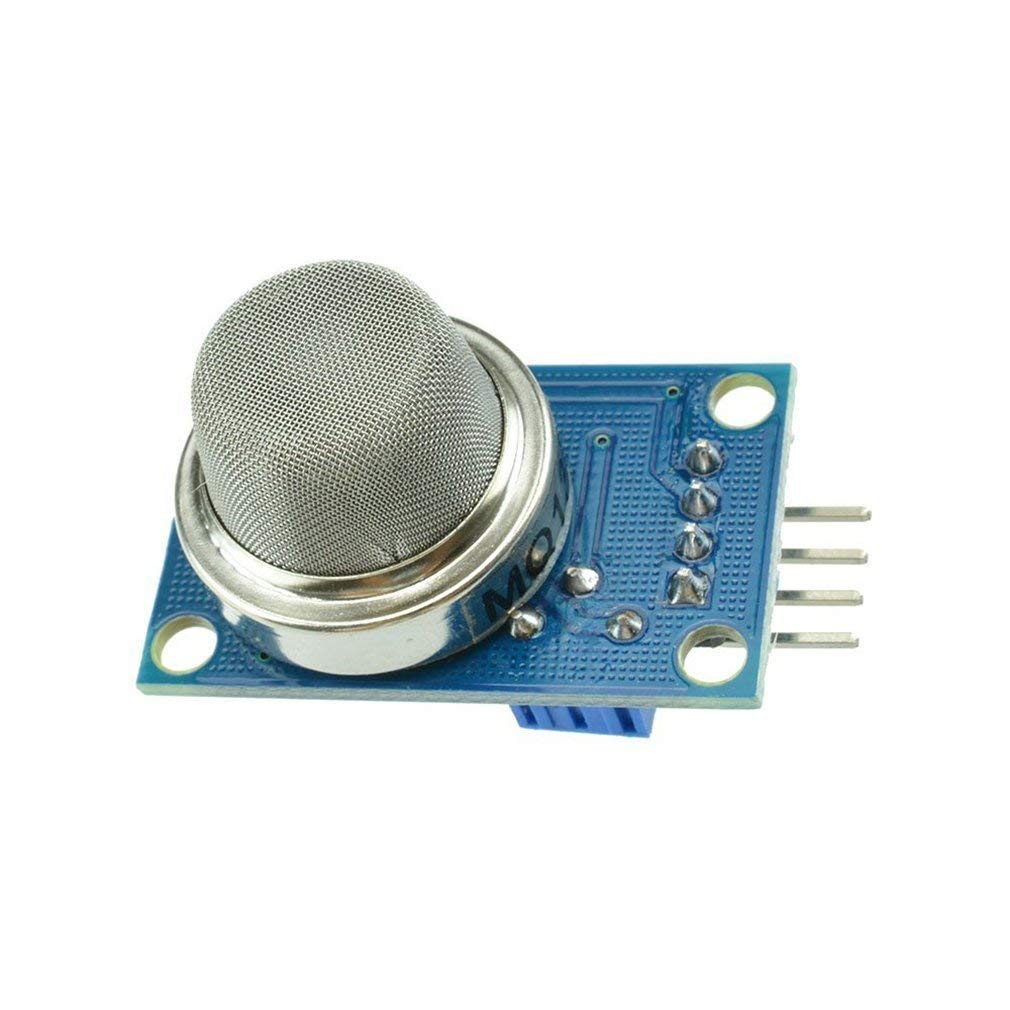
MQ-135 Air Quality / Gas Detector Sensor Module for Arduino
The most affordable starting point for indoor air quality monitoring with Arduino — detects NH₃, NOx, CO₂, benzene, and smoke on a simple analog interface.
Wiring and Using Gas Sensors with Arduino
Gas sensor modules (MQ series) are straightforward to wire:
| MQ Module Pin | Arduino Pin |
|---|---|
| VCC | 5V |
| GND | GND |
| AO (Analog Out) | A0 |
| DO (Digital Out) | D7 (optional) |
#define MQ135_PIN A0
#define DIGITAL_PIN 7

void setup() {
  Serial.begin(9600);
  pinMode(DIGITAL_PIN, INPUT);
  Serial.println("Warming up sensor - please wait 3 minutes...");
  delay(180000); // 3-minute warm-up
  Serial.println("Sensor ready!");
}

void loop() {
  int analogVal = analogRead(MQ135_PIN);
  int digitalVal = digitalRead(DIGITAL_PIN);

  // Map to rough air quality index (requires calibration for accuracy)
  Serial.print("Analog Value: ");
  Serial.print(analogVal);
  Serial.print(" | Air Quality: ");

  if (analogVal < 200) Serial.println("Good");
  else if (analogVal < 400) Serial.println("Moderate");
  else if (analogVal < 600) Serial.println("Unhealthy");
  else Serial.println("Hazardous - Ventilate NOW!");

  if (digitalVal == HIGH) {
    Serial.println("WARNING: Threshold exceeded! (Digital alarm)");
  }

  delay(2000);
}
Building an Indoor Air Quality Monitor
A complete IAQ monitor should combine multiple sensors for comprehensive coverage. Here is a recommended sensor stack for an ESP32-based Wi-Fi IAQ monitor:
- MQ-135: General gas quality index (NH₃, NOx, benzene, smoke)
- MQ-131 (Ozone sensor): Detect ozone from air purifiers and photocopiers
- DHT20 or BME280: Temperature, humidity, and pressure (needed to correct gas sensor readings)
- MH-Z19B: CO₂ concentration (most critical metric for ventilation decisions)
Send data via MQTT to a Home Assistant dashboard, or directly to a cloud service like ThingSpeak. Add email/Telegram alerts when any sensor crosses a threshold. Mount in a 3D-printed enclosure with passive airflow slots and a small OLED display for local readout.
If budget allows, replace the MQ-135 with a PMS5003 for genuine PM2.5 and PM10 data. The PMS5003 communicates via UART (SoftwareSerial or HardwareSerial on ESP32) and outputs particle count data in a structured binary packet parsed by the PMS library.
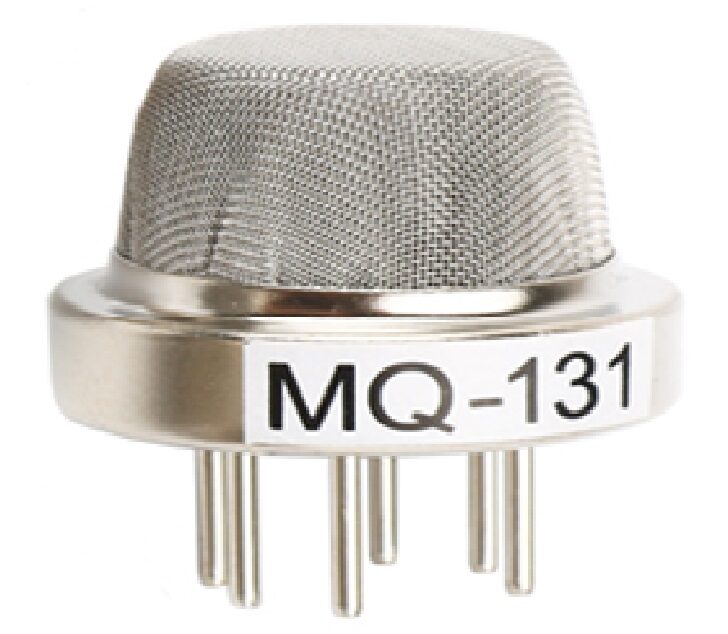
MQ-131 Ozone Gas Detection Sensor
Detect harmful ozone from air purifiers, photocopiers, and UV lamps. Pair with MQ-135 for comprehensive indoor gas monitoring.
Optimal Sensor Placement Tips
- Height: Mount at breathing height — 1.0–1.5 metres from floor for living areas, 1.2–1.8 m for offices
- Location: Central room location, away from windows and doors that cause airflow spikes
- Kitchen: Do not mount directly above the stove — cooking events will saturate the sensor. Mount 1–2 metres away for meaningful data.
- Enclosure: Allow passive convection airflow. Enclosed sensor housings without ventilation slots will trap heat and cause readings to drift high.
- Avoid: Direct sunlight on sensor (heats the element), proximity to air conditioning vents (dilutes localized pollution), and bathrooms (humidity spikes damage MQ sensors over time)
Frequently Asked Questions
What is the difference between a smoke detector and a PM sensor?
Smoke detectors (ionization or photoelectric) are binary alarm devices — they trigger when smoke reaches a danger threshold. PM sensors continuously measure particle concentration and output quantitative data (µg/m³ or particle count). PM sensors are for monitoring and data logging; smoke detectors are for safety alarms.
Can MQ-135 measure CO₂ accurately?
Not reliably. The MQ-135 responds to CO₂ among many gases, but its cross-sensitivity to humidity, temperature, and other VOCs makes accurate CO₂ measurement unreliable without precise calibration. For accurate CO₂, use an NDIR sensor like the MH-Z19B.
How often should I recalibrate the MQ-135?
The R0 baseline (clean air resistance) should be measured periodically — every 3–6 months or after relocating the sensor. Perform calibration outdoors in clean air (far from traffic) during mild temperature and humidity conditions.
Are PM sensor readings accurate enough for health decisions?
Low-cost optical PM sensors correlate well with reference instruments in general trends but may differ by ±20–30% in absolute values. They are excellent for relative monitoring — knowing when air quality is worse than usual — but should not be used for compliance reporting, which requires certified reference instruments.
How does cooking affect indoor PM2.5 levels?
Cooking on a gas stove can raise indoor PM2.5 to 200–500 µg/m³ within minutes — far above hazardous thresholds. Using exhaust fans and opening windows during cooking is critically important, especially in Indian kitchens with oil-based cooking.
Can I run a MQ sensor 24/7?
Yes, MQ sensors are designed for continuous operation. However, continuous 24/7 use accelerates heating element aging. An intermittent duty cycle (preheat for 30s before each reading, then power down) can extend sensor life to 5+ years.
Conclusion and Buying Recommendations
Choosing the right sensor depends entirely on your goal and budget:
- Budget smoke/gas alarm (under ₹200): MQ-2 for smoke/LPG, MQ-135 for general air quality index
- Accurate PM2.5 measurement (₹1,500–2,500): PMS5003 or SDS011 laser optical particle counter
- Comprehensive IAQ monitor: MQ-135 + BME280/DHT20 + MH-Z19B CO₂ + optional PMS5003
- Ozone-specific detection: MQ-131 (important in homes with ionizer air purifiers)
Start with the MQ-135 to get familiar with gas sensor concepts, then upgrade to a laser PM sensor when your project requirements demand genuine particle-count data. The combination of gas sensors and environmental sensors (temperature, humidity) on an ESP32 with Wi-Fi reporting gives you a powerful, affordable indoor air quality monitoring platform that can genuinely improve your family’s health awareness.
Zbotic stocks MQ-series gas sensors, environmental sensors, and more for your indoor air quality monitoring projects. Browse all sensors at Zbotic →





Add comment