
Choosing between SIM800L vs A6 Mini GSM module in India is one of the most common decisions Indian IoT makers face when adding cellular connectivity to Arduino or ESP32 projects. Both modules are inexpensive, widely available, and support SMS + voice calls — but they have very different power requirements, AT command support, form factors, and network compatibility with Indian operators. This deep-dive comparison covers everything you need to make the right choice for your specific project.
Module Overview: SIM800L and A6 Mini
SIM800L
The SIM800L is based on the SIMCom SIM800 chipset, a quad-band 2G GSM/GPRS module. It has been the go-to choice for hobbyists since 2015 thanks to its extremely low idle current (0.7 mA in sleep), rock-solid AT command implementation, and massive community support. The “L” variant is a miniaturised version of the full SIM800 module, bringing the price down to ₹200–₹350 in India.
The SIM800L supports SMS, voice calls, GPRS data, HTTP/S, SMTP, FTP, and even has an audio codec for microphone/speaker connections. It is arguably the most fully featured 2G module available at this price point.
A6 Mini (AI-Thinker A6)
The A6 Mini is made by AI-Thinker (same company behind ESP8266 and ESP32 modules). It is a quad-band 2G GSM/GPRS module that supports SMS, voice, and GPRS data. The A6 is smaller than the SIM800L and runs on 3.3V–4.2V. It costs slightly less (₹150–₹280) but has a smaller online community and some AT command quirks that require workarounds.
AI-Thinker also makes the A7 (GSM+GPS combo), but the A6 Mini is the pure GSM variant in this comparison.
Technical Specifications Compared
| Specification | SIM800L | A6 Mini |
|---|---|---|
| Chipset | SIMCom SIM800 | AI-Thinker A6 |
| Network | GSM/GPRS 2G Quad-band | GSM/GPRS 2G Quad-band |
| Frequency bands | 850/900/1800/1900 MHz | 850/900/1800/1900 MHz |
| Supply voltage | 3.4V–4.4V (4.0V optimal) | 3.3V–4.2V (3.7V optimal) |
| Peak TX current | 2A | 1.5A |
| Sleep current | 0.7 mA | 1.0 mA |
| GPRS data speed | 85.6 kbps DL / 42.8 kbps UL | 85.6 kbps DL / 42.8 kbps UL |
| SIM type | Micro SIM | Micro SIM |
| UART baud rate | Auto-baud (default 115200) | Default 115200 |
| Audio codec | Yes (MIC/SPK pins) | Yes (MIC/SPK pins) |
| Bluetooth | Yes (BT 3.0, on SIM800C variant) | No |
| PCB size | 25mm × 23mm | 24mm × 24mm |
| Price in India (2024) | ₹200–₹350 | ₹150–₹280 |
| Library support | Excellent (TinyGSM, ITEADLIB) | Good (TinyGSM partial) |
| Community & tutorials | Very large | Moderate |
Indian Network Compatibility
Both modules are 2G only. This means Jio SIM cards will NOT work — Jio shut down their 2G network entirely and is 4G-only. Here is the current compatibility status for Indian carriers:
| Operator | SIM800L Works? | A6 Mini Works? | Notes |
|---|---|---|---|
| Airtel | Yes | Yes | Best 2G rural coverage |
| BSNL | Yes | Yes | Best in Tier-2/3 cities and hills |
| Vi (Vodafone-Idea) | Yes | Yes | Coverage varies by region |
| Jio | No | No | 4G/VoLTE only — no 2G |
Recommendation for India: Buy an Airtel prepaid nano SIM and keep BSNL as backup. In most urban and semi-urban areas, Airtel 2G works reliably even as 4G coverage expands.
Power Supply Requirements
Power supply is the biggest practical difference between the two modules for Indian hobbyist builds:
SIM800L Power Supply
The SIM800L requires 3.4V–4.4V and draws up to 2A peak during GSM transmission. The 2A peak is the primary challenge — it cannot be powered from an Arduino’s 3.3V or 5V pins. Solutions:
- Direct LiPo 18650 cell (3.7V–4.2V, capable of 3A+ discharge) — ideal
- AMS1117-4.0 regulator from a 5V supply — works but barely (ensure 2A rating)
- MT3608 boost converter from 3.3V to 4.0V — reliable but adds cost
A6 Mini Power Supply
The A6 Mini draws only 1.5A peak and operates at 3.3V–4.2V, making it slightly more forgiving. It can be powered from a 3.7V LiPo directly or from a dedicated 3.3V supply rated at 2A. However, the standard Arduino 3.3V pin (limited to 50–150 mA) is still insufficient — never connect directly.
Winner: A6 Mini — lower peak current means cheaper, simpler power supply design.
AT Command Differences
Both modules use standard Hayes AT commands, but there are important differences in implementation:
SMS Sending — Both Identical
AT+CMGF=1         // Set SMS text mode
AT+CMGS="+91XXXXXXXXXX"  // Recipient number
> Hello from Zbotic!     // Message text
Ctrl+Z (0x1A)            // Send
HTTP GET — SIM800L vs A6 Mini
SIM800L has full HTTP/HTTPS support via dedicated AT+HTTPINIT commands:
// SIM800L HTTP GET
AT+HTTPINIT
AT+HTTPPARA="CID",1
AT+HTTPPARA="URL","http://api.example.com/data"
AT+HTTPACTION=0
AT+HTTPREAD
AT+HTTPTERM
The A6 Mini lacks the built-in HTTP commands — you must use raw TCP sockets via AT+CIPSTART and manually construct HTTP request strings. This works but requires more code and is error-prone.
Winner: SIM800L — built-in HTTP stack saves significant development time. Critical for sending data to web APIs or IoT platforms.
TinyGSM Library
The excellent TinyGSM Arduino library supports both modules. For SIM800L, all features work. For A6 Mini, SMS and basic calls work, but HTTPS and some advanced features may have issues.
Which Module for Which Project?
| Project Type | Recommended Module | Reason |
|---|---|---|
| SMS alert system (tank level, door alarm) | Either — A6 Mini cheaper | SMS AT commands identical |
| IoT data upload to web API / cloud | SIM800L | Built-in HTTP stack |
| Remote vehicle tracker | SIM800L (or FONA 808 for GPS) | Better library support + HTTP |
| Voice call OTP system | SIM800L | Better audio codec documentation |
| Budget SMS sender on LiPo battery | A6 Mini | Lower cost + lower peak current |
| Agricultural field sensor | SIM800L | Lower sleep current (0.7 mA) = longer battery life |
| Classroom learning / first GSM project | SIM800L | More tutorials, bigger community |
GSM Modules and Accessories at Zbotic
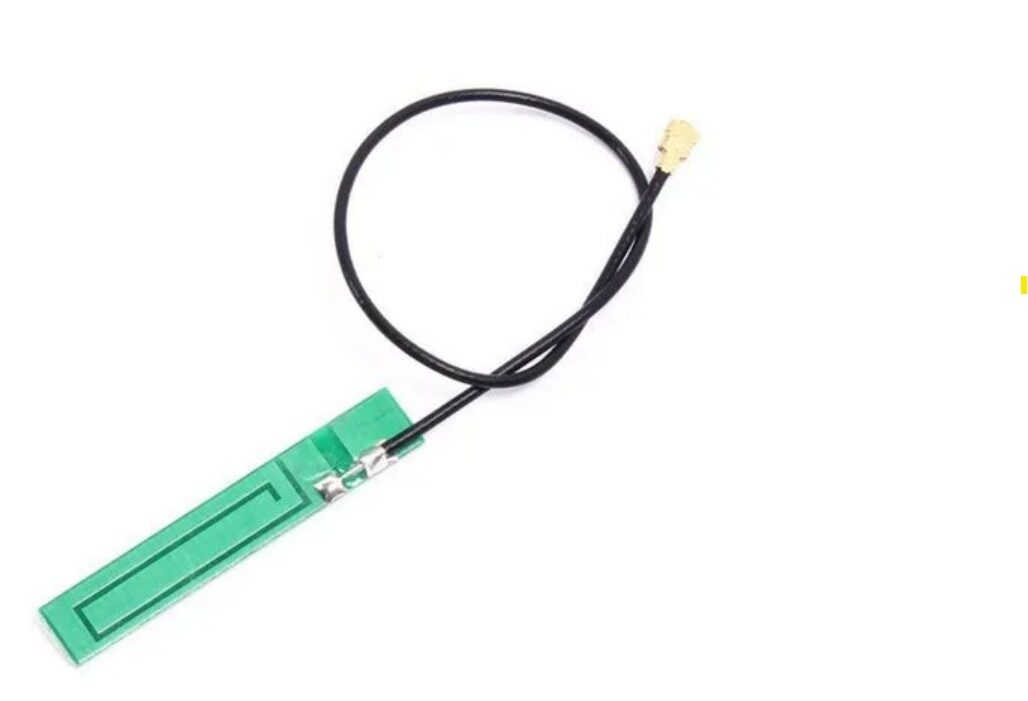
15cm 3DBI GSM/GPRS/3G PCB Antenna with IPEX Connector
Essential upgrade for both SIM800L and A6 Mini. Replace the tiny onboard ceramic antenna with this 3 dBi gain PCB antenna for dramatically improved signal — especially in basement or enclosure installations.
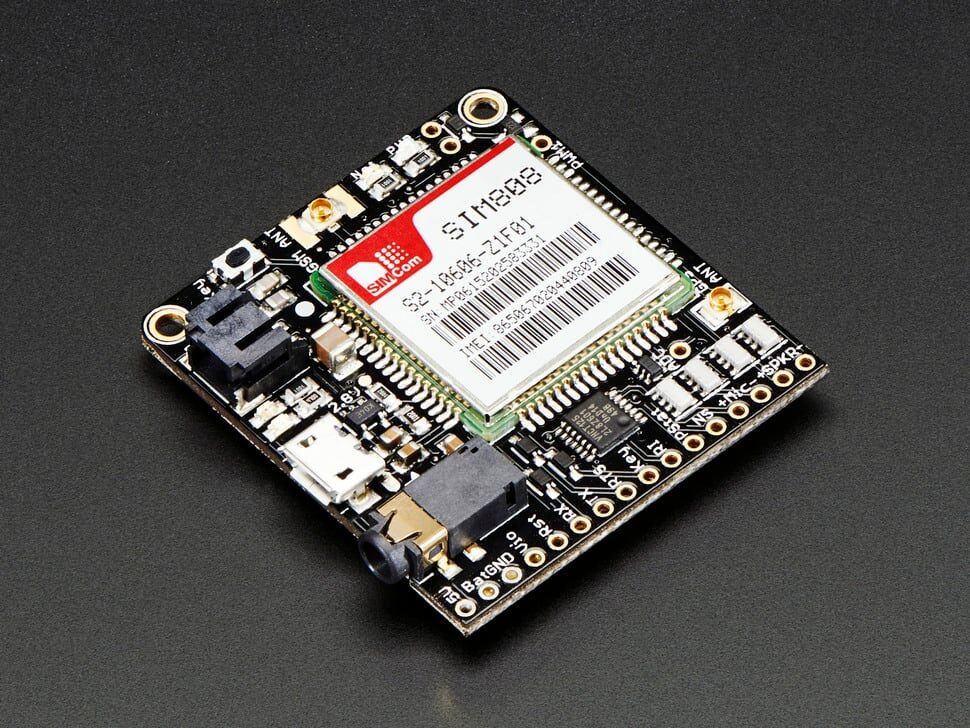
Adafruit FONA 808 – Mini Cellular GSM + GPS Breakout
When you need more than basic SMS — the FONA 808 combines GSM with GPS in one module. Excellent for vehicle trackers, asset monitoring, and field survey tools across India.
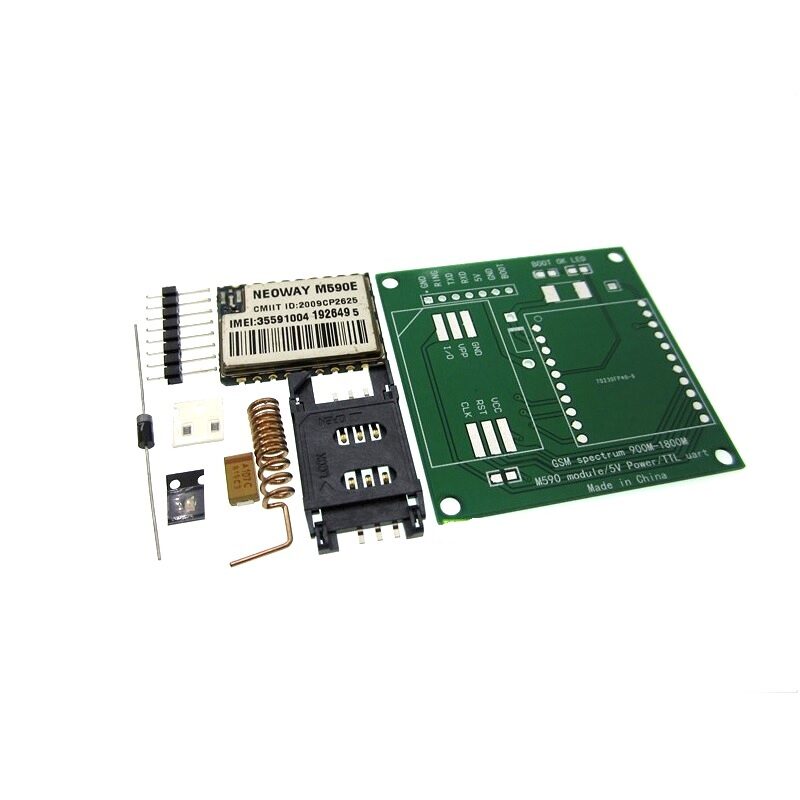
DIY GSM/GPRS M590E Module Kit
A third alternative worth considering — the M590E offers a different form factor and SMD pad layout suitable for custom PCB integration. Good for product development when you want to design a compact custom board.
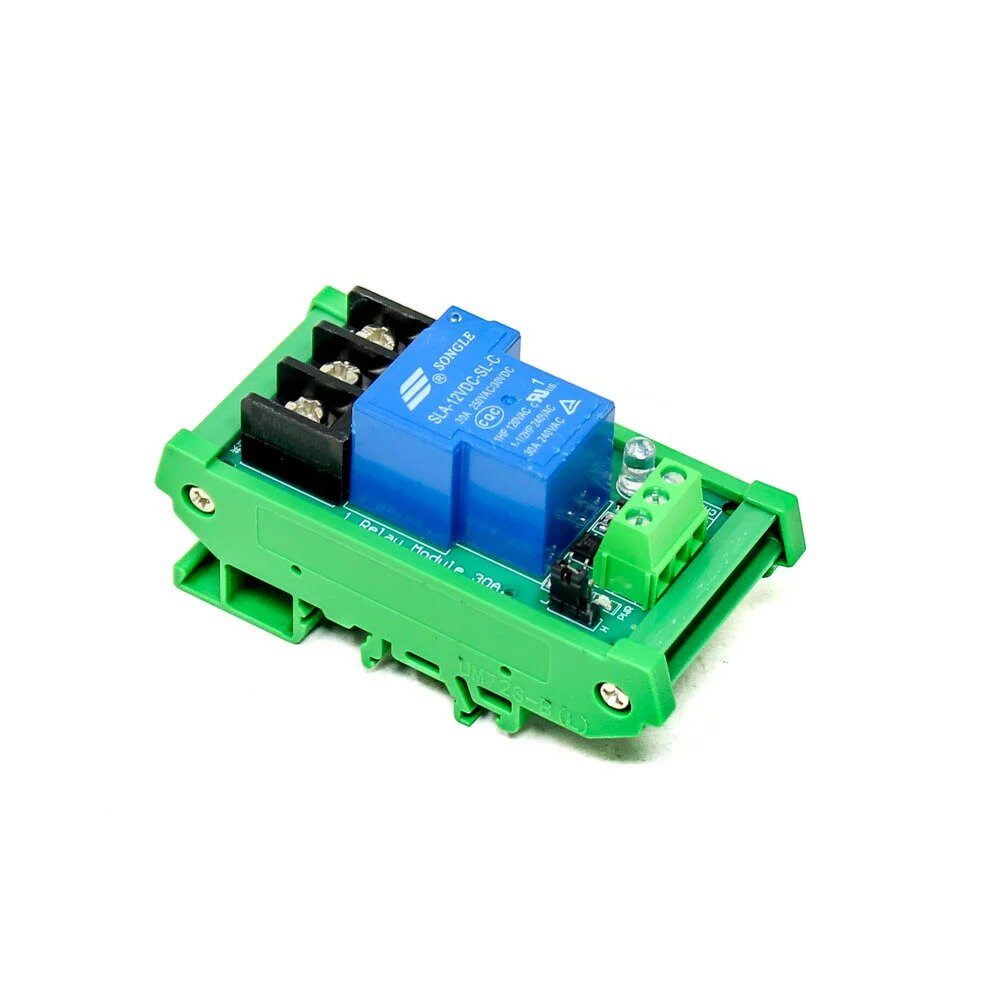
1 Channel 12V 30A Relay Module with Optocoupler
Complete your GSM-controlled project with this heavy-duty relay. Control pumps, motors, and 230V AC loads remotely via SMS commands sent to your SIM800L or A6 module.
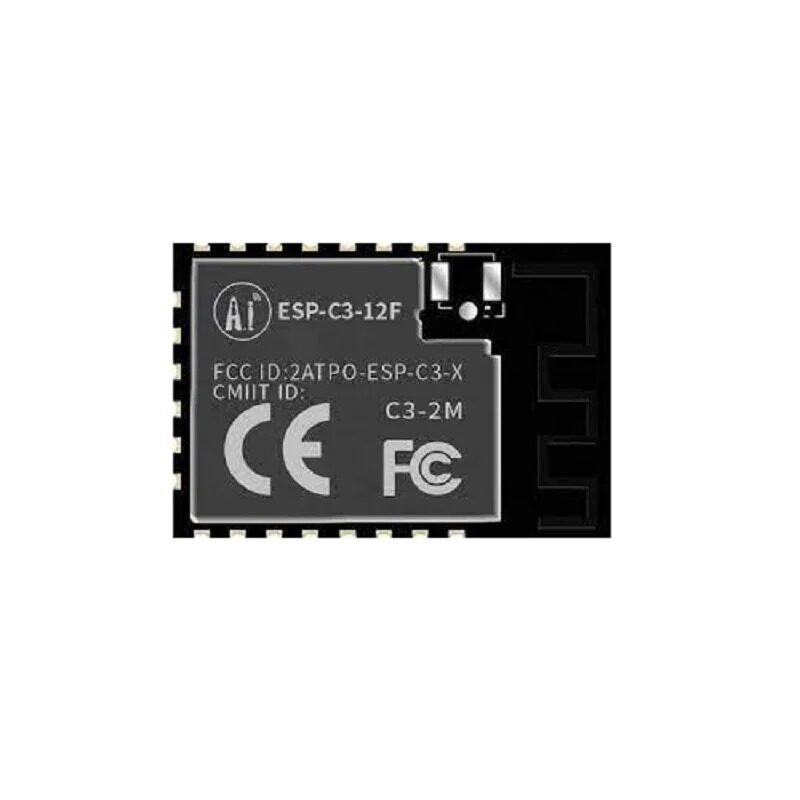
Ai-Thinker ESP32-C3-12F Wi-Fi + BLE Module
Pair an ESP32-C3 with your GSM module for a WiFi+GSM dual-connectivity IoT node — use WiFi when available and fall back to GSM SMS alerts when the home network is down.
Frequently Asked Questions
Is SIM800L still available in India in 2024?
Yes, SIM800L modules are still widely available through online stores including Zbotic. While SIMCom has moved on to newer 4G modules (SIM7600, SIM7080G), the SIM800 series remains in production for IoT applications where 2G coverage is sufficient. Stock is readily available from Indian distributors.
Can SIM800L or A6 Mini access 4G or LTE networks in India?
No. Both are 2G (GSM/GPRS) only modules. They cannot connect to 4G/LTE networks. If you need 4G in India, look at modules like SIM7600E-H (LTE Cat-4), SIM7080G (LTE Cat-M1/NB-IoT), or the A7670 series. These are more expensive but future-proof as 2G networks are gradually being phased down.
Which module has better code examples for beginners in India?
SIM800L has a much larger community and more Indian-specific tutorials. Searching for “SIM800L Arduino India” returns hundreds of verified working projects. For beginners, start with SIM800L + TinyGSM library — there are working examples for Blynk, ThingSpeak, and direct HTTP API calls.
What is the difference between SIM800L and SIM800C?
The SIM800C adds Bluetooth 3.0 support on top of the standard SIM800L feature set. It is slightly more expensive and less common. For pure GSM/SMS/GPRS projects, SIM800L is sufficient. Only choose SIM800C if you need Bluetooth pairing alongside GSM.
Can I use SIM800L or A6 Mini for GPRS data in India?
Yes — both support GPRS (2.5G data). GPRS speeds are limited to ~85 kbps which is enough for sending small JSON payloads to IoT platforms like Blynk, ThingSpeak, or custom REST APIs. It is NOT suitable for streaming video, large file transfers, or MQTT brokers with high message rates. For high-bandwidth IoT, consider an ESP32 + WiFi or a 4G module.
Get Your GSM Module Delivered Across India
Zbotic stocks GSM modules, antennas, relay modules, and all the accessories you need for cellular IoT projects. Pan-India fast shipping — order today and build tomorrow!




Add comment