
The SIM7020 NB-IoT module India market is growing fast as smart metering, asset tracking, and industrial IoT deployments demand ultra-low-power wide-area connectivity. Whether you are building a water meter that reports usage every hour or a remote soil sensor that runs on a coin cell for two years, the SIM7020 is one of the most cost-effective NB-IoT solutions available to Indian makers and engineers today. This guide covers everything from hardware setup and AT commands to power optimization techniques that let you squeeze years of life out of a small battery.
What Is NB-IoT and Why Does It Matter in India?
Narrowband IoT (NB-IoT) is a 3GPP standard (Release 13) designed specifically for low-data-rate, battery-operated devices that need deep indoor penetration and nationwide cellular coverage. Unlike Wi-Fi or standard GSM/GPRS, NB-IoT operates in licensed spectrum bands, giving it interference-free reliability and strong MCL (Maximum Coupling Loss) of up to 164 dB — roughly 20 dB better than LTE.
In India, NB-IoT sits on the cusp of mass adoption. Smart city projects, smart metering mandates from MNRE, and agriculture IoT initiatives by ICAR and state governments are all pushing demand. Jio has rolled out NB-IoT in Band 28 (700 MHz) across major cities, while Airtel is deploying in Band 8 (900 MHz). For Indian engineers, this means devices built today will have real carrier infrastructure to connect to — without SIM registration fees that used to cost ₹10,000+ for M2M connections.
Key advantages of NB-IoT over alternatives:
- Ultra-low power: A device can achieve 10+ year battery life on 2 AA cells using PSM (Power Saving Mode)
- Deep indoor penetration: 900 MHz propagation passes through thick concrete walls and underground meter pits
- Low cost per SIM: Jio NB-IoT SIMs are available from ₹150–300/year for small data plans
- No gateway needed: Connects directly to the cellular tower, unlike LoRa which needs a gateway
- Standardised: Move between Jio, Airtel, and future operators without changing hardware
SIM7020 Module Overview & Key Specs
The SIMCom SIM7020 is a multi-band NB-IoT module in a compact LCC package (23.6 × 19.9 mm). It supports 3GPP Release 14 features including PSM, eDRX, and NPUSCH enhancements. Here are the critical specifications Indian designers need to know:
| Parameter | Value |
|---|---|
| Frequency Bands | B1/B2/B3/B4/B5/B8/B12/B13/B17/B18/B19/B20/B25/B26/B27/B28/B66/B70/B85 (global variant) |
| Supply Voltage | 2.1 V – 3.6 V (typical 3.3 V) |
| Peak Current (TX) | ~500 mA (at 23 dBm) |
| PSM Current | < 5 µA |
| Data Rate (DL/UL) | Up to 27 kbps / 62.5 kbps (multi-tone) |
| Protocols | TCP, UDP, CoAP, MQTT, HTTP/HTTPS, LwM2M |
| UART Interface | 115200 bps default |
The SIM7020E variant covers B3/B5/B8/B20/B28 — the bands most relevant for India (B5 and B8 for Airtel, B28 for Jio). Always confirm the band variant before ordering. For Indian projects, the SIM7020E is usually the correct choice.
Hardware Setup: Wiring SIM7020 to Arduino / ESP32
The SIM7020 operates at 3.3 V logic and requires a 3.3 V power supply capable of delivering at least 500 mA peak current. This is the single most common mistake beginners make — under-powering the module causes unpredictable resets and failed registrations (see our FAQ below on power issues).
Minimal wiring for Arduino Uno (with 3.3V level shifting):
- VCC → 3.3 V (use AMS1117-3.3 regulator from 5V with 470µF bulk capacitor)
- GND → GND
- TXD → Arduino RX (via voltage divider: 10kΩ / 20kΩ to drop 3.3V → 2.2V is acceptable)
- RXD → Arduino TX (3.3V tolerant; no level shift needed for TX)
- PWRKEY → Arduino GPIO (pull LOW for 2 seconds to power on)
- STATUS → Arduino GPIO (read HIGH = module on)
Wiring for ESP32 (3.3V native — much simpler):
- VCC → 3.3V rail (ensure your power supply supports 500mA+ peak)
- GND → GND
- TXD → ESP32 GPIO16 (RX2)
- RXD → ESP32 GPIO17 (TX2)
- PWRKEY → ESP32 GPIO5
Antenna: Always connect an appropriate antenna before powering the module. Operating without an antenna can damage the RF front-end. Use a 700 MHz or 900 MHz PCB antenna with an IPEX/u.FL connector matching your target band.
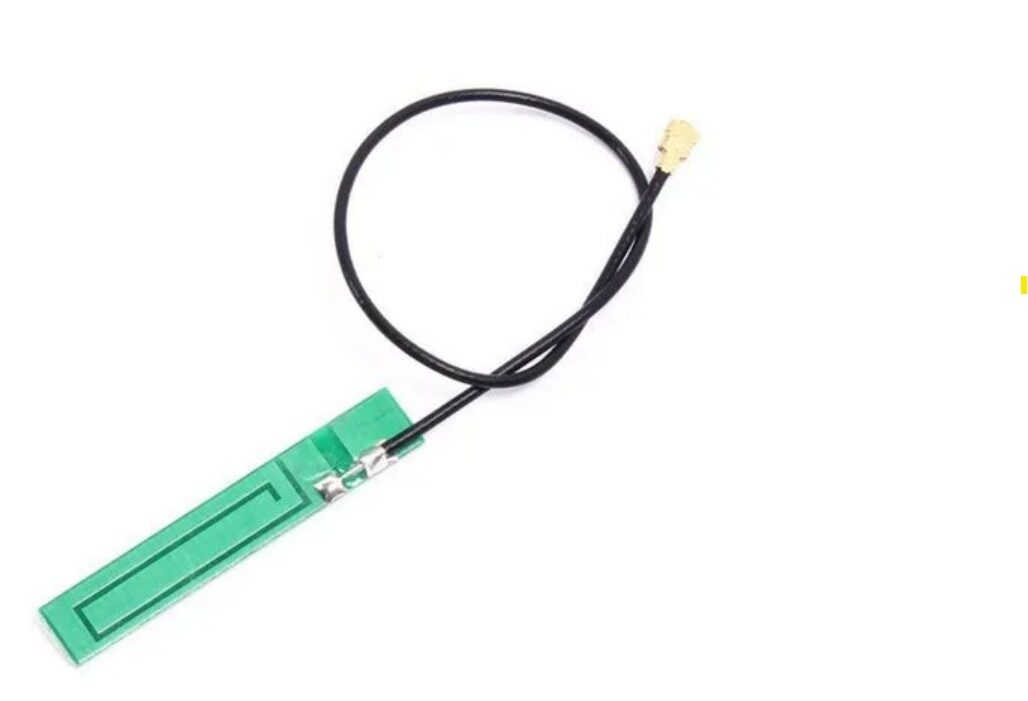
15cm 3DBI GSM/GPRS/3G PCB Antenna with IPEX Connector
Compact 15 cm PCB antenna with IPEX connector — compatible with NB-IoT modules operating in GSM frequency bands (800/900/1800 MHz). Ideal for enclosure-mounted IoT devices.
Essential AT Commands to Get Connected
The SIM7020 is controlled entirely via AT commands over UART. Below is a minimal sequence to attach to the network and send a UDP packet — the foundation of any NB-IoT application.
; Step 1: Check module is alive
AT
; Response: OK

; Step 2: Check SIM status
AT+CIMI
; Response: 404XXXXXXXXXXX (IMSI starting with 404 = India)

; Step 3: Set APN for Jio NB-IoT
AT+CGDCONT=1,"IP","jionet"
; For Airtel: AT+CGDCONT=1,"IP","airtelgprs.com"

; Step 4: Set network registration (NB-IoT only)
AT+CMNB=1
; 1 = NB-IoT only, 3 = NB-IoT + eMTC

; Step 5: Enable auto network attach
AT+CEREG=1

; Step 6: Force network attach
AT+CGATT=1

; Step 7: Wait for registration (poll every 5s)
AT+CEREG?
; Response: +CEREG: 1,1 means registered on home network
; +CEREG: 1,5 means roaming (ok for testing)

; Step 8: Check signal quality
AT+CSQ
; Response: +CSQ: 20,0 → RSSI = -73 dBm (good)

; Step 9: Open a UDP socket to a test server
AT+CSOC=1,2,1
; Returns socket ID (e.g. 0)

; Step 10: Connect to server
AT+CSOCON=0,7777,"test.server.com"

; Step 11: Send data (hex encoded)
AT+CSOSEND=0,11,"48656C6C6F20576F726C64"
; Sends "Hello World" as 11-byte payload
MQTT connection (recommended for cloud platforms like AWS IoT, EMQX):
AT+CMQNEW="broker.emqx.io","1883",12000,1024
AT+CMQCON=0,4,"sim7020_device_01",60,0,0
AT+CMQPUB=0,"zbotic/sensor/temp",1,0,0,15,"{temp:28.5,hum:65}"
Power Optimization: PSM and eDRX Explained
Power optimization is where the SIM7020 truly shines. Two features — PSM (Power Saving Mode) and eDRX (extended Discontinuous Reception) — let your device sleep for hours or days between transmissions while maintaining network registration.
PSM (Power Saving Mode)
In PSM, the module enters deep sleep after data transmission. The network retains the device’s registration context, so it can wake up and transmit immediately without re-registering. PSM current drops to under 5 µA — comparable to a coin cell self-discharge rate.
; Enable PSM with T3412 (periodic TAU timer) = 1 hour
; T3412 = 01000001 = 010 (10h unit) + 00001 (1 unit) = 10h...
; Easier: use the SIM7020 helper command
AT+CPSMS=1,,,"00100001","00000001"
; Param 4 = T3412 (TAU timer) = 10 min × 1 = 10 min
; Param 5 = T3324 (Active timer) = 2s × 1 = 2s
; Device will be reachable for 2s after each transmission, then sleep 10 min
eDRX (Extended Discontinuous Reception)
eDRX is for applications that need to receive downlink data occasionally. The device wakes on a regular schedule (configurable from 20 seconds to 2 hours) to check for incoming messages, then sleeps again. This is ideal for over-the-air updates or remote commands.
; Enable eDRX with 163.84 second cycle (NB-IoT)
AT+CEDRXS=1,5,"0101"
; Mode 1 = enable, 5 = NB-IoT, "0101" = 163.84s
Practical battery life calculation: With PSM active (5 µA sleep), 20ms active transmission at 200mA peak, transmitting once every 15 minutes:
- Average current = (200mA × 20ms + 5µA × 899.98s) / 900s ≈ 4.44 µA + 5 µA ≈ 9.4 µA average
- 2× AA batteries = 2400 mAh = 2,400,000 µAh
- Battery life = 2,400,000 / 9.4 ≈ 255,000 hours ≈ 29 years (ideal)
- Practical (inefficiencies, self-discharge, temperature) ≈ 5–8 years
NB-IoT Network Coverage in India
As of early 2026, here is the realistic state of NB-IoT connectivity in India:
- Jio (Band 28, 700 MHz): Best for deep indoor and rural coverage. Deployed in 100+ tier-1 and tier-2 cities. Contact Jio Enterprise for M2M SIM provisioning. SIMs need NB-IoT activation; standard consumer SIMs will not work.
- Airtel (Band 8, 900 MHz): Available in select metros. Airtel SmartConnect IoT SIM required. Good urban coverage but more limited rural reach than Jio.
- BSNL: Piloting NB-IoT in limited circles; not yet commercially ready for production deployments.
APN settings summary:
- Jio:
jionet - Airtel:
airtelgprs.comorm2m.airtel.in(M2M SIMs)
Tip: If you are prototyping and do not yet have an NB-IoT SIM, consider starting with the SIM7020’s MQTT-over-UDP stack using a hotspot fallback, then switching to NB-IoT for production testing.
Real-World Use Cases for Indian Makers
1. Smart Water Meter
Pulse-count a flow sensor, accumulate litres, and transmit a daily reading via MQTT to AWS IoT. The SIM7020 wakes at midnight, transmits 50 bytes, and sleeps for 24 hours. Battery life exceeds 5 years on 3× D-cell batteries.
2. Agricultural Soil Moisture Monitor
Read a capacitive soil sensor and transmit NPK + moisture data every 6 hours. Coverage in rural Maharashtra or Punjab is surprisingly good on Jio Band 28 even with no tower in line-of-sight (NLOS), thanks to NB-IoT’s 164 dB MCL.
3. Cold Chain Temperature Logger
Attach a DS18B20 probe to a pharma shipment container. Log temperature every 30 minutes and send an alert if excursions occur. CoAP over UDP is ideal here for its tiny packet overhead.
4. Asset Tracker (Low-Update-Rate)
Combine the SIM7020 with a NEO-6M GPS module. Wake every 4 hours, acquire a GPS fix in 30 seconds (hot fix), transmit coordinates, and sleep. Ideal for tracking construction equipment or shipping containers across India.
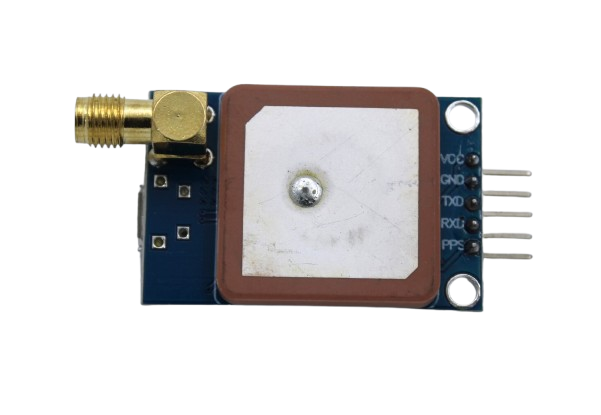
GPS NEO-6M Satellite Positioning Module
Pair the NEO-6M GPS module with SIM7020 NB-IoT for a complete low-power asset tracker. Supports Arduino, STM32, and most 3.3V/5V microcontrollers.
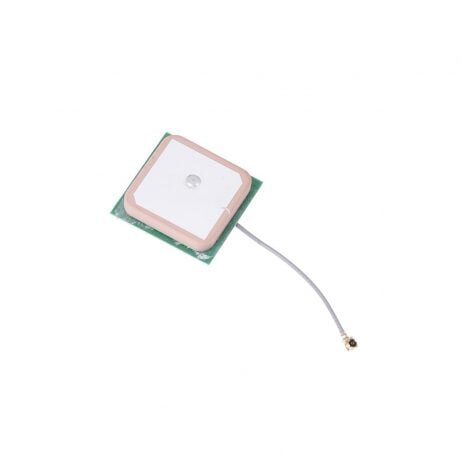
28dB High Gain Active GPS Antenna for NEO-6M/7M/8M
High-gain 28 dB ceramic patch GPS antenna for fast satellite acquisition. Works with NEO-6M, NEO-7M, and NEO-8M modules in outdoor tracker designs.
Recommended Modules & Accessories
To get started with NB-IoT development, you will also benefit from a reliable display for debugging and a capable MCU. Here are our top picks available at Zbotic:
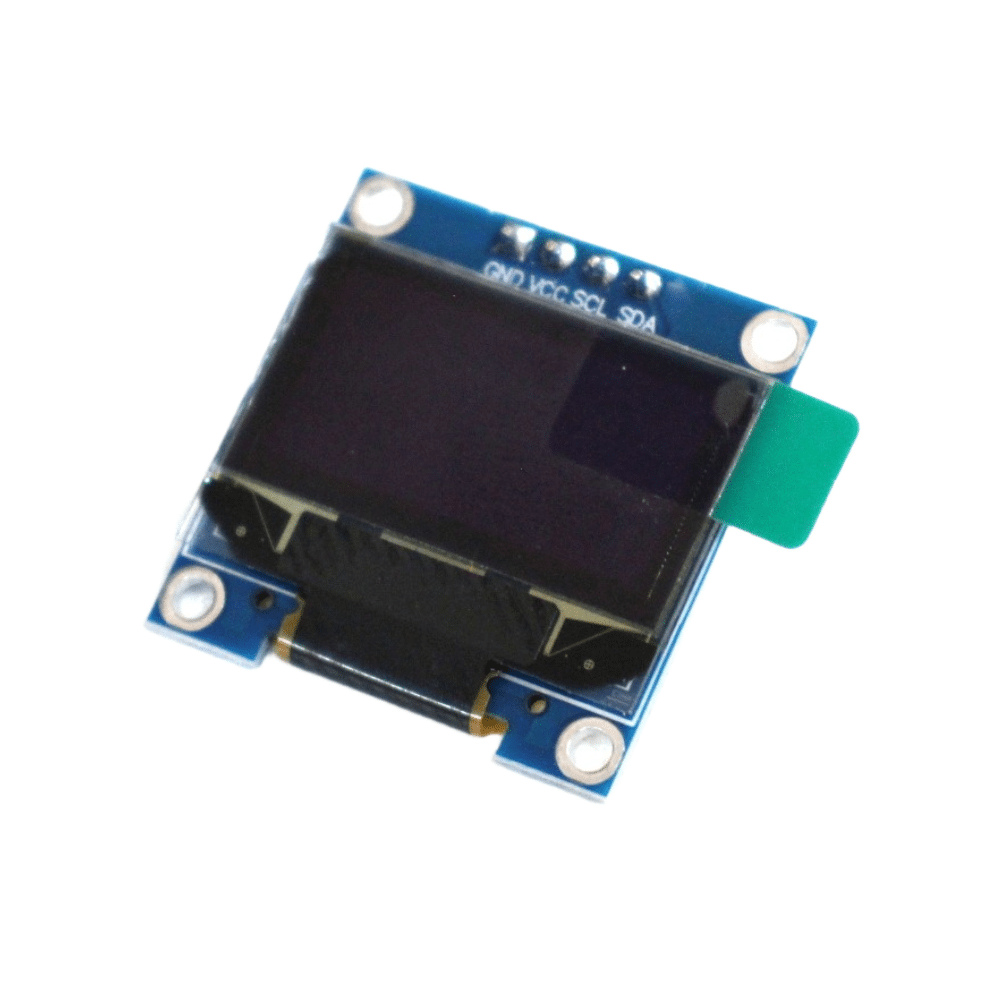
0.96 Inch I2C OLED LCD Module (SSD1306) White
Display signal strength, network status, and sensor readings on this crisp OLED module. Perfect for NB-IoT field debug enclosures — just 4 wires to any Arduino or ESP32.
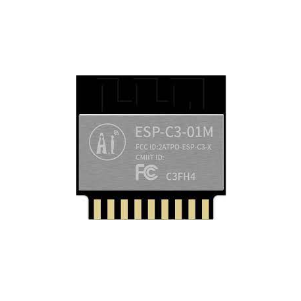
Ai Thinker ESP32-C3-01M Wi-Fi + BLE Module
Pair the ESP32-C3 with the SIM7020 for a dual-mode IoT node: Wi-Fi/BLE for local debugging and NB-IoT for long-range cloud connectivity. Low power and budget-friendly.
Frequently Asked Questions
Q: My SIM7020 keeps resetting when it tries to transmit. What is wrong?
Almost certainly a power supply issue. The SIM7020 draws up to 500 mA during TX bursts. If your 3.3V regulator (like the common LD1117) cannot supply this current, the voltage sags below the module’s UVLO threshold and it resets. Use an AMS1117-3.3 rated at 1A or better, add a 470µF–1000µF electrolytic capacitor right at the module’s VCC pin, and ideally a 100nF ceramic capacitor in parallel. This is the same issue that affects all GSM and cellular modules.
Q: How do I get an NB-IoT SIM card in India?
You need an M2M/IoT SIM, not a regular consumer SIM. For Jio, contact Jio Enterprise (enterprise.jio.com) or a Jio M2M partner. For Airtel, go through Airtel IoT (airtelioT.in). Minimum order quantities vary — some resellers offer single SIMs for prototyping at ₹300–500. Ensure the SIM is provisioned for NB-IoT (some M2M SIMs default to 2G only).
Q: Can I use the SIM7020 with a regular Jio 4G consumer SIM?
No. NB-IoT requires dedicated provisioning on the network side. A regular Jio 4G SIM will not register on NB-IoT even if the hardware supports it. You need a Jio M2M SIM with NB-IoT capability enabled by Jio’s network operations team.
Q: Is NB-IoT better than LoRa for Indian deployments?
It depends on your use case. NB-IoT uses licensed spectrum and requires no gateway infrastructure — Jio/Airtel towers are your gateways. LoRa uses unlicensed spectrum (865 MHz in India) and requires you to deploy your own gateways or use a TTN community gateway. NB-IoT has guaranteed QoS and two-way communication, while LoRa has lower per-SIM cost. For city-scale deployments with existing cellular coverage, NB-IoT is usually superior. For remote farms where you own the land and can place a gateway, LoRa may be more economical.
Q: What is the maximum payload size for a single NB-IoT message?
NB-IoT is optimised for small payloads. Practical single UDP payload size is up to 1,358 bytes (IPv4 MTU minus headers). For CoAP, keep payloads under 512 bytes for best reliability. MQTT over TCP allows fragmentation, but keeping messages under 256 bytes minimises air time and cost. If you need to send larger data like firmware updates, use LwM2M FOTA instead of raw TCP.
Ready to Build Your NB-IoT Project?
Explore our full range of wireless modules, antennas, and development boards at Zbotic. Fast delivery across India — Chennai, Mumbai, Delhi, Bengaluru, and beyond.



Add comment