
When people talk about going beyond PLA and ABS for 3D printing, two materials come up constantly: PETG and TPU. Both offer properties that neither PLA nor ABS can match — PETG for its chemical resistance and toughness, TPU for its genuine rubber-like flexibility. But they are different materials for different applications, and choosing the wrong one leads to expensive reprints and wasted filament.
This guide gives you a complete PETG vs TPU filament comparison — covering mechanical properties, printability, best use cases, slicer settings, and practical considerations for makers in India. By the end, you will know exactly which material belongs in your next spool order.
What Is PETG Filament?
PETG stands for Polyethylene Terephthalate Glycol-modified. The glycol modification distinguishes it from regular PET (the material used in water bottles) by making it less brittle, easier to print, and more transparent in its natural form. It is one of the most versatile 3D printing filaments available.
PETG occupies a useful middle ground in the filament spectrum. It is tougher and more heat-resistant than PLA, while being significantly easier to print than ABS. It does not warp like ABS (no enclosure required), does not become brittle like PLA in cold environments, and is naturally food-safe in its undyed form (though colourants and additives may change this).
PETG is slightly flexible compared to PLA — it bends rather than snapping under load, which makes it more impact-resistant. However, it is not a flexible material in the way TPU is. PETG-printed parts are rigid in normal use; they just deform plastically under extreme stress rather than fracturing.
What Is TPU Filament?
TPU stands for Thermoplastic Polyurethane. It is a true elastomer — a rubber-like material that can be stretched, compressed, and bent repeatedly without permanent deformation. When you print with TPU, the result is a genuinely flexible, squeezable part that behaves more like rubber than plastic.
TPU filament is described by its Shore hardness, which measures resistance to surface indentation. Common 3D printing TPU ranges from Shore 85A (very soft, like a rubber band) to Shore 95A (firm, like a shoe sole). The standard 95A is the most printable and is what most hobbyists start with. Softer grades (85A, 87A) produce more flexible parts but are considerably harder to print reliably.
TPU is extremely impact-resistant, abrasion-resistant, and UV-stable — properties that make it valuable for parts that must flex, grip, or survive rough handling. It is also resistant to oils, greases, and many chemicals, which opens up industrial applications.
Side-by-Side Properties Comparison
| Property | PETG | TPU (95A) |
|---|---|---|
| Flexibility | Slightly flexible (rigid in use) | Highly flexible (rubber-like) |
| Tensile Strength | ~50 MPa (strong) | ~40–55 MPa (strong when stretched) |
| Heat Resistance | ~80°C continuous use | ~80–100°C (varies by grade) |
| Print Difficulty | Easy to moderate | Moderate to hard |
| Warping | Minimal | Minimal |
| Stringing | Moderate (manageable) | High (inherent to material) |
| Layer Adhesion | Excellent | Excellent |
| Chemical Resistance | Good (oils, weak acids) | Excellent (oils, fuels, greases) |
| UV Resistance | Moderate | Good to excellent |
| Cost (India) | ₹1,200–2,500 / kg | ₹1,500–3,000 / kg |
Printing PETG: Settings and Tips
PETG is generally considered an easy-to-print material, but it has quirks that catch beginners off guard.
Temperature Settings
- Nozzle: 230–250°C (240°C is a reliable starting point)
- Bed: 70–85°C (glass or PEI; PEI grips PETG very aggressively when hot — use a release agent or slightly lower bed temp)
- Part cooling fan: 30–50% (PETG bridges better with some cooling, unlike ABS)
The Bed Adhesion Warning
PETG grips PEI and glass surfaces extremely aggressively when hot. This is a known hazard — parts can pull off pieces of the bed surface, damaging your build plate. Solutions: print on a clean glass bed with hairspray or a thin glue stick layer, use a PEI sheet at a slightly lower temperature (65°C), or apply a release agent. Never use bare PEI with PETG without this precaution.
Stringing in PETG
PETG strings more than PLA due to its hygroscopic nature and the wide temperature range over which it remains viscous. Increase retraction distance slightly (5–6mm for Bowden, 1–2mm for direct drive), reduce travel speed to 150mm/s, and use a temperature tower to find the lowest temperature at which your specific PETG still prints cleanly.
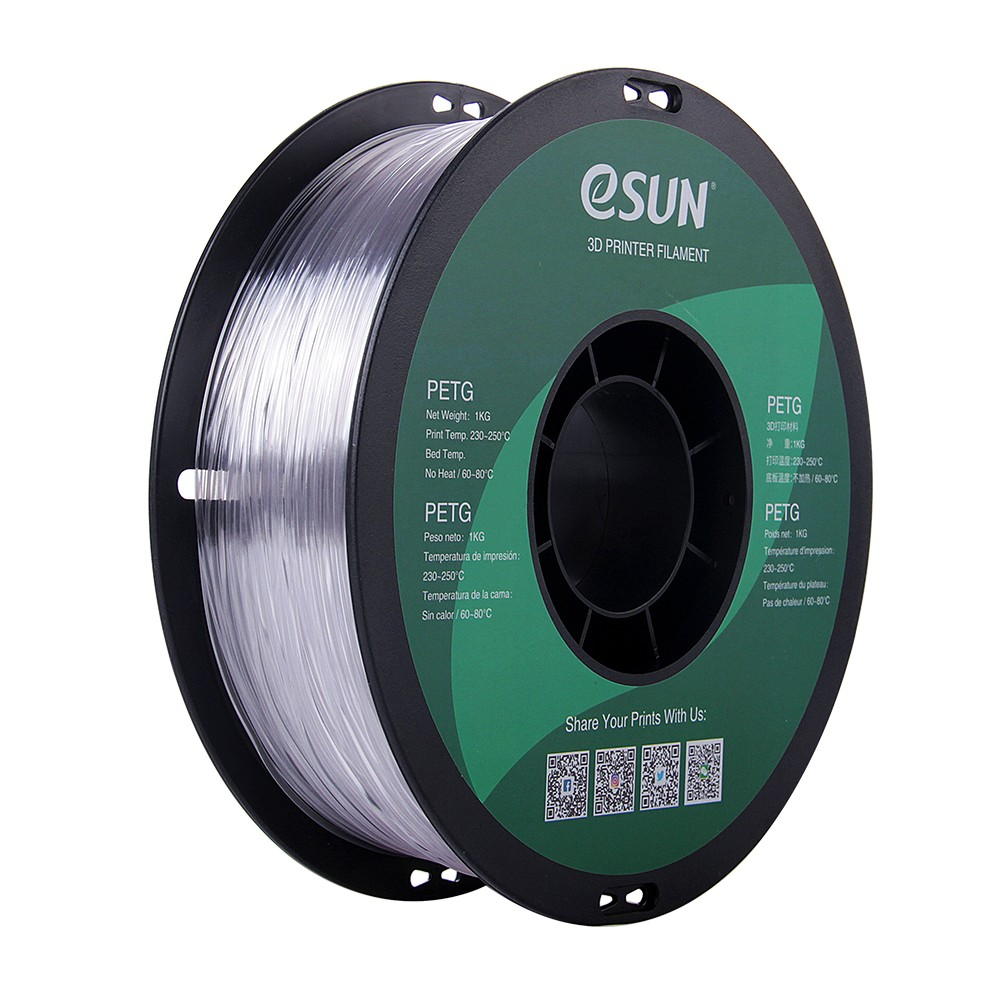
eSUN PETG 1.75mm 3D Printing Filament 1kg – Clear
Natural clear PETG from eSUN, ideal for light-guiding applications, display stands, and food-safe containers. eSUN is one of the most reliable mid-range filament brands available in India.
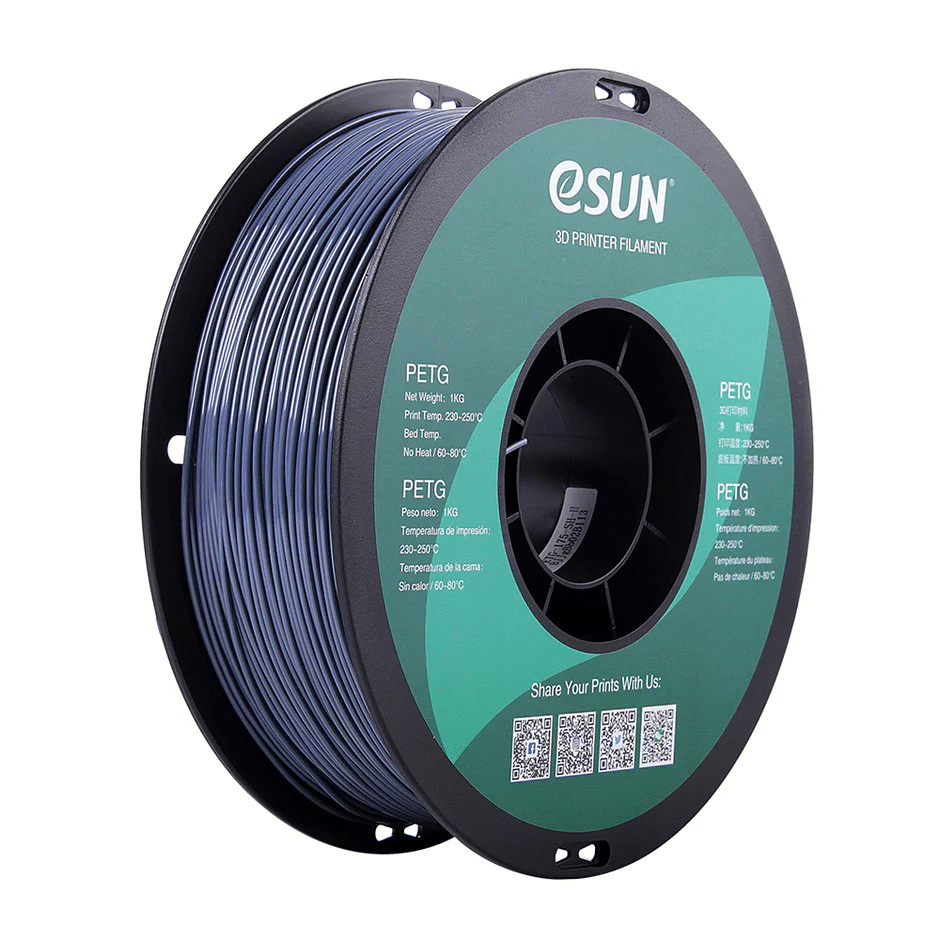
eSUN PETG 1.75mm 3D Printing Filament 1kg – Grey
Grey PETG from eSUN for functional parts, enclosures, and mechanical components. Grey is a neutral colour that works well for prototypes and technical parts where aesthetics are secondary to function.
Printing TPU: Settings and Tips
TPU is one of the most challenging common filaments to print reliably, primarily because its flexibility works against the extruder. The filament can buckle and compress inside the extruder path instead of being pushed forward, causing under-extrusion and jams.
Direct Drive is Almost Essential
Bowden setups (where the extruder is separate from the hotend) struggle with soft TPU because there is a long tube between the extruder and hotend where the flexible filament can compress and buckle. A direct drive setup, where the extruder motor is right next to the hotend, dramatically improves TPU printability. For harder grades (95A), Bowden printing is possible with slow speeds and careful tuning. For 85A or softer, direct drive is essentially mandatory.
Temperature Settings for TPU
- Nozzle: 220–240°C (230°C is typical)
- Bed: 30–60°C (TPU does not need much heat — it already adheres well to room-temperature surfaces)
- Part cooling fan: 25–50% (helps maintain shape during printing)
Speed is Critical
Print TPU slowly. 20–30mm/s for outer walls, 30–40mm/s for infill. Fast printing is the primary cause of TPU jams because the extruder cannot push flexible filament forward fast enough before it buckles. When in doubt, go slower.
Retraction
Reduce retraction distance significantly for TPU — often to 0–1mm for direct drive. Excessive retraction with flexible filament creates unpredictable behaviour as the filament stretches and compresses inside the extruder rather than retracting cleanly.
Best Use Cases for PETG
PETG’s combination of strength, toughness, and chemical resistance makes it ideal for:
- Mechanical parts that see repeated stress: Hinges, brackets, enclosures, motor mounts
- Outdoor parts: Better UV resistance than PLA, handles temperature swings without brittle fracture
- Food-adjacent applications: In undyed form, PETG is considered food-safe by many regulatory frameworks (always verify with your specific filament supplier)
- Transparent or translucent parts: PETG in natural form has good clarity for light guides, diffusers, and display pieces
- Water-resistant components: PETG is resistant to water and many household chemicals
- Electronic enclosures: Handles the heat of electronics better than PLA without requiring an enclosure like ABS
Best Use Cases for TPU
TPU’s rubber-like flexibility opens up applications that rigid plastics cannot handle:
- Phone cases and protective covers: The most common consumer use of TPU in 3D printing
- Grips, handles, and knobs: Improved ergonomics and vibration absorption
- Seals and gaskets: Flexible enough to compress and fill irregular gaps
- Drone and RC vehicle bumpers: Absorb impact that would crack PLA or PETG
- Flexible hinges (living hinges): Parts that need to bend repeatedly without fatigue failure
- Custom insoles, orthotics, and ergonomic supports: Printable to individual fit
- Conveyor and machine components: Abrasion-resistant flexible elements in light machinery
Which Should You Choose?
Use this decision framework:
Choose PETG when:
- You need a strong, tough, rigid part that will outlast PLA in outdoor or warm environments
- The part needs chemical resistance to oils, mild acids, or cleaning agents
- You want something easier than ABS with similar functional performance
- Transparency or food safety matters for the application
Choose TPU when:
- The part must flex, compress, or bend in service
- Impact resistance is the primary requirement (TPU absorbs energy that would crack rigid materials)
- You need vibration dampening or grip characteristics
- The part must seal against irregular surfaces or act as a gasket
Use both together when: Many functional assemblies combine a rigid PETG structure with TPU grips, bumpers, or seals. This gives you the dimensional stability of a rigid material where it is needed and the impact/flex properties of TPU where they add value.
Considerations for Indian Makers
India’s climate introduces factors that affect both materials:
Humidity and PETG: PETG is hygroscopic and absorbs moisture from the air. Wet PETG produces bubbles, rough surfaces, and stringing during printing. During monsoon season, always dry PETG before printing (65–70°C for 4–6 hours in an oven or food dehydrator) and store opened spools in sealed bags with silica gel.
Humidity and TPU: TPU is also hygroscopic and sensitive to moisture. Symptoms of wet TPU include popping sounds during printing and rough, foamy surfaces. The same drying approach applies: 60–65°C for 4–6 hours.
Summer temperatures: India’s summer heat (35–45°C) affects storage. Both PETG and TPU should be stored in cool, dry conditions — not in a car, a sun-exposed garage, or anywhere temperatures consistently exceed 35°C. While both materials can tolerate these temperatures as printed parts, the filament spool itself can deform and cause feeding problems if stored in excessive heat.
Cost efficiency: Both materials are priced at a premium compared to PLA. For Indian makers looking to minimise cost, print your prototypes in PLA, switch to PETG or TPU only for the functional final part.
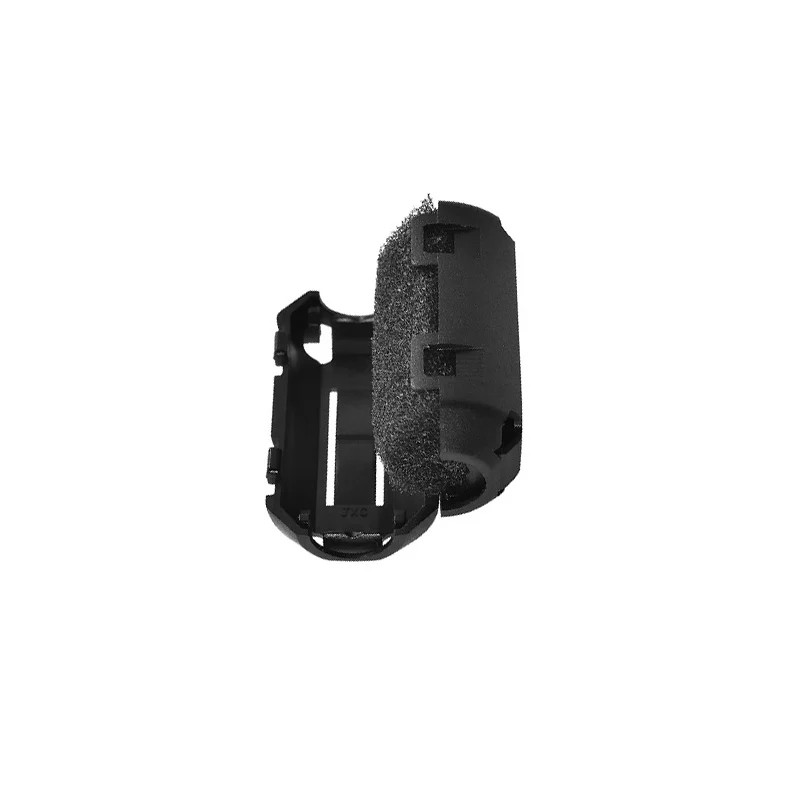
1.75mm Filament Filter Cleaner – Dust Removal for PETG, ABS, PLA
A universal filament cleaner compatible with PETG and TPU. Removes surface dust and particles that can cause nozzle buildup when printing hygroscopic materials like PETG.
Zbotic stocks eSUN PETG in multiple colours, delivered fast across India. Quality filament with tight tolerances for reliable printing.
Shop PETG Filament at Zbotic
Frequently Asked Questions
Is PETG stronger than TPU?
In rigid applications, PETG is stronger under compressive loads. TPU has higher elongation at break and better impact resistance because it absorbs energy by deforming elastically. They serve different mechanical roles — comparing their strength directly is like comparing a steel beam to a rubber band. Each is stronger in its relevant application.
Can I print TPU on a Bowden printer like the Ender 3?
Yes, with limitations. For Shore 95A TPU, it is possible with very low speeds (15–25mm/s), minimal retraction, and a well-tuned Bowden setup. For softer TPU grades (85A–92A), a direct drive conversion is strongly recommended. Many makers install a direct drive upgrade kit on their Ender 3 specifically to enable reliable TPU printing.
Does PETG require an enclosure?
No. This is one of PETG’s advantages over ABS. PETG prints without significant warping in open-frame printers in most environments. An enclosure can help with very large PETG prints by reducing thermal gradients, but it is not required the way it is for ABS.
Which has better layer adhesion, PETG or TPU?
Both have excellent layer adhesion when printed correctly. PETG layers fuse well across the full temperature range. TPU’s elasticity means layers can peel apart if the part is stressed in the Z-direction, but this is mitigated with higher infill percentages and more walls. For anisotropic applications, orient the print so the expected stress direction is not parallel to the layer lines.
How do I clear a TPU clog?
TPU clogs are often in the cold zone of the extruder rather than the nozzle, because flexible filament buckles under back-pressure. Remove the PTFE tube (if Bowden) and manually push the filament through. Heat the hotend, perform a cold pull, and check for filament fragments in the Bowden tube. For a full clear, remove the nozzle when hot and push a cleaning needle through.
Is PETG food safe for printing food contact items?
PETG in its natural (undyed) form is generally considered food-safe by FDA and EU standards. However, 3D printing creates micro-pores between layers where bacteria can accumulate, so printed PETG items are not recommended for long-term food contact without post-processing (epoxy coating, etc.). For food-safe applications, use undyed PETG, print at 100% infill, and replace items regularly.







Add comment