
Table of Contents
- Understanding the Chemistry: Li-Po vs Li-ion
- Form Factor and Physical Differences
- Performance Comparison: Discharge Rate, Energy Density, Cycle Life
- Safety Comparison: Which Is More Dangerous?
- Charging Requirements and Best Practices
- Cost and Availability in India
- Which Battery Is Right for Your Project?
- Frequently Asked Questions
The lithium polymer vs lithium ion battery comparison is one of the most searched questions in the Indian maker community — and for good reason. Whether you are building a racing drone, a wheeled robot, a solar power bank, or an IoT sensor node, the battery you choose fundamentally affects runtime, weight, form factor, safety, and cost. In this detailed guide we break down both chemistries across every dimension that matters to hobbyists and engineers in India, so you can make a confident decision for your next project.
Understanding the Chemistry: Li-Po vs Li-ion
Despite their different names and physical appearances, LiPo and Li-ion batteries are more similar than different at a chemical level. Both use lithium-based cathode materials and a graphite anode. The key difference lies in the electrolyte:
Lithium Ion (Li-ion)
Li-ion batteries use a liquid electrolyte — typically a lithium salt (LiPF6) dissolved in an organic solvent (ethylene carbonate, dimethyl carbonate). The liquid electrolyte enables high ionic conductivity (fast charge/discharge), but requires a rigid cylindrical or prismatic metal case to contain the liquid and withstand internal pressure. The most common form factor is the 18650 cylindrical cell (18mm × 65mm), though 21700 cells are increasingly popular.
Lithium Polymer (Li-Po)
LiPo batteries use a semi-solid polymer or gel electrolyte — technically a lithium salt dissolved in a plasticised polymer matrix. This gel electrolyte does not require a rigid metal case, enabling the use of thin, flexible aluminium-plastic laminate pouches. The result is an extremely thin, lightweight cell that can be made in virtually any shape. True solid polymer electrolytes are still largely experimental; most commercial LiPo cells today use a gelled polymer (sometimes called Li-ion polymer).
Both chemistries operate at the same nominal cell voltage: 3.6–3.7V nominal, 4.2V fully charged, 3.0–3.2V cutoff. The similar voltage means most charging circuits and BMS boards work with both, though LiPo cells are generally more sensitive to overcharge.
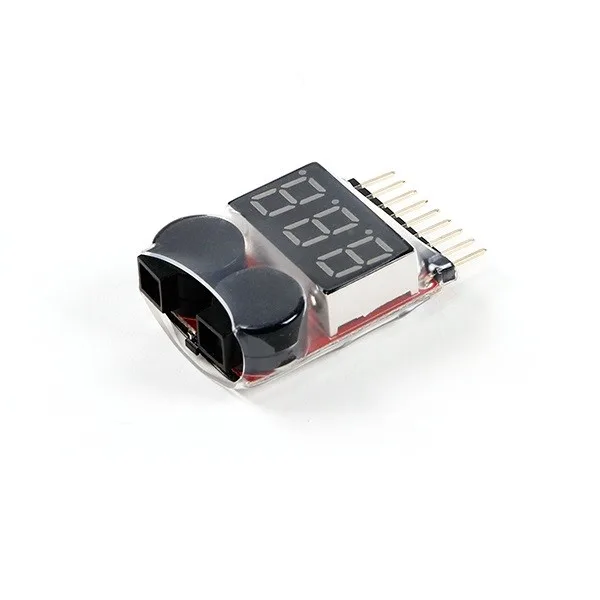
1–8S Lipo Battery Voltage Tester (No Alarm)
Monitor your LiPo pack’s per-cell voltages to prevent dangerous over-discharge. Works on 1–8S packs — essential for any RC, drone, or robot project using LiPo batteries.
Form Factor and Physical Differences
This is where LiPo and Li-ion diverge most dramatically:
Li-ion Cell Formats
- 18650: 18mm × 65mm cylinder. Used in laptop batteries, power banks, e-bikes, Tesla Model S. Widely available in India from ₹150–₹600 per cell.
- 21700: 21mm × 70mm cylinder. Higher capacity (4000–5000 mAh), used in Tesla Model 3, high-end power tools.
- 14500: AA battery size (14mm × 50mm). Used in flashlights, small devices.
- Prismatic: Rectangular hard-case cells used in EVs and large storage systems.
LiPo Cell Formats
- Pouch cells: Flat, soft-packaged cells in any custom dimension. Used in smartphones, tablets, RC drones, wearables.
- RC battery packs: Multi-cell (2S to 6S) pouch cells in a shrink-wrapped pack with balance connectors and XT30/XT60 discharge connectors. The dominant format for FPV drones and RC cars in India.
The bottom line on form factor: If your project has a defined cylindrical or standardised battery compartment, Li-ion 18650/21700 is the natural choice. If you need a thin, lightweight, custom-shaped pack for a drone, robot chassis, or wearable device, LiPo is far more suitable.
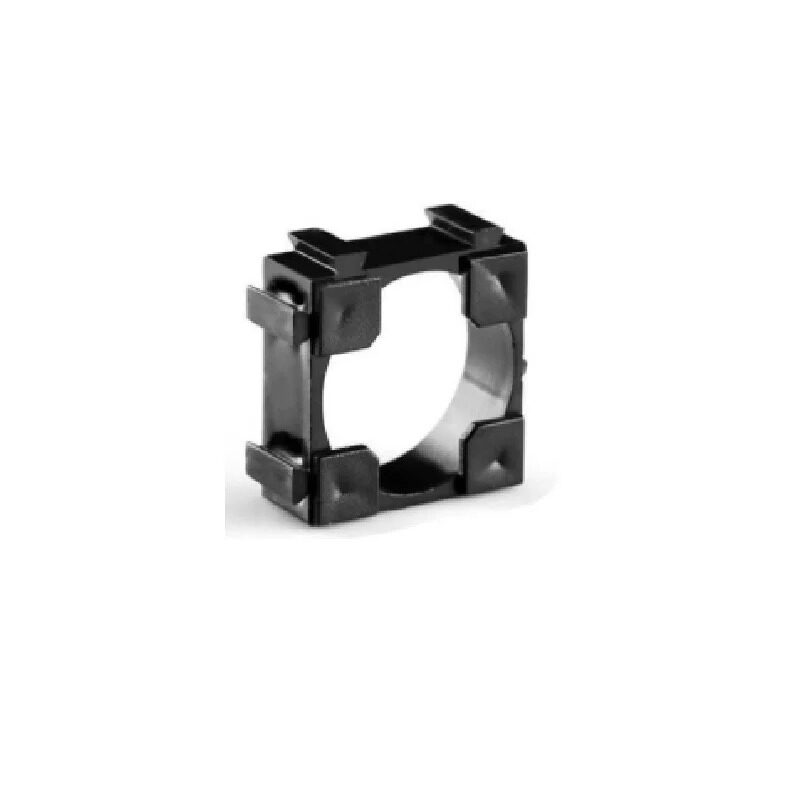
1 x 18650 Battery Holder with 18.4mm Bore (Pack of 4)
Build your own Li-ion 18650 packs in any series/parallel configuration with these sturdy holders. Ideal for DIY power banks, solar storage, and robot power systems.
Performance Comparison: Discharge Rate, Energy Density, Cycle Life
| Parameter | Li-ion (18650) | LiPo (RC Pack) |
|---|---|---|
| Nominal Voltage | 3.6–3.7V/cell | 3.7V/cell |
| Energy Density | 200–265 Wh/kg | 150–200 Wh/kg (pack level) |
| Max Discharge Rate | 2–10C (standard cells) | 20–120C (RC-grade) |
| Cycle Life | 500–1000 cycles | 150–500 cycles |
| Internal Resistance | 50–150 mΩ (cell) | 1–10 mΩ (pack) |
| Weight (per Wh) | ~5–6g/Wh | ~6–8g/Wh (pack level) |
| Self-discharge | 1–3%/month | 2–5%/month |
The standout difference is the maximum discharge rate. A standard Li-ion 18650 cell (e.g., Samsung 30Q) is rated for 15A (about 5C on a 3000mAh cell) — impressive for most applications, but far below what RC-grade LiPo packs can deliver. A racing drone LiPo rated at 100C on a 1500mAh pack can theoretically deliver 150A continuously. This is why FPV drones, RC cars, and high-current robotics almost exclusively use LiPo batteries.
Safety Comparison: Which Is More Dangerous?
Both chemistries carry safety risks, but the risks manifest differently:
Li-ion Safety
Li-ion cells in rigid metal cases are generally more mechanically robust. If a cylindrical 18650 is punctured, it vents gas before igniting, giving a small window of warning. However, Li-ion cells contain flammable liquid electrolyte, and thermal runaway — triggered by overcharge, short circuit, or mechanical damage — can propagate from cell to cell in a multi-cell pack catastrophically. A BMS is mandatory.
LiPo Safety
LiPo cells are more mechanically vulnerable — a punctured or over-discharged LiPo pouch can swell (puffing) and ignite rapidly, with much less warning than cylindrical Li-ion. RC-grade LiPo fires are intense and fast. The risk is higher because LiPo packs are often used without BMS protection in RC applications where weight is critical. Storage and charging in a fireproof LiPo bag is strongly recommended.
Safety verdict: Li-ion 18650 cells with a proper BMS are generally safer for everyday maker projects. High-rate LiPo packs require more user awareness and handling care, particularly regarding storage voltage (3.8V/cell for long-term storage, not full charge).
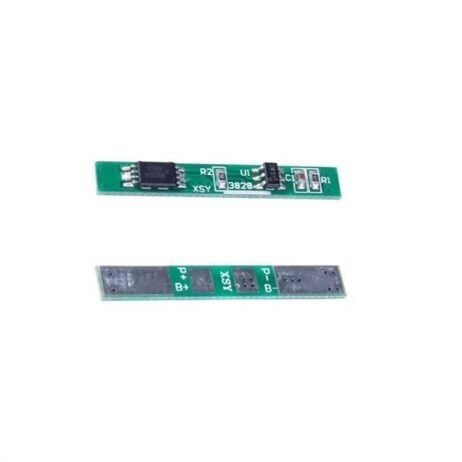
1S 3.7V 2A 1MOS BMS Li-ion 18650 Battery Protection Board
Essential safety hardware for single-cell Li-ion builds. This 2A BMS prevents overcharge, over-discharge, and short circuit — mandatory for any unprotected 18650 cell project.
Charging Requirements and Best Practices
Both battery types use the CC-CV (Constant Current – Constant Voltage) charging method:
- Constant Current (CC) phase: Charge at a fixed current (typically 0.5C–1C for Li-ion, 1C–2C for LiPo) until the cell reaches 4.2V.
- Constant Voltage (CV) phase: Hold at 4.2V while current tapers down. Charging is complete when current drops to 0.05C.
LiPo-Specific Charging Rules
- Always use a balance charger that monitors and equalises each cell individually. Never charge a multi-cell LiPo pack without balance charging.
- Never charge at more than 1C unless the pack is explicitly rated for fast charging. Most quality RC LiPo packs allow 2C fast charge.
- Never charge below 0°C or above 45°C.
- Never leave charging unattended — use a LiPo bag and a charger with auto-cutoff.
Li-ion Charging Simplicity
The TP4056 IC handles single-cell Li-ion charging automatically at 1A and is widely used in Indian maker projects. For multi-cell packs, a dedicated balance charger (like the ISDT series) is recommended.
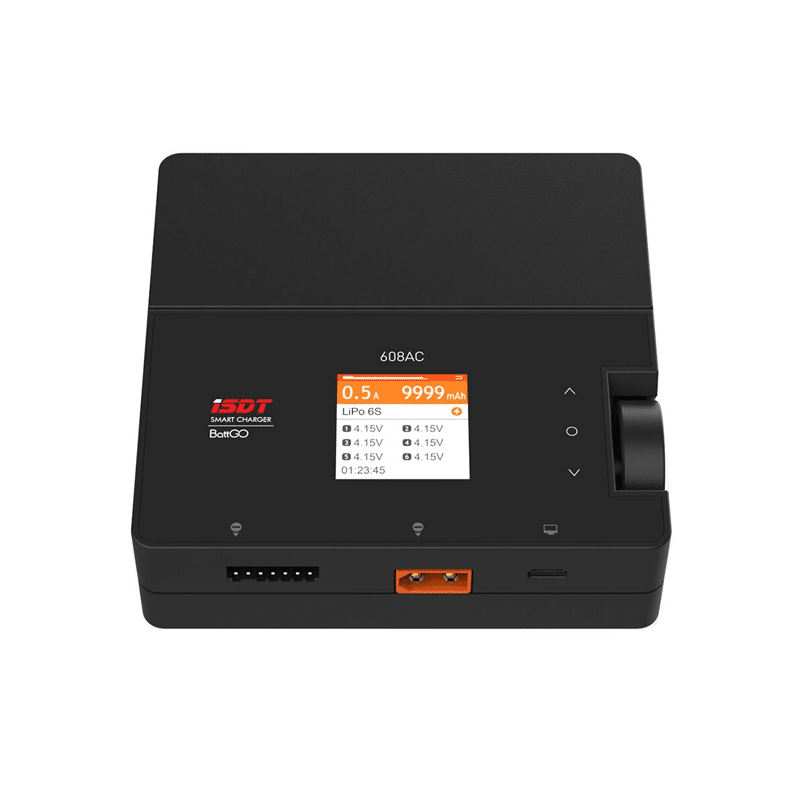
ISDT 608 AC LiPo Battery Charger – AC 50W / DC 200W
A professional-grade dual-mode charger that handles both LiPo and Li-ion packs safely. With AC and DC input modes and 200W DC power, it is the ideal charger for serious Indian RC and drone enthusiasts.
Cost and Availability in India
In the Indian market, here is what to expect:
Li-ion 18650 Cells
Genuine branded cells (Samsung, LG, Panasonic) cost ₹250–₹600 per cell from reputable Indian distributors. Beware of grey-market cells with inflated capacity claims (a genuine 18650 cannot exceed ~3600mAh with current technology — anything claiming 9800mAh is fraudulent). Reliable Indian sources include dedicated electronics distributors and established online stores with verified reviews.
LiPo Battery Packs
RC-grade LiPo packs (2S–4S, 1000–5000mAh) are widely available through Indian RC hobby stores and electronics platforms, typically priced ₹600–₹3000 depending on capacity and C-rating. Premium brands (Tattu, GNB, CNHL) tend to perform as rated and last longer than cheaper alternatives.
Long-term Cost Comparison
Li-ion 18650 cells offer better long-term value for stationary/slow-discharge applications (power banks, IoT nodes) due to their longer cycle life. LiPo packs offer better value for high-rate applications (drones, RC) where their ability to handle burst currents without degradation makes them irreplaceable despite shorter total cycle life.
Which Battery Is Right for Your Project?
Use this quick decision guide:
- FPV drone, racing quadcopter, high-speed RC car: LiPo, always. The high C-rating and low weight are non-negotiable.
- Slow flyer, trainer plane, educational robot: Either works. Li-ion 18650 packs are safer; LiPo packs are lighter.
- Arduino/ESP32 IoT node, sensor, wearable: Single Li-ion 18650 cell with TP4056 charger and BMS. Simple, safe, long life.
- DIY power bank, solar storage: Li-ion 18650 in parallel. High cycle life, good energy density, easy to source replacement cells.
- Slim device, wearable, flexible form factor: LiPo pouch cell. Unmatched thinness and shape flexibility.
- High-current motor driver bench supply: LiPo pack at appropriate S-count for your motor voltage.
Frequently Asked Questions
Q1. Are LiPo and Li-ion batteries interchangeable?
Electrically they use the same voltage (3.7V nominal per cell) and the same CC-CV charging profile. However, their form factors, connectors, BMS requirements, and maximum discharge rates differ significantly. You cannot physically swap them in most cases, but you can design a project around either chemistry using the same charging and protection ICs.
Q2. Why do LiPo batteries puff up?
LiPo cells produce small amounts of gas (CO2 and organic vapours) from electrolyte decomposition, particularly during overcharging, deep discharge below 3V/cell, or high-temperature operation. The gas accumulates inside the sealed pouch, causing visible swelling. A puffed LiPo should be carefully discharged to storage voltage and disposed of safely — never puncture or compress it.
Q3. Can I use a LiPo charger for Li-ion 18650 cells?
Yes, if the charger supports both chemistries (they share the same 4.2V/cell charge voltage). However, many cheap LiPo-specific chargers use a different connector than bare 18650 cells, so an adapter or cell holder may be needed. Always verify the charger terminates at 4.2V/cell — not 4.35V (used by high-voltage LiHV cells).
Q4. What is the storage voltage for LiPo packs?
For long-term storage (more than a week), store LiPo packs at 3.8–3.85V per cell (approximately 50–60% state of charge). Most quality RC chargers have a dedicated storage charge/discharge mode. Storing fully charged LiPo packs accelerates electrolyte degradation and reduces total cycle life significantly.
Q5. Are used 18650 cells from laptop battery packs safe to use?
Cells salvaged from genuine laptop packs (Sony, Samsung, Panasonic, LG cells used by HP, Lenovo, Dell) can be safe if individually tested for capacity and internal resistance. Reject any cells with capacity below 1500mAh or internal resistance above 200mΩ. Always add a BMS when using salvaged cells — they may have undetected micro-shorts or degraded separators.
Choose the Right Battery, Power Your Vision
Both lithium polymer and lithium ion technologies are exceptional energy storage solutions — the question is matching the right chemistry to the right application. LiPo for high-rate, weight-sensitive applications; Li-ion for longevity, safety, and versatility. Now that you understand the full picture, you can make confident battery choices for every maker project.
Shop Zbotic’s complete range of battery holders, BMS boards, chargers, and LiPo testers to equip your next build with everything it needs — delivered across India.





Add comment