
Lithium Battery Swelling: Causes, Prevention and Safe Disposal
A swollen lithium battery is not just an inconvenience — it is a genuine safety hazard that every maker, drone builder, and electronics hobbyist needs to understand. If you have ever discovered a puffy lump where your flat battery pack used to be, you have already encountered the lithium battery swelling causes prevention disposal issue first-hand. This guide explains exactly what causes that puffiness, how to stop it before it starts, and how to responsibly dispose of batteries that can no longer be trusted — all with specific advice for the Indian hobbyist context.
What Is Lithium Battery Swelling?
Lithium-ion and lithium polymer (LiPo) batteries consist of thin layers of electrodes and electrolyte sealed inside a rigid cylindrical case (18650 cells) or a flexible foil pouch (LiPo packs). When gas builds up inside the cell faster than it can be vented or absorbed, the casing inflates. In cylindrical cells this manifests as bulging end caps; in flat LiPo packs the soft foil envelope balloons visibly outward.
The gas responsible is primarily carbon dioxide and hydrogen generated by electrolyte decomposition reactions. These reactions happen slowly at normal operating conditions but accelerate sharply when the battery is abused, aged, or defective. The key insight is that swelling is always a symptom — it tells you something has already gone wrong inside the cell.
In India’s maker community, LiPo swelling is especially common among drone enthusiasts and RC hobbyists who push high-C batteries hard. 18650 cell swelling is increasingly seen in DIY power banks and solar storage systems where cheap, unprotected cells are used without proper BMS circuits.
Root Causes of Battery Swelling
Understanding exactly what triggers swelling lets you design around the problem:
1. Overcharging
Charging a lithium cell above its maximum voltage (4.2 V for standard lithium-ion, 4.35 V for high-voltage variants) causes lithium plating on the anode and accelerated electrolyte oxidation at the cathode. The oxidation reaction releases CO2 and other gases. Even small overcharges of 100-200 mV, repeated over hundreds of cycles, cause progressive gas accumulation. This is the most common cause of swollen 18650 cells in DIY projects that use cheap charging modules without accurate voltage cut-off.
2. Over-Discharging
Discharging below the minimum voltage (typically 3.0 V for lithium-ion, 3.5 V per cell for LiPo) causes copper dissolution from the anode current collector. This copper can re-deposit as dendrites — metallic spikes that pierce the separator and cause internal short circuits. Even before a short forms, the chemistry changes irreversibly and gas can form. Drone pilots who fly until the motors stutter are often over-discharging their packs.
3. High Rate Charging or Discharging
Batteries have an internal resistance. When you push high currents through that resistance, it heats the cell. Heat accelerates every degradation reaction. A cell discharged at 10C continuously will heat up dramatically and begin producing gas much earlier in its life than the same cell operated at 1C. This is why cheap LiPo cells marketed with inflated C ratings swell so quickly — they cannot actually handle the claimed rates without overheating.
4. Heat Exposure
Storing or operating lithium cells at temperatures above 45 degrees C accelerates electrolyte decomposition significantly. In India, this is a very real problem. A sealed metal enclosure on a rooftop in May can reach 70 degrees C or more. A drone battery left in a car parked in direct sunlight in Ahmedabad or Chennai can be exposed to temperatures that cause measurable degradation within hours.
5. Physical Damage
Punctures, crushing, or sharp impacts damage the separator between electrodes, causing internal short circuits. The short generates intense localised heat that triggers electrolyte vaporization. Even a single crash landing that dents a LiPo pack can set off a slow internal failure that manifests as swelling days later.
6. Age and Cycle Count
Every charge-discharge cycle causes microscopic structural changes in the electrodes. Graphite anodes expand and contract slightly with lithium insertion and extraction. Over hundreds of cycles, this mechanical stress creates tiny cracks and increases internal resistance. Higher resistance means more heat for the same current, which means faster degradation — a self-reinforcing cycle that eventually produces enough gas to cause visible swelling.
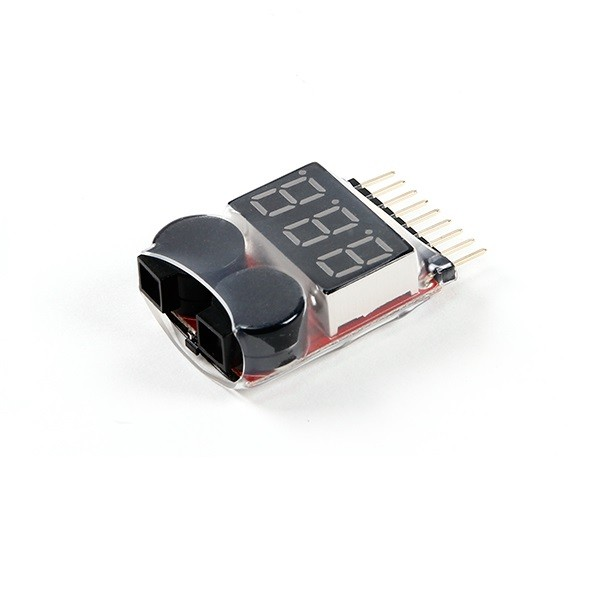
1-8S Lipo Battery Voltage Tester without alarm
Check individual cell voltages before and after every session. Catching an under-voltage cell early is the single best way to prevent swelling from over-discharge.
How to Spot a Swollen Battery Before It Fails
Early detection prevents catastrophic failure. Here is what to look for:
- Visual bulge on LiPo packs: Place the pack on a flat surface. Any visible dome or rocking motion when pressed indicates swelling. A healthy LiPo pack lies completely flat.
- End cap bulge on 18650 cells: The positive terminal end of a swollen 18650 cell will often bulge outward. The cell may no longer fit snugly in its holder.
- Rapid self-discharge: If a battery that used to hold charge for a week now drains in a day without use, internal short-circuit formation — a precursor to catastrophic failure — may be occurring.
- Unusual heat during charging: A cell that becomes uncomfortably hot to the touch during a standard charge rate is building internal resistance and generating more heat than it should.
- Capacity loss greater than 20%: Measure the actual capacity with a battery analyzer. If a 2000 mAh cell now delivers only 1400 mAh, significant degradation has occurred and the risk of gas formation increases.
- Hissing or odor: Any hissing sound or sweet chemical smell (from electrolyte) during charging or discharging is an emergency. Remove the battery from any charger immediately and move it to an open outdoor space.
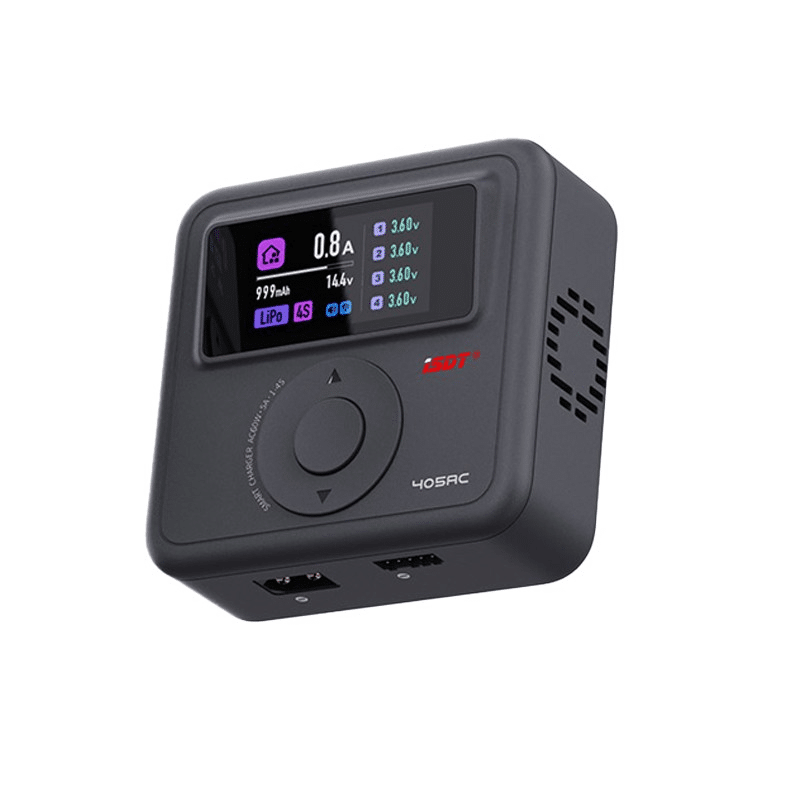
ISDT 405AC 60W AC GaN Smart Charger
Accurate cell-level charging with precise voltage cut-off prevents overcharging — the leading cause of LiPo swelling. Supports 1-4S LiPo and multiple chemistry types.
The Real Dangers: Thermal Runaway and Fire
A swollen battery is under mechanical stress. Its separator may already be compromised. If the swelling progresses to the point where the pouch ruptures, flammable electrolyte vapors are released. If an ignition source is present — a short circuit, a spark from a connector, or even a nearby hot surface — the result is a lithium battery fire.
Lithium fires are class D fires. They are not extinguished by water (water reacts with lithium compounds and can intensify the fire) or by CO2 extinguishers. The only effective approach is thermal isolation and dilution: submerge the burning battery in a large bucket of water (to cool it and contain the fire) and keep adding water continuously. The reaction will eventually self-limit. Sand can also be used to smother and isolate the fire.
Thermal runaway is the chain reaction mode of failure. Heat from one cell triggers reactions in adjacent cells, which generate more heat, which triggers the next cell. A 6S LiPo pack in full thermal runaway releases energy equivalent to a small incendiary device. This is not hypothetical — it happens regularly in drone communities worldwide, and several houses in India have suffered fires from improperly stored LiPo packs.
The key safety rule: never charge lithium batteries unattended, never charge indoors overnight, and always use a proper LiPo-safe charging bag or metal container as a containment device.
Prevention: Best Practices for Longer Battery Life
Preventing swelling is far better than dealing with its consequences. These practices extend battery life dramatically:
Charge to 80%, Store at 50%
The ideal storage voltage for a lithium cell is approximately 3.7-3.85 V per cell — roughly 50-60% state of charge. Storing at 100% charge keeps the cathode in a highly oxidized state that accelerates electrolyte decomposition. If you will not use a LiPo pack for more than a week, discharge it to storage voltage first. Quality chargers like the ISDT series have dedicated storage charge modes.
Use a Quality BMS for 18650 Packs
A Battery Management System (BMS) enforces both overcharge and over-discharge protection at the cell level. Any DIY 18650 pack — whether for a power bank, solar storage, or robot — should include a BMS with per-cell voltage monitoring. Without it, individual cells in a series string will drift in voltage over cycles, with the weakest cell eventually being driven below 3.0 V every time you use the pack.
Respect C-Rate Limits
Every battery has a continuous discharge rating (C-rate). If your battery is rated 30C continuous and stores 1500 mAh (1.5 Ah), the maximum continuous discharge current is 45 A. Exceeding this heats the cells excessively. For daily use, operating at half the rated C-rate significantly extends battery life and reduces swelling risk.
Avoid Charging Immediately After Heavy Use
After a high-current discharge — flying a drone, running a high-power motor driver — allow the cells to cool for at least 15-20 minutes before connecting to the charger. Charging a hot cell accelerates all the degradation mechanisms.
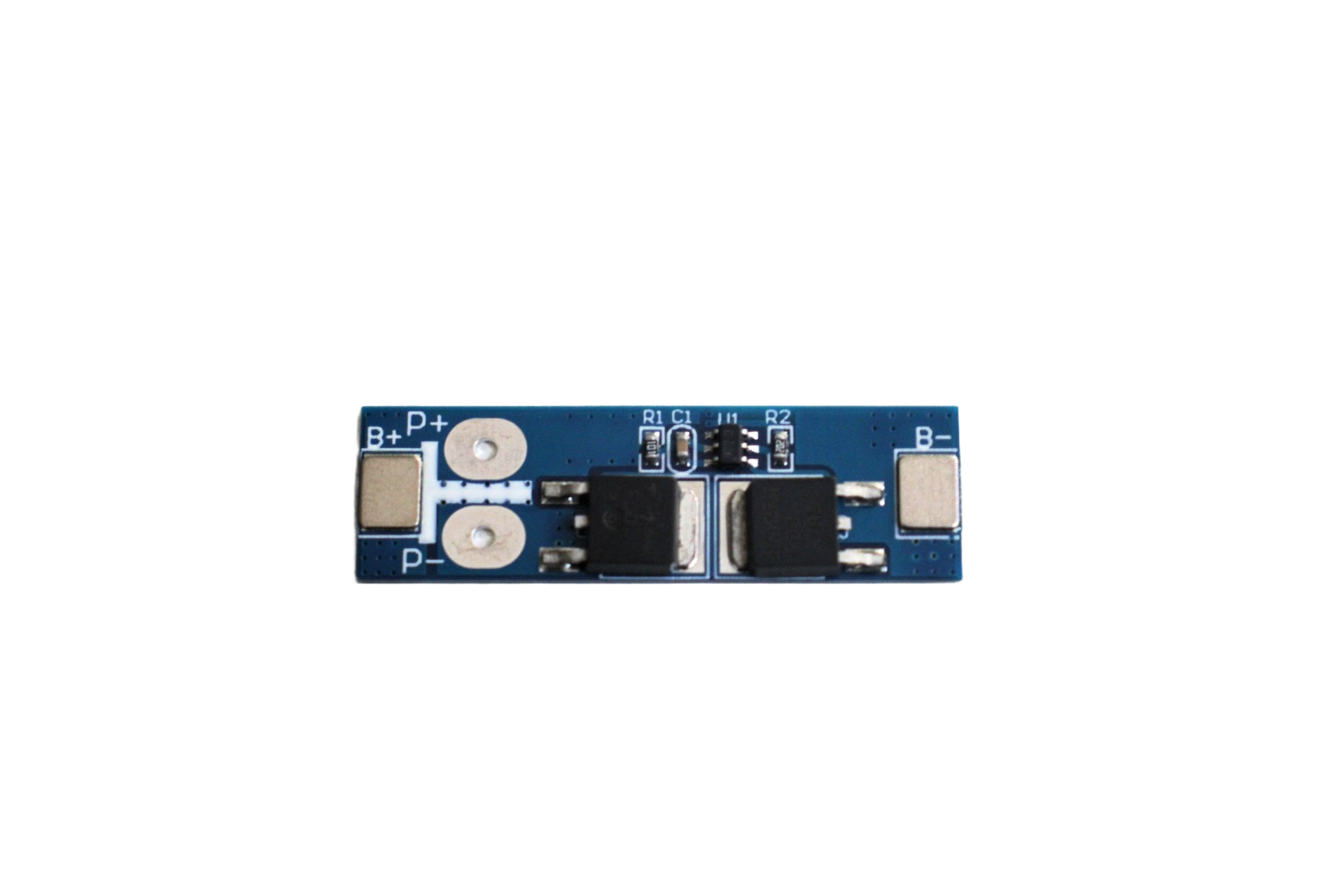
1S 12A 3.6V BMS Battery Protection Board for Li-ion Cell
Essential protection for single-cell 18650 projects. Prevents overcharge, over-discharge, and short circuit — the three main triggers of lithium cell swelling.
Proper Storage Tips for Indian Climates
India’s climate creates specific storage challenges that hobbyists elsewhere do not face:
- Temperature: Store lithium batteries in a cool, dry place — ideally between 15-25 degrees C. A cupboard in an air-conditioned room is ideal. Avoid garages, car trunks, or direct sunlight exposure during summer months.
- Humidity: High humidity does not damage lithium cells directly, but it corrodes connectors and PCBs on charging modules. Store batteries with silica gel packs in their storage containers during monsoon season.
- LiPo storage bags: These thick fireproof pouches contain a LiPo fire long enough to prevent it from spreading. They are inexpensive and should be considered mandatory for any collection of LiPo packs larger than 1S 500 mAh.
- Separate from flammables: Never store LiPo packs near petrol, solvents, or other flammable materials. Store them on or near non-flammable surfaces — tile floors, metal shelves — rather than on wooden desks or inside cardboard boxes.
- Check monthly: Inspect stored batteries every 30 days for any signs of swelling. A battery that swells in storage — with no use — has a manufacturing defect or was already damaged when stored.
For long-term storage (more than 3 months), discharge LiPo packs to storage voltage (3.7-3.85 V per cell), place in a LiPo bag, and store in a cool location. Check and top up to storage voltage every 3 months to prevent over-discharge from self-discharge.

25cm Lipo Battery Strap Belt Reusable Cable Tie Wrap
Keep your LiPo packs securely bundled during storage and transport. Prevents the physical damage and vibration that can accelerate internal degradation.
Safe Disposal of Swollen Lithium Batteries in India
Once a lithium battery is visibly swollen, it must be retired. Do not use it, do not charge it, and do not throw it in regular trash. Here is the right disposal process for Indian hobbyists:
Step 1: Safely Discharge the Battery
A swollen battery still holds energy and must be discharged before disposal. For mildly swollen cells that are not leaking, you can connect a resistive load (a 12 V bulb, a ceramic power resistor, or a load bank) and discharge it slowly to below 1 V per cell. Do this outdoors, away from flammables. Monitor continuously — do not leave unattended.
For badly swollen or leaking cells: place the cell in a bucket of sand or a metal container, take it outdoors, and call your local PCBA recycler directly. Do not attempt to discharge a leaking cell.
Step 2: Find a Collection Point
India has a formal e-waste recycling framework under the E-Waste (Management) Rules 2022. Lithium batteries fall under this framework. Disposal options in India include:
- Authorized e-waste collectors: Companies like Attero Recycling, Eco Recycling (Ecoreco), and Greenscape have collection points in major Indian cities. Search for your nearest collection point on their websites.
- OEM take-back programs: Major battery brands and laptop manufacturers are required by law to provide take-back mechanisms. Lenovo, Dell, HP, and others have drop-off programs at their service centers.
- Local electronics shops: Many small electronics shops in Lamington Road (Mumbai), Nehru Place (Delhi), or SP Road (Bangalore) will accept old batteries informally and aggregate them for recyclers.
- Municipal collection drives: Some municipalities periodically organize e-waste collection drives. Check your local BBMP, BMC, or municipal website for schedules.
What Not to Do
- Do not puncture a swollen cell deliberately — this releases electrolyte vapors that are toxic and flammable.
- Do not throw in municipal solid waste bins — landfill compaction can rupture cells and cause fires in garbage trucks or landfills.
- Do not burn or incinerate — burning lithium cells releases toxic lithium oxide, hydrofluoric acid vapor, and other dangerous compounds.
- Do not pour electrolyte down the drain if a cell leaks — it is an organic solvent mixture that is toxic to aquatic life.
Frequently Asked Questions
Can a slightly swollen LiPo battery still be used safely?
No. Even mild swelling indicates that gas has formed inside the cell — meaning internal chemistry is already compromised. The separator may be under stress. Continuing to use or charge a swollen LiPo risks rapid escalation to thermal runaway. Retire it immediately, discharge it safely, and dispose of it through proper channels.
Why does my 18650 cell swell but my LiPo looks fine at the same abuse level?
Cylindrical 18650 cells have rigid metal cases that conceal swelling until the end caps deform visibly. The internal pressure can build significantly before you see any external change. LiPo pouches inflate visibly at much lower internal pressure because the soft foil has no structural resistance. Paradoxically, LiPo packs often give earlier visual warning of swelling — which is actually an advantage for safety monitoring.
Does cold weather prevent lithium battery swelling?
Cold temperatures reduce the rate of chemical degradation reactions, which is why batteries last longer in cooler storage. However, very cold temperatures (below 0 degrees C) introduce their own problem: lithium plating during charging. Charging a lithium cell when its temperature is below 5 degrees C causes metallic lithium to plate on the anode rather than intercalate into the graphite, leading to dendrites and long-term swelling risk. Always bring batteries to room temperature before charging.
How many charge cycles should I expect before swelling becomes a concern?
Quality 18650 cells from reputable manufacturers (Samsung, LG, Panasonic, Molicel) are rated for 300-500 cycles to 80% capacity with proper use. LiPo packs for RC use typically last 200-400 cycles if not abused. Cheap unbranded cells may show swelling in as few as 50 cycles. Tracking cycle count and monitoring capacity helps you predict when to retire cells before they become a hazard.
Is it safe to store a swollen battery in a zip-lock bag?
No. A regular zip-lock bag provides no fire containment. Use a dedicated LiPo-safe charging/storage bag (available from drone equipment suppliers) or a small metal ammunition box lined with sand. These can contain a small lithium fire long enough for you to safely remove the container from your home or workspace.
Keep Your Batteries Healthy — Start with the Right Tools
A quality charger, a proper BMS, and a cell voltage tester are the three investments that prevent most lithium battery swelling. Zbotic stocks all of these with fast delivery across India — no need to wait weeks for international shipping.







Add comment