
LiPo Battery Puffing: Causes, Danger Signs & Safe Disposal
If you’ve been flying drones, driving RC cars, or powering robotics projects for any length of time, you’ve almost certainly encountered a LiPo battery puffing or swelling — that unmistakable balloon-like expansion of the soft aluminium pouch that houses the cells. It looks alarming because it is alarming. A puffed LiPo is not just cosmetically damaged — it’s chemically unstable, potentially flammable, and should be treated with great care. This guide explains exactly why LiPo batteries swell, how to identify dangerous levels of puffing, what you should absolutely not do, and how to safely discharge and dispose of a puffed pack in India.
Why Do LiPo Batteries Puff Up?
LiPo (Lithium Polymer) batteries use a gel-like electrolyte instead of the liquid electrolyte in cylindrical lithium-ion cells (like 18650s). When the electrolyte decomposes — for any reason — it produces gas, primarily carbon dioxide and other volatile compounds. Because LiPo cells are sealed in a soft foil pouch, this gas has nowhere to go and the pouch inflates.
The electrolyte decomposition can happen for several reasons:
1. Overcharging
Charging a LiPo cell above its maximum voltage (4.20V per cell for standard LiPo, 4.35V for High Voltage LiPo) causes violent electrolyte oxidation. Even a brief over-voltage event of 4.25–4.30V repeated over many cycles leads to cumulative gas buildup. This is why using a dedicated balance charger with cell-level voltage monitoring is so important.
2. Over-discharging
Discharging below 3.0V per cell (or 3.5V for conservative management) causes copper dissolution from the anode current collector, which deposits inside the cell on subsequent charges, creating dendrites. Below 2.5V, the chemistry changes fundamentally and gas production accelerates significantly. Flying until your drone loses power is a common cause of over-discharge.
3. Excessive Charge/Discharge Rate (C-rating abuse)
Pulling more current than the pack’s C-rating allows causes internal heat buildup. Every time cells run hot, a tiny amount of electrolyte decomposes. Over time — especially if regularly run at 90–100% of C-rating — the cumulative gas production causes visible puffing.
4. Physical Damage
A puncture, crush, or significant impact to a LiPo can breach the internal separator between anode and cathode, causing localised short-circuit and rapid gas generation. A crash that bends or creases a pack should always trigger a careful inspection before the pack is used again.
5. Age and Cycle Count
All LiPo packs gradually puff with age as the electrolyte slowly degrades through normal use. A pack showing very slight puffing after 200+ charge cycles at moderate C-rates is showing normal ageing. The question is always one of degree.
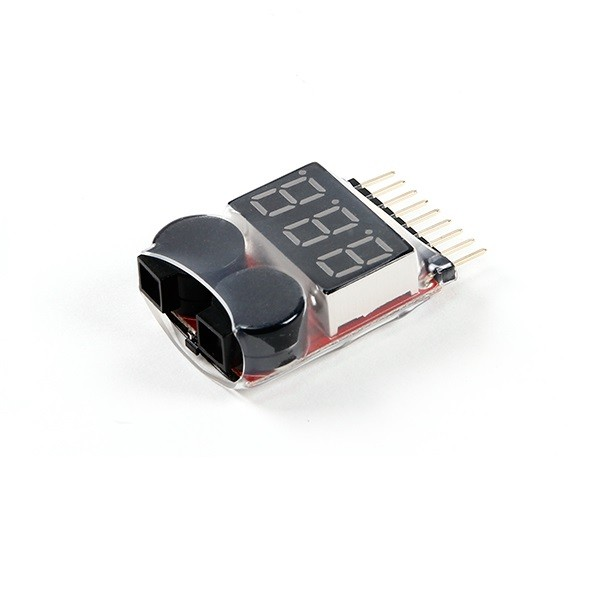
1-8S Lipo Battery Voltage Tester without Alarm
Monitor individual cell voltages before and after each flight session. Catching cells dropping below 3.5V early prevents the over-discharge damage that leads to puffing.
Danger Signs: When to Stop Using Immediately
Not all LiPo swelling is equally dangerous. Here’s how to assess the severity:
Mild Puffing (Watch and Monitor)
- Very slight firmness in the pack compared to when new — pack still fits in its compartment
- No individual cell visibly protruding more than others
- Pack is less than 2 years old and under 100 cycles
- No other warning signs (heat, smell, voltage imbalance)
Mild puffing: still usable with caution. Monitor closely every session, never leave unattended while charging.
Moderate Puffing (Retire Immediately)
- Pack visibly thicker than new — won’t fit in compartment easily
- Any individual cell noticeably more swollen than others
- Cell voltage imbalance greater than 0.1V
- Pack gets noticeably warm during charging at 1C or lower
Moderate puffing: stop using immediately. Discharge to storage voltage and dispose.
Severe Puffing (Emergency — Handle with Extreme Care)
- Pack is 2x or more its original thickness
- Pouch has tears, punctures, or you can hear/smell gas
- Pack is hot to the touch without being in use
- Visible electrolyte leakage (liquid, often with a sharp solvent smell)
- Pack hisses or crackles
Severe puffing: treat as a fire hazard. Place it in a metal container outdoors immediately. Do not charge, do not puncture, do not store inside your home.
Can a Puffed LiPo Be Fixed?
This is one of the most commonly searched questions, and the answer is almost always no — a puffed LiPo cannot be safely fixed.
You may have seen advice online suggesting you can deflate a LiPo with a pin and it’ll be fine. This is extremely dangerous. The gas inside is flammable, and the interior of the cell is highly reactive. Puncturing the pouch exposes the electrolyte to air and moisture, triggering a chemical reaction that can lead to fire within seconds.
Other suggested “fixes” like squeezing the pack under heavy books or putting it in a vice to compress it back to original size are equally dangerous — they risk cracking the internal separator and causing an internal short.
The only correct action for a puffed LiPo (beyond very mild early-stage puffing) is to retire and safely dispose of it.
Safe Storage of a Puffed LiPo
While you arrange for disposal, store the puffed pack safely:
- Place it in a LiPo-safe bag or a metal ammunition can with loose sand filling the gaps.
- Store outdoors or in a detached garage — never in your home, bedroom, or car.
- Keep it away from flammable materials (paper, wood, fabric).
- Keep it at a comfortable ambient temperature — not in direct sunlight, not in a hot car.
- Check on it daily for worsening swelling, heat, or smell.

25cm Lipo Battery Strap Belt Reusable Cable Tie Wrap
Secure your LiPo packs firmly in drones and RC frames to prevent pack movement and vibration damage — one of the leading causes of premature puffing in RC applications.
Safely Discharging Before Disposal
Before disposing of a puffed LiPo, you must fully discharge it to make it as safe as possible. Never put a fully charged LiPo in landfill — the energy stored can still cause fire or explosion.
Method: Salt water discharge (safest for severely puffed packs)
- Dissolve 1/4 cup of table salt in 1 litre of water in a plastic bucket.
- Place the puffed LiPo in the bucket — ensure the connector wires are long enough so the pack is submerged but the connector is above the water line.
- Connect the LiPo connector to a simple resistive load (a 12V car light bulb rated 5–10W works well). The salt water acts as both an additional load and a fire suppression medium if thermal runaway occurs.
- Leave for 24–48 hours until the cell voltage drops below 1V per cell.
- After full discharge, the pack can be safely cut from the connector and disposed.
Alternative: Balance charger discharge mode
If the pack is only mildly puffed and still holds charge, use your balance charger’s discharge function to bring cells to storage voltage (3.7–3.8V per cell). Continue with the salt water method from there to fully discharge before disposal.
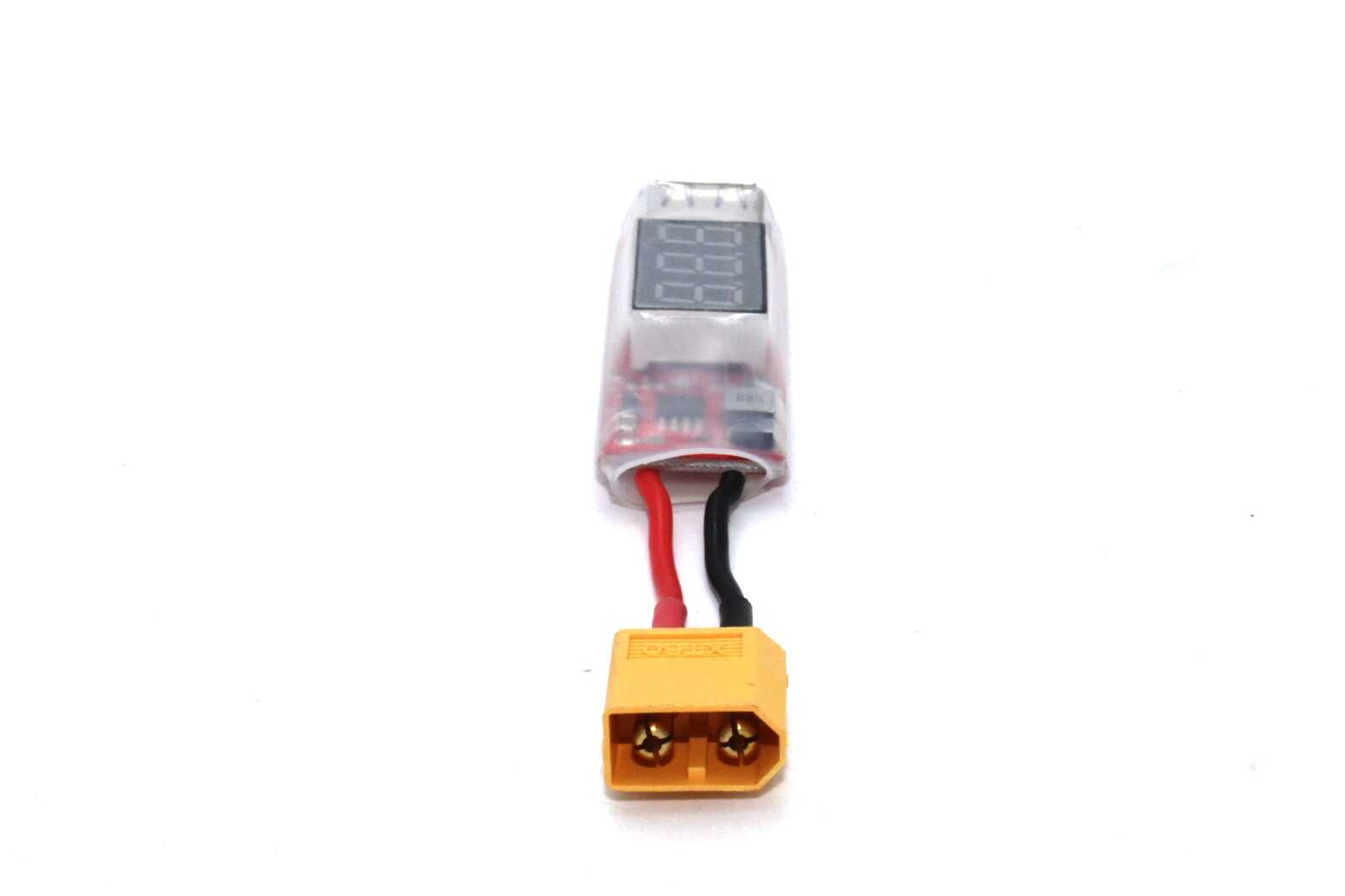
2S-6S Lipo Battery with XT60 Plug to USB Cellphone Charger Adapter with Voltage Display
Doubles as a useful field tool — the voltage display lets you monitor pack voltage in real time during a controlled discharge process before LiPo disposal.
How to Dispose of LiPo Batteries in India
LiPo batteries are classified as hazardous electronic waste (e-waste) in India under the E-Waste (Management) Rules, 2016. They must not be thrown in regular household garbage. Here are your options:
- E-waste collection centres: Most major cities (Mumbai, Delhi, Bangalore, Hyderabad, Pune, Chennai) have designated e-waste collection points. Check the CPCB (Central Pollution Control Board) website or your municipal corporation’s website for the nearest authorised collection centre.
- Brand take-back programs: Many electronics brands (especially phone manufacturers like Samsung, Apple, Xiaomi) have battery recycling programs at their authorised service centres. Some RC hobby shops also accept old LiPo packs.
- Municipality e-waste drives: Many municipalities hold periodic e-waste collection drives — watch for these in local news or your housing society notice board.
- Kabadiwala / scrap dealers: Some informed scrap dealers accept lithium batteries. Ensure they’re connected to a certified recycler — you can ask for documentation.
Never burn a LiPo — the combustion produces toxic fluorine compounds that are harmful to breathe. Never pour the electrolyte liquid down a drain — it is a hazardous chemical.
Preventing LiPo Puffing
The best cure is prevention. Here’s how to maximise LiPo lifespan and minimise puffing risk:
- Always use a proper balance charger. A charger that monitors individual cell voltages prevents overcharging any single cell.
- Charge at 1C or less. Charging at 2C or higher increases internal temperature and accelerates electrolyte breakdown.
- Never over-discharge. Set a conservative low-voltage cutoff on your ESC: 3.5–3.7V per cell under load is a good threshold. After landing, check cells and ensure none are below 3.5V.
- Store at storage voltage. If you won’t fly for more than a few days, use your charger’s storage mode to bring cells to 3.80–3.85V per cell.
- Keep packs cool. Never charge or store LiPo packs in a hot car or in direct sunlight. Never charge immediately after a flight — let the pack cool to ambient temperature first.
- Secure packs properly. Use velcro straps to hold packs firmly in drone frames. A pack that rattles and vibrates will degrade faster.
- Inspect after every crash. Even if the pack looks fine externally, check voltage balance and feel for warmth before your next flight.
Frequently Asked Questions
Can I still use a slightly puffed LiPo battery?
Very mild puffing — where the pack is barely firmer than new and still fits its compartment — is often seen in packs with 100+ cycles and may be used cautiously for non-critical, low-risk applications with close monitoring. However, any moderate to severe puffing means the pack should be retired immediately. When in doubt, retire it — a new LiPo costs far less than a fire.
Is a puffed LiPo dangerous to touch or carry?
A mildly puffed pack that is not hot, is not leaking, and has no tears is generally safe to handle with normal care. Avoid squeezing or bending the pack. A severely swollen, hot, or leaking pack should be handled minimally — pick it up gently, place it in a metal container outdoors, and avoid bending or puncturing it. If in doubt, use gloves and eye protection.
Why does my new LiPo puff after just a few charges?
Rapid puffing of a new pack usually indicates one of three things: the charger is set to the wrong battery type or cell count (causing overcharge), the discharge C-rate in use exceeds the pack’s rating, or the pack is counterfeit with substandard cell chemistry. Always double-check your charger settings, especially the cell count, before every charge. Cheap no-brand LiPo packs are a very common culprit.
Where can I dispose of LiPo batteries in Bangalore / Mumbai / Delhi?
In Bangalore, BBMP runs e-waste drives and there are authorised collection points like E-Parisaraa Pvt. Ltd. In Mumbai, the BMC has designated e-waste drop-off points, and brands like Samsung and Apple have in-store battery recycling. In Delhi, the CPCB maintains a list of authorised recyclers on their website. Search for “e-waste collection near me” on Google Maps — many authorised centres are listed.
Can I fly my drone with a puffed LiPo if I really need to?
No. Flying with a puffed LiPo risks mid-flight power failure (the weakened cell structure can’t deliver consistent current), battery fire in the air, and crash damage to your aircraft. If the pack vents or enters thermal runaway while airborne, it can cause a crash, fire, and serious injury to bystanders. A crashed drone can be repaired; injuries and fires are far costlier. Never fly with a puffed pack.
Replace Your Puffed LiPo Safely
Zbotic stocks a wide range of LiPo accessories including voltage testers, battery straps, and balance chargers to keep your packs healthy and extend their lifespan. Shop now and fly safe.






Add comment