
Lithium Polymer (LiPo) batteries power everything from racing drones and RC cars to FPV quads and robotic arms — but they come with a serious responsibility. Understanding LiPo battery charging safety dos and don’ts is not optional; it’s the difference between a thriving hobby and a house fire. Each year, dozens of LiPo-related fires are reported worldwide, many caused by simple, avoidable mistakes. Whether you’re a first-time RC pilot or a seasoned Indian drone racer, this complete guide will help you charge, store, and dispose of your LiPo batteries safely.
Table of Contents
- Why Are LiPo Batteries Dangerous?
- The Dos of LiPo Charging
- The Don’ts of LiPo Charging
- LiPo Voltage Reference Guide
- Storage Charging: The Often-Ignored Rule
- What to Do with Damaged or Puffy LiPos
- Choosing the Right Charger
- Special Considerations for India
- Frequently Asked Questions
Why Are LiPo Batteries Dangerous?
LiPo batteries use a liquid electrolyte made from a flammable organic solvent. Unlike lithium-iron-phosphate (LiFePO4) or nickel-metal hydride batteries, LiPo cells are inherently less thermally stable. When a LiPo cell is overcharged, over-discharged, punctured, short-circuited, or exposed to excessive heat, it can undergo thermal runaway — a self-sustaining exothermic reaction where the cell heats up, vents flammable gases, and ignites.
The fire burns at extreme temperatures and is difficult to extinguish because the cell itself provides both fuel and oxidiser. Class D fire extinguishers or large quantities of sand are needed; water alone is ineffective and can intensify the reaction. Understanding this chemistry is why every safety rule below exists — it’s not paranoia, it’s physics.
The Dos of LiPo Charging
DO Use a Proper Balance Charger
Always use a charger designed specifically for LiPo batteries with balance charging capability. A balance charger monitors each individual cell’s voltage through the balance connector and equalises them during the charging process. This prevents individual cells from being overcharged even when the pack’s total voltage looks correct. Chargers like the ISDT range connect to both the main discharge connector (for current) and the balance port (for individual cell monitoring).
DO Charge at 1C or Below
The standard, safest charging rate for LiPo batteries is 1C — meaning if you have a 1,500 mAh pack, charge it at 1.5 A. Most manufacturers specify a maximum charge rate of 1C for longest life. Some packs are rated for 2C charging, but this generates more heat and accelerates degradation. Unless you’re in a race situation with insufficient time between rounds, stick to 1C.
DO Supervise the Charging Process
Never leave a charging LiPo unattended. If the cell starts swelling, emitting a strange smell, getting unusually warm, or hissing, immediately disconnect the charger and move the pack to a safe, non-flammable surface outdoors or in a LiPo-safe bag. Most LiPo fires start during charging — staying present lets you intervene early.
DO Use a LiPo-Safe Bag or Metal Container
Charge and store your LiPo packs in a fireproof LiPo-safe bag or a metal ammunition can. These won’t completely stop a thermal runaway, but they will contain the fire long enough for you to safely move it outdoors. Many Indian hobbyists improvise with metal tiffin boxes — this works reasonably well.
DO Check Cell Voltages Before Charging
Before connecting your pack to the charger, check individual cell voltages. Use your charger’s built-in cell monitor or a standalone voltage tester. Cells that have dropped below 3.0 V are over-discharged and should not be charged normally — most quality chargers will refuse to charge them, which is the correct behaviour. Do not attempt to revive severely over-discharged cells.
DO Charge on a Non-Flammable Surface
Charge batteries on a concrete floor, ceramic tile, or a metal tray — not on wooden tables, carpets, or foam mats. In case of a fire, this limits the spread significantly.
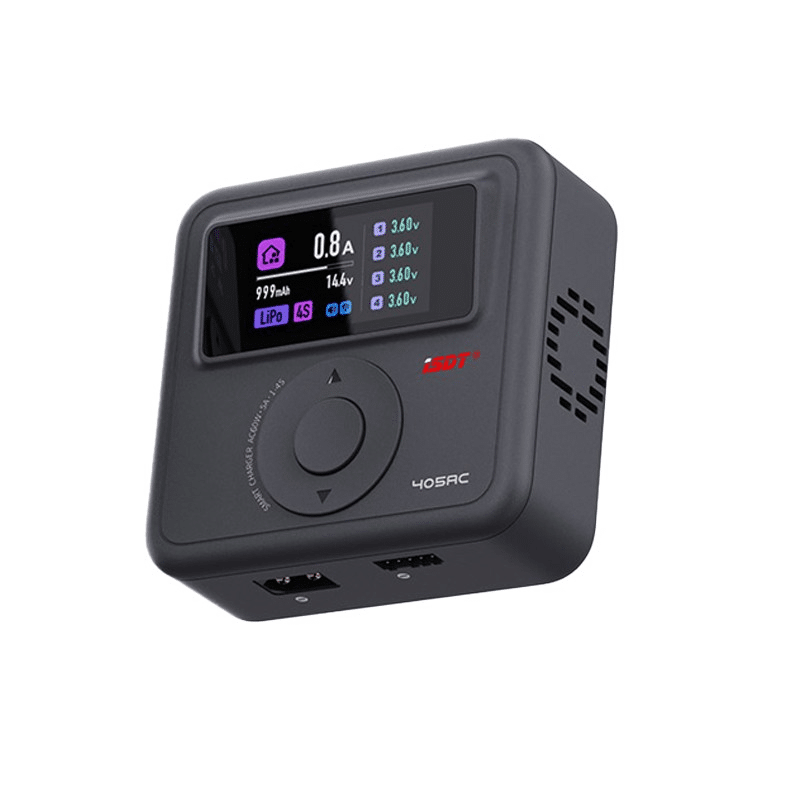
ISDT 405AC 60W AC GaN Smart Charger – 0.1-5A, 1S–4S LiPo/LiHv/LiFe (XT60)
A premium AC-powered GaN smart charger with built-in balance charging for 1–4S LiPo packs. Compact, efficient, and safe — with overcharge and short-circuit protection built in.
The Don’ts of LiPo Charging
DON’T Overcharge
Never charge a LiPo cell above 4.20 V per cell (4.35 V for HV/LiHv cells). Overcharging is the most common cause of LiPo fires. Use a quality charger with proper LiPo presets — not generic phone chargers or unregulated power supplies. Most accidents happen when hobbyists use incorrect charger profiles (e.g., selecting NiMH mode for a LiPo pack).
DON’T Over-Discharge
Discharging a LiPo cell below 3.0 V per cell (under load) causes irreversible damage and makes the cell unsafe to recharge. Set a low-voltage cutoff alarm on your ESC or flight controller. Most modern electronics will cut power at 3.3–3.5 V under load — respect this protection. The 1-8S voltage tester is your friend here.
DON’T Charge Damaged or Puffy Packs
A swollen (puffed) LiPo has vented internally and accumulated gas due to electrolyte decomposition. Charging a puffy LiPo is extremely dangerous. If your pack looks fatter than usual, dispose of it safely — do not charge it, do not use it, do not puncture it indoors.
DON’T Leave Packs Fully Charged During Long Storage
Storing a LiPo at full charge (4.2 V/cell) accelerates capacity loss and increases the risk of swelling. More on this in the storage section below.
DON’T Charge in Extreme Heat
Ambient temperature significantly affects charging safety. Avoid charging in direct sunlight, inside a hot car, or in any environment above 40°C. This is especially important in Indian summers where workshop temperatures can exceed 45°C. The chemical reactions inside the cell accelerate with temperature — compounding any existing safety margin reduction.
DON’T Use Cheap or Damaged Cables
Loose connectors, frayed wires, or undersized cables cause voltage drop and resistive heating. Always use properly rated XT60, XT30, or EC3 connectors for your discharge leads. Inspect balance connectors for bent pins — a short across balance wires during charging can be catastrophic.
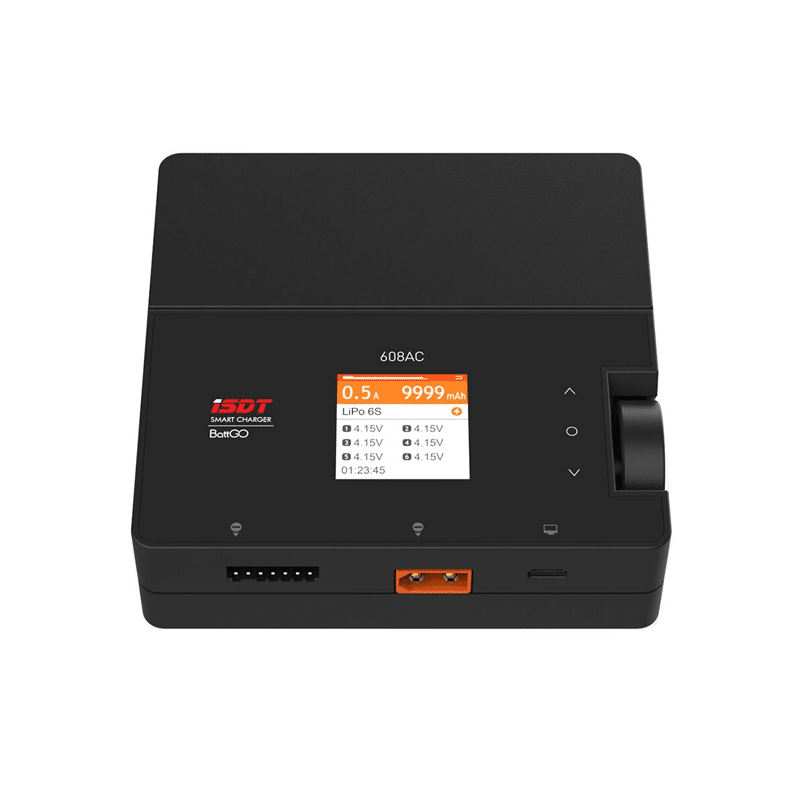
ISDT 608 AC LiPo Battery Charger – AC 50W / DC 200W Dual Mode RC Charger/Discharger
A serious dual-mode charger for RC pilots — 200W DC power lets you field-charge packs quickly, while AC mode handles home charging. Supports LiPo, LiHv, LiFe, NiMH, and Pb batteries.
LiPo Voltage Reference Guide
Understanding per-cell voltages is fundamental to safe LiPo use. Here is a quick reference for standard LiPo cells (4.20 V max / cell):
| State | Per Cell Voltage | 2S Pack | 3S Pack | 4S Pack |
|---|---|---|---|---|
| Fully Charged | 4.20 V | 8.40 V | 12.60 V | 16.80 V |
| Storage Charge | 3.80–3.85 V | 7.60–7.70 V | 11.40–11.55 V | 15.20–15.40 V |
| Nominal | 3.70 V | 7.40 V | 11.10 V | 14.80 V |
| Low (Alarm) | 3.50 V | 7.00 V | 10.50 V | 14.00 V |
| Critical (Cutoff) | 3.00–3.20 V | 6.00–6.40 V | 9.00–9.60 V | 12.00–12.80 V |
| Dead / Damaged | <3.00 V | <6.00 V | <9.00 V | <12.00 V |
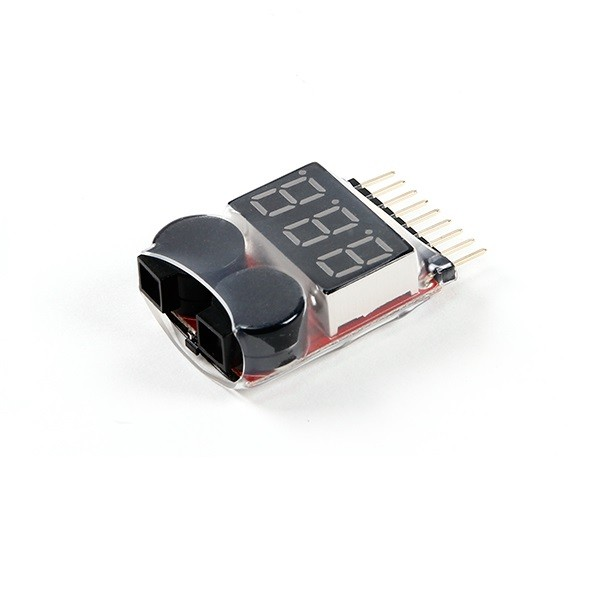
1-8S LiPo Battery Voltage Tester (without alarm)
Essential field tool for any LiPo user. Instantly displays individual cell voltages and total pack voltage for 1S through 8S packs. Check cell balance before and after charging to catch problems early.
Storage Charging: The Often-Ignored Rule
If you won’t be using your LiPo pack for more than a week, you should put it on a storage charge — approximately 3.80–3.85 V per cell. Most quality chargers have a dedicated “Storage” mode that does this automatically.
Why does this matter? Storing at full charge (4.2 V/cell) keeps the lithium ions in a high-stress state, accelerating capacity loss and increasing the chance of swelling over time. Storing at too low a voltage (below 3.5 V/cell) risks the cell drifting further down to damaging levels during storage.
The sweet spot of 3.80–3.85 V/cell minimises chemical stress and keeps the cells healthy for their next use. Get into this habit every time you come back from a flying or driving session — it will significantly extend the life of your packs.
What to Do with Damaged or Puffy LiPos
Never throw a LiPo battery in the regular trash. Punctured or crushed cells in garbage trucks have caused refuse vehicle fires. Here’s the safe disposal process:
- Discharge completely: Connect the pack to a resistive load (a car headlight bulb works well) until the voltage drops to near zero. Do this outdoors.
- Salt water discharge: Submerge the pack in a bucket of salt water (1 cup salt per 3 litres) for at least 2 weeks. The saline conducts enough current to slowly discharge the pack to zero, neutralising it.
- Drop at an e-waste centre: Once fully discharged and neutralised, drop the cell at an authorised e-waste collection point. Many Indian cities have these centres, and Zbotic’s city partners include collection options.
A swollen pack that hasn’t been used yet should be placed in a LiPo-safe bag, taken outdoors, and allowed to self-discharge slowly before the salt-water treatment. Never puncture a swollen cell to “release the gas” — the gas is flammable and toxic.
Choosing the Right Charger
Your charger is the single most important piece of safety equipment for LiPo batteries. Here’s what to look for:
- Balance charging: Non-negotiable. Never use a charger without balance functionality for LiPo packs.
- Correct chemistry presets: Must have a specific “LiPo” (or LiPo/LiHv) mode, not just a generic lithium mode.
- Adjustable charge current: Lets you charge at 1C for your specific pack size.
- Overcharge protection: Terminates automatically when each cell reaches 4.2 V (or 4.35 V for HV cells).
- Temperature cutoff: Some chargers accept a temperature probe to stop charging if the pack gets too hot.
- Indian power compatibility: AC chargers must accept 230V/50Hz. DC-only chargers need a separate power supply.
Special Considerations for India
Indian hobbyists face some unique challenges with LiPo safety:
- Summer temperatures: Ambient temps of 40–48°C in many parts of India during May–June demand extra caution. Avoid outdoor charging in direct sunlight. Store packs in the coolest, shadiest part of your home (not in parked vehicles).
- Power fluctuations: Voltage fluctuations common in many Indian areas can interfere with charger operation. Use a stabiliser or UPS as a buffer if your power supply is unstable.
- Monsoon humidity: High humidity can cause corrosion on balance connector pins. Inspect and clean connectors with a dry brush regularly. Do not charge packs that have been exposed to rain without first drying them thoroughly.
- Shipping regulations: LiPo packs above a certain watt-hour rating have restrictions on air freight. Check DGCA guidelines before importing high-capacity packs, or use ground shipping options.
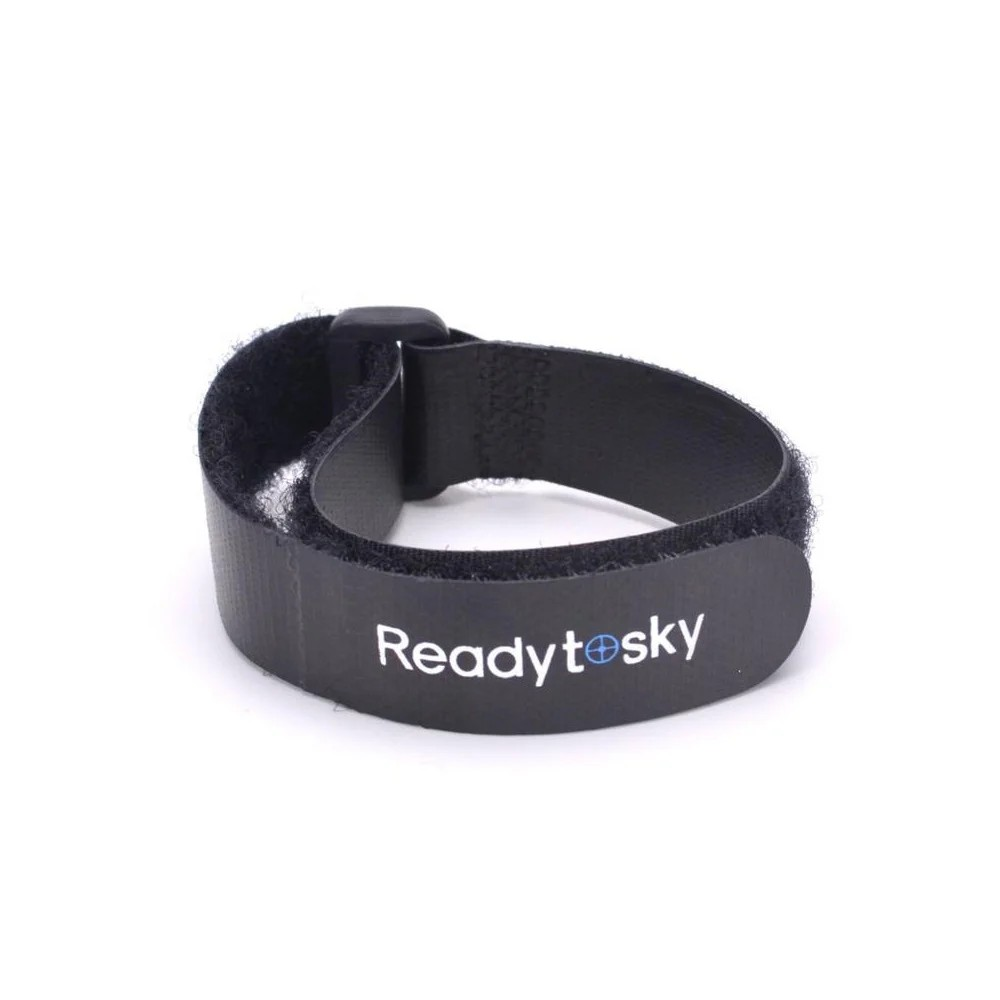
25cm LiPo Battery Strap Belt – Reusable Cable Tie Wrap
Secure your LiPo packs properly to RC frames and mounts with these strong, reusable Velcro straps. Prevents pack vibration, connector stress, and potential short circuits from loose batteries.
Frequently Asked Questions
Q1: Can I use a LiPo charger to charge 18650 Li-ion cells?
Only if the charger has a specific Li-ion mode — the chemistry presets (charge termination voltage, etc.) differ from LiPo even though both are lithium-based. Most multi-chemistry chargers handle both. Never use a LiPo-only preset for Li-ion cells, and vice versa.
Q2: How hot should a LiPo battery get during charging?
A slight warmth (below 40°C / warm to the touch) is normal at 1C charge rate. If the pack is too hot to comfortably hold, disconnect immediately — something is wrong. Packs charging above 50°C are in dangerous territory.
Q3: My LiPo pack says 2C max charge rate. Should I always charge at 2C?
Just because the manufacturer allows 2C doesn’t mean it’s optimal. Charging at 1C generates less heat, stresses cells less, and extends the pack’s cycle life. Use 2C only when you genuinely need faster turnaround — for example, between race heats.
Q4: Is it safe to fly a drone indoors with a LiPo battery?
The flight itself isn’t the safety concern — the charging is. Never charge packs indoors without a LiPo-safe container, and always fly in a space where a crash won’t cause a fire risk. Keep a bucket of sand nearby when charging indoors.
Q5: What should I do if my LiPo catches fire?
Do not use water. Move the pack to a non-flammable area immediately if possible. Smother with sand or dry chemical powder. Call for help if the fire spreads. Prevention is far superior to reaction — this is why every rule in this guide exists.
Charge Smart, Fly Safe
LiPo batteries are remarkable power sources that have revolutionised RC hobbies and portable electronics. With the right charger, correct charging procedures, and consistent safe storage habits, you can enjoy years of reliable service from your packs with zero incidents. The rules aren’t complicated — they just require discipline and the right equipment.
Zbotic stocks a full range of LiPo-compatible chargers, voltage testers, and accessories to help you charge safely. Browse our Batteries, Power & Charging section and gear up for safe, responsible flying and driving!





Add comment