
The L3G4200D gyroscope sensor is a three-axis MEMS angular rate sensor from STMicroelectronics that has become a staple in robotics, drones, balancing bots, and gesture-recognition projects. Unlike accelerometers that measure linear acceleration, a gyroscope measures how fast an object rotates — expressed in degrees per second (°/s). Understanding angular rate measurement with the L3G4200D unlocks a whole class of motion-aware applications that simply aren’t possible with a single accelerometer. In this comprehensive guide you will learn everything from the sensor’s internal architecture to wiring, calibration, and real-world fusion with an accelerometer.
What Is the L3G4200D Gyroscope Sensor?
The L3G4200D is a low-power, three-axis digital output gyroscope manufactured by STMicroelectronics. It measures angular velocity around the X, Y, and Z axes simultaneously, making it ideal for full 3D orientation tracking. The sensor communicates over both I2C and SPI interfaces, giving it flexibility for integration into nearly any microcontroller platform.
The device integrates the sensing element with a signal-conditioning ASIC and analog-to-digital converters inside a single 4×4×1.1 mm package. This compact footprint, combined with 3.3 V / 5 V compatibility (via breakout boards), makes it popular among Indian hobbyists and engineering students working on budget-friendly IMU projects.
It was widely used in smartphones and gaming controllers before being made available as a standalone module for the maker community. Today, you’ll find it in self-balancing robots, quadcopter flight controllers, camera stabilisers, and human-gesture interfaces.
How a MEMS Gyroscope Measures Angular Rate
The L3G4200D relies on the Coriolis effect to measure rotation. Inside the sensor, a micro-machined vibrating structure oscillates at a fixed frequency along a drive axis. When the sensor is rotated, the Coriolis force deflects the vibrating mass perpendicular to both its motion and the rotation axis. Capacitive sensing electrodes detect this tiny deflection, and the ASIC converts the capacitance change into a voltage proportional to angular rate.
Because this measurement is purely mechanical and electrical — with no moving optical parts — MEMS gyroscopes are extremely small, rugged, and power-efficient. However, they do suffer from gyroscopic drift: even at rest, the output is not perfectly zero due to temperature effects and electronic noise. Calibration (discussed later) is essential for accurate angle integration.
The L3G4200D runs its drive oscillation at roughly 20 kHz, far above audible range, ensuring no interference with acoustic sensors nearby. Its bandwidth is software-selectable up to 100 Hz with an internal low-pass filter, giving you flexibility between noise rejection and fast response time.
Key Specifications You Must Know
- Axes: 3 (X, Y, Z)
- Full-Scale Range (selectable): ±250 °/s, ±500 °/s, ±2000 °/s
- Sensitivity: 8.75, 17.5, or 70 mdps/LSB depending on range
- ADC Resolution: 16-bit
- Interface: SPI (up to 10 MHz) or I2C (up to 400 kHz)
- Supply Voltage: 2.4–3.6 V (breakout boards usually include 3.3 V regulator)
- Current Consumption (normal): ~6.1 mA; sleep mode ~1.5 mA
- Operating Temperature: −40 °C to +85 °C
- Package: LGA-16 (4×4×1.1 mm)
- FIFO: 32-level FIFO for batched data reading
- Interrupt outputs: Two programmable interrupt pins (INT1, DRDY)
The selectable full-scale range is one of the most important parameters to understand. For slow, precise movements (robotic arms, pan-tilt heads), use ±250 °/s for the highest resolution. For fast rotation (quadcopters, RC cars), select ±2000 °/s to avoid output saturation.
Wiring the L3G4200D to Arduino
Most breakout boards for the L3G4200D expose VCC, GND, SDA/SCL (I2C), and sometimes SDO, CS, INT1, INT2 pins. Here is the standard I2C wiring to an Arduino Uno or Nano:
| L3G4200D Pin | Arduino Pin | Notes |
|---|---|---|
| VCC | 3.3 V | Use 3.3 V pin — most breakouts have regulator |
| GND | GND | Common ground |
| SDA | A4 (SDA) | I2C data |
| SCL | A5 (SCL) | I2C clock |
| SDO (optional) | GND or 3.3 V | Sets I2C address: GND=0x68, 3.3V=0x69 |
| CS (SPI only) | Any digital pin | Pull HIGH for I2C mode |
Important: Always use 4.7 kΩ pull-up resistors on SDA and SCL when using long wires or combining multiple I2C devices. Many breakout boards include these on-board.
Arduino Code: Reading Angular Rate Data
Install the L3G4200D library by Pololu via the Arduino Library Manager (search “L3G”). Alternatively, you can use direct I2C register reads. Here is a complete sketch using the Pololu library:
#include <Wire.h>
#include <L3G.h>

L3G gyro;

void setup() {
  Serial.begin(115200);
  Wire.begin();

  if (!gyro.init()) {
    Serial.println("Failed to autodetect gyro type!");
    while (1);
  }

  // Set full-scale to 2000 dps for fast movements
  gyro.enableDefault();
  // Optionally set scale: gyro.writeReg(L3G::CTRL_REG4, 0x20); // 500 dps

  Serial.println("L3G4200D Gyroscope Ready");
  delay(1000);
}

void loop() {
  gyro.read();

  // Raw values in LSB — convert to dps
  float sensitivity = 0.07; // mdps/LSB for 2000 dps range (70 mdps/LSB)
  float gx = gyro.g.x * sensitivity;
  float gy = gyro.g.y * sensitivity;
  float gz = gyro.g.z * sensitivity;

  Serial.print("Gx: "); Serial.print(gx);
  Serial.print(" Gy: "); Serial.print(gy);
  Serial.print(" Gz: "); Serial.println(gz);

  delay(50); // 20 Hz update rate
}
The gyro.g.x, gyro.g.y, gyro.g.z values are 16-bit signed integers. Multiply by the sensitivity factor (8.75e-3 for ±250°/s, 17.5e-3 for ±500°/s, 70e-3 for ±2000°/s) to get degrees per second. Open the Serial Monitor at 115200 baud to observe live angular rate readings.
Integrating Angular Rate to Get Angle
To compute the angle rotated, integrate the angular rate over time:
float angleZ = 0;
unsigned long prevTime = millis();

void loop() {
  gyro.read();
  unsigned long now = millis();
  float dt = (now - prevTime) / 1000.0; // seconds
  prevTime = now;

  float gz_dps = gyro.g.z * 0.07; // 2000 dps range
  angleZ += gz_dps * dt;

  Serial.print("Angle Z: "); Serial.println(angleZ);
  delay(10);
}
This simple integration accumulates drift over time. For long-term stable angles, you must combine this with an accelerometer using a complementary or Kalman filter (see the Sensor Fusion section).
Calibration: Removing Drift and Offset Bias
Calibrating the L3G4200D is critical for any project where accurate angle tracking matters. The main sources of error are:
- Zero-rate offset (bias): The raw output at rest is not zero. This shifts integrated angles rapidly.
- Sensitivity error: The actual sensitivity may differ slightly from the datasheet value.
- Temperature drift: Sensitivity and bias both change with temperature.
Step 1: Measure Zero-Rate Offset
Place the sensor perfectly still on a level surface. Collect 1000–2000 samples and compute the average for each axis:
long sumX = 0, sumY = 0, sumZ = 0;
int samples = 2000;

for (int i = 0; i < samples; i++) {
  gyro.read();
  sumX += gyro.g.x;
  sumY += gyro.g.y;
  sumZ += gyro.g.z;
  delay(2);
}

float biasX = sumX / (float)samples;
float biasY = sumY / (float)samples;
float biasZ = sumZ / (float)samples;
Step 2: Subtract Bias During Operation
In your main loop, subtract the bias before using the readings:
float gz_corrected = (gyro.g.z - biasZ) * 0.07;
After calibration, angle drift reduces from several degrees per second to fractions of a degree per second — a 10–50× improvement for most sensors at room temperature.
Sensor Fusion with Accelerometer
A gyroscope alone drifts; an accelerometer alone is noisy and susceptible to vibration. The classic solution is complementary filtering: blend the gyroscope’s short-term accuracy with the accelerometer’s long-term stability.
The complementary filter formula for the pitch angle is:
// alpha: time constant factor (typically 0.96–0.99)
float alpha = 0.98;
float pitch = alpha * (pitch + gyro_rate * dt) + (1 - alpha) * accel_pitch;
For higher accuracy, implement a Kalman filter (available as the Kalman library in Arduino IDE). The Kalman filter models gyro drift as a state variable and continuously corrects it using accelerometer measurements — optimal for robotics and drone applications.
A popular IMU combining both sensors in one chip is the MPU-6050, which pairs a 3-axis gyroscope with a 3-axis accelerometer and includes a Digital Motion Processor (DMP) for on-chip sensor fusion. However, the L3G4200D offers superior gyroscope performance and is the right choice when you specifically need high-quality angular rate data.
Project Ideas Using L3G4200D
- Self-Balancing Robot: Use the Z-axis angular rate plus an accelerometer to maintain vertical balance via PID control of two DC motors.
- Camera Gimbal Stabiliser: Detect unwanted camera rotations and drive servo motors to counteract them in real time.
- Quadcopter Flight Controller: Combine L3G4200D with a barometer and GPS for attitude estimation and stable hover.
- Gesture Mouse: Translate wrist rotations into cursor movement via USB HID on an Arduino Leonardo.
- Pedestrian Dead Reckoning: Estimate walking direction and turns indoors where GPS is unavailable.
- Vehicle Yaw Rate Sensor: Detect skidding or lane changes in automotive prototyping projects.
Recommended Sensors from Zbotic
While working on gyroscope and motion sensing projects, you will often need complementary sensors to complete your system. Here are our top picks from Zbotic:
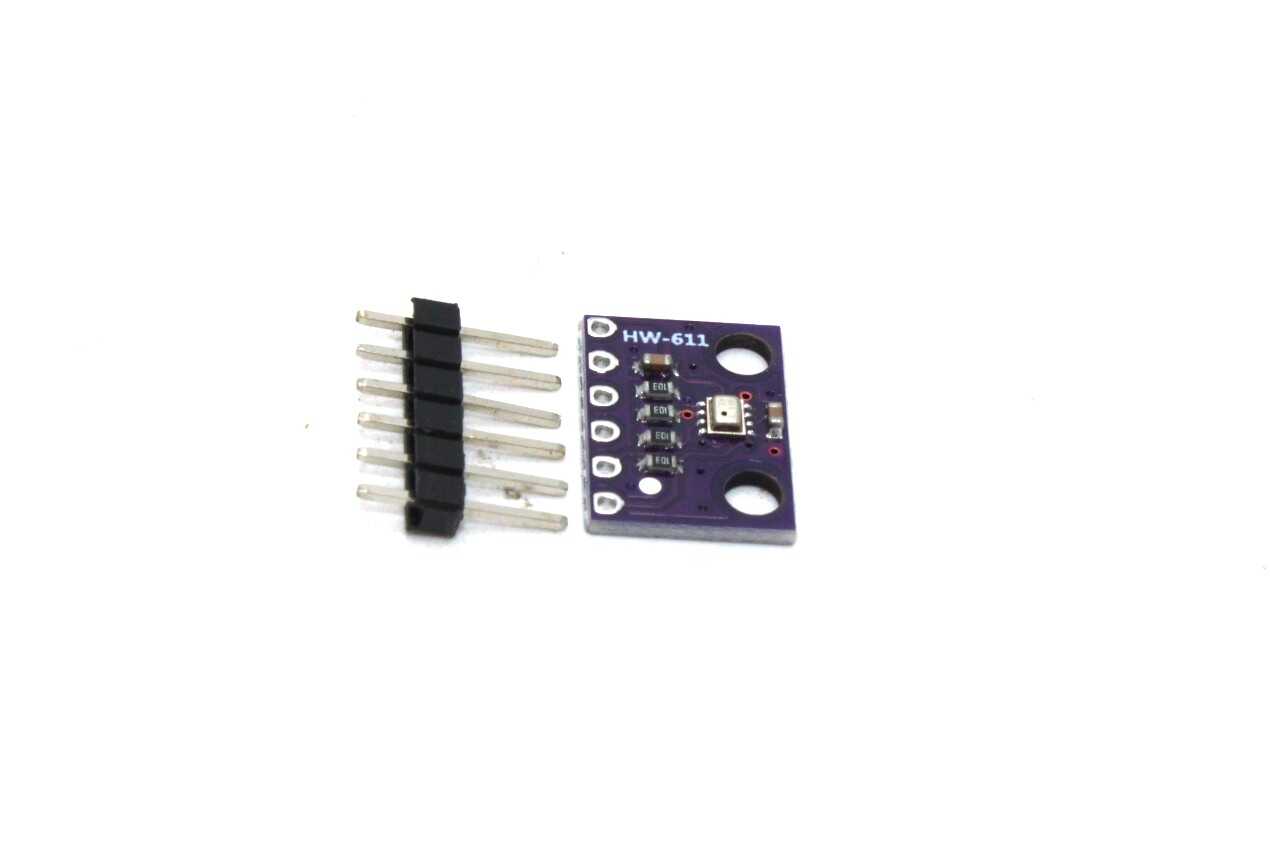
BMP280 Barometric Pressure and Altitude Sensor I2C/SPI Module
Pair with the L3G4200D for altitude hold in drones. The BMP280 provides Z-axis position data that complements gyroscope angular rate for full 3D state estimation.
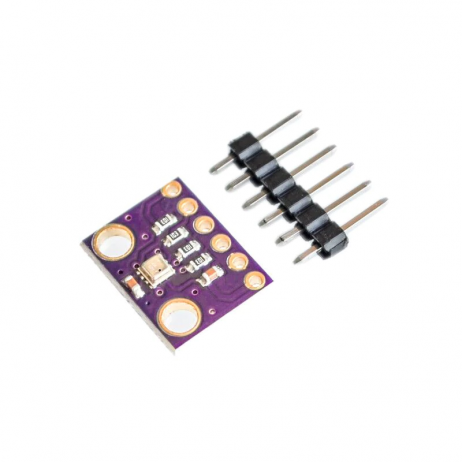
GY-BME280-3.3 Precision Altimeter Atmospheric Pressure Sensor Module
The BME280 adds temperature and humidity in addition to pressure — useful for compensating gyroscope readings that drift with temperature changes.
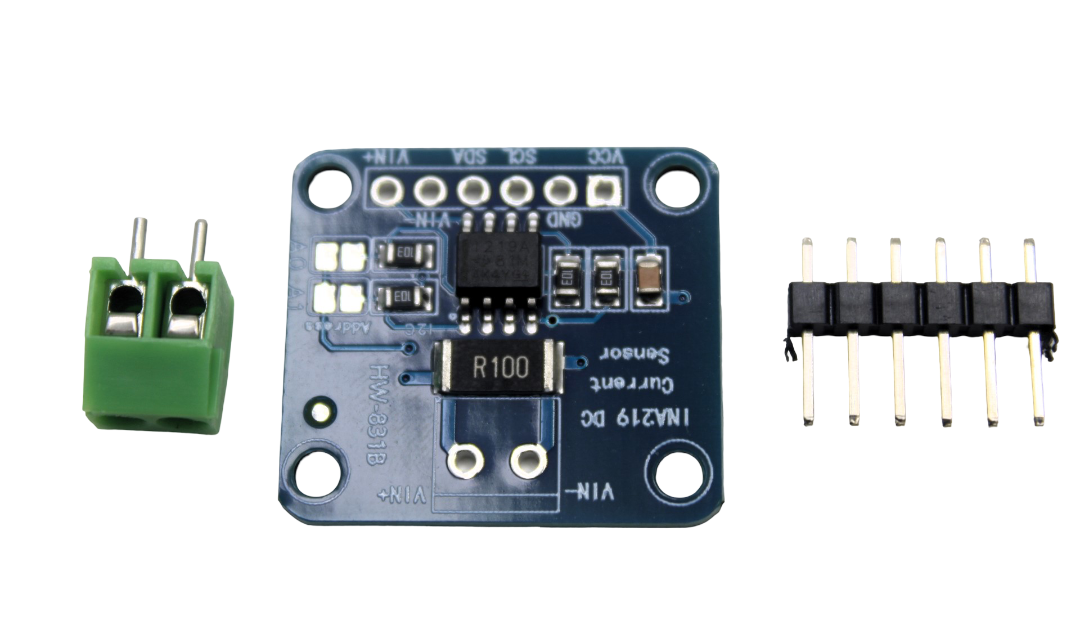
CJMCU-219 INA219 I2C Bi-directional Current / Power Monitoring Module
Monitor battery current draw in gyroscope-based robots to prevent brownouts that cause sensor drift errors and unexpected resets.
Frequently Asked Questions
Q1: What is the difference between a gyroscope and an accelerometer?
A gyroscope measures angular rate (how fast something rotates) in degrees per second. An accelerometer measures linear acceleration (including gravity) in m/s². Both are complementary — gyroscopes track short-term rotation accurately but drift over time; accelerometers provide a stable long-term reference but are noisy. IMU systems use both together.
Q2: Can I use the L3G4200D at 5 V with an Arduino Uno?
The L3G4200D chip itself operates at 2.4–3.6 V. Most breakout boards include a 3.3 V regulator and level shifters, making them safe for 5 V Arduino boards. Always check your specific breakout board’s datasheet before connecting to 5 V GPIO pins.
Q3: How do I choose the right full-scale range?
Use ±250 °/s for slow, precise motions (robotic arms, turntables). Use ±500 °/s for moderate applications (camera gimbals, walking robots). Use ±2000 °/s for fast motions (quadcopter props, RC cars). Selecting too small a range causes output saturation; too large reduces resolution.
Q4: Why does my angle drift even after calibration?
Temperature changes shift the zero-rate offset of MEMS gyroscopes even after calibration at room temperature. Additionally, integration accumulates any remaining bias error over time. For long-duration accurate tracking, always use sensor fusion with an accelerometer or magnetometer.
Q5: Is the L3G4200D still available? What are alternatives?
The L3G4200D has been largely superseded by the L3GD20H and LSM6DS3 from STMicroelectronics, which offer lower noise and integrated accelerometers. For budget Arduino projects, the MPU-6050 (which includes both gyro and accelerometer) is extremely popular. However, L3G4200D breakout boards are still widely available from Indian electronics suppliers.
Q6: What I2C address does the L3G4200D use?
The L3G4200D uses I2C address 0x68 when the SDO pin is connected to GND, and 0x69 when SDO is connected to VDD. This allows two L3G4200D sensors on the same I2C bus, useful for differential rotation measurement.
Explore our full range of sensors and measurement modules at Zbotic. From gyroscopes and accelerometers to pressure and environmental sensors — everything you need for your next robotics or IoT project, delivered fast across India.

Add comment