
If you’ve ever built a robot arm, an automated sliding door, or a motorised camera gimbal, you’ve probably faced the challenge of picking a motor that turns at the right speed with enough power to move your load. That’s exactly where a gear reduction motor comes in. By pairing a motor with a gearbox, you trade excess speed for useful torque — and the maths behind it is surprisingly straightforward once you know the formulas.
In this guide we’ll walk through everything you need: gear ratio basics, the speed and torque calculation formulas, worked examples using real motors available in India, efficiency factors, and tips for choosing the right gear motor for your next DIY or professional project.
What Is Gear Reduction?
A gear reduction motor (also called a geared DC motor or gear motor) combines a standard electric motor with an internal gearbox. The gearbox uses a series of meshing gears to reduce the output shaft’s rotational speed while simultaneously multiplying torque. Think of it like the gears on a bicycle — shifting to a lower gear makes pedalling easier (more force) but slows you down.
In the world of electronics and robotics, this is essential because most small DC motors spin at thousands of RPM — far too fast for driving wheels, lifting arms, or opening doors. Gear reduction brings that speed down to a practical range (5 RPM to 500 RPM) while delivering the muscle needed to actually move a load.
Types of Gear Reduction Mechanisms
- Spur gears: Simple, low-cost, slightly noisy. Most hobby gear motors use these.
- Helical gears: Quieter and stronger, used in industrial applications.
- Planetary gears: Compact, high torque density, very efficient. Common in NEMA stepper gearboxes.
- Worm gears: Very high reduction in a single stage, self-locking (cannot be back-driven). Great for lifts and gates.
Understanding Gear Ratio
The gear ratio is the single most important number in gear reduction. It tells you how many times the input shaft (motor) rotates for every one rotation of the output shaft (load).
Gear Ratio (GR) = Input Shaft Speed (RPM) ÷ Output Shaft Speed (RPM)
Or equivalently, for a two-gear system:
GR = Number of Teeth on Driven Gear ÷ Number of Teeth on Driving Gear
A gear ratio of 1:100 means for every 100 rotations of the motor, the output shaft makes exactly 1 rotation. The motor spins fast; the output turns slowly but powerfully.
Multi-Stage Gearboxes
Most practical gear motors use multiple gear stages. The overall gear ratio is the product of each stage’s ratio:
Overall GR = Stage 1 GR × Stage 2 GR × Stage 3 GR …
For example, three stages of 5:1 each give an overall ratio of 5 × 5 × 5 = 125:1.
Output Speed Formula
Once you know the gear ratio, calculating output speed is simple:
Output Speed (RPM) = Motor No-Load Speed (RPM) ÷ Gear Ratio
Note: Always use the motor’s speed at your operating voltage, not the absolute maximum. Most hobbyist DC motors are rated at a specific voltage (e.g., 12V). If you’re running them at a lower voltage, the actual speed will be proportionally lower.
Speed at Load
The no-load speed is the speed the motor reaches when spinning freely. Under load, the motor slows down. The speed at a given load torque can be estimated using the motor’s speed-torque curve, but for most hobby applications, using 70–80% of no-load speed as a working estimate is a reasonable starting point.
Output Torque Formula
Torque is where gear reduction really shines. Output torque increases with the gear ratio (minus losses):
Output Torque = Motor Stall Torque × Gear Ratio × Gearbox Efficiency
Or more practically, using rated torque (the torque at the motor’s rated operating point):
Output Torque = Motor Rated Torque × Gear Ratio × η
Where η (eta) is gearbox efficiency, typically expressed as a decimal (e.g., 0.80 for 80% efficient).
Units Matter
- Torque in Indian datasheets is often given in kg-cm (kilogram-centimetres).
- International standard is N·m (Newton-metres).
- Conversion: 1 kg-cm ≈ 0.0981 N·m (multiply by ~0.1 for a quick estimate).
- Stall torque is the maximum torque the motor produces when held stationary — it’s the peak but also the point of maximum current draw and heat.
Worked Examples with Real Motors
Example 1: 25GA-370 DC Gear Motor at 12 RPM
Let’s take a practical motor commonly used in Arduino and robotics projects in India — the 25GA-370 series. The 12 RPM variant has the following specs:
- Supply voltage: 12V DC
- No-load output speed: 12 RPM
- No-load current: ~70 mA
- Stall torque: approximately 3 kg-cm
- Stall current: ~500 mA
- Gear ratio: approximately 1:1360 from the base motor speed
Calculation: If the base motor runs at ~16,000 RPM (typical for a 370 motor) and the output is 12 RPM:
GR = 16,000 ÷ 12 ≈ 1,333:1
This explains why it can hold significant torque — a 1333:1 reduction multiplies whatever the motor generates by 1333 times (before efficiency losses).
Example 2: 25GA-370 at 1360 RPM
The same 25GA-370 body with a 1360 RPM output has a much lower gear ratio (~12:1). This gives far less torque multiplication but is useful where you need moderate speed with some torque boost.
- No-load output speed: 1360 RPM
- GR ≈ 16,000 ÷ 1360 ≈ 11.8:1
- If base motor torque is 1 g-cm, output torque ≈ 1 g-cm × 11.8 × 0.80 ≈ 9.4 g-cm
Example 3: NEMA17 Stepper Motor with Planetary Gearbox
The NEMA17 (42HS48-1204A) is rated at 5.6 kg-cm holding torque. If you attach a 5:1 planetary gearbox with 85% efficiency:
Output Torque = 5.6 × 5 × 0.85 = 23.8 kg-cm
Output Speed = (Your driver’s step-rate speed) ÷ 5
This is how CNC machines and 3D printers achieve precise, high-torque motion from relatively small motors.
Gearbox Efficiency & Losses
No gearbox is 100% efficient. Every gear mesh introduces friction, and that friction converts mechanical energy into heat. Understanding efficiency helps you not over-specify or under-specify your motor.
| Gear Type | Typical Efficiency | Notes |
|---|---|---|
| Spur gear (1 stage) | 95–98% | Very efficient, common in hobby motors |
| Planetary gear (1 stage) | 90–97% | Compact, good power density |
| Helical gear (1 stage) | 92–97% | Quiet, industrial |
| Worm gear | 40–90% | Self-locking; efficiency drops fast with ratio |
| Multi-stage spur (3 stages) | 80–88% | Compound efficiency: 0.96³ ≈ 0.885 |
Thermal Considerations
Efficiency losses become heat. If you run a 10W motor through a 70% efficient gearbox, 3W is dissipated as heat in the gearbox. For short-duration use this is fine; for continuous operation you need to ensure the gearbox’s thermal rating isn’t exceeded. Always check the motor’s duty cycle specification.
How to Choose the Right Gear Motor
Selecting a gear reduction motor involves balancing four parameters: speed, torque, size, and supply voltage. Here’s a practical step-by-step process:
Step 1: Define Your Load Requirements
- What is the mass you need to move? (in kg)
- What is the radius of the wheel, spool, or arm where the force is applied? (in cm)
- Required torque = mass × g × radius (use g = 9.81 m/s² or approximate as 10 for quick estimates)
- Add a safety factor of 2–3× for real-world friction, inertia, and startup loads
Step 2: Determine Your Required Output Speed
- How fast does the output shaft need to turn? (RPM or linear speed)
- For a wheeled robot: Output RPM = (Linear Speed × 60) ÷ (π × Wheel Diameter)
- For a conveyor belt or linear stage, calculate similarly using the drive pulley/sprocket circumference
Step 3: Calculate Required Gear Ratio
Once you have the required output RPM, check what gear ratios are available for motors in your voltage and size class. Most 25GA-370 and similar motors come in pre-set gear ratios (12, 30, 60, 100, 200, 300, 1000+ RPM options).
Step 4: Verify Power Budget
Power (W) = Torque (N·m) × Angular Velocity (rad/s). Make sure your battery, ESC, or power supply can deliver the stall current without browning out.
Step 5: Check Physical Fit
Shaft diameter, motor body diameter, mounting holes — these all matter. The 25GA-370 has a ~25mm body diameter and typically a 4mm or 6mm output shaft. NEMA17 steppers are 42mm square with a standard 5mm shaft.
Recommended Gear Reduction Motors from Zbotic
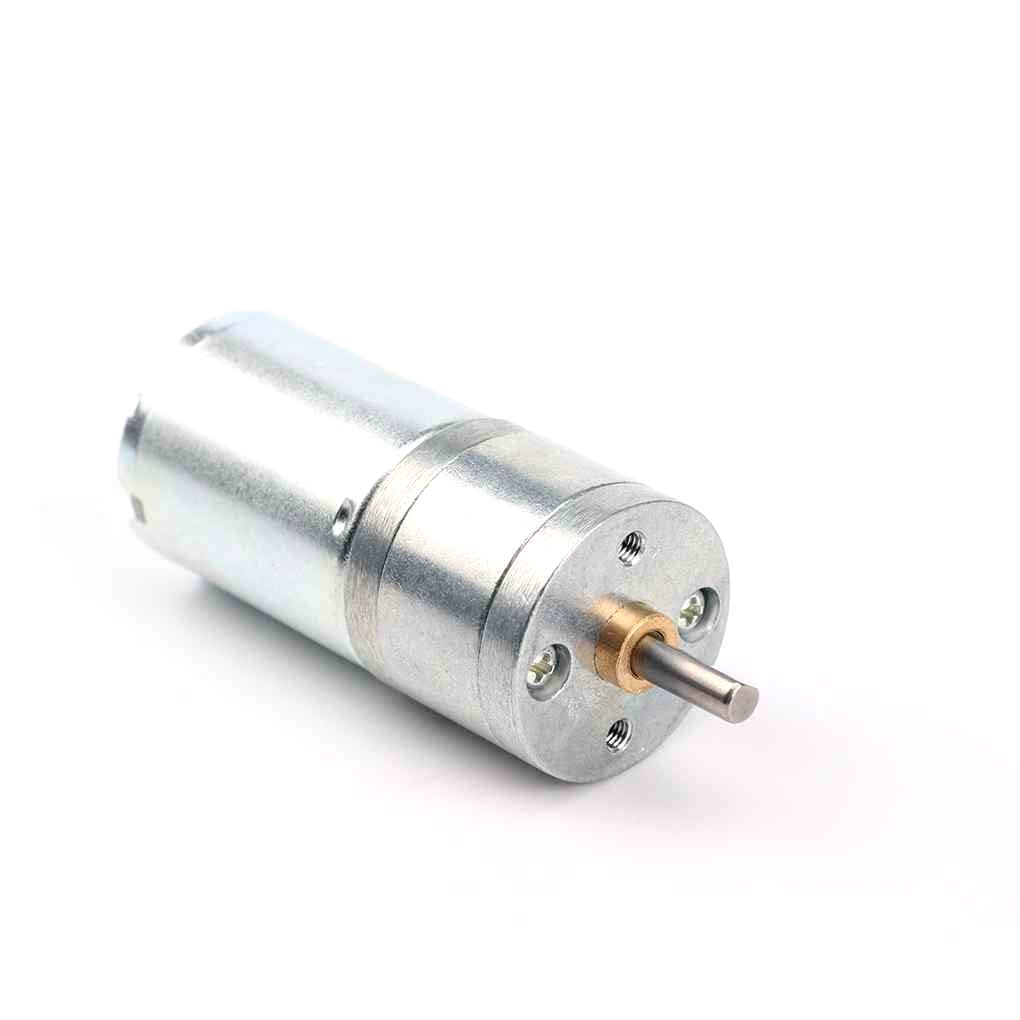
25GA-370 12V 12RPM DC Reducer Gear Motor
Ultra-low speed, high torque output. Perfect for slow precision drives, camera sliders, and automated linear systems where you need steady, powerful movement.
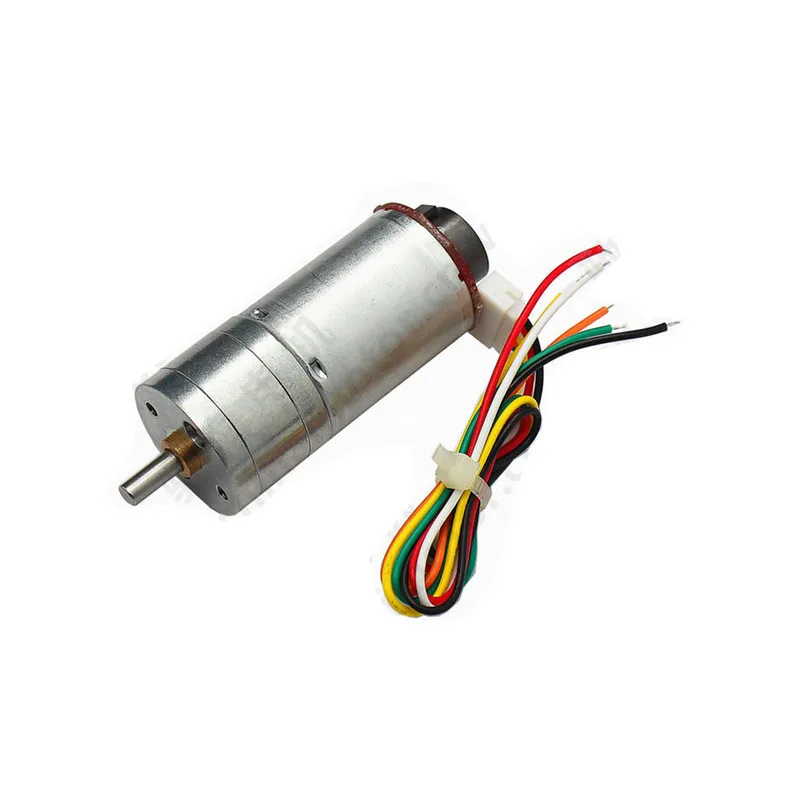
25GA-370 12V 12RPM DC Reducer Gear Motor with Encoder
Same excellent gear motor but with a built-in quadrature encoder for closed-loop position and speed control — ideal for precise robotics applications.
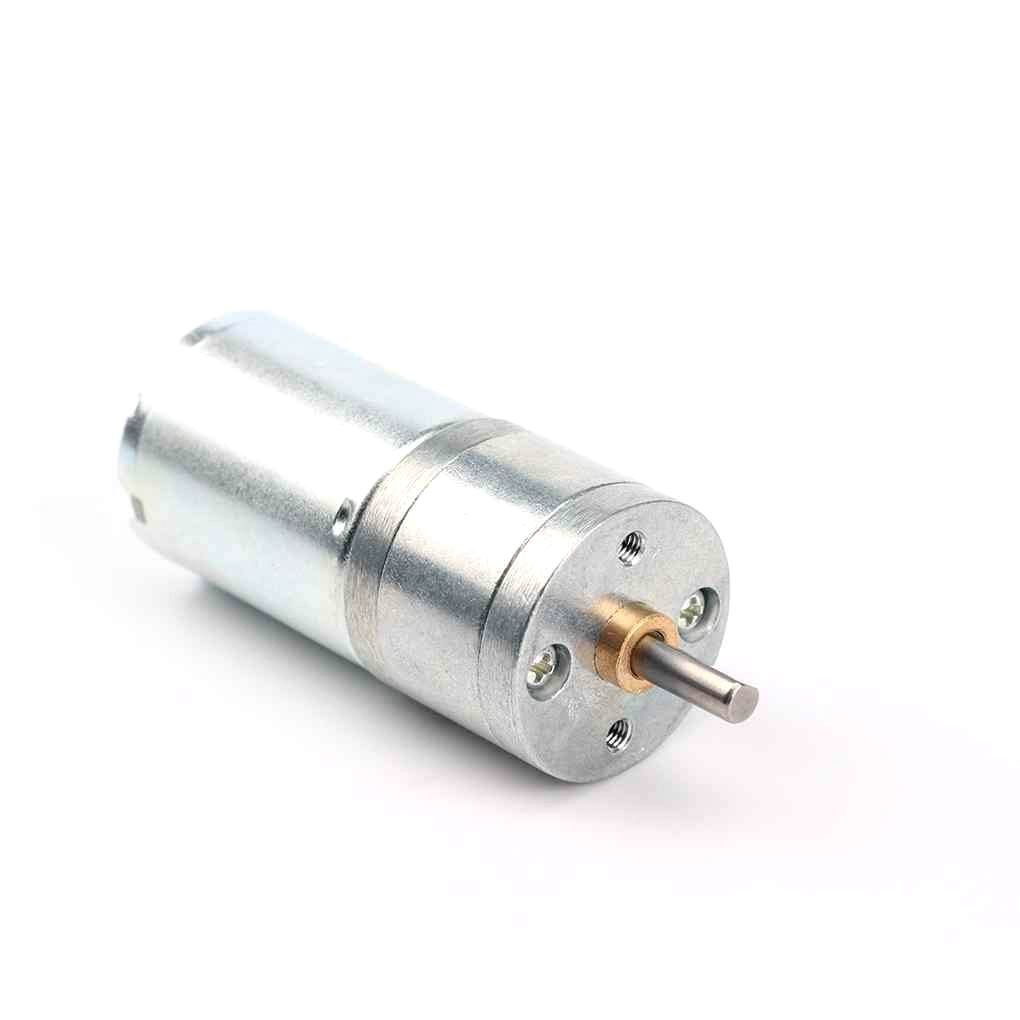
25GA-370 12V 1360RPM DC Reducer Gear Motor
Higher speed variant for applications needing faster rotation with moderate torque — great for conveyor lines, fans, or wheeled bots.

NEMA17 5.6 kg-cm Stepper Motor with Detachable Cable
High holding torque stepper — pair it with a planetary gearbox for extreme torque multiplication in 3D printers, CNC machines, and precision stages.
Frequently Asked Questions
Q1: What is the difference between gear ratio and reduction ratio?
They refer to the same thing in the context of speed reduction. A 1:100 gear ratio and a 100:1 reduction ratio both mean the output shaft spins 100 times slower than the motor shaft. Different datasheets use different conventions — always check which way the ratio is written.
Q2: Does a higher gear ratio always mean more torque?
Yes — within limits. As gear ratio increases, output torque increases proportionally (minus efficiency losses). However, extremely high gear ratios can suffer from backlash (slack in the gears) and the gearbox itself may become a weak point before the motor stalls.
Q3: Can I change the gear ratio of my gear motor?
For most compact hobby gear motors, the gearbox is fixed. For NEMA-type stepper motors, you can attach an external planetary gearbox module. For custom builds, you can design your own spur gear train using printable or purchased gears.
Q4: Why is my gear motor getting hot during operation?
Heat is normal under load but excessive heat indicates you’re running near or above the rated torque. Check your load torque against the motor’s rated torque, ensure you’re not exceeding the duty cycle, and verify the supply voltage is within spec. Refer to our troubleshooting guide on motor driver overheating for more details.
Q5: What is back-EMF and does it affect gear motor performance?
Back-EMF (back electromotive force) is the voltage generated by a spinning motor that opposes the supply voltage. As speed increases, back-EMF increases, which limits further acceleration — this is why motors reach a no-load equilibrium speed. In gear motors this effect is the same as in any DC motor, but the gearbox output speed is proportionally reduced, so back-EMF effects are less prominent at the output shaft.
Q6: Which is better — 12V or 6V gear motor for Arduino?
Arduino can only supply 5V/3.3V logic, so you always need a motor driver regardless of voltage. A 12V motor running at 12V gives full rated torque and speed. A 6V motor run at 5V will give roughly 83% of rated speed. For most Arduino robot projects, 12V motors with an L298N or TB6612FNG driver are the standard combination.
Conclusion
Calculating gear reduction motor output speed and torque boils down to three numbers: the no-load motor speed, the gear ratio, and the gearbox efficiency. With those, you can determine exactly what any gear motor will deliver at its output shaft — and from there, choose the right motor for your project with confidence.
The formulas are simple: Output Speed = Motor Speed ÷ GR and Output Torque = Motor Torque × GR × η. Run through the worked examples above to get comfortable with the calculations, then apply them to your own load requirements.
Whether you’re building a robotic arm, a slow-motion camera rig, or an automated gate opener, Zbotic has the gear motors, stepper motors, and motor drivers you need — shipped fast across India.
Ready to Build Your Next Motor Project?
Explore our full range of DC gear motors, stepper motors, and motor drivers — all available with fast shipping across India.







Add comment