
ExpressLRS (ELRS) Setup Guide: From Flashing to First Bind
ExpressLRS has taken the FPV drone community by storm — and for good reason. With packet rates up to 500Hz, sub-2ms latency, impressive range, and hardware that costs a fraction of traditional premium RC systems, ELRS is now the go-to choice for Indian FPV pilots and drone builders. But getting started for the first time can feel daunting: firmware flashing, binding phrases, Betaflight configuration…
Don’t worry. This comprehensive ExpressLRS setup guide walks you through every step from unboxing to your first successful bind — and beyond. Whether you’re flashing a Radiomaster Ranger module or setting up a tiny BetaFPV ELRS receiver, this guide covers it all.
1. What You Need Before Starting
Before you begin the ELRS setup process, make sure you have the following ready:
Hardware
- ELRS TX Module — e.g., Radiomaster Ranger Micro, BetaFPV Micro 2.4GHz module, or use a radio with internal ELRS (Radiomaster TX16S Mk2, Boxer, Pocket)
- ELRS Receiver — BetaFPV SuperP, Happymodel EP1/EP2, Radiomaster RP1/RP2, or any other ELRS-certified receiver
- Flight Controller — any FC running Betaflight 4.3+, iNav 5.0+, or ArduPilot
- USB cable for connecting FC to PC
- A PC/laptop running Windows or Linux (Mac also works)
Software to Install
- ELRS Configurator (from ExpressLRS GitHub releases)
- Betaflight Configurator (if using Betaflight)
- EdgeTX or OpenTX firmware on your radio (ELRS requires EdgeTX 2.8+ for best compatibility)
Important: Firmware Version Matching
This is the most common mistake beginners make. Your TX module and receiver MUST run the same major.minor ELRS firmware version (e.g., both 3.3.x). Mismatched versions will prevent binding. Always flash both TX and RX to the latest stable version together.
2. Installing ELRS Configurator
The ELRS Configurator is the desktop app used to build customised ELRS firmware for your specific hardware and flash it.
- Go to github.com/ExpressLRS/ExpressLRS-Configurator/releases
- Download the latest release for your OS (.exe for Windows, .AppImage for Linux, .dmg for Mac)
- On Linux:
chmod +x ExpressLRS-Configurator*.AppImage && ./ExpressLRS-Configurator*.AppImage - On Windows: Run the installer, allow it through Windows Defender if prompted
Once open, you’ll see a clean interface with fields for:
- ELRS version selection (always choose latest stable)
- Device target (your specific TX module or receiver model)
- Flashing method (WiFi, UART, BF passthrough)
- Build options (binding phrase, regulatory domain)
3. Flashing the TX Module
Your TX module may come with older ELRS firmware pre-installed. Always flash to the latest stable version before first use.
Method 1: WiFi Flashing (Easiest)
- If your TX module already has ELRS firmware (even older), you can use WiFi flashing
- Put your TX module into WiFi mode: In the ELRS Lua script on your radio, select WiFi Connectivity > Enable WiFi. Or for external modules, triple-click the button after booting
- The module creates a WiFi hotspot named ExpressLRS TX (password: expresslrs)
- Connect your PC to this hotspot
- In ELRS Configurator, select your device, enter your binding phrase, set regulatory domain to ISM2400 (for 2.4GHz) or AU_915 / EU_868 (for 900MHz, check your region)
- Choose WiFi as flash method and click Build & Flash
- The firmware uploads automatically; module reboots with new firmware
Method 2: UART Flashing
For modules that don’t have ELRS pre-installed (fresh hardware), you’ll need a UART adapter (FTDI board or similar):
- Connect TX/RX/GND/3.3V from FTDI to module’s programming pads
- Hold boot button while connecting USB to enter DFU mode
- In ELRS Configurator, select UART as flash method, choose your COM port
- Click Build & Flash
Regulatory Domain for India
For 2.4GHz ELRS in India, use ISM2400 — this is the globally unlicensed 2.4GHz ISM band, legal worldwide including India. For 900MHz, use AU_915 or EU_868 depending on your hardware and verify WPC compliance.
4. Flashing the Receiver
Receivers can be flashed in three ways:
Method 1: Betaflight Passthrough (Most Common)
This is the most convenient method for receivers already soldered into your drone:
- Connect receiver to your FC’s UART (TX→RX, RX→TX, 5V, GND)
- Connect FC to PC via USB, open Betaflight Configurator
- Do NOT arm or power any motors — USB power only
- In ELRS Configurator: select your receiver device target, enter your binding phrase (MUST match TX module), choose Betaflight Passthrough as flash method
- Select the correct COM port (your FC’s USB port)
- Click Build & Flash — ELRS Configurator talks to Betaflight, which then passes the flash through to the receiver
- Success! Receiver LED will indicate new firmware
Method 2: WiFi Flashing (Receiver)
Power the receiver (without flight controller fully booting if possible — some FCs boot in WiFi mode if the receiver doesn’t bind within 60 seconds). Connect to the ExpressLRS RX hotspot, navigate to 10.0.0.1 in your browser, and upload the firmware binary directly.
Method 3: UART Direct
Solder UART pads on the receiver to an FTDI adapter and flash directly. Needed for first-time flashing if receiver has no ELRS firmware.

35A V2.1 2-5S 4-in-1 Brushless ESC for RC Drone FPV Racing
4-in-1 ESC stack for FPV racing builds. BLHeli_S firmware, 35A per motor, 2-5S input. Essential component for any FPV build alongside your ELRS receiver.
View on Zbotic5. Understanding & Setting Binding Phrase
The binding phrase is one of ELRS’s most elegant features. Instead of traditional button-based binding, ELRS uses a unique passphrase that is compiled directly into the firmware of both your TX module and receivers. Any TX and RX with the same binding phrase will automatically bind — no buttons needed.
How It Works
- The binding phrase is hashed into the firmware during compilation
- TX and RX with matching phrases will always bind on power-up
- Choose a unique phrase only you know — prevents accidentally binding to someone else’s transmitter at a flying event
- You can have multiple drones with the same binding phrase — they all bind to your TX
Choosing Your Binding Phrase
Pick something memorable and unique. Examples: your callsign, your drone’s name, a favourite movie quote. Avoid generic phrases like “expresslrs” or “mybind” that others might accidentally use.
Important: Once set, you cannot change the binding phrase without reflashing the firmware. Keep a note of your phrase!
Setting It in ELRS Configurator
In the ELRS Configurator, after selecting your device, there’s a Binding Phrase field. Enter the same phrase for both TX and RX firmware builds. The phrase can be anything — it’s hashed, so even a single character difference makes them incompatible.
6. Betaflight Configuration for ELRS
Once your receiver is flashed and bound, you need to configure Betaflight to receive ELRS data.
Step 1: UART Configuration
- Open Betaflight Configurator and connect your FC
- Go to the Ports tab
- Find the UART your receiver is connected to (e.g., UART2)
- Enable Serial RX for that UART
- Click Save and Reboot
Step 2: Receiver Configuration
- Go to the Receiver tab
- Set Receiver Mode to Serial (via UART)
- Set Serial Receiver Provider to CRSF
- Click Save and Reboot
Step 3: Verify Channel Input
In the Receiver tab, you should now see channels moving when you move your sticks. Verify:
- Channel 1 = Roll (aileron)
- Channel 2 = Pitch (elevator)
- Channel 3 = Throttle
- Channel 4 = Yaw (rudder)
If channels are wrong, adjust the channel map (TAER, AETR, etc.) in the Receiver tab dropdown.
Step 4: Set Deadband & Stick Midpoints
In the Receiver tab, verify stick midpoints are at 1500 and endpoints at 1000/2000. If they’re off, trim/calibrate on your radio. Set a small deadband (3-5) to prevent stick drift at centre.
7. ELRS Lua Script on Your Radio
The ELRS Lua script runs on your EdgeTX/OpenTX radio and lets you change ELRS settings in real time without a laptop.
Installing the Lua Script
- Download the ELRS Lua script from the ExpressLRS GitHub (look for ELRSv3.lua or ELRS.lua)
- Copy it to your radio’s SD card at /SCRIPTS/TOOLS/
- Also copy the folder ELRS/ to /SCRIPTS/TOOLS/
- On your radio, go to System > Tools > ExpressLRS
Key Settings in the Lua Script
- Packet Rate (Hz) — 25Hz to 500Hz depending on your hardware
- TX Power — control output power from 10mW to max (250mW or 1W)
- Telemetry Ratio — how often telemetry data is returned (1:2 to 1:64)
- WiFi Connectivity — enable WiFi for OTA firmware updates from the field
- VTX Admin — control VTX frequency/power via telemetry
8. Choosing the Right Packet Rate
This is one of the most important tuning decisions in ELRS. The packet rate determines the tradeoff between latency/feel and maximum range.
| Rate (2.4GHz) | Latency | Max Range | Best For |
|---|---|---|---|
| 500Hz | ~2ms | ~5km | Racing, proximity freestyle |
| 250Hz | ~4ms | ~8km | Freestyle, general use |
| 100Hz | ~10ms | ~15km | Long range 2.4GHz |
| 50Hz | ~20ms | ~20km+ | Max range 2.4GHz |
For Indian pilots flying at a local ground: 500Hz for racing, 250Hz for general freestyle and cruising. For long-range autonomous missions (agricultural, survey), drop to 50-100Hz and use 900MHz ELRS if your module supports it.
9. Telemetry Setup
One of ELRS’s underrated features is bidirectional telemetry — your drone can send data back to your radio in real time.
What Telemetry Data You Get
- RSSI and Link Quality (LQ) — critical for monitoring signal health
- Battery voltage and current (if FC/ESC provides it via ESC telemetry or current sensor)
- GPS coordinates, altitude, speed (if GPS is connected)
- Flight mode
- VARIO (vertical speed)
Configuring Telemetry in EdgeTX
- In EdgeTX, create a new model or edit your existing model
- Go to Model Settings > Telemetry
- Click Discover new sensors — power on your drone (with props off!) and sensors will appear
- Add RSSI, LQ, BATT, GPS sensors to your telemetry screen
- Set a RSSI alarm at -85dBm or LQ alarm at 70% for low signal warning
Setting Telemetry Ratio
In the ELRS Lua script, Telemetry Ratio controls how often telemetry packets are returned. 1:8 is a good balance for most use cases. Higher ratios (1:2) give more frequent telemetry updates but slightly reduce range. For racing, set Off — you don’t need telemetry and every packet slot should be used for control.
10. Troubleshooting First Bind Issues
Receiver Not Binding
- Check binding phrase — TX and RX must have identical phrases. Even a single space difference breaks it
- Check firmware versions — major.minor version must match on both
- Check regulatory domain — must be the same on TX and RX
- Try switching TX to 25mW power temporarily — some receivers are picky at high power during initial bind
Betaflight Shows No Channel Input
- Verify UART is set to Serial RX in Ports tab
- Verify Receiver Mode is CRSF in Receiver tab
- Check wiring: receiver TX pin → FC RX pin, receiver RX pin → FC TX pin (TX/RX are swapped intentionally)
- Check receiver LED — should be solid (bound) not flashing (searching)
Channel Map is Wrong
In Betaflight Receiver tab, change the channel map to match your radio. EdgeTX defaults to AETR (Aileron, Elevator, Throttle, Rudder). Betaflight defaults to TAER. Common fix: change channel map to AETR in Betaflight to match EdgeTX output.
Telemetry Sensors Not Appearing
Ensure telemetry ratio is not set to OFF in ELRS Lua. Also check that your UART in Betaflight has both TX and RX pins connected — ELRS needs bidirectional UART, not just RX.
11. ELRS with ArduPilot / iNav
ELRS works excellently with ArduPilot and iNav for autonomous applications. The configuration is similar to Betaflight:
ArduPilot UART Configuration
- In Mission Planner, go to Config > Full Parameter List
- Set SERIALx_PROTOCOL = 23 (RCIN) for the UART connected to your ELRS receiver
- Set SERIALx_BAUD = 115 (115200 baud)
- Set RC_PROTOCOLS = 536 (enables CRSF/ELRS parsing)
- Reboot, and RC channels should appear in Mission Planner’s Radio Calibration page

3DR 100mW Radio Telemetry 915MHz for APM/PX4/Pixhawk
Complement your ELRS RC link with a dedicated MAVLink telemetry radio for mission monitoring. ELRS handles RC control; this handles GCS telemetry — the ideal autonomous drone combo.
View on ZboticiNav CRSF Configuration
In iNav Configurator, go to the Ports tab and enable MSP/UART on the receiver’s UART. In the Configuration tab, set Receiver type to SERIAL and provider to CRSF. iNav 5.0+ has improved ELRS/CRSF support with telemetry including GPS data sent back to your radio.
ELRS for Agricultural Drones
For ArduPilot-based agricultural drones, use ELRS 900MHz at 50-100Hz. This gives you maximum range for large field coverage while consuming less power. Combine ELRS RC link with a separate 3DR telemetry radio — ELRS for stick control, 3DR for MAVLink mission monitoring via Mission Planner.
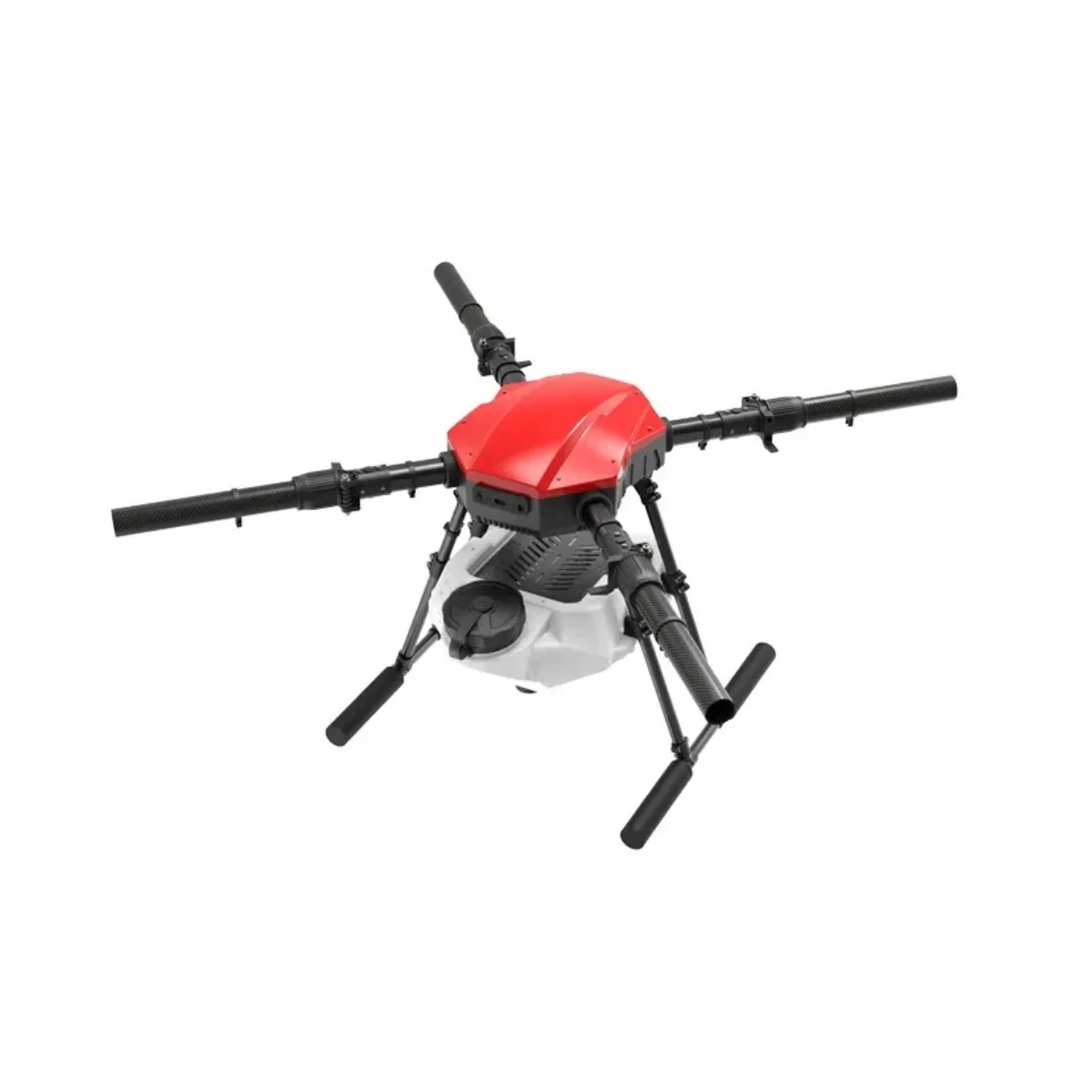
EFT E410P 10L 4 Axis Agricultural Drone Frame
Professional 10-litre agricultural drone frame with 4-axis layout. Designed for precision spraying missions. Pair with ArduPilot + ELRS for full autonomous operation.
View on ZboticFrequently Asked Questions
Q: Do I need the ELRS Configurator every time I fly?
No. The Configurator is only needed for firmware flashing. Once your TX and RX are flashed and bound with the same binding phrase, you just power on and fly. Day-to-day settings (packet rate, power) are adjusted via the Lua script on your radio.
Q: Can I use the same binding phrase on multiple receivers?
Yes, and this is actually how most pilots use ELRS. All your drones share the same binding phrase — they all auto-bind to your TX when powered on. Only one can be actively controlled at a time.
Q: What is LQ (Link Quality) and why is it important?
LQ is the percentage of ELRS packets successfully received in a given window (usually 100 packets). 100% LQ is perfect. Below 70% LQ, you may start losing control response. Monitor LQ via your radio’s telemetry screen. RSSI alone can be misleading — LQ gives the true picture of link health.
Q: Is ELRS compatible with FrSky radios?
Yes. FrSky Taranis and Horus radios running OpenTX can use ELRS via an external JR module bay module. However, EdgeTX (a community fork of OpenTX) offers better ELRS integration. It’s recommended to update to EdgeTX for the best ELRS experience.
Q: How do I update ELRS firmware in the field?
Using WiFi OTA. In the ELRS Lua script on your radio, go to WiFi Connectivity > Enable WiFi. Your TX module broadcasts a WiFi hotspot. Connect your phone/laptop, go to 10.0.0.1, and upload the new firmware file (.bin). No laptop or USB cable needed. For receivers, use Betaflight passthrough from the field if you have a laptop with Betaflight Configurator.
Q: Why is my ELRS receiver getting very hot?
If your TX is transmitting at maximum power (250mW or 1W) at close range, the receiver’s AGC can get stressed. Reduce TX power to 25-50mW for close range flying — this is also better for the radio hardware longevity. Dynamic power (available in ELRS 3.x Lua) automatically adjusts TX power based on RSSI — use this feature for field flying.
Build Your ELRS-Powered FPV Drone
Find ESCs, FPV cameras, propellers, and all drone components at Zbotic. Fast delivery across India — everything you need to complete your ELRS build in one place.
Shop at Zbotic Now






Add comment