
EV Charger Types: CC-CV Charging for Li-Ion and LiFePO4
Choosing the right EV charger with CC-CV charging for your Li-Ion or LiFePO4 battery pack is one of the most important decisions in any electric vehicle build. Use the wrong charger and you risk undercharging (reducing range), overcharging (destroying cells), or worse — a thermal runaway fire. This guide explains how Constant Current – Constant Voltage (CC-CV) charging works, the key differences between chargers for Li-Ion versus LiFePO4 packs, and what specifications to look for when buying in India.
Table of Contents
- What Is CC-CV Charging and Why Does It Matter?
- CC-CV Profile for Li-Ion Batteries
- CC-CV Profile for LiFePO4 Batteries
- Types of EV Chargers Available in India
- How to Choose the Right Charger for Your Pack
- Charging Safety Best Practices
- Common Charging Mistakes and How to Avoid Them
- Frequently Asked Questions
What Is CC-CV Charging and Why Does It Matter?
CC-CV stands for Constant Current – Constant Voltage, the two-phase charging algorithm used by virtually all modern lithium battery chargers. Understanding this process is essential for anyone working with e-bike, e-scooter, or electric vehicle battery packs.
Phase 1 — Constant Current (CC): The charger delivers a fixed current (e.g., 5A) regardless of battery voltage. During this phase, voltage rises steadily as the cells fill up. This is the bulk charging phase and accounts for roughly 80% of the total charge delivered.
Phase 2 — Constant Voltage (CV): Once the battery reaches its target voltage (e.g., 4.2V/cell for Li-Ion), the charger holds voltage steady while current gradually tapers down. Charging is considered complete when current drops below a termination threshold — typically C/20 (5% of rated capacity).
Why does this two-phase approach matter? Lithium cells are extremely voltage-sensitive. Exceeding the maximum charge voltage by even 100 mV per cell accelerates electrolyte decomposition and can lead to capacity fade, gas venting, or in severe cases, fire. The CV phase prevents this by capping voltage precisely while the current naturally self-limits as cells approach full charge.
CC-CV Profile for Li-Ion Batteries
Li-Ion batteries (using 18650, 21700, or pouch cells) follow a specific voltage window that the charger must respect exactly:
- Nominal cell voltage: 3.6V–3.7V
- Full charge (CV target): 4.2V per cell (some premium cells: 4.35V)
- Minimum discharge cutoff: 2.5V–3.0V per cell
- Recommended charge rate (CC phase): 0.5C to 1C (e.g., 5A for a 10Ah pack)
For a common 36V Li-Ion e-bike pack (10 cells in series), the full charge voltage is 10 × 4.2V = 42V. Your charger’s output voltage must be exactly 42V. A 48V pack (13S) charges to 54.6V, and a 24V pack (7S) charges to 29.4V.
Temperature sensitivity: Li-Ion cells should only be charged between 0°C and 45°C. Charging below 0°C causes lithium plating on the anode — an irreversible degradation mechanism. In Indian winters, this is rarely an issue, but avoid charging packs that have just come from cold storage (e.g., an air-conditioned room at 18°C after a night parked outside).
CC-CV Profile for LiFePO4 Batteries
LiFePO4 (Lithium Iron Phosphate) batteries use a different voltage window from standard Li-Ion. This is the most common mistake Indian EV hobbyists make — using a Li-Ion charger on a LiFePO4 pack, which will chronically overcharge the cells.
- Nominal cell voltage: 3.2V–3.3V
- Full charge (CV target): 3.6V–3.65V per cell
- Minimum discharge cutoff: 2.5V per cell
- Recommended charge rate: 0.2C to 0.5C for maximum cycle life; up to 1C acceptable
For a 24V LiFePO4 pack (8 cells in series, commonly called 8S), full charge voltage = 8 × 3.65V = 29.2V. For a 48V LiFePO4 pack (16S), full charge = 16 × 3.65V = 58.4V.
LiFePO4 charging advantages:
- Much flatter discharge curve — voltage stays nearly constant from 20% to 90% state of charge
- Tolerates higher temperatures during charging (up to 55°C) — critical for Indian summers
- 2000–4000 charge cycles vs 500–1000 for standard Li-Ion
- Less sensitive to overcharge — still requires correct charger, but consequences of mild overcharge are less severe
Types of EV Chargers Available in India
The Indian market offers several categories of lithium battery chargers for EV applications:
1. Fixed-Voltage Smart Chargers (Most Common)
These are the standard chargers supplied with e-bikes and e-scooters. They are factory-set for a specific voltage (e.g., 42V for 36V Li-Ion) and implement CC-CV automatically. They typically charge at 2A–5A and include LED indicators for charging/full status. Cost: ₹500–₹2,000 in India.
2. Adjustable CC-CV Power Supplies
Laboratory-style power supplies (like the popular DPS5020 or WANPTEK units) allow you to set both voltage and current. These are invaluable for custom pack charging and cell testing. You manually set CV voltage to the pack’s maximum and CC current to your desired charge rate. Cost: ₹1,500–₹5,000 for a 20A–50A capable unit.
3. Multi-Chemistry Programmable Chargers
Advanced chargers (popular in the RC and EV hobby community) support Li-Ion, LiFePO4, NiMH, and lead-acid in one unit. They allow you to set cell count, chemistry, charge rate, and storage charge level. These are ideal for workshops and serious builders who work with multiple battery types.
4. On-Board Chargers (OBC)
Used in higher-power EVs (e-motorcycles, electric cars, three-wheelers), OBCs are installed in the vehicle and accept AC mains input. They convert 230V AC to the appropriate DC voltage for the pack. Industrial OBCs from 300W to 3.3kW are available from Indian EV component suppliers.
How to Choose the Right Charger for Your Pack
Follow this decision process when selecting a charger for your EV battery:
- Identify your battery chemistry: Li-Ion or LiFePO4? These require different CV voltages. Never mix them up.
- Count your series cells (S rating): Multiply by the per-cell full charge voltage (4.2V for Li-Ion, 3.65V for LiFePO4) to get your required charger output voltage.
- Determine acceptable charge time: Divide pack capacity (Ah) by charger current (A) to get approximate charge time. A 20Ah pack at 5A takes ~4 hours. At 10A, ~2 hours.
- Check charger termination: Ensure the charger has automatic shutoff at full charge (CV current tapering). Basic chargers without this will overcharge and damage cells.
- Verify connector compatibility: Indian market chargers commonly use XLR 3-pin, DC barrel, or Anderson PowerPole connectors. Match to your pack’s charging port.
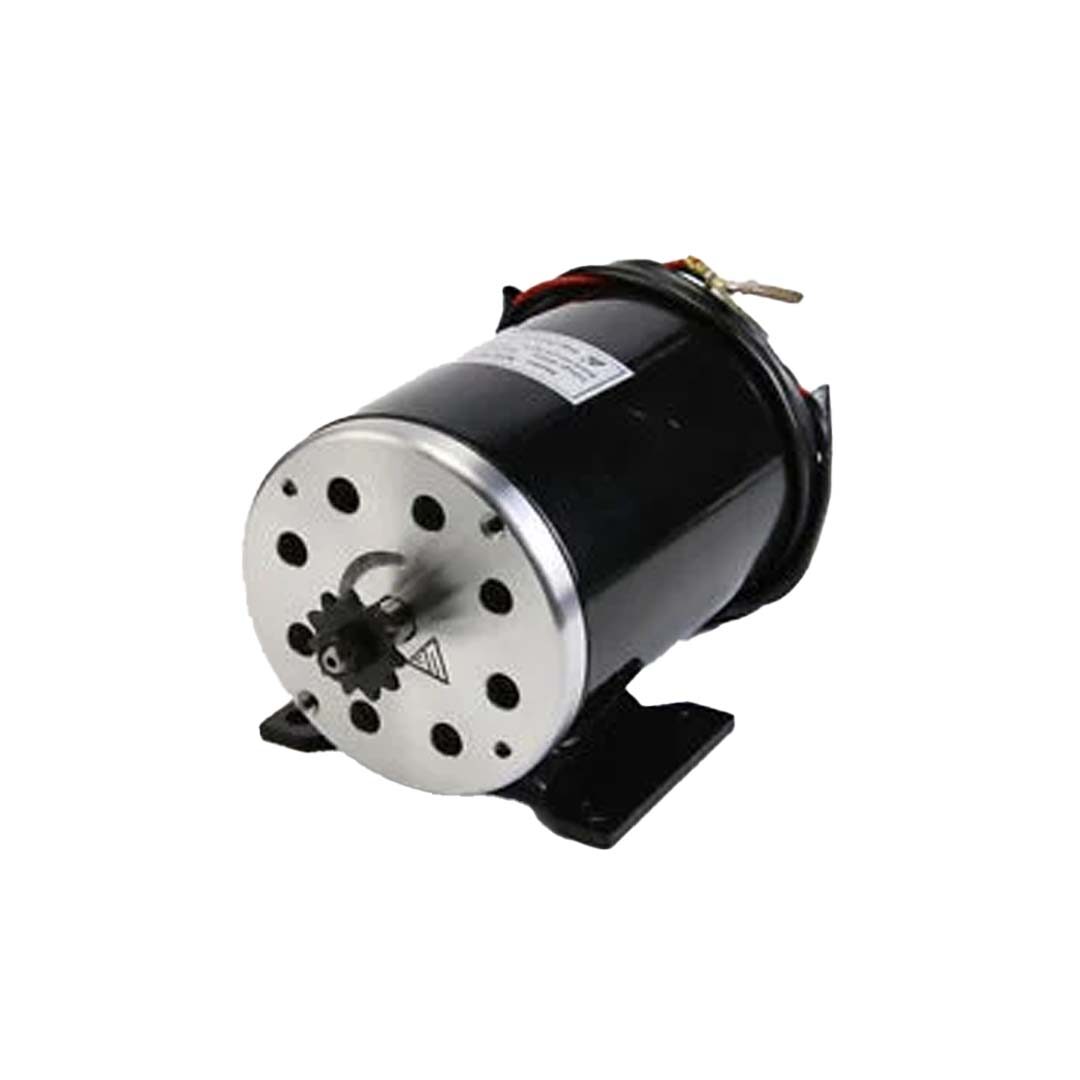
Ebike 500W 24V DC Motor (MY1020)
500W 24V motor for scooters, go-karts, and e-bikes. Understanding your motor’s voltage is the first step in selecting the correct battery pack and charger combination.
Charging Safety Best Practices
Lithium battery fires are rare but devastating when they occur. Follow these practices every time you charge:
- Never leave charging unattended overnight: Charge during the day when you can check periodically. A smoke detector in your charging area is a good precaution.
- Charge in a well-ventilated area: Even though LiFePO4 cells release much less gas than other chemistries, good ventilation is always best practice.
- Never charge a hot pack: If the battery is warm from riding, let it cool to ambient temperature (at least 30 minutes in Indian summer conditions) before connecting the charger.
- Use a charger with overtemperature protection: Quality chargers monitor charger temperature and throttle output if they overheat — important for the Indian climate.
- Inspect connectors regularly: Oxidized or loose charging connectors create resistance, generate heat, and can cause fires. Clean and tighten connectors every few months.
- Charge on a non-combustible surface: A ceramic tile, concrete floor, or metal shelf — not wood or carpet.
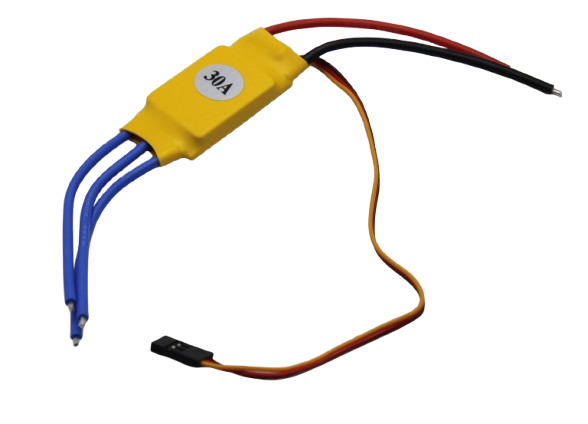
30A BLDC ESC Brushless Electronic Speed Controller
A quality ESC with built-in low-voltage cutoff protects your battery from deep discharge — working in tandem with a good charger to maximize battery life in EV builds.
Common Charging Mistakes and How to Avoid Them
These are the errors most frequently made by Indian EV enthusiasts when it comes to charging:
- Using a Li-Ion charger on LiFePO4 pack: A 42V charger on a 24V/8S LiFePO4 pack will deliver 42V instead of the correct 29.2V — massively overcharging every cell. Always double-check chemistry and voltage before connecting any charger.
- Ignoring the BMS: The BMS is your last line of defense against overcharge and over-discharge. If the BMS trips and disconnects the pack, do not bypass it — diagnose the root cause instead.
- Charging at maximum current always: Consistently charging at 1C or above accelerates capacity fade. For packs that will be used daily, charge at 0.5C for longer cycle life.
- Storing at full charge: Lithium cells stored at 100% state of charge degrade faster. For storage beyond two weeks, charge to 50–60% (storage voltage). Most programmable chargers have a storage charge mode.
- Using unbranded chargers: Cheap unbranded chargers often lack proper CC-CV implementation or have inaccurate voltage output. Invest in a quality charger — it is far cheaper than replacing a battery pack.
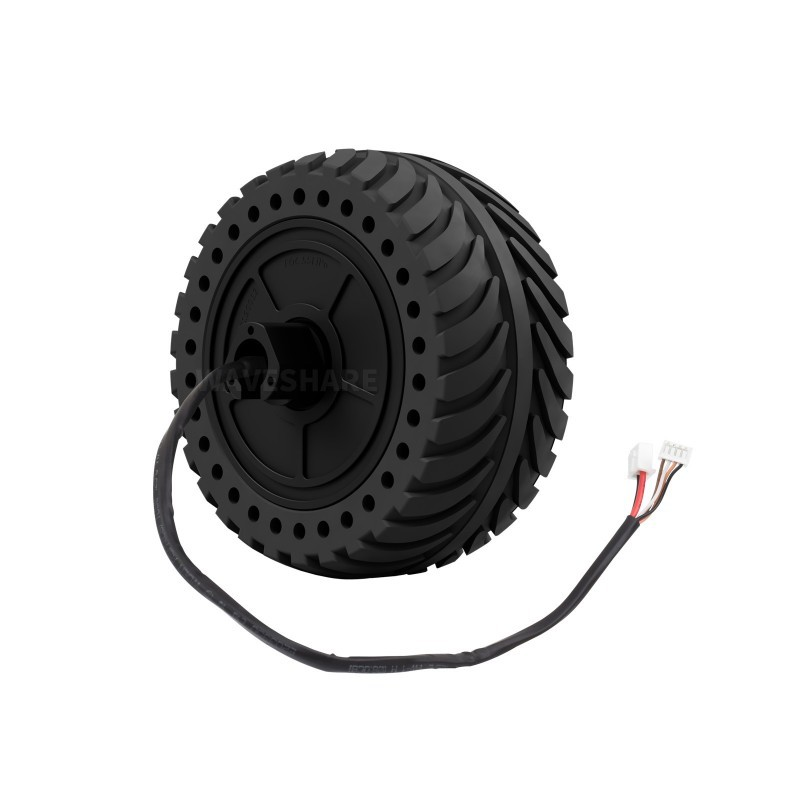
Waveshare DDSM115 Direct Drive Hub Motor
Hub motor for EV and robotics applications. When pairing with a battery and charger, always match the motor’s operating voltage to the nominal pack voltage for correct system design.
Frequently Asked Questions
Can I use the same charger for Li-Ion and LiFePO4?
No. They require different CV termination voltages. Using a Li-Ion charger (4.2V/cell) on LiFePO4 (3.65V/cell) will overcharge and potentially damage the pack. Always use a chemistry-specific charger or a programmable multi-chemistry unit.
What does the C-rate mean for charging?
C-rate is charge/discharge current expressed as a multiple of capacity. A 10Ah battery at 1C charges at 10A. At 0.5C it charges at 5A. Lower C-rates are gentler on cells and extend cycle life — charge at 0.5C whenever time permits.
How do I know when my battery is fully charged?
A quality smart charger will have an LED or display indicator that changes from red (charging) to green (full). Technically, charging is complete when current in the CV phase drops below approximately 5% of the rated pack capacity (C/20).
Is it safe to charge LiFePO4 batteries in Indian summers (40–45°C ambient)?
LiFePO4 is significantly more heat-tolerant than standard Li-Ion. Charging up to 45°C ambient is acceptable for LiFePO4, though it will be slower as the BMS may throttle charge current. Keep the charging area shaded and well-ventilated.
Why is my battery getting warm during charging?
Some warmth is normal — lithium cells have internal resistance that generates heat during charge. The pack should be warm, not hot. If the battery or charger becomes uncomfortably hot to touch, stop charging immediately and check for a faulty cell or excessive charge rate.
Conclusion: Choose the Right CC-CV Charger for Long Battery Life
Understanding CC-CV charging for Li-Ion and LiFePO4 EV batteries is not just technical knowledge — it directly impacts how long your battery pack lasts and how safely your EV operates. The key takeaways: use chemistry-specific chargers, match charger voltage precisely to your series cell count, charge at moderate rates, and never skip the BMS. A battery pack that costs ₹10,000–₹25,000 deserves an equally good charger to protect it.
Browse EV motors, ESCs, and related components at Zbotic.in’s E-Bikes & Electric Vehicles collection with delivery across all Indian states.






Add comment