
When searching for the most affordable cheap IoT WiFi MCU for India, two names that often come up are the ESP32 and the W600. The ESP32 needs no introduction — it has dominated the Indian maker market for years. The W600 is a lesser-known Chinese WiFi+MCU chip that promises similar capabilities at a potentially lower cost. In this ESP32 vs W600 comparison we will look at raw specifications, software ecosystem, community support, pricing in India, and real-world suitability for different project types.
Overview: Meet the Contenders
ESP32
Designed by Espressif Systems (Shanghai), the ESP32 is a dual-core Xtensa LX6 processor running at up to 240MHz. It integrates 802.11 b/g/n Wi-Fi and Bluetooth 4.2/BLE on a single chip. Since its launch in 2016 it has become the default choice for IoT hobbyists and professionals worldwide, including a massive user base in India. The chip is manufactured at TSMC 40nm and is available in dozens of module form factors from multiple vendors (Espressif, Ai Thinker, DOIT, etc.).
W600
The W600 is a Wi-Fi SoC developed by Winner Micro (Winnermicro) in China. It uses a Cortex-M3 core running at up to 80MHz, integrates 802.11 b/g/n Wi-Fi, and includes hardware TCP/IP stack support. It is sold primarily through WinnerMicro’s own module ecosystem (TB-01, W600-PICO, etc.) and has seen some adoption in the low-cost smart home product market in China. In India it is significantly less common than ESP32 or ESP8266.
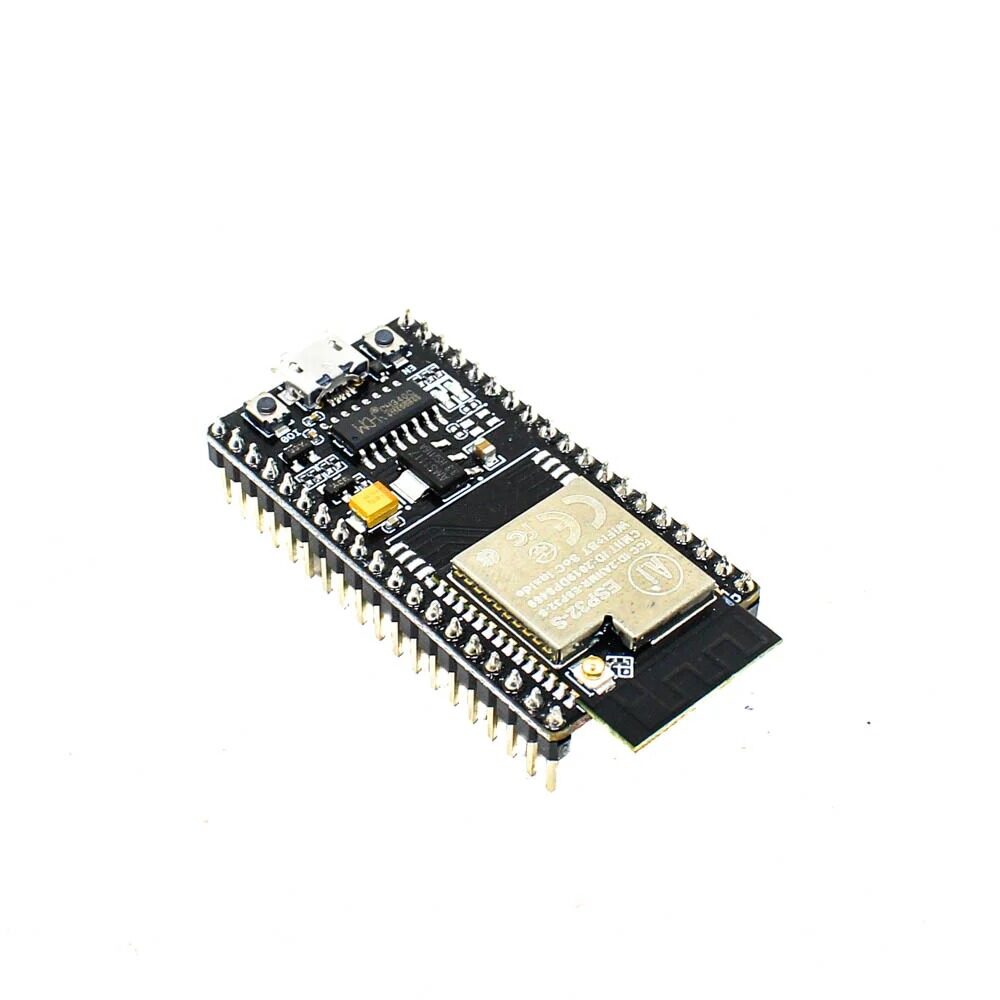
Ai Thinker NodeMCU-32S-ESP32 Development Board – IPEX Version
The most widely used ESP32 development board in India — dual-core, Wi-Fi+BT, 4MB flash, and supported by every major IoT framework and library.
Detailed Specs Comparison
| Feature | ESP32 | W600 |
|---|---|---|
| CPU | Dual-core Xtensa LX6, up to 240MHz | Single-core Cortex-M3, 80MHz |
| SRAM | 520KB + 8MB PSRAM support | 288KB |
| Flash | External 4MB–16MB SPI flash | 1MB internal flash |
| Wi-Fi | 802.11 b/g/n 2.4GHz | 802.11 b/g/n 2.4GHz |
| Bluetooth | BT Classic 4.2 + BLE | None |
| GPIO | 34 (various modules) | 18 |
| ADC | 18 channels, 12-bit | 4 channels, 12-bit |
| I2C / SPI / UART | 2 / 4 / 3 | 1 / 2 / 2 |
| I2S | Yes (2 controllers) | No |
| DAC | 2 channels, 8-bit | No |
| Touch Sensor | Yes (10 pins) | No |
| Crypto Hardware | AES, SHA, RSA, ECC | AES, SHA1 |
| Deep Sleep Current | ~10µA | ~10µA |
| Operating Voltage | 2.3V–3.6V | 3.3V |
The spec sheet verdict is clear: the ESP32 has roughly three times the processing power, more RAM, Bluetooth, more GPIO, I2S audio, and hardware touch sensors — all advantages that make it suitable for a much wider range of projects.
Software Ecosystem and IDE Support
ESP32 Software Support
The ESP32’s software ecosystem is unmatched in the budget microcontroller world:
- Arduino IDE: Full support via official Espressif Arduino Core (ESP-IDF wrapped)
- ESP-IDF: Espressif’s professional FreeRTOS-based SDK with hundreds of components
- MicroPython: Excellent support, large community, thousands of libraries
- CircuitPython: Adafruit’s beginner-friendly Python for ESP32-S2 and S3
- Tasmota: Popular smart home firmware, supports MQTT and Home Assistant out of the box
- ESPHome: YAML-based Home Assistant integration used by hundreds of thousands of installations
- WLED: Industry-leading LED strip firmware
- FreeRTOS: Real-time OS included in ESP-IDF
W600 Software Support
The W600’s software options are much more limited:
- WinnerMicro SDK: The official C SDK, documentation primarily in Chinese
- Arduino IDE: Community-maintained Arduino core exists but has far fewer tested libraries
- MicroPython: Experimental port exists but is not production-ready
- Tasmota / ESPHome / WLED: Not supported
The W600’s biggest weakness is software ecosystem. If you want to use ESPHome, WLED, Tasmota, or MicroPython — the ESP32 is the only viable choice.
Community, Documentation, and India Availability
For Indian makers, community support and local availability are critical factors. When something goes wrong at midnight before a project deadline, you need Stack Overflow answers, YouTube tutorials, and local spares.
ESP32: Has an enormous global community. Search any ESP32 problem and you will find solutions in English, Hindi, and Tamil. Components are available at every major Indian electronics distributor, including Zbotic, Robu, Robocraze, and local shops in SP Road (Bengaluru) or Lamington Road (Mumbai).
W600: Community is primarily Chinese-language. English documentation exists but is sparse. In India, W600 modules are not available at most local shops and must be imported from China (AliExpress), adding 2–4 weeks of delivery time and import duties.
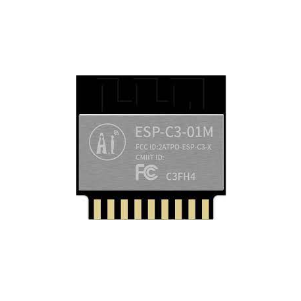
Ai Thinker ESP32-C3-01M Wi-Fi + BLE Module
If cost is your main concern, the ESP32-C3 is a cheaper ESP32 variant that undercuts W600 on price while keeping the entire ESP ecosystem — Arduino, MicroPython, ESPHome.
Power Consumption Comparison
For battery-powered IoT devices, power consumption is the deciding factor. Both chips are capable of very low deep sleep currents:
| Mode | ESP32 | W600 |
|---|---|---|
| Deep Sleep | ~10µA | ~10µA |
| Light Sleep | ~800µA | ~2mA |
| Modem Sleep (Wi-Fi off) | ~20mA | ~15mA |
| Active (Wi-Fi TX peak) | ~260mA | ~300mA |
In deep sleep the two chips are essentially equal. For active Wi-Fi use, the ESP32 is slightly more efficient due to its more modern modem design. The W600’s higher light sleep current is a disadvantage for always-on battery sensors.
Price Comparison in India
Pricing is where the W600 is supposed to have an advantage, but the reality in India is more nuanced:
- ESP32 DevKit (full board): ₹250–₹350 from Indian sellers including Zbotic
- ESP32-C3 module (bare module): ₹90–₹150 from Indian sellers — this is the apples-to-apples comparison with bare W600 modules
- W600 module (bare): Approximately ₹60–₹100 from AliExpress — but you must import it yourself, pay shipping (₹200+ for small orders), wait 3–4 weeks, and handle customs
When you account for import cost, shipping time, and the risk of DOA units without local warranty support, the W600’s price advantage disappears for most Indian buyers. The ESP32-C3 from Zbotic is almost as cheap and comes with next-day shipping and a proper returns process.
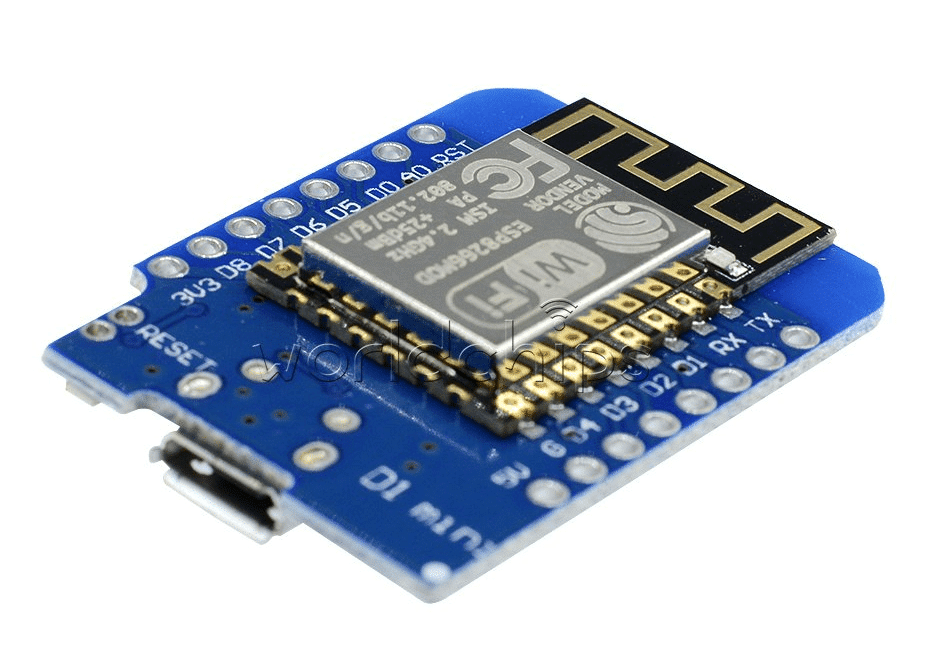
D1 Mini V2 NodeMCU 4M Bytes Lua Wi-Fi IoT Development Board (ESP8266)
If budget is your sole concern, the D1 Mini ESP8266 is a proven, ultra-cheap alternative available locally in India — thousands of libraries and tutorials available.
Which Should You Choose for Your Project?
Here is our honest recommendation matrix for Indian IoT builders:
| Use Case | Recommended | Reason |
|---|---|---|
| Home automation / ESPHome | ESP32 | W600 not supported at all |
| LED strip controller (WLED) | ESP32 | W600 not supported |
| Audio streaming (I2S) | ESP32 | W600 has no I2S |
| Simple sensor → MQTT gateway | ESP32-C3 or ESP8266 | Cheaper than ESP32, same ecosystem |
| MicroPython projects | ESP32 | W600 MicroPython is experimental |
| Mass production (custom PCB) | ESP32-C3 or W600 (if you can source in bulk) | Cost per unit matters at volume |
| Learning/education | ESP32 | Vastly more tutorials and Hindi resources |
Our verdict: For virtually every Indian IoT maker or hobbyist, the ESP32 or its variants (ESP32-C3, ESP32-S3) are the right choice. The W600 makes sense only for commercial product manufacturers who can source it in large volumes and have engineering resources to work with Chinese-language SDKs. If cost is your primary concern, choose the ESP32-C3 — it is nearly as affordable as the W600 while keeping the entire ESP ecosystem intact.
Frequently Asked Questions
Is the W600 better than ESP8266?
On paper the W600 has a slightly faster CPU (80MHz Cortex-M3 vs 80MHz Xtensa LX106) and similar Wi-Fi capability. However, the ESP8266’s vastly superior software ecosystem and Indian availability make it the better practical choice in almost all cases.
Can I use W600 with Arduino IDE?
A community Arduino core for W600 exists on GitHub but is not officially maintained and has limited library compatibility. Do not expect Arduino libraries designed for ESP32/ESP8266 to work on W600 without modification.
What is the cheapest Wi-Fi MCU available in India with good support?
The ESP32-C3 module (like the Ai Thinker ESP32-C3-01M) is currently the most cost-effective option in India with full software ecosystem support. It is available locally from Zbotic and costs under ₹150.
Does W600 support Bluetooth?
No — the W600 is Wi-Fi only. If you need Bluetooth or BLE alongside Wi-Fi, the ESP32 (classic BT + BLE) or ESP32-C3 (BLE 5.0 only) are your only options at this price point.
Buy ESP32 and ESP8266 Modules in India
Skip the import hassle. Zbotic stocks the full range of Espressif ESP32 and ESP8266 modules with fast delivery across India, genuine components, and proper support.



Add comment