
Imagine you’ve built a motorised lift, a robotic arm, or an electric gate. The motor moves your load to the desired position — but the moment power is cut, gravity or external forces try to pull it back. This is the problem that an electromagnetic brake for a DC motor solves. It holds the load exactly where you left it, even when the motor is powered off, and releases instantly when you want to move again.
In this guide, we’ll cover how electromagnetic brakes work, the key electrical and mechanical specifications, wiring diagrams, safety considerations, and the types of motors and projects that benefit most from electromagnetic braking in India’s robotics and automation ecosystem.
How an Electromagnetic Brake Works
An electromagnetic (EM) brake uses the principle of electromagnetism to create or release a mechanical braking force. At its core, it consists of three parts:
- Electromagnet coil: When energised, it creates a magnetic field.
- Armature plate: A ferromagnetic disc attached to the rotating shaft.
- Friction pad / rotor disc: The surface that armature clamps against to create braking force.
Power-Off (Fail-Safe) vs Power-On Operation
This is the most critical distinction to understand when selecting an electromagnetic brake:
Spring-engaged (Fail-Safe / Power-Off) brakes: A spring holds the brake engaged by default. When you apply voltage to the coil, the electromagnet overcomes the spring force and releases the brake. If power fails, the spring re-engages the brake automatically. This is the safest design for vertical loads, elevators, and cranes.
Electrically-engaged (Power-On) brakes: The brake is released by default. Applying voltage engages the braking. Used in applications where you want braking only when commanded — for example, emergency stop systems.
For most DIY safety-critical builds (lifts, robotic arms holding weight), always prefer spring-engaged fail-safe brakes. If your Arduino crashes or the power cuts out, the brake engages automatically and prevents the load from dropping.
Types of Electromagnetic Brakes
1. Spring-Applied Disc Brakes
The most common type for DC motor applications. A disc (rotor) is keyed to the motor shaft, and spring-loaded friction pads clamp it when power is off. Simple, reliable, widely available.
2. Electromagnetic Tooth Clutch-Brakes
Used in industrial servo systems. The teeth mesh together for a positive, non-slip lock. Higher holding torque per unit size, but noisier engagement.
3. Hysteresis Brakes
Use magnetic hysteresis loss in a specially treated rotor to create braking torque. Very smooth and controllable, used in winding machines and tension control. More expensive, less common in hobbyist/maker markets.
4. Eddy Current Brakes
Non-contact braking using induced eddy currents in a conductor moving through a magnetic field. No friction wear, but cannot hold torque at zero speed (only effective while moving). Used in train braking and dynamometers.
Key Specifications to Understand
| Specification | What It Means | Typical Value |
|---|---|---|
| Static Holding Torque | Torque the brake can resist when engaged | 1–100 N·m |
| Coil Voltage | DC voltage needed to energise/release the brake | 12V, 24V, 48V DC |
| Coil Power (W) | Steady-state power consumption | 3W – 30W |
| Engagement Time | Time from power-off to full braking torque | 10–100 ms |
| Release Time | Time from power-on to full release | 5–50 ms |
| Air Gap | Clearance between armature and magnet face when released | 0.1–0.5 mm |
Important: Torque Safety Factor
Always choose a brake with a static holding torque at least 1.5–2× your maximum expected load torque. Under dynamic stopping (stopping a rotating load), the brake must absorb kinetic energy — the required dynamic torque can be 2–4× the static holding requirement.
Wiring an EM Brake to a DC Motor
Wiring an electromagnetic brake with a DC motor requires a few important considerations beyond just connecting wires:
Basic Wiring Topology
The motor and brake are typically wired to separate circuits:
- Motor circuit: Motor driver (L298N, BTS7960, etc.) → Motor windings
- Brake circuit: Relay or MOSFET switch → Brake coil
- Both share a common ground
Flyback Diode — Non-Negotiable
An electromagnetic brake coil is an inductor. When you cut power to the coil, it generates a voltage spike (back-EMF) that can be 10–100× the supply voltage. This will destroy your relay contacts, MOSFET, or Arduino I/O pin without a flyback diode (also called a freewheeling or snubber diode).
CRITICAL: Always place a 1N4007 (or similar) flyback diode across the brake coil terminals, with the cathode on the positive side. Skipping this will damage your control electronics.
Relay vs MOSFET Control
- Relay: Simple, electrically isolated, no need for logic-level considerations. But slow (5–15ms switching time) and mechanical wear over time. Use for infrequent brake switching.
- MOSFET (e.g., IRLZ44N, BTS117): Fast switching, no mechanical wear, PWM-capable for soft engagement. Requires proper gate drive voltage. Use for frequent or precise brake control.
Timing Sequence for Fail-Safe Operation
The correct sequence when starting/stopping a motor with a spring-engaged brake:
- Starting: Energise the brake coil first → wait for release time (e.g., 20ms) → then command the motor to move.
- Stopping: Command the motor to stop (or slow down) → wait for motor to decelerate → then de-energise the brake coil.
If you cut brake power while the motor is still spinning at speed, the friction plates engage a moving load — generating heat and wearing the pads rapidly. Always stop or slow the motor first.
Controlling the Brake with a Microcontroller
For Arduino or ESP32-based projects, the control logic is straightforward. Here’s the general approach:
Arduino Control via MOSFET
// Pin definitions
const int brakePin = 7;   // MOSFET gate control (HIGH = brake released)
const int motorPWM = 9;   // PWM to motor driver
const int motorDir = 8;   // Direction pin

void releaseBrake() {
  digitalWrite(brakePin, HIGH); // Energise coil → release spring → motor free
  delay(25); // Wait for mechanical release
}

void applyBrake() {
  analogWrite(motorPWM, 0); // Stop motor first
  delay(50);                // Let motor decelerate
  digitalWrite(brakePin, LOW); // De-energise → spring clamps brake
}

void setup() {
  pinMode(brakePin, OUTPUT);
  pinMode(motorPWM, OUTPUT);
  pinMode(motorDir, OUTPUT);
  applyBrake(); // Start in braked state
}
Emergency Stop Integration
Wire an emergency stop button to cut power to the brake coil relay. When pressed, the spring engages the brake regardless of what the microcontroller is doing. This is true hardware-level fail-safe that software alone cannot provide.
Safety Considerations & Fail-Safe Design
Electromagnetic brakes in safety-critical applications demand careful thought about failure modes:
Power Failure Analysis
- Spring-engaged brake + power failure: Brake engages. Load is held. Safe.
- Power-on brake + power failure: Brake releases. Load may fall. Dangerous.
- Coil failure (open circuit) on spring brake: Brake engages. Load held. Safe (fail-safe).
- Mechanical jam on spring brake: Brake may not engage fully. Load may slip. Requires limit switches to detect.
Thermal Monitoring
The brake coil consumes power continuously when energised (during motor operation). In a spring-engaged brake running continuously, the coil heats up. For extended-duty applications, some systems use a higher “pull-in” voltage to release quickly, then reduce to a lower “hold” voltage — some brake controllers have this feature built in.
Limit Switches & Position Sensors
Always combine a brake with limit switches or encoders when controlling vertical or high-risk loads. The brake holds position mechanically, but the controller needs feedback to know the load reached the correct position before braking.
Real-World Applications in India
Electromagnetic brakes for DC motors are used across a wide range of professional and DIY applications in India:
- Industrial hoists & cranes: Holding loads at height during power interruptions
- Robotic arms: Holding joint positions against gravity between movements
- Automated gates & barriers: Preventing gates from being pushed open when motor is off
- Medical devices: Patient lift equipment, hospital bed height adjustment
- CNC machines: Z-axis brake to prevent spindle drop when powered off
- Solar tracker systems: Holding panel position in high wind without continuous power
- Conveyors: Emergency braking to stop the belt without electrical dissipation
Alternatives to Electromagnetic Brakes
Sometimes an EM brake is overkill or impractical. Consider these alternatives:
Worm Gear Motors
Worm gears are inherently self-locking — the load cannot back-drive the motor. A worm gear motor holding a door or solar panel naturally stays in position with no extra brake needed. This is why worm gear motors are so popular in window openers and gate drives.
Dynamic Braking (Shorting Motor Terminals)
Shorting the motor terminals creates a braking effect from the motor’s back-EMF. This slows the motor quickly but does NOT hold position — as soon as the motor stops, there’s no holding force. Good for deceleration, not for position holding.
Stepper Motor Holding Torque
Stepper motors maintain holding torque when current is applied to the windings and the motor is stationary. This is an electrical hold, not mechanical — it consumes current continuously and the motor can still be forced out of position under high load. For vertical loads, a mechanical brake is still preferred.
Linear Actuators with Internal Screw Drives
Lead screw-type linear actuators are often self-locking like worm gears. If your application can use a linear actuator instead of a rotary motor, you may not need a separate brake.
Related Motors from Zbotic
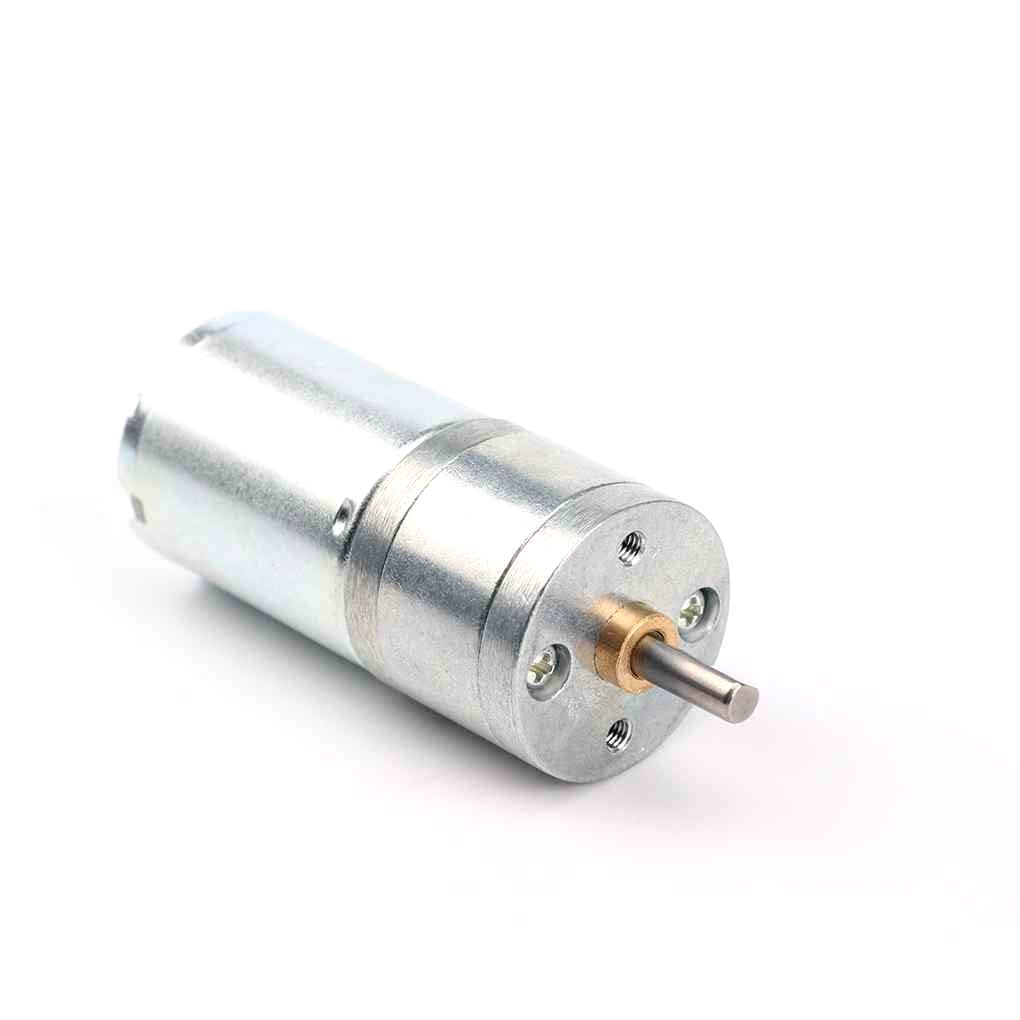
25GA-370 12V 12RPM DC Reducer Gear Motor
Low-speed gear motor ideal for lifts and positioning systems where a brake keeps the load held between moves. High gear ratio also provides natural resistance to back-driving.
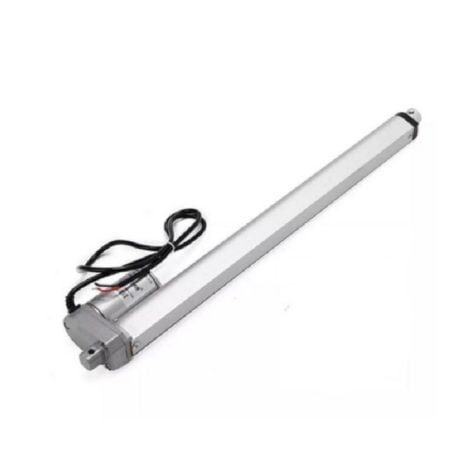
DC12V 500MM 2000N Electric Linear Actuator
Built-in self-locking lead screw means no separate brake needed for holding position — perfect for doors, gates, and vertical lift applications.

NEMA17 5.6 kg-cm Stepper Motor
Stepper motors provide inherent holding torque when current is applied — useful for lighter vertical loads on CNC machines and 3D printers without needing a separate brake.
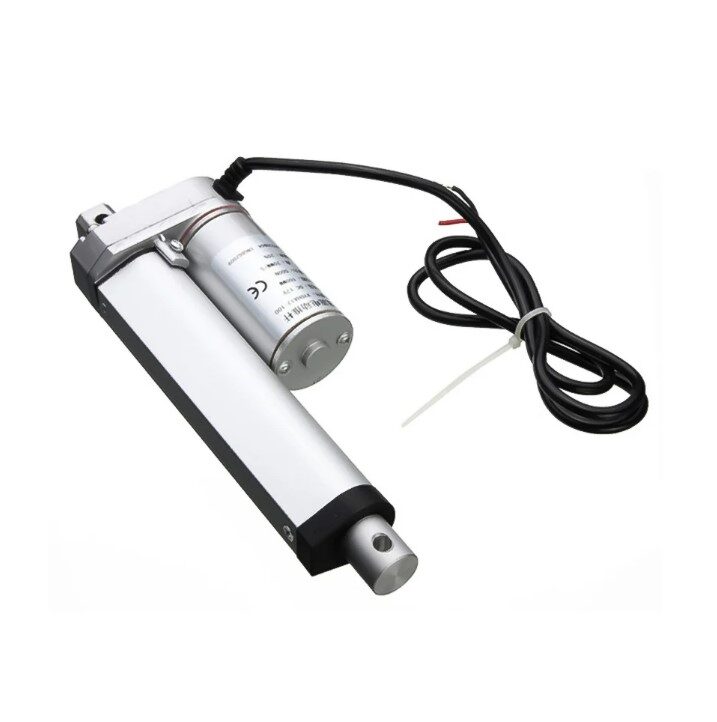
Linear Actuator 100MM 1500N 12V
Compact 1500N self-locking actuator for tight spaces — the internal screw holds position without braking hardware, ideal for panel tilt and hatch lifting.
Frequently Asked Questions
Q1: Can I use a relay to switch the brake coil directly from Arduino?
Yes, but use a logic-level relay module (5V trigger) with an opto-isolated driver. Do not drive the relay coil directly from an Arduino GPIO pin — the relay coil draws 70–100mA, which exceeds the ~40mA maximum safe output of an Arduino pin. Always use a transistor driver or dedicated relay module between them.
Q2: What voltage should the brake coil run at?
Match the brake coil’s rated voltage. Most compact brakes for 12V DC motor systems use 12V or 24V coils. Never significantly overvolt the coil — it will overheat. Some builders run at a slightly higher pull-in voltage (e.g., 15V) for faster engagement then drop to rated voltage for holding — only do this with a purpose-built brake controller.
Q3: Why does my motor jerk when the brake releases?
You’re commanding the motor to move before the brake has fully released. Add a delay of 20–50ms between energising the brake coil and issuing the motor move command. The exact delay depends on the brake’s specified release time.
Q4: Can I use an electromagnetic brake with a stepper motor?
Yes. In fact, adding a brake to a stepper motor is a best practice for vertical CNC axes and 3D printer Z-axes, since it removes the need to maintain stepper holding current (which generates heat) between moves. The brake holds the position while the driver is idle.
Q5: How long do electromagnetic brake pads last?
For spring-engaged disc brakes used primarily for holding (engaged/released frequently but not for dynamic stopping), pads can last hundreds of thousands of cycles. For applications where the brake stops a spinning load repeatedly, pad life is much shorter and depends on the kinetic energy absorbed per stop. Always check the manufacturer’s cycle life specification.
Conclusion
An electromagnetic brake is the right tool whenever you need a DC motor to hold a load safely when power is removed or during a pause in operation. The spring-engaged (fail-safe) type is the industry standard for safety-critical builds — it holds by default and requires active power to release, ensuring that any power failure automatically protects the load and personnel.
Key takeaways: always fit a flyback diode, sequence your motor stop before brake engagement, choose a brake rated for at least 1.5× your maximum load torque, and test your fail-safe by cutting power under load in a controlled setting before deployment.
Build Safer Motor Systems
Browse Zbotic’s complete selection of DC gear motors, linear actuators, and stepper motors — all shipped fast across India.





Add comment