
The humble TT gear motor is the backbone of hobbyist robot cars in India. Walk into any electronics class, college robotics club, or maker space, and you will find the bright yellow TT motor powering everything from simple line followers to obstacle-avoidance bots. Yet most beginners just buy whatever is available without understanding how to match voltage, RPM, and tire diameter to their robot’s actual speed and torque requirements. This guide solves that problem definitively.
What Is a TT Gear Motor?
A TT gear motor (also called a “toy motor” or “130 motor with gearbox”) combines a small 130-series DC brushed motor with a plastic gearbox that reduces the raw motor speed (typically 8,000–15,000 RPM) to a usable output shaft speed of 90–300 RPM. The name “TT” refers to the dual flat-sided output shaft shape (resembling the letter T in cross-section), which interfaces with compatible robot wheels and 65 mm rubber tires.
The TT motor’s key appeal for beginners and educators:
- Low cost: ₹40–80 per motor in India
- Wide compatibility: Fits standard robot chassis, robot car kits, and wheel hubs from multiple manufacturers
- Easy wiring: Only two wires (positive and negative); reverse polarity to reverse direction
- Available with and without encoders: Encoder variants enable closed-loop speed control for more sophisticated robots
TT Motor Specifications: Voltage, RPM & Torque
TT gear motors are not all identical. There is considerable variation in gear ratio, output RPM, and rated voltage between different batches and manufacturers. Here are the typical specifications for the most common variants available in India:
| Variant | Voltage | No-load RPM | Stall Torque | Current (no-load) | Stall Current |
|---|---|---|---|---|---|
| Standard 1:48 | 3–6 V | 90–200 RPM | 0.4 kg·cm | 100–200 mA | 600 mA |
| High-speed 1:30 | 3–6 V | 250–300 RPM | 0.25 kg·cm | 100–180 mA | 500 mA |
| High-torque 1:120 | 3–6 V | 30–50 RPM | 1.5 kg·cm | 80–150 mA | 700 mA |
| 6V high-speed | 6 V | 200–280 RPM | 0.5 kg·cm | 150–250 mA | 800 mA |
Key insight: The RPM printed on a TT motor is always the no-load speed. Under the actual load of a robot car carrying electronics, a chassis, and potentially a battery, the effective speed drops to 60–80% of the no-load figure. Always design with loaded speed in mind.
Tire Matching: Wheel Diameter vs Robot Speed
The relationship between motor RPM, wheel diameter, and robot linear speed is:
Speed (m/s) = (RPM × π × Wheel_diameter_m) / 60
Speed Calculations for Standard TT Motor + 65 mm Wheel
The most common TT motor wheel in India is the 65 mm diameter rubber tire. Here is what you get at different RPM values:
| Motor RPM (loaded) | Wheel Diameter | Linear Speed | Suitable For |
|---|---|---|---|
| 60 RPM | 65 mm | 0.20 m/s (20 cm/s) | Line follower, maze solver |
| 120 RPM | 65 mm | 0.41 m/s (41 cm/s) | General robot car, sumo bot |
| 200 RPM | 65 mm | 0.68 m/s (68 cm/s) | Fast obstacle avoidance |
| 200 RPM | 80 mm | 0.84 m/s (84 cm/s) | High-speed demo bot |
Torque Requirements by Robot Weight
To ensure your robot can actually move (and climb small obstacles), the motor must provide enough torque. Rule of thumb: for a flat-surface robot, each motor needs a loaded torque of at least:
Required torque (kg·cm) = (Robot weight (g) × Wheel radius (cm)) / (Number of motors × 1000)
For a 500 g robot with 65 mm wheels (radius 3.25 cm) and 4 motors:
Required = (500 × 3.25) / (4 × 1000) = 0.41 kg·cm per motor — well within the standard TT motor’s 0.4–1.5 kg·cm range.
For a 1,200 g robot with the same setup: 0.975 kg·cm — you would need a 1:48 or 1:120 high-torque variant rather than the high-speed 1:30 variant.
3V vs 5V vs 6V TT Motors
TT motors are generally rated for a voltage range, not a single voltage. However, the label “3V motor” or “6V motor” gives you the recommended operating voltage for optimum efficiency. Here is what each choice means for your robot:
3V TT Motors
Running at 3V produces lower RPM and torque but also lower current draw. Ideal for battery-powered robots using 2xAA (3V) or single LiPo cell (3.7V). At 3V, a standard TT motor draws 80–120 mA no-load, making it suitable for the L293D driver which has higher on-resistance but lower current limits.
5V TT Motors
The sweet spot for Arduino-based robots powered by 4xAA (6V nominal, ~5V under load) or a 5V regulated supply. At 5V, the standard TT motor produces 150–200 RPM and 120–180 mA no-load current. The L298N handles this comfortably at both channels simultaneously.
6V TT Motors
At 6V (4xAA alkaline or 5-cell NiMH), TT motors deliver maximum speed and torque within spec. Current draw increases to 150–250 mA no-load. Stall current at 6V can reach 800 mA–1.2 A per motor — important for driver selection when all four motors stall simultaneously (e.g., hitting a wall in a maze).
Overvoltage Warning
Running TT motors above 6V (e.g., at 7.4V from a 2S LiPo) significantly reduces motor lifespan. The brushes wear faster, the plastic gearbox overheats, and the motor shaft can warp. If you need higher speed, use a higher-RPM gear ratio motor at the correct voltage rather than overvoltaging a standard motor.
4WD vs 2WD Robot Chassis
2WD Differential Drive
Two driven rear wheels + one or two front caster balls. The simplest configuration for line followers and maze solvers. Uses only 2 motors, reducing cost and current draw. Turning is achieved by differentiating the two motor speeds. Limitation: less traction on uneven surfaces and slight slippage during sharp turns.
4WD Drive
Four TT motors — one per wheel. All wheels drive simultaneously, providing better traction and stability on uneven classroom floors, carpet edges, and ramp transitions. The left-side motors wire in parallel; right-side motors wire in parallel — then controlled by a dual-channel driver (L298N handles both channels). More current draw but much better all-surface performance.
Standard 4WD plastic chassis with TT motors is available in India as a complete kit for ₹200–400 and is the recommended starting point for most beginners.
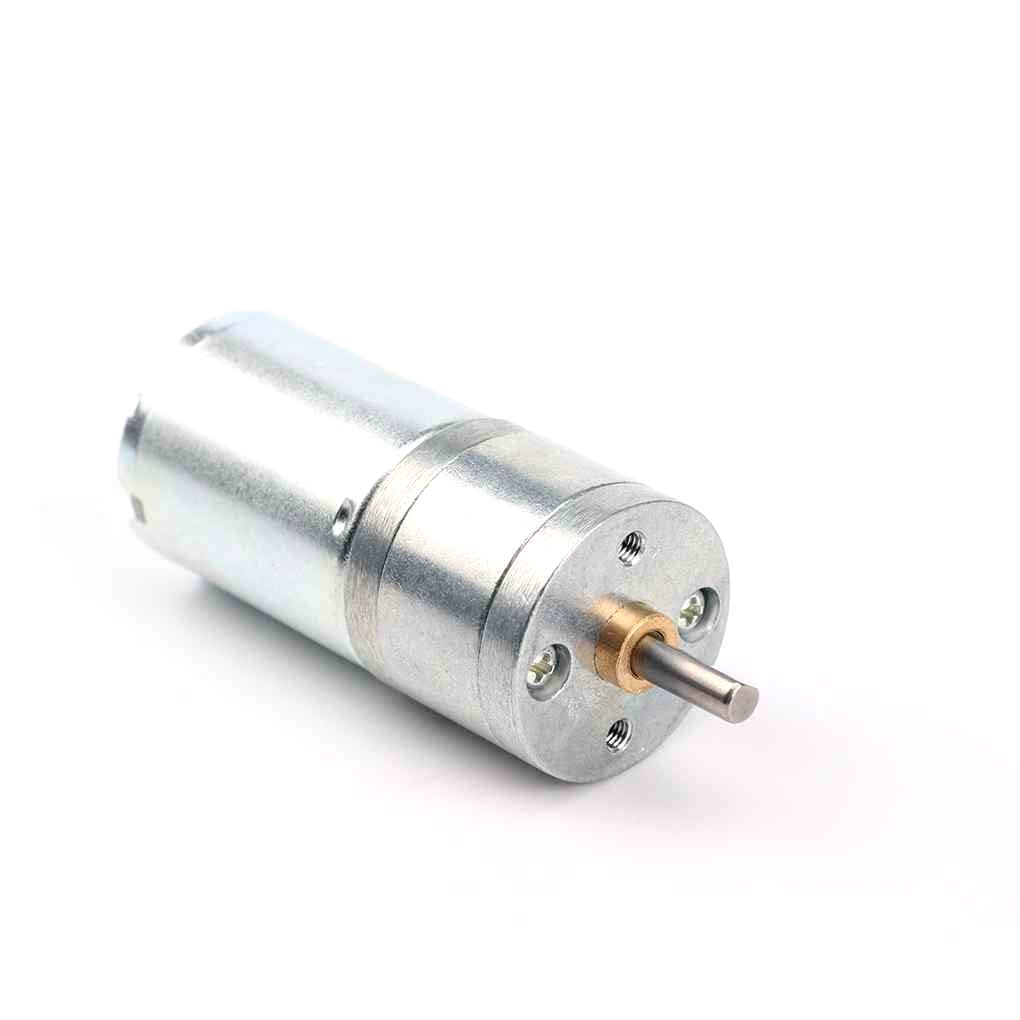
25GA-370 12V 12RPM DC Reducer Gear Motor
When your robot project requires more torque and precision than a TT motor can deliver — such as a heavy sumo bot, arm joint, or differential drive rover — this 25GA-370 metal gear motor delivers 12 RPM at 12V with robust stall performance. Ideal for intermediate and advanced robotics projects.
Motor Driver Selection: L298N, L293D & Beyond
L293D for 2WD with TT Motors
The L293D is a quad half-bridge driver rated at 600 mA per channel (1.2 A peak). For 2WD robots with TT motors running at 5V, the L293D works well — it is often built into the Arduino Motor Shield. At 600 mA per channel, it has headroom over the typical 120–200 mA no-load TT motor current, but stall current (600 mA–1 A per motor) can push it to its limit.
L298N for 4WD Robot Cars
The L298N (2 A per channel) is the right choice for 4WD setups where two TT motors wire in parallel per channel. Two motors in parallel draw 240–400 mA no-load (well within 2 A limit) and up to 1.2–2 A at stall. The L298N handles this safely with a small heatsink. It also provides the ENA/ENB PWM speed control pins needed for smooth differential steering.
L298N Voltage Drop Issue
The L298N has a 2–4 V voltage drop across its output transistors. This means if you power from a 6 V battery, the motors receive only 2–4 V — significantly less than rated. Solutions: (1) use a 9–12 V supply to compensate, (2) use the L298N’s onboard 5 V regulator only for logic and power the motor supply from 7.4 V (2S LiPo) at reduced duty cycle, or (3) upgrade to a BTS7960-based driver that has lower saturation voltage.
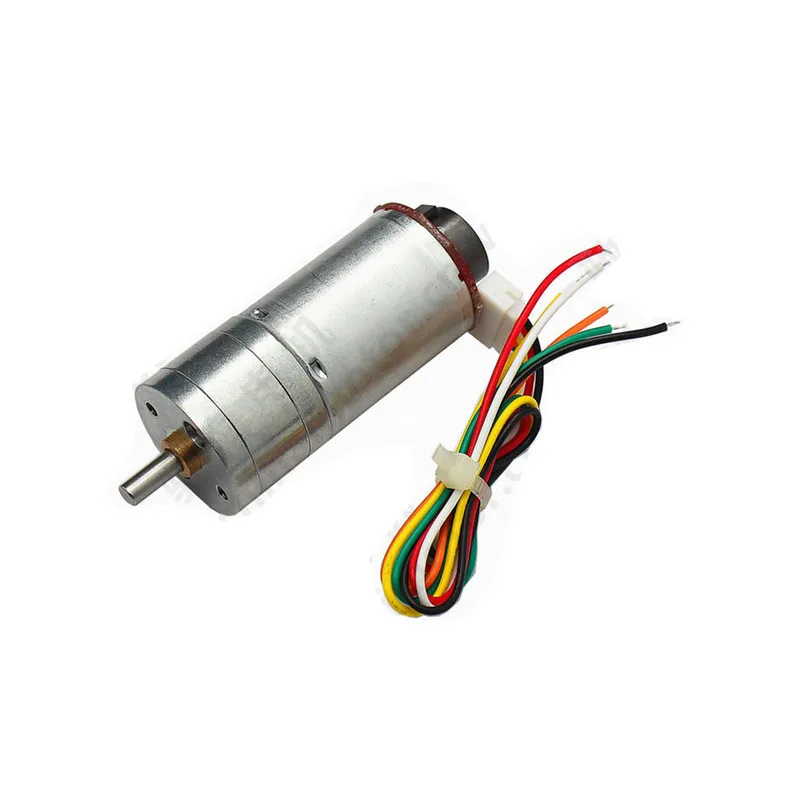
25GA-370 12V DC Reducer Gear Motor with Encoder
For robot cars that need accurate speed feedback and closed-loop PID control, this DC gear motor includes a built-in encoder. Use it when your project has outgrown TT motors and needs precise, repeatable wheel odometry for navigation.
Full Wiring Guide for 4-Motor Robot Car
Battery Selection First
For a standard 4WD TT motor robot car with Arduino Uno and L298N:
- Recommended: 7.4V 2S LiPo 1,000–2,000 mAh — provides sufficient voltage for the L298N motor supply (motors receive ~4–5 V after L298N drop) and powers Arduino via the L298N’s onboard 5V regulator
- Budget option: 4xAA alkaline in a battery holder — 6V nominal, dropping to 5V under load; adequate for simple demo robots
Wiring Diagram (L298N + 4x TT Motor + Arduino Uno)
Battery+  →  L298N 12V pin
Battery-  →  L298N GND
L298N 5V  →  Arduino 5V (if using L298N onboard regulator)
L298N GND →  Arduino GND

Left motors (front-left + rear-left): both + to L298N Out1, both - to Out2
Right motors (front-right + rear-right): both + to L298N Out3, both - to Out4

L298N IN1 → Arduino D2
L298N IN2 → Arduino D3
L298N IN3 → Arduino D4
L298N IN4 → Arduino D5
L298N ENA → Arduino D9 (PWM)
L298N ENB → Arduino D10 (PWM)
Basic Arduino Drive Code
void forward(int spd) {
  analogWrite(9, spd);   // ENA
  analogWrite(10, spd);  // ENB
  digitalWrite(2, HIGH); // IN1
  digitalWrite(3, LOW);  // IN2
  digitalWrite(4, HIGH); // IN3
  digitalWrite(5, LOW);  // IN4
}
void turnLeft(int spd) {
  analogWrite(9, spd);
  analogWrite(10, spd);
  digitalWrite(2, LOW);  // Left reverse
  digitalWrite(3, HIGH);
  digitalWrite(4, HIGH); // Right forward
  digitalWrite(5, LOW);
}
TT Motors with Encoders: Speed Feedback for PID
Standard TT motors are open-loop — you set a PWM duty cycle, and the robot goes at some speed that varies with battery level, slope, and mechanical load. This causes problems for line followers and maze solvers where consistent speed is important.
TT motors with optical or magnetic encoders add a feedback signal — typically a quadrature output of A and B channels. By counting encoder pulses per second, you know the actual RPM and can implement a PID controller that adjusts PWM to maintain target speed regardless of load.
When to Use Encoders
- Line following robots that need consistent speed around curves
- Maze solvers requiring dead-reckoning (estimating position by counting wheel rotations)
- Robots that carry variable payloads
- Projects where the two motors must stay synchronised (otherwise the robot curves even on straight sections)
For a basic obstacle-avoidance robot or RC car, encoders add complexity without significant benefit. Use standard TT motors for these projects.
Buying Guide for India 2026
What to Look For When Buying TT Motors
- Gear ratio: 1:48 is the standard all-rounder. Buy 1:120 for heavy bots, 1:30 for speed bots.
- Shaft type: Ensure the shaft cross-section matches your wheels. TT shaft (double-flat) is standard, but some budget motors have variations.
- Pack quantity: Buy in packs of 4 (for 4WD) or 2 (for 2WD). Matching motors from the same batch ensures similar performance.
- Encoder option: Pay ₹30–50 extra per motor for the encoder variant if your project involves PID speed control.
Complete 4WD Robot Car Components from Zbotic
For a complete robot car project from Zbotic.in, you will need:
- 4x TT gear motors (or 25GA-370 for heavier builds)
- 4x 65 mm wheels with TT shaft hubs
- 1x 4WD plastic chassis (many kit options available)
- 1x L298N motor driver module
- 1x Arduino Uno (or Nano for smaller chassis)
- 1x battery holder / LiPo battery + charger
- Optional: ultrasonic sensor (HC-SR04), IR sensors for line following
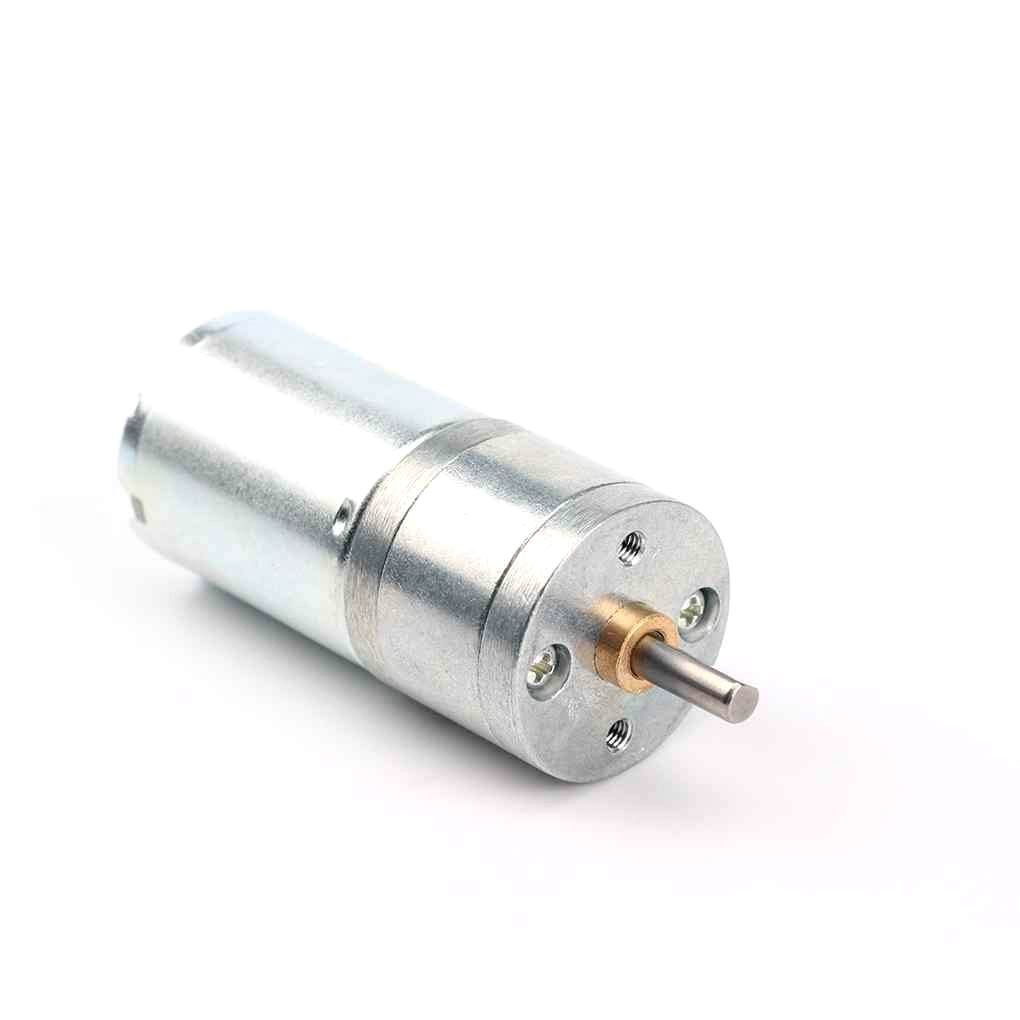
25GA-370 12V 1360RPM DC Reducer Gear Motor
Need more speed for a racing robot or rover? This 1360 RPM high-speed DC gear motor in the 25GA format delivers fast wheel speeds suitable for speed competition robots and high-mobility platforms, with reliable 12V operation.
Frequently Asked Questions
What RPM TT motor is best for a line following robot in India?
For a line following robot, 100–200 RPM (1:48 gear ratio at 5–6V) is ideal. Lower speed gives more time for the microcontroller to respond to sensor readings and make steering corrections. High-speed TT motors (250+ RPM) make it harder to follow tight curves reliably, especially for beginners.
Can I run 4 TT motors on one L298N module?
Yes. Connect the two left motors in parallel to Channel A and the two right motors in parallel to Channel B. The L298N handles 2A per channel continuous — sufficient for two TT motors in parallel (drawing 200–400 mA no-load). During stall, two parallel TT motors may draw 1.2–2A, staying within the L298N limit with a heatsink fitted.
How fast will a TT motor robot car go with 65mm wheels?
At 150 RPM under load with 65mm wheels: speed = (150 × π × 0.065) / 60 ≈ 0.51 m/s (51 cm/s). Most student robot cars run at 0.3–0.7 m/s depending on gear ratio and battery voltage. At full PWM on an L298N from a 7.4V LiPo with 200 RPM motors and 65mm wheels, expect 0.6–0.7 m/s.
What battery should I use for a 4WD TT motor robot car?
A 7.4V 2S LiPo battery (1000–2000 mAh) is the best choice for a 4WD TT motor robot car. It provides enough voltage to compensate for the L298N’s 2V drop, delivers clean current for consistent motor performance, and is rechargeable. For a budget build, 6x AA alkaline batteries in a holder (9V) also work well.
Why does my TT motor robot car pull to one side?
This is caused by motor-to-motor variation — even motors from the same batch have slightly different RPM at the same voltage. Solutions: (1) use encoders and PID speed control to actively synchronise both sides, (2) manually calibrate left/right PWM values via a trim factor, or (3) use motors from the same production run. For precise navigation, encoder-based speed control is the correct long-term solution.
Build Your Robot Car Today
Zbotic.in stocks DC gear motors, motor driver boards, chassis components, and everything else you need for a complete robot car build in India. From beginner TT motor kits to precision encoder motors for advanced projects, find it all in one place with fast nationwide shipping.







Add comment