
Table of Contents
- Why Propeller Guards Matter for Indian Drone Builders
- Propeller Guard Design Basics
- Best 3D Printing Materials for Propeller Guards
- Types of Propeller Guard Designs
- 3D Printing Tips for Strong Guards
- Mounting Propeller Guards to Your Drone Frame
- Weight Impact and Flight Performance
- Where to Find Free STL Files in India
- Recommended Products from Zbotic
- Frequently Asked Questions
If you have ever flown a drone indoors or near people, you already know the anxiety that comes with spinning propellers at thousands of RPM. One small crash or unexpected gust and those carbon fibre or plastic blades can cause serious injury — to fingers, faces, and expensive electronics. 3D printed propeller guards are one of the smartest, most affordable upgrades any Indian drone builder can add to their build, and they are completely customisable for every frame size and flying environment.
This comprehensive guide walks you through everything you need to know about designing, printing, and mounting your own propeller guards — from choosing the right filament to understanding how guards affect your centre of gravity and flight dynamics.
Why Propeller Guards Matter for Indian Drone Builders
India’s drone hobbyist community has grown explosively since the DGCA relaxed regulations for nano and micro drones under the Drone Rules 2021. With more makers flying indoors at robotics clubs, schools, college fests, and home workshops, propeller guards have become a practical necessity rather than an afterthought.
Here is why you should seriously consider adding guards to your build:
- Personal safety: A 5-inch propeller spinning at 8,000 RPM can cut through skin instantly. Guards act as the last line of defence.
- Protecting your drone: Indoor walls, furniture, and obstacles are drone-killers. Guards absorb impact and protect both the propellers and the frame arms.
- Protecting your camera: FPV cameras and gimbals are expensive. Guards give you an extra buffer zone in tight spaces.
- Regulatory compliance: For demonstration flights at public events in India, enclosed propellers are often a requirement from venue management or DGCA event permits.
- Training tool: Beginners crash constantly. Guards let new pilots practise without destroying ₹500–₹2000 sets of propellers every session.
The best part? If you have access to a 3D printer — or can use a service like Tvasta, Fracktal, or any local print shop — you can design and manufacture guards customised to your exact frame for as little as ₹50–₹150 per guard in material cost.
Propeller Guard Design Basics
Before you open Fusion 360, FreeCAD, or Tinkercad, you need to understand the fundamental principles that make a propeller guard effective rather than just decorative.
Key Measurements You Need
- Propeller diameter: This is your starting point. A 5-inch prop needs a guard with an inner diameter of at least 127 mm (5 inches = 127 mm). Always add 5–10 mm clearance on each side, so your guard inner diameter should be roughly 137–147 mm for a 5-inch prop.
- Motor mount diameter: The guard must clear your motor can. Measure the outer diameter of your motor including the bell.
- Frame arm width: Your guard mounting tabs need to match your arm width precisely. Too loose and it vibrates; too tight and it cracks during installation.
- Guard height: The vertical distance from the propeller plane (both above and below) determines protection coverage. A guard that only sits at propeller level offers minimal protection from below.
- Wall thickness: For structural integrity, guard walls should be at least 1.5 mm thick for PLA and 1.2 mm for PETG.
The Clearance Rule
Always design with a minimum of 5 mm radial clearance between the propeller tip and the inner wall of the guard. At high RPM, propellers flex outward slightly due to centrifugal force. If your guard is too tight, the prop tips will contact the guard wall, causing vibration, noise, and potential guard failure. A 7–8 mm clearance is ideal for most racing and freestyle builds.
Structural Load Points
The guard must transfer crash loads to the frame without cracking. This means your mounting interface — whether tabs, clips, or wraps — needs to be the strongest part of the design. Use thicker walls, more perimeters, and higher infill percentages at connection points.
Best 3D Printing Materials for Propeller Guards
Material choice fundamentally changes how your guards perform in the real world. Here are the most practical options available in India:
PLA (Polylactic Acid) — ₹700–₹1200/kg
PLA is the most common filament in India and the easiest to print. It is rigid, takes detail well, and prints cleanly even on budget printers like the Ender 3. However, PLA is brittle under impact — it will crack rather than flex during a crash. For low-speed indoor training drones, PLA works acceptably. For anything faster than 30 km/h, look at other options.
PETG (Polyethylene Terephthalate Glycol) — ₹900–₹1500/kg
PETG is the sweet spot for propeller guards. It is tougher than PLA, more impact resistant, and handles the minor heat from motor airflow far better. It has a slight flex that absorbs crash energy instead of cracking. Print temperature is around 230–240°C with a 70–80°C bed. PETG from brands like Esun, Sunlu, and Fiberlogy is widely available on Amazon India and Robocraze.
TPU (Thermoplastic Polyurethane) — ₹1200–₹2000/kg
TPU is flexible rubber-like material that is excellent for full-enclosure bumper-style guards. It absorbs impacts without cracking at all. The downside is that it is heavier and can limit airflow, reducing propeller efficiency. TPU works best for micro drones (65mm to 75mm class) or for children’s educational drones.
ASA or ABS — ₹800–₹1400/kg
For outdoor use where UV exposure and heat are concerns, ASA is excellent. It is tougher than PLA and UV stable, unlike PETG which yellows over time. ASA requires an enclosure on your printer and is harder to work with, but the result is a professional-grade guard that lasts years outdoors.
Types of Propeller Guard Designs
There is no single best design — the right choice depends on your drone’s use case, your printer’s capabilities, and how much weight penalty you can absorb.
1. Full Ring Guard
A solid circular ring that fully encloses the propeller disk laterally. This is the most common design for indoor racing and training drones. It provides 360-degree protection from lateral contact but leaves the top and bottom of the prop arc exposed.
Best for: Indoor racing, training drones, school robotics clubs
Weight: 8–20g per guard depending on size and material
Difficulty: Easy to design, prints in 1–2 hours per guard
2. Lattice/Cage Guard
A full 3D cage that encloses the propeller from above, laterally, and partially below. This is the safest design but also the heaviest and most complex to print. Typically used on drones that fly near the public — demonstration craft, educational platforms, and first responder training drones.
Best for: Public demonstrations, educational platforms, DGCA event compliance
Weight: 25–60g per guard
Difficulty: Complex design, requires support structures in print
3. Clip-On Strut Guard
Instead of a full ring, this design uses 3–4 curved struts that mount to the frame arm and extend outward past the prop tips. Lighter than a full ring, offers partial protection, and is much easier to print. Popular for 5-inch FPV freestyle builds where weight matters.
Best for: FPV racing, outdoor freestyle, intermediate builders
Weight: 3–8g per guard
Difficulty: Moderate — requires good tab design for secure mounting
4. Integrated Frame Guard
The guard is designed as an integral part of the frame arm itself — printed as one piece rather than added on. This is the most structurally sound approach but requires you to design or modify your frame from scratch. Not practical unless you are designing a custom frame.
3D Printing Tips for Strong Guards
A poorly printed guard is worse than no guard — it will shatter on first impact and potentially send shrapnel toward the pilot. Follow these settings for structurally sound prints:
Slicer Settings That Matter
- Perimeters/Walls: Use 3–4 perimeters minimum. This is the single most important setting for impact resistance. More perimeters = more strength, especially for thin features.
- Infill: 20–30% for most of the guard body. Use 40–50% at mounting tabs and reinforced zones. Gyroid or honeycomb patterns distribute stress better than grid.
- Layer height: 0.2 mm for most guards. Drop to 0.15 mm if printing thin lattice features that need to bond well between layers.
- Print speed: Slow down for PETG — 40–50 mm/s for perimeters. Fast PETG printing often causes stringing and poor layer bonding.
- Cooling: For PETG, reduce cooling to 30–50% to improve layer adhesion. For PLA, full cooling is fine.
- Bed adhesion: Use a brim of 5–8 mm for thin ring guards to prevent warping, especially with PETG and ASA.
Orientation on the Build Plate
Print ring guards flat (lying on their side) rather than upright. Printing upright creates layer lines that run perpendicular to impact forces, making the guard much more likely to crack at layer boundaries. Flat orientation means crash forces act along the layer lines rather than against them.
Post-Processing
After printing, inspect all mounting tabs for layer delamination. Light sanding on the inner ring face helps ensure propeller clearance is consistent. For PETG, a quick acetone wipe is not effective — stick to mechanical finishing only.
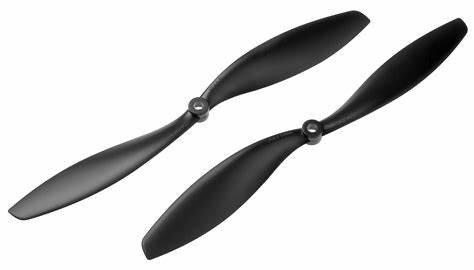
1045 Carbon Fiber Propeller CW&CCW
High-quality 10-inch carbon fibre propellers — the exact type that most benefits from printed propeller guards during indoor testing and training flights.
Mounting Propeller Guards to Your Drone Frame
How you attach the guard to the frame is just as critical as the guard design itself. A guard that detaches mid-flight can fly into the propeller and destroy it — or worse, fly off into a bystander.
Screw-Mount System
Design mounting tabs with M2 or M3 screw holes that align with existing standoff holes or arm holes on your frame. Use nylon lock nuts or threadlocking adhesive (Loctite Blue is available in most Indian hardware shops for about ₹150). This is the most secure mounting method.
Friction Clip System
A snap-fit channel that clips around the frame arm. Quick to install and remove — useful if you want to add and remove guards between indoor and outdoor sessions. Design the channel 0.2–0.3 mm smaller than your arm for a tight press fit in PLA, or 0.3–0.5 mm smaller for PETG which is slightly more flexible.
Zip Tie Slots
Add 2–4 small slots in the guard where zip ties can pass through and around the frame arm. Simple, cheap, and very reliable for fixed installations. Use 2.5 mm zip ties rated for at least 8 kg — widely available at electrical shops across India for ₹50–₹80 per pack of 100.
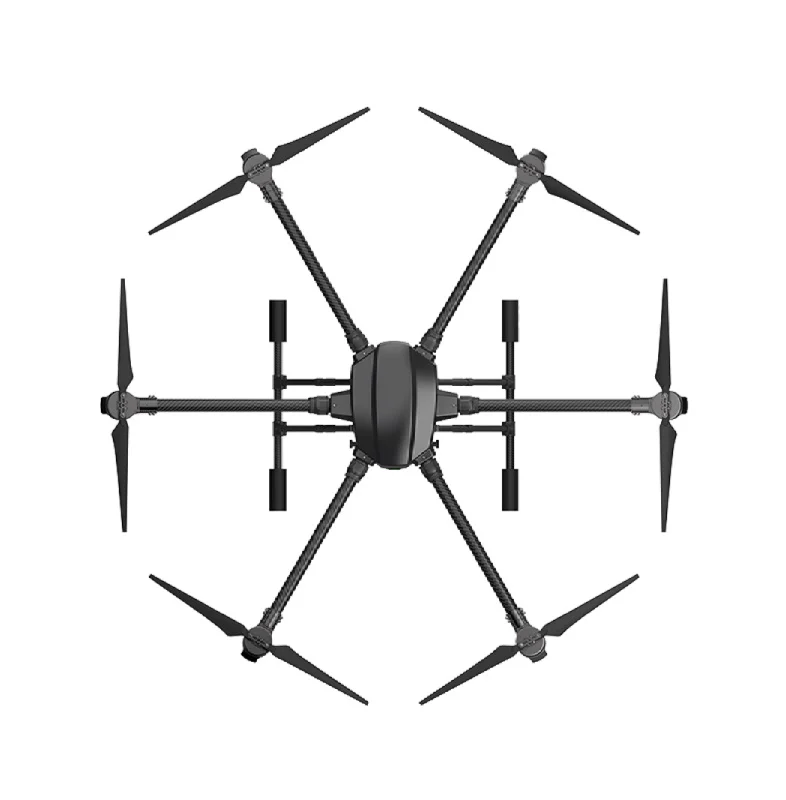
EFT 6120 Multifunction Surveillance Drone Frame
A heavy-duty hexacopter frame with structured arm mounts — ideal for integrating custom 3D printed propeller guard systems for professional and surveillance applications.
Weight Impact and Flight Performance
This is where propeller guards become a real engineering trade-off. Weight is the enemy of every metric in drone performance — flight time, agility, top speed, and climb rate all degrade with added mass.
Weight Budget Calculations
A typical 5-inch FPV quad weighs 250–350g all-up. Adding four full ring PETG guards at 12g each adds 48g — roughly a 14–19% weight increase. This translates to approximately:
- 8–12% reduction in flight time (higher current draw to maintain hover)
- 10–15% reduction in top speed (higher drag, more weight to accelerate)
- Slightly higher hover throttle (more motor heat over long sessions)
For training purposes, this is absolutely worth it. For race days or performance flying, remove the guards and fly free.
Centre of Gravity Considerations
Guards mounted at arm tips shift mass outward from the centre of the drone. This increases the drone’s rotational inertia (moment of inertia), making it feel more sluggish in pitch and roll. Heavier guards amplify this effect. If your Betaflight PIDs are tuned without guards, expect to re-tune D-term and I-term when flying with guards attached.
Propeller Wash Disruption
Full ring guards partially interrupt the clean airflow below the propeller disk. This increases turbulence in the propeller wash zone, which can cause slightly more vibration and less efficient thrust. Keep guard rings at least 15 mm above the motor mount plate to minimise this effect.
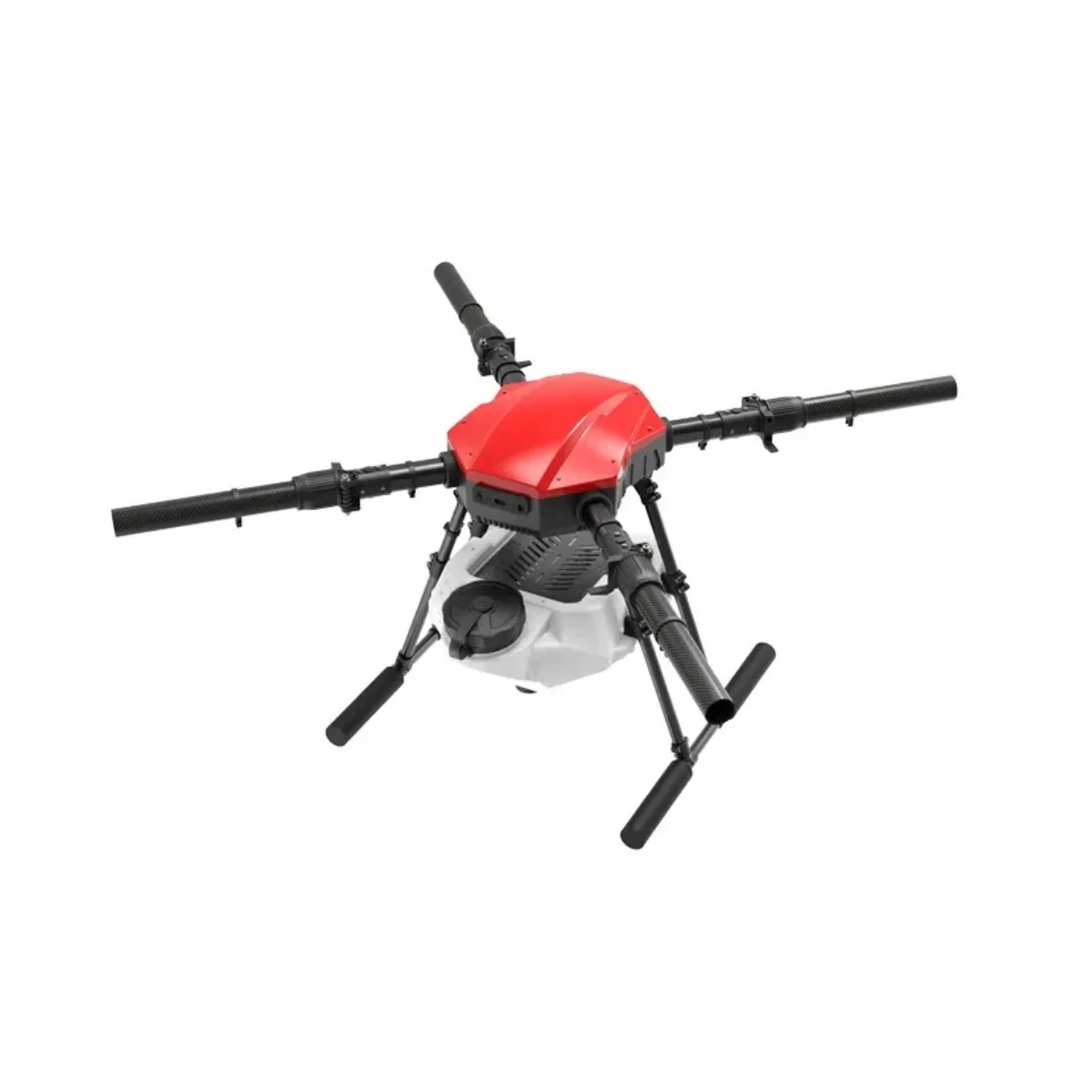
EFT E410P 10L 4 Axis Agricultural Drone Frame
A professional agricultural drone frame that benefits from large-diameter propeller guards in field demonstration and operator training scenarios.
Where to Find Free STL Files in India
You do not have to design from scratch. These sources have large libraries of tested propeller guard designs:
- Thingiverse.com: Search “propeller guard” + your frame name or prop size. Massive community library with user-tested designs.
- Printables.com (Prusa): Higher quality designs, better curated than Thingiverse.
- Cults3D.com: Mix of free and paid designs. Some excellent professional-grade guards here.
- Grabcad.com: More technical CAD files, good if you want to modify designs in Fusion 360.
- RCGroups forum: Community members post frame-specific guard designs regularly.
When evaluating an STL file, check the comments section for real-world feedback on fit, material recommendations, and any known issues. A design with 50+ makes and positive feedback is generally reliable.
CAD Software for Custom Design
- Fusion 360: Free for hobbyists and startups under ₹1 crore annual revenue. Best parametric modelling software available.
- FreeCAD: Completely free, open source. Steeper learning curve but highly capable.
- Tinkercad: Browser-based, completely free. Perfect for simple ring guard designs. Great starting point for beginners.
- OpenSCAD: Code-based CAD, excellent for parametric designs where you define prop diameter as a variable and generate the guard automatically.
Recommended Products from Zbotic
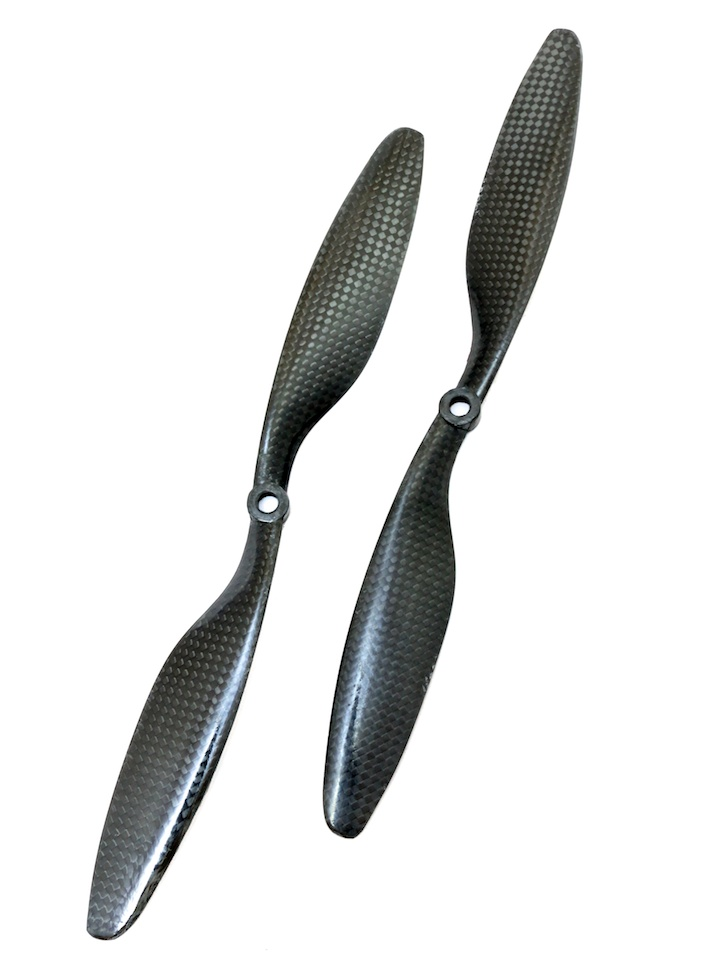
1045 Carbon Fiber Propeller CW&CCW For DJI
DJI-compatible 10-inch carbon fibre props with precise weight balance — protect these premium props with well-designed 3D printed guards during testing.
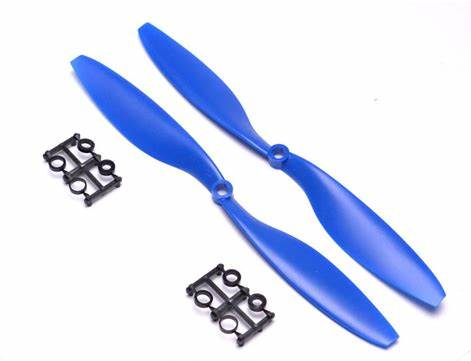
1045 2 Blades Propeller CW&CCW (Blue)
Coloured propellers help with orientation during flight — pair these blue props with colour-matched 3D printed guards for a clean, professional build aesthetic.
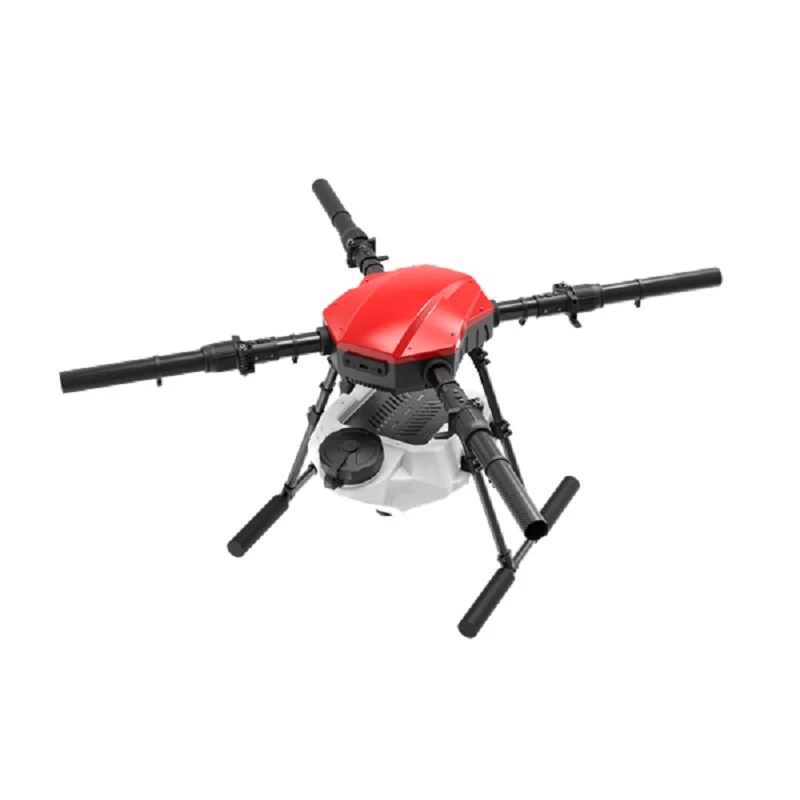
EFT E416P 16L 4 Axis Agricultural Drone Frame
A heavy-lift 16-litre agricultural drone frame — large professional builds like this require robust, custom-designed propeller guards for safe field operations and training.
Frequently Asked Questions
Can propeller guards be used on FPV racing drones?
Yes, but only during training. Full ring guards add too much weight and drag for competitive racing. Use them when learning new tracks or when flying in restricted indoor spaces, then remove them for race day.
What is the best filament for outdoor propeller guards in India’s climate?
ASA is the best choice for outdoor guards in India. It handles UV exposure from the harsh Indian sun, is not affected by monsoon humidity, and is more impact-resistant than PLA. PETG is a good second choice and is easier to print.
How thick should propeller guard walls be?
A minimum of 1.5 mm wall thickness with 3–4 perimeters in your slicer. For mounting tabs and high-stress areas, use 2.5–3 mm wall thickness. Thinner than 1.5 mm and the guard will shatter on first impact.
Will propeller guards affect my Betaflight tuning?
Yes. The added weight and increased rotational inertia will make the drone feel sluggish with default PIDs. Lower your P-term slightly on roll and pitch, and reduce D-term to avoid oscillations caused by the heavier arms. Run Betaflight’s auto-tune (RPM filter) after adding guards for best results.
Can I print propeller guards for agricultural drones with large propellers?
Large agricultural drone propellers (18–32 inches) require guards that are not practically 3D printable in one piece on standard home printers. You would need to design them in segments that bolt together, or consider aluminium tube frames instead. For professional agricultural operations, purpose-built safety cages are recommended.
Where can I get a 3D print done in India if I don’t have a printer?
Many Indian cities have local 3D printing services. Search for print shops on Urbanclap/Urban Company, Sulekha, or Just Dial in your city. Online services like Fracktal Works, PrintStop (for FDM), and Imaginarium India offer shipping across the country. A standard propeller guard in PETG typically costs ₹80–₹250 per piece depending on size.
Conclusion
Designing and 3D printing your own propeller guards is one of the most rewarding projects for any drone builder. You get a functional safety component, learn valuable design skills, and can iteratively improve your design based on real-world testing. Start with a simple full-ring design in PETG, test fit it carefully, fly a few indoor sessions, and refine from there. The investment in safety always pays off — especially when it saves your ₹1,500 carbon fibre props from a needless crash.







Add comment