
Table of Contents
- Why Arm Material Matters for Drone Performance
- Carbon Fiber: Properties and Performance
- Aluminium: Properties and Performance
- Strength Comparison: Real-World Data
- Weight Impact on Flight Time and Agility
- Vibration Damping: Which Material Wins?
- Crash Behaviour and Repairability
- Cost Analysis for Indian Builders
- Use-Case Recommendations
- Recommended Products from Zbotic
- Frequently Asked Questions
Pick up a high-end FPV racing frame and you will immediately notice how impossibly light it feels — four 5 mm thick arms supporting motors that together produce over 4 kg of thrust, yet the entire frame weighs under 100 grams. Hold a budget agricultural drone arm and it feels solid, confident, almost indestructible. These two experiences perfectly illustrate the fundamental trade-off at the heart of drone arm material selection: carbon fibre offers the highest strength-to-weight ratio available in consumer materials, while aluminium offers forgiving toughness, easy machinability, and a price that is a fraction of carbon fibre tubing.
In this guide we go beyond the usual “carbon is better” oversimplification and look at what actually matters for different drone applications — from 5-inch FPV racers to 10-litre agricultural sprayers — and help you make the right material choice for your specific build.
Why Arm Material Matters for Drone Performance
The drone arm is one of the most structurally critical components of a multirotor. It must simultaneously:
- Support the motor and propeller at its tip, transferring up to 2 kg of thrust per arm toward the centre frame.
- Resist the bending moment created by that thrust force acting on a lever arm (typically 150–400 mm long).
- Absorb vibration from the spinning propeller without amplifying it into the flight controller’s IMU.
- Survive crash impacts without catastrophic failure that destroys the motor or flight controller.
- Do all of the above at the minimum possible weight to maximise flight time and agility.
The material choice directly determines how well the arm meets each of these requirements.
Carbon Fiber: Properties and Performance
What Is Carbon Fiber Composite?
Carbon fibre for drone construction is not pure carbon fibre — it is a carbon fibre reinforced polymer (CFRP) composite, where carbon fibre strands (each just 5–7 micrometres in diameter) are woven into a fabric or laid unidirectionally, then bonded with epoxy resin and cured under heat and pressure. The resulting sheet or tube is anisotropic — it is extremely strong in the direction of the fibres but weaker perpendicular to them.
Mechanical Properties
- Tensile strength: 3,500–7,000 MPa along fibre direction (vs. 7075 aluminium at ~570 MPa).
- Specific stiffness: 4–5× higher than aluminium alloy per unit mass — the key metric for drone arms.
- Density: ~1,600 kg/m³ (vs. aluminium at ~2,700 kg/m³). Carbon fibre is approximately 40% lighter than equivalent aluminium for the same volume.
- Fatigue resistance: CFRP has excellent fatigue resistance. It does not suffer from the cyclic metal fatigue that gradually weakens aluminium under repeated flexing.
For FPV Drones
The high stiffness of carbon fibre is critical for FPV performance. A stiff arm means motor vibrations are transmitted more efficiently (or rather, a stiff arm combined with vibration-isolated FC mounting minimises low-frequency resonance in the arm itself). More importantly, a stiff arm means the motor stays pointed in the correct direction under load — flex in the arm at high throttle would cause precession and handling anomalies.
Common Arm Forms for Drones
- Flat plates: Cut from 3 mm, 4 mm, or 5 mm CFRP sheet by CNC router or laser. Used on X-frame and H-frame racers. Strong in the horizontal plane, somewhat weaker against vertical loads.
- Round tubes: Pultruded or roll-wrapped CFRP tubes. Used on tarot-style quad frames and large agricultural drones. Excellent strength in all axes due to symmetrical cross-section.
- Square tubes: Less common but used on some survey and industrial frames. Better resistance to torsion than round tubes of the same material use.
Aluminium: Properties and Performance
Alloys Used in Drone Construction
Not all aluminium is equal. Drone frames typically use:
- 6061-T6: Most common general-purpose alloy. Good strength (570 MPa ultimate tensile), excellent corrosion resistance, easy to machine and anodise. Used for most budget and mid-range drone arms.
- 7075-T6: Higher-grade aerospace alloy. Tensile strength ~570 MPa but higher yield strength and better strength-to-weight. Used in premium aluminium frames. More expensive and less corrosion-resistant than 6061.
- Aluminium profiles: Extruded rectangular or T-slot aluminium profiles are used in some large industrial drone frames for their structural efficiency and ease of customisation.
Mechanical Properties
- Density: ~2,700 kg/m³ — approximately 70% heavier than CFRP for the same volume.
- Young’s modulus: ~70 GPa (vs. ~230 GPa for CFRP) — aluminium is significantly more flexible per unit cross-section.
- Ductility: Aluminium yields and bends before fracturing. This is actually an advantage in crashes — a bent arm can often be straightened, while a CFRP arm that fails does so by shattering.
- Machinability: Aluminium can be drilled, tapped, and machined with standard tools. Carbon fibre requires diamond-tipped tools and generates carcinogenic dust.
For Agricultural and Industrial Drones
Large agricultural drones like the EFT E410P (10-litre payload) and E416P (16-litre payload) use folding aluminium alloy arms specifically because:
- Aluminium tubes can be machined with fold-joint hardware that would be impractical in CFRP.
- Repair in the field is practical — a farmer can straighten a bent aluminium arm or drill a new mounting hole. Repairing a cracked CFRP arm requires specialist materials.
- At the scale of a 16-litre payload drone, the total aircraft mass is already 25–35 kg. The 200–400 gram weight penalty of aluminium arms over CFRP is proportionally less significant than on a 250-gram FPV racer.
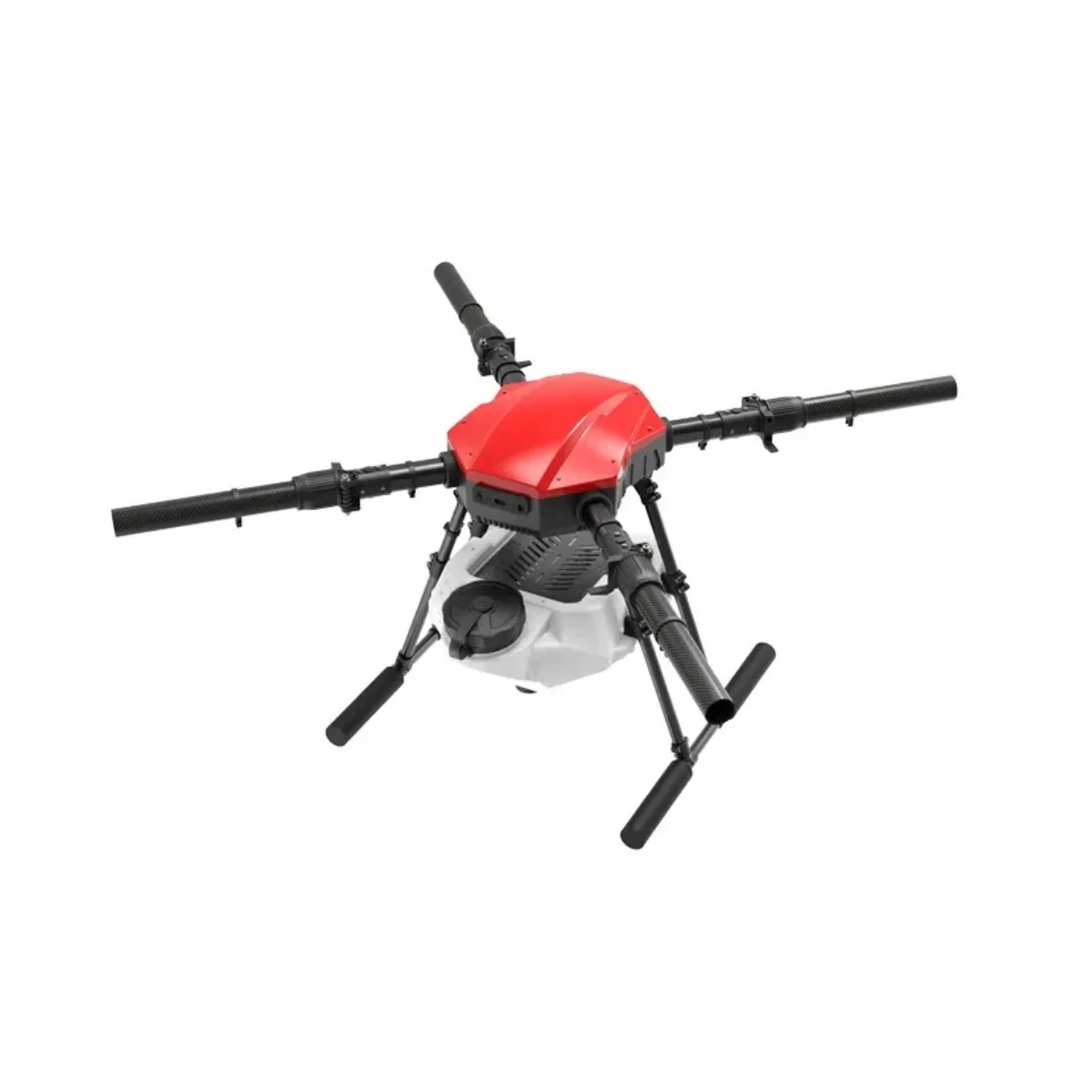
EFT E410P 10L 4-Axis Agricultural Drone Frame
A folding aluminium-arm agricultural drone frame designed for 10-litre payload spraying. The aluminium construction provides field-repairable durability and easy transport.
Strength Comparison: Real-World Data
Bending Strength Test (Same Arm Dimensions)
Consider a 20 mm outer diameter, 2 mm wall thickness arm tube of 300 mm length, fixed at one end and loaded at the tip (simulating motor thrust):
- CFRP tube (carbon fibre): Fails at approximately 95–120 N tip load (buckling/delamination failure).
- 6061-T6 aluminium tube: Permanently deforms at approximately 45–55 N tip load but does not fracture until much higher load.
- 7075-T6 aluminium tube: Permanent deformation at approximately 60–70 N tip load.
However, the CFRP tube at these dimensions weighs approximately 35 grams versus 70 grams for the aluminium — twice as heavy. For equal weight (halving the CFRP wall thickness or diameter), aluminium’s advantage diminishes further. At equal weight, CFRP arm sections are typically 2–4× stiffer than aluminium equivalents.
Impact Toughness (Crash Resistance)
This is where aluminium has a clear advantage over carbon fibre in some scenarios:
- CFRP arms fail by brittle fracture — they crack or shatter suddenly at a critical load. This often results in complete arm separation and motor loss.
- Aluminium arms fail by plastic deformation — they bend and absorb energy without fracturing completely. A bent aluminium arm may keep the motor attached and the drone recoverable after a moderate crash.
However, for high-speed FPV crashes, even aluminium arms often bend so severely that the motor is destroyed anyway. In this scenario, CFRP’s higher strength means it might survive a crash that would bend aluminium — it is only in the next energy bracket (where CFRP would crack) that aluminium’s ductility becomes an advantage.
Weight Impact on Flight Time and Agility
On a 5-inch FPV racer where the total all-up weight is 250–350 grams, every gram counts. The four arms of a carbon fibre 5-inch frame weigh approximately 20–30 grams combined. The equivalent aluminium arms would weigh 40–60 grams — an extra 20–30 grams on a 300-gram aircraft, adding roughly 7–10% to all-up weight. On a 10% heavier aircraft:
- Flight time decreases approximately 8–12% (motors work harder to maintain altitude).
- Acceleration is reduced — the same thrust-to-weight ratio drop affects maximum roll/flip rate.
- The flight controller must compensate more aggressively for the heavier platform, which can increase oscillation tendency.
For an agricultural drone with 10 kg of liquid payload, the same 30-gram difference in arm weight is 0.15% of total aircraft mass — completely negligible. This is why aluminium is appropriate for large agricultural drones but unsuitable for competitive FPV.
Vibration Damping: Which Material Wins?
This is a nuanced topic. Pure stiffness comparisons suggest carbon fibre would transmit more vibration (higher Young’s modulus = stiffer = less natural damping). However, real-world measurement tells a different story:
- CFRP arms have higher natural resonant frequencies than aluminium arms of the same geometry. A higher natural frequency means the arm is less likely to resonate at the typical motor vibration frequencies (100–500 Hz), which is actually beneficial.
- Aluminium arms have lower stiffness, which means they flex more under thrust. This flex can amplify low-frequency vibration and introduce it into the central frame where the flight controller sits.
- In practice, FPV builders using FC isolation mounts (rubber grommets or foam padding) find carbon fibre frames produce lower IMU vibration levels than comparable aluminium builds.
For agricultural drones where motor RPM is typically lower (large slow propellers), aluminium arms with their lower resonant frequencies are somewhat more prone to sympathetic vibration. Premium agricultural frames address this with vibration-isolated FC mounting, similar to FPV builds.
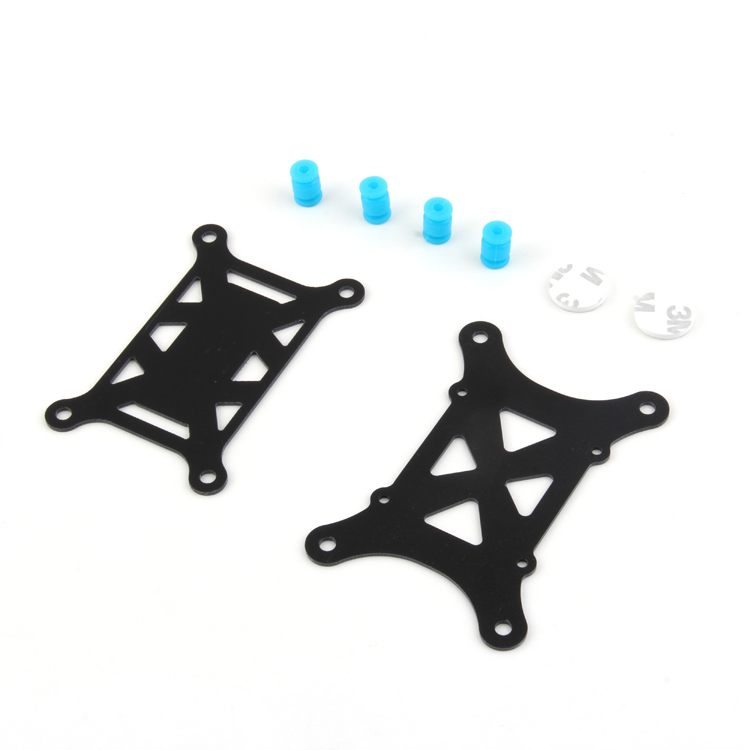
Anti-Vibration Shock Absorber for APM / KK / MWC / PixHawk
A damping mount that isolates your flight controller from frame vibration. Essential on aluminium frames and large carbon builds where resonance can upset IMU readings.
Crash Behaviour and Repairability
Carbon Fibre Crash Characteristics
Carbon fibre fails abruptly. When a CFRP arm hits the ground at speed, it absorbs virtually no energy through deformation — instead it fractures, releasing energy suddenly. The crack typically propagates in microseconds. A cracked CFRP arm is non-repairable in the field. You must order a replacement, which in India may mean a week’s wait for delivery.
However, CFRP’s brittleness is paired with its high strength. For most FPV crash severities, the arm survives because its higher strength threshold is never exceeded. You tend to see more damaged motors and props than damaged carbon frames in typical FPV flying.
Aluminium Crash Characteristics
Aluminium arms bend rather than shatter. In a moderate crash, an aluminium arm may survive with a slight bend that can be straightened by hand or with simple tools. Even a badly bent arm can often be returned to roughly correct geometry and flown again — a significant advantage for agricultural drone operators working in remote areas of India where spare parts are difficult to obtain.
The downside is that repeated bending weakens aluminium through work hardening — eventually a repeatedly bent arm will develop a stress fracture. Inspect aluminium arms regularly for cracks at bend points.
Cost Analysis for Indian Builders
Cost is a major consideration for Indian builders. Here is a realistic comparison:
- Carbon fibre 5-inch FPV frame (full frame): ₹800–₹2,500 for mid-range; ₹4,000–₹8,000 for premium. Replacement arm: ₹150–₹500.
- Aluminium arm tube (custom cut): ₹50–₹150 per arm from local hardware/engineering stores. Widely available across India in standard sizes.
- Agricultural drone with aluminium arms (EFT E410P/E416P): Frame cost is ₹15,000–₹35,000 but serves as a complete structural platform for a ₹3–6 lakh aircraft.
For student and hobby builders, aluminium is compelling purely on cost. A simple aluminium tube quadcopter frame can be built for under ₹500 in materials from local sources. The same specification in carbon fibre would cost ₹2,000–₹4,000 minimum just for the frame material.
Use-Case Recommendations
Choose Carbon Fibre If:
- Building a 2.5–7 inch FPV racer or freestyle quad where weight directly determines performance.
- Your aircraft is under 1 kg all-up weight where every gram matters.
- You want maximum stiffness for precise flight control and high-speed cornering.
- You are comfortable with the repair cost when arms eventually break.
Choose Aluminium If:
- Building an agricultural drone where arms must fold and unfold repeatedly in the field.
- Budget is a primary constraint and you need a flyable frame quickly.
- The drone will be operated by people who need to repair it in the field without specialist tools or parts.
- Building a large hexacopter or octocopter where the weight penalty of aluminium is proportionally small.
Hybrid Construction
Some commercial agricultural drone designs use carbon fibre for the central frame plate (where stiffness prevents flex between arm attachment points) and aluminium alloy tubes for the arms (for fold-ability and repairability). This hybrid approach gives the best structural performance at the centre while maintaining field serviceability in the arms. The EFT surveillance and agricultural frames follow this philosophy effectively.
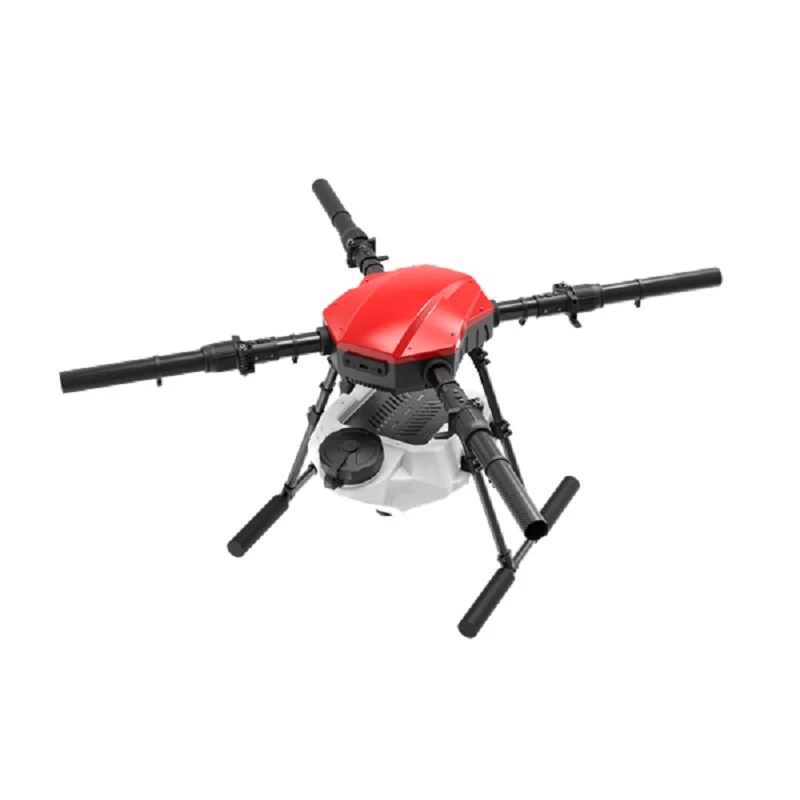
EFT E416P 16L 4-Axis Agricultural Drone Frame
A heavy-duty agricultural drone frame for 16-litre spray payloads. Folding aluminium arms balance structural strength with field repairability for Indian farm operations.
Recommended Products from Zbotic
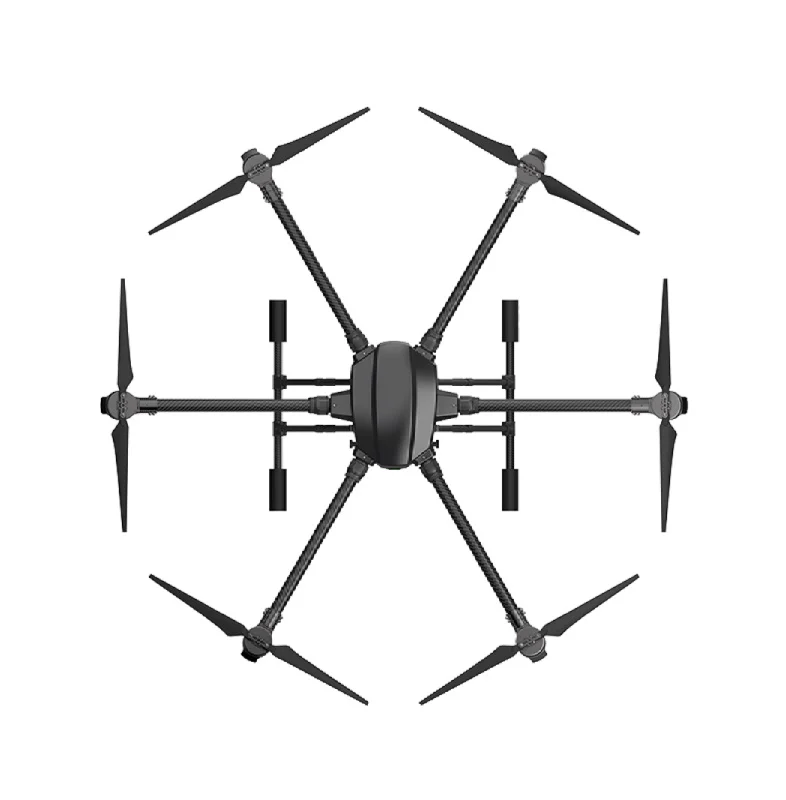
EFT 6120 Multifunction Surveillance Drone Frame
A professional hexacopter surveillance frame using structural-grade aluminium arms with carbon fibre central plates — the ideal hybrid design for long-duration operations.
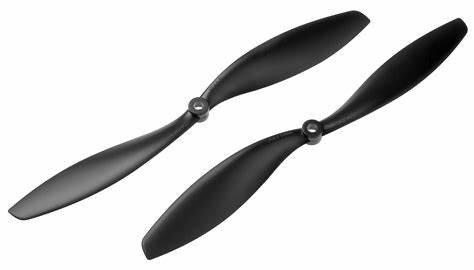
1045 2-Blade Carbon Fiber Propeller CW & CCW
Lightweight carbon fibre 10×4.5 inch propellers in matched CW/CCW pairs. The stiffness of CFRP props reduces vibration generation at the source, complementing your arm material choice.
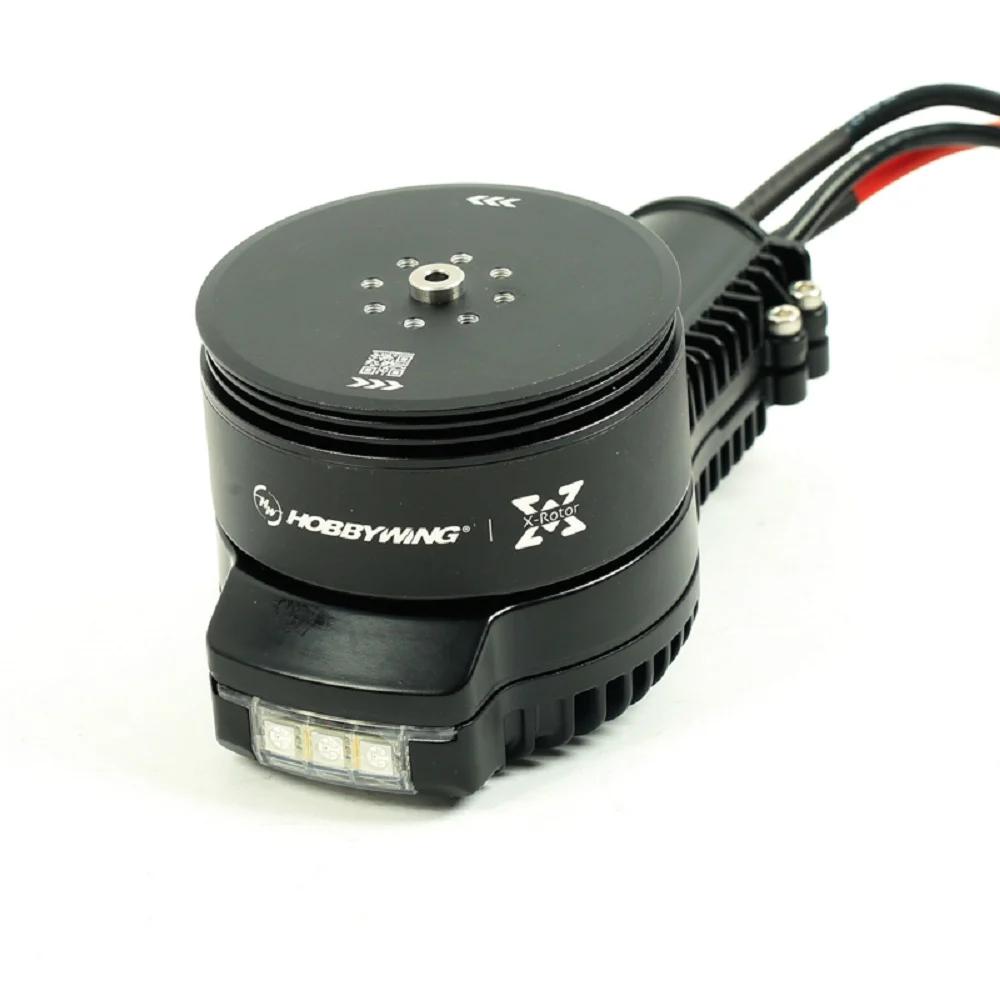
Hobbywing X6 Plus Motor CCW
A high-efficiency integrated motor+ESC unit for large multirotors. Pairs with folding aluminium arm frames for professional agricultural and surveillance builds.
Frequently Asked Questions
Is carbon fibre safe to cut and work with at home?
Carbon fibre dust is a respiratory hazard. When cutting or drilling CFRP, always wear an N95 or P100 respirator, safety goggles, and work outdoors or in a well-ventilated space with a vacuum extractor. Never dry-sand carbon fibre — wet-cut with a sharp CNC router or a diamond blade to minimise dust generation.
Can I replace individual arms on a carbon fibre frame?
Yes, on most FPV frame designs the arms are replaceable — they are bolt-on plates that can be unbolted from the central frame and replaced individually. This is one reason carbon fibre FPV frames remain cost-competitive despite arm breakage: you only need to buy the replacement arm, not a whole new frame.
Are aluminium drone frames allowed for DGCA registration in India?
DGCA registration covers the complete drone product, not the material of the frame. Both carbon fibre and aluminium frames are used in DGCA-registered commercial drones. The material choice affects the airworthiness demonstration but there is no specific restriction on either material.
Which material is better in Indian summer heat?
Both materials handle India’s ambient temperatures (up to 50°C in extreme cases) without structural issues — these temperatures are far below the melting point of aluminium (~660°C) or the thermal degradation point of CFRP epoxy (~180°C). However, black carbon fibre absorbs solar radiation and can become uncomfortably hot to the touch after sitting in direct sunlight, though this does not affect structural properties at normal flying temperatures.
Do carbon fibre arms interfere with GPS or radio signals?
Carbon fibre is electrically conductive and can partially shield RF signals. This is why most drones mount GPS receivers and RC antennas on stalks or poles that elevate them above the carbon fibre frame. Aluminium is also conductive but is typically less of a concern because aluminium frames are often used in designs where the GPS is naturally elevated on a mast. For both materials, keep antennas clear of the arm surfaces.
Build Better with Zbotic
Zbotic stocks agricultural drone frames, high-efficiency motors, carbon fibre propellers, and vibration dampeners for all types of multirotor builds across India. Find the right frame and components for your project today.







Add comment