
A DIY drone payload drop mechanism for agriculture turns a standard quadcopter into a precision farming tool — capable of deploying seeds, fertiliser pods, pesticide capsules, or even water payloads at exact GPS coordinates. In India, where smallholder farms dominate and labour costs for manual application are rising, a well-built agri-drone with a drop mechanism can deliver real economic value. This guide covers the mechanical design, electronics, servo control, and safety considerations for building your own drone payload system.
Agricultural Use Cases for Drone Payload Drop
Drone payload drop systems serve a growing range of precision agriculture applications in India:
- Direct seeding: Drop pre-coated or hydroseeding capsules into prepared soil — useful for paddy, mustard, and soybean farms where transplanting is labour-intensive.
- Fertiliser micro-dosing: Deploy slow-release fertiliser pellets at exact GPS coordinates matched to soil health maps.
- Pesticide spot-treatment: Drop encapsulated pesticide balls at pest hotspots identified by drone-mounted NDVI cameras, instead of blanket spraying.
- Beneficial insect release: Deploy egg cards of biological pest control agents (Trichogramma) — already used commercially in Maharashtra sugarcane farms.
- Emergency water delivery: Drop water pouches for firefighting or animal rescue in remote areas.
Indian Regulations for Agri-Drones
Before building a payload drop drone, understand the DGCA regulatory framework:
- Drones over 250g require registration on the Digital Sky Platform (digitalsky.dgca.gov.in).
- Agricultural drones are classified under the RPAS Rules 2021. “Yellow” category drones (250g–2kg) need a Remote Pilot Certificate (RPC).
- Drones used for pesticide/fertiliser dispersal may additionally require state agriculture department approval.
- Operations must stay below 120m AGL and within Visual Line of Sight (VLOS) unless you have a BVLOS waiver.
- Avoid flying within 5km of an airport without ATC permission.
For prototype and testing purposes, fly at designated aeromodelling grounds or private farmland away from populated areas, always complying with the no-fly zones shown on the Digital Sky app.
Types of Drop Mechanisms
1. Servo Hatch / Trapdoor
A spring-loaded hatch held closed by a servo arm. When the servo rotates, the hatch opens and payload falls by gravity. Simple, reliable, and works for seeds, pellets, and small pods up to ~500g.
2. Servo-Actuated Rotating Drum
A rotating cylinder with compartments dispenses measured quantities at each step — ideal for metered seed or fertiliser applications where consistent quantity per drop is important.
3. Electromagnet Release
An electromagnet holds the payload; cutting current drops it. Very fast release (~20ms) and no moving parts. Good for heavy single-item drops. Requires a 12V coil and a transistor driver circuit.
4. Linear Servo / Lead Screw
A linear actuator pushes a piston to dispense liquids or gel capsules. More complex but enables controlled quantity dispensing for liquid biocontrol agents.
For most beginners, the servo hatch mechanism is the best starting point — it’s mechanically simple, uses components you likely already have, and is easy to test and repair in the field.
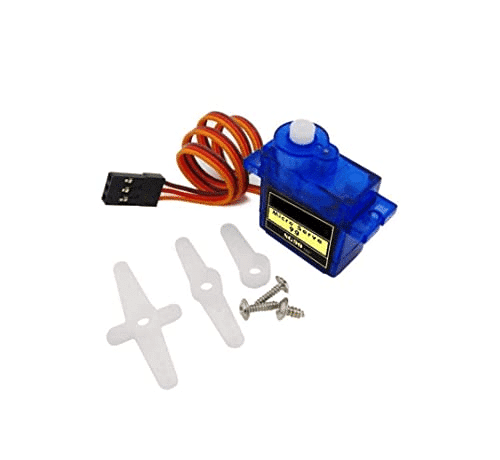
TowerPro SG90 180 Degree Rotation Servo Motor
The classic SG90 servo — lightweight (9g), 180° rotation, perfect for triggering a hatch drop mechanism on your agricultural drone.
Servo-Based Drop Mechanism Design
Materials Needed
- SG90 or MG90 servo motor (1 per hatch)
- 3D-printed or laser-cut hatch body (PETG recommended for outdoor UV resistance)
- M2 screws and standoffs for mounting
- Small spring (6mm diameter, 15mm length) for hatch return
- 150mm × 80mm × 50mm payload compartment box
Mechanical Design
The hatch is a hinged flap at the bottom of the payload box. The servo arm connects to the hatch via a short (30mm) linkage rod. In the closed position, the servo holds the hatch shut. When the servo rotates 90°, the linkage pulls away and the spring-loaded hatch snaps open, releasing the payload.
Key dimension: the linkage attachment point on the servo horn should be 15–20mm from the servo centre for a 1:1 linkage ratio. Longer = more mechanical advantage but less travel; shorter = more travel but more servo torque required.
3D Printing Tips
- Print hatch parts in PETG at 30% infill — it’s UV-resistant and won’t deform in Indian summer heat (unlike PLA which softens above 55°C).
- Add 0.3mm tolerance gaps in hinge pin holes for outdoor thermal expansion.
- Coat with UV-resistant clear spray paint for additional protection.
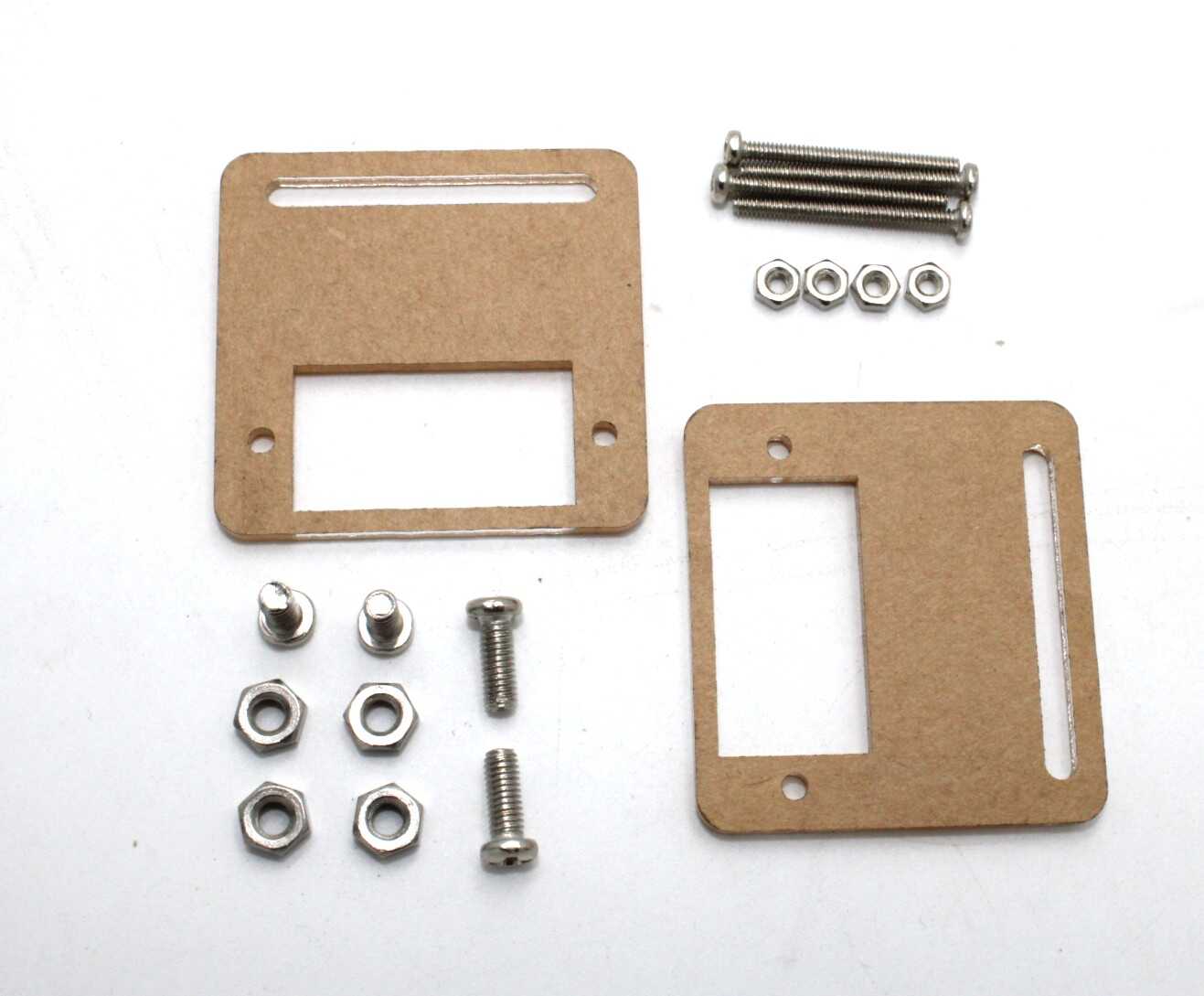
Servo Mount Holder Bracket For SG90/MG90 (Pack of 2)
Metal servo mounting brackets — secure your payload mechanism servos to the drone frame with these precision-cut holder brackets.
Weight, CG, and Payload Calculations
Payload addition has a dramatic effect on flight time and stability — careful weight planning is non-negotiable.
Maximum Payload Rule of Thumb
For stable flight, total take-off weight should not exceed 50% of the drone’s rated thrust. Example: a 5kg thrust quad should carry no more than 2.5kg total (including its own body weight of ~1.5kg, leaving 1kg for payload).
Centre of Gravity (CG)
The payload compartment must be mounted directly below the drone’s centre of mass — symmetrically positioned between all four arms. An off-centre payload shifts CG, causing the flight controller to compensate with asymmetric motor throttle, reducing efficiency and potentially causing instability.
Test CG before and after payload loading: balance the entire drone on a single finger under each arm. All four corners should require equal pressure. If not, redistribute battery or payload until balanced.
Flight Time Impact
Every 100g of payload reduces flight time by approximately 8–12% on a typical 4S 5000mAh agri-drone. A 500g seed payload → 40–60% flight time reduction. Size your battery accordingly, or use a larger 6S setup for agri-drone builds.
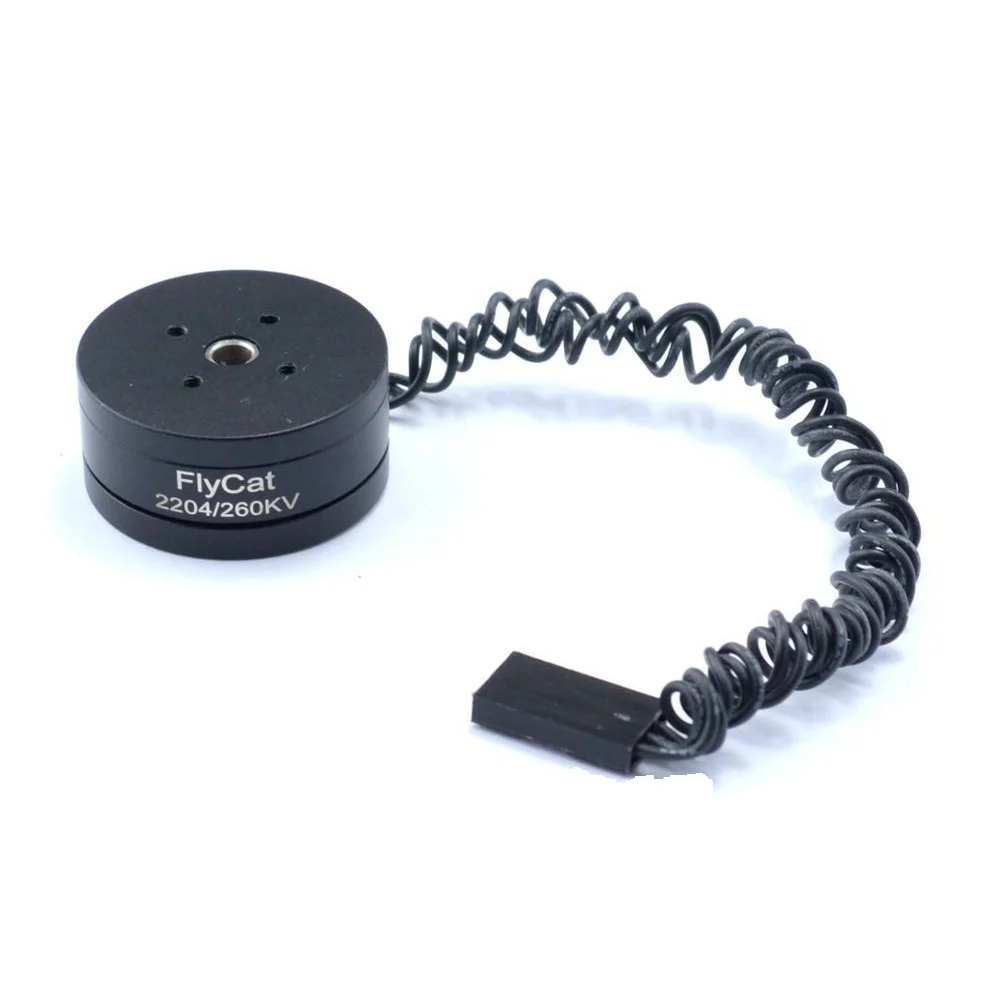
2204 260KV Brushless Gimbal Motor
Low-KV brushless motor for stable, torque-efficient operation — ideal for payload-carrying agri-drones where steady flight under load is critical.
Electronics and Trigger System
The servo trigger can be activated in three ways depending on your control system:
Option A: RC Channel (Simplest)
Connect the servo directly to a spare channel on your RC receiver (e.g., channel 5 or 6). Map a toggle switch on your transmitter to this channel. When you flip the switch, the servo moves and the hatch opens.
Option B: Arduino-Controlled (Smart)
An Arduino Nano sits between the RC receiver and the servo. It reads the PWM signal from the receiver, adds logic (timing delays, payload count limits), and drives the servo accordingly:
#include <Servo.h>
Servo dropServo;
int rcPin = 2;    // RC input from channel 5
int servoPin = 9; // Servo signal output
int payloadsRemaining = 6;

void setup() {
  dropServo.attach(servoPin);
  dropServo.write(0); // hatch closed
  pinMode(rcPin, INPUT);
}

void loop() {
  int pwm = pulseIn(rcPin, HIGH, 25000);
  if (pwm > 1700 && payloadsRemaining > 0) {
    dropServo.write(90);  // open hatch
    delay(800);           // payload falls
    dropServo.write(0);   // close hatch
    payloadsRemaining--;
    delay(500);           // debounce
  }
}
Option C: Flight Controller MAVLink (Advanced)
ArduPilot’s DO_SET_SERVO or DO_GRIPPER commands can trigger the servo from a mission plan. The drone autonomously drops payload at a GPS waypoint — true precision agriculture deployment.
Mounting to the Drone Frame
Secure mounting is critical — a payload module that vibrates or wobbles introduces attitude disturbances that the flight controller must constantly correct, wasting battery and degrading flight stability.
- Use M3 or M4 nylon standoffs between the payload module and drone frame. Nylon is non-conductive and provides slight vibration isolation.
- Add anti-vibration foam pads (3M VHB or similar) between the payload module and frame rails.
- Route servo signal and power cables through the frame arms where possible to prevent cable snag on propellers.
- Include a quick-release mechanism (sliding rails with spring clips) so the payload module can be loaded/unloaded in under 30 seconds in the field.
Autonomous Drop Control with ArduPilot
For precision agriculture, manual triggering is not scalable. ArduPilot Mission Planner supports autonomous payload drops via waypoint commands:
- In Mission Planner, create a waypoint grid covering the field (use the Auto WP Grid tool).
- At each drop point, add a
DO_SET_SERVOcommand: Channel 9, PWM 1900 (open) → 500ms wait → Channel 9, PWM 1100 (close). - Upload the mission to the drone via telemetry radio.
- Execute the mission in AUTO mode — the drone flies to each waypoint, drops payload, and continues to the next point autonomously.
Use RTK GPS (like Here3+) for sub-10cm placement accuracy if you need precise row-by-row seeding. Standard M8N GPS gives 1–2m accuracy, which is adequate for spot fertilisation but insufficient for row seeding.
Frequently Asked Questions
Q: How heavy a payload can an SG90 servo handle?
The SG90 has 1.8 kg·cm torque. For a 20mm moment arm, it can hold ~900g of hatch + payload force. For payloads over 200g in the compartment, use an MG90S (2.4 kg·cm) or MG996R (10 kg·cm) servo. Overloading an SG90 will strip the plastic gears quickly.
Q: Can I use this system on a commercially-bought drone like a DJI?
DJI drones with SDK access (DJI SDKs for Enterprise series) allow accessory attachment. However, most consumer DJI drones don’t allow payload drops without a licensed DJI payload attachment. Custom flight controllers (ArduPilot/PX4) on your own frame give complete freedom.
Q: What’s the minimum drone size for a 200g payload drop?
For a 200g payload, a 450mm quadcopter with 2212 motors and 9045 propellers on 3S should manage comfortably. Total thrust of ~2kg with 1.5kg drone leaves 500g margin. Always test with sandbag equivalent weights before real payloads.
Q: How do I prevent the hatch from accidentally opening mid-flight?
Add a mechanical locking pin (servo-triggered) or configure the RC switch to require a 2-second hold before triggering the drop in your Arduino code. Also set a failsafe: if RC signal is lost (PWM drops to 0), the servo stays in the closed position.
Q: Is DGCA approval required for agri-drone payload drops in India?
Yes — as of 2023, fertiliser and pesticide dispersal requires both DGCA RPAS registration and state agriculture department NOC. Seed dropping from drones is in a regulatory grey area — consult your state agriculture office. Always fly under the applicable rules for the specific payload type.
Servos, brushless motors, ESCs, and all the electronics you need for your agri-drone payload system — delivered fast anywhere in India. Shop Robotics & DIY at Zbotic today.





Add comment