
The Prusa MK3S is widely regarded as one of the best FDM 3D printers ever made — reliable, open-source, and highly documented. The good news for Indian makers is that building a Prusa MK3S clone 3D printer in India is entirely feasible with locally available and imported components. In this guide, we break down every part you need, where to source them in India, and how to assemble your DIY 3D printer from scratch.
Why Build a Prusa MK3S Clone?
The original Prusa MK3S kit costs approximately ₹55,000–₹70,000 when imported to India including duties. A well-sourced clone can be built for ₹15,000–₹25,000 with comparable print quality. Since Prusa Research publishes all hardware files under open-source licenses (CERN OHL v1.0 for hardware, GPL for firmware), building a clone is completely legal and widely practiced.
Benefits of DIY over buying a kit:
- Deep understanding of every mechanical and electronic system — easier to repair and upgrade
- Freedom to deviate from the original design (larger build volume, different extruder, dual Z-axis)
- Substitute expensive branded parts with quality Indian alternatives
- Genuine satisfaction of printing from a machine you built yourself
What stays the same as the original: Frame geometry, motion system (i3-style XZ carriage on Y bed), Bowden-less direct drive extruder, PINDA2-style inductive levelling, power panic, filament sensor.

42HS48-1204A-20F NEMA17 5.6 kg-cm Stepper Motor with Detachable Cable
High-torque NEMA17 stepper motor matching Prusa MK3S specifications. Detachable cable, D-type shaft, 5.6 kg-cm holding torque — ideal for X, Y, and Z axes.
Frame and Mechanical Structure
The MK3S frame is built from laser-cut steel plates (8mm and 4mm) and a combination of 3D-printed plastic parts. For a clone build in India:
Frame Options
- Laser-cut steel plates: Any local laser cutting shop can cut from the Prusa DXF files (available on Prusa’s GitHub). 3–4mm mild steel, powder coated in black. Cost: ₹800–₹1,500 depending on city.
- Aluminium extrusion alternative: Some clone builders use 2020/2040 V-slot extrusions for a cleaner look. This requires modified printed parts for mounts.
Printed Parts
You need approximately 50–60 3D-printed parts. If you don’t have a printer yet, services like Cults3D local print farms, Hubs, or local maker spaces in Pune/Bangalore/Hyderabad can print these in PETG or ABS for ₹1,500–₹3,000. PETG is recommended over PLA for heat resistance near the heated bed and motors.
Download all STL files from: github.com/prusa3d/Original-Prusa-i3
Fasteners
MK3S uses primarily M3 and M5 screws with T-nut/heatset inserts. Source from local hardware stores (Stanley, Elora) or Aliexpress. Total fastener cost: ₹400–₹700.
Stepper Motors: NEMA17 Specifications
The MK3S uses five stepper motors total:
- X axis: NEMA17, 1.8°/step, ~40Ncm holding torque
- Y axis: NEMA17, 1.8°/step, ~40Ncm holding torque
- Z axis (x2): NEMA17, 1.8°/step, ~30Ncm — these only need to lift the X carriage
- Extruder (E axis): NEMA17, 1.8°/step, short body (25–28mm), ~20Ncm — must be short to fit the extruder assembly
Key spec to verify: step angle and wiring. Both 1.8° (200 steps/rev) and 0.9° (400 steps/rev) motors are NEMA17 frame. MK3S uses 1.8° for XYZ and a special 0.9° motor for the extruder in later versions. Check your motor’s datasheet. Firmware microstep settings must match.
Wire pairing: Use a multimeter (continuity mode) to identify the two coil pairs (A+/A- and B+/B-). Incorrect wiring causes the motor to vibrate without turning — swap one pair’s wires to fix.

A4988 Stepper Motor Driver Controller Board – Red
Industry-standard A4988 stepper driver with up to 1/16 microstepping. Compatible with RAMPS 1.4 and most 3D printer controller boards. Easy Vref trimmer adjustment.
Motion System: Rods, Bearings, Belts
Smooth Rods and Linear Bearings
- X axis: 2× 370mm, 10mm diameter smooth rods + LM10UU bearings
- Y axis: 2× 330mm, 8mm diameter smooth rods + LM8UU bearings
- Z axis: 2× 320mm, 8mm diameter smooth rods + LM8UU bearings + 2× 320mm M5 lead screws with T8 brass nuts
Smooth rods must be precision ground (h6 tolerance) for smooth motion without play. Source from industrial bearing suppliers (SKF, NTN resellers) or Aliexpress for budget builds. Bearings: use name-brand (ABEC-5 rated minimum) to avoid play and noise.
Belts and Pulleys
MK3S uses GT2 timing belts (2mm pitch) on X and Y axes, with 16-tooth GT2 pulleys on motor shafts. Belt tension is critical — too loose causes layer shifting, too tight stresses motor bearings. X belt: ~540mm loop, Y belt: ~820mm loop.
Electronics: Controller, Drivers, PSU
Controller Board
Original MK3S uses Prusa’s custom EINSy board (ATmega2560 + TMC2130 drivers). For a clone:
- Budget option: Arduino Mega 2560 + RAMPS 1.4 + A4988 drivers. Total: ₹800–₹1,200. Works with Marlin firmware. Louder (A4988 vs TMC stealth chop) but fully functional.
- Mid-range: BigTreeTech SKR Mini E3 V3 (32-bit, TMC2209 drivers built-in). ~₹2,500. Near-silent, faster, supports input shaping.
- Clone-accurate: BTT Octopus or MKS SGen L with TMC2130 drivers for actual SPI control matching MK3S behavior.
Stepper Drivers
A4988 drivers work well with RAMPS and are widely available in India. Set Vref (current limit) correctly: Vref = I_motor × 0.4 × R_sense / 8. For a typical 1.0A NEMA17: Vref ≈ 0.5V. Use a multimeter — incorrect Vref causes overheating or skipping.
Power Supply
MK3S uses a 24V PSU for faster heated bed recovery. For RAMPS-based builds, a 12V 30A PSU is standard. A cheap 12V 30A PSU from a local CCTV supplier (₹700–₹900) works fine but use a proper IEC inlet with fuse.
Heated Bed
MK3S uses a 24V 200×200mm aluminum heated bed with PEI spring steel sheet. For 12V RAMPS builds, use a 12V MK2B or MK52 clone heated bed (₹500–₹800). PEI sheets are available on Amazon India.
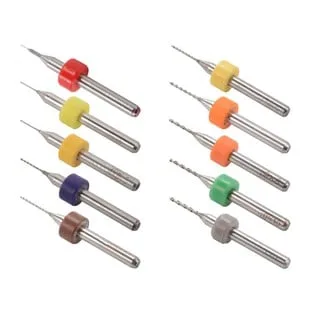
0.1–1.0mm Mixed 3D Printer Nozzle Cleaning Drill Bit Kit (10 Pcs)
Essential maintenance kit for MK7/MK8 compatible hotends. Clear partial clogs without disassembly. Every 3D printer builder should have one of these.
Extruder and Hotend Assembly
The MK3S uses the Prusa-designed Bondtech-inspired dual-drive extruder (BMG-style) with a 0.4mm hardened brass nozzle. For clones:
- Extruder: BMG clone extruder (dual drive) ₹400–₹700, or an E3D Titan clone for ₹200–₹350.
- Hotend: E3D V6 clone is the standard choice. Includes heater block, 40W heater cartridge, NTC 100k thermistor, and 0.4mm brass nozzle. ₹200–₹400 from local suppliers.
- Heatbreak: A bimetallic heatbreak (stainless/brass or titanium) significantly reduces heat creep and clogs — worth the ₹300–₹500 upgrade.
- Cooling fan: Two fans needed — 40mm hotend cooling fan and 30mm or 40mm parts-cooling blower. Wattage must match your PSU voltage.
Firmware and Calibration
Prusa MK3S runs a fork of Marlin firmware, but for a clone, standard Marlin 2.x is the go-to choice.
Key Marlin settings to configure:
- Steps per mm: XY = (motor steps × microsteps) / (pulley teeth × belt pitch) = 200 × 16 / (16 × 2) = 100 steps/mm. Z = (200 × 16) / (lead screw pitch) = typically 400 steps/mm for T8 8mm/rev lead screws. E (extruder): depends on your extruder gear ratio — BMG is ~415 steps/mm.
- PID tuning: Run
M303 E0 S200 C8for extruder PID andM303 E-1 S60 C8for heated bed. Save withM500. - Z probe offset: Measure the distance between your probe trigger point and the nozzle tip. Set with
M851 Z-x.xx. - Mesh bed leveling: Enable UBL (Unified Bed Leveling) in Marlin for automatic first-layer compensation.
First print calibration order: (1) Z offset → (2) first layer calibration → (3) extruder e-steps → (4) PID tuning → (5) test print.
Frequently Asked Questions
Q: How long does it take to build a Prusa MK3S clone?
With all parts in hand, assembly takes 2–4 days for a first-time builder — longer if you need to reprint parts or troubleshoot wiring. Many builders spread this over a weekend.
Q: Can I buy a Prusa MK3S clone kit assembled in India?
Some Indian sellers on Indiamart and Amazon offer assembled Prusa-style printers at ₹12,000–₹20,000. Quality varies widely. Building from parts gives better quality control and learning value.
Q: What filament should I use for my first print?
PLA is the easiest — prints at 200°C with no heated enclosure, minimal warping. Use a quality brand like Esun, eSun, or Polymaker. After you’re comfortable, move to PETG for stronger, slightly heat-resistant parts.
Q: Do I need a BLTouch for auto bed leveling?
The MK3S uses an inductive PINDA2 probe for leveling on its steel PEI sheet. BLTouch is compatible too and works on glass beds. Either is better than manual leveling for beginners.
Q: What is the build volume of an MK3S clone?
Standard MK3S: 250mm × 210mm × 210mm (XYZ). You can increase Y by using a longer bed and frame plate, but Z increases require a longer lead screw and adjusted Zmax endstop position.
Zbotic stocks NEMA17 stepper motors, A4988 motor drivers, nozzle cleaning kits, and more components for your Prusa MK3S clone build. Fast shipping across India. Browse the Robotics & Automation store and get building.







Add comment