
The choice between a brushless and a brushed DC motor is one that makers, engineers, and hobbyists face repeatedly. It is not a simple question of one being universally better — both motor types have genuine strengths and real weaknesses, and the right choice depends entirely on your application’s requirements for efficiency, lifespan, cost, noise, control complexity, and operating environment.
This guide provides a thorough, unbiased comparison of brushless versus brushed DC motors, covering the underlying technology, real-world performance differences, control electronics, and detailed guidance on which type suits which project category. By the end, you will have a clear framework for making this decision confidently on any future project.
1. How a Brushed DC Motor Works
A brushed DC motor has three core components: a stationary magnet assembly (stator), a rotating winding (rotor/armature), and a mechanical commutator with carbon brushes. The brushes press against the commutator ring on the rotating shaft and carry current to the armature windings. As the rotor turns, the commutator segments switch the current direction in the windings, maintaining the magnetic torque in the same direction regardless of shaft position.
This mechanical commutation is brilliantly simple — the motor requires only two wires (+ and −) and runs directly from a DC voltage without any external control electronics beyond a simple transistor or switch. Reverse the polarity and the motor reverses direction. Apply more voltage and it spins faster. This simplicity is the brushed motor’s greatest asset.
The downside is the brushes. They wear down over time through friction with the commutator, generating carbon dust, heat, electrical noise (EMI), and eventually requiring replacement. The brushes are the life-limiting component.
2. How a Brushless DC Motor Works
A brushless DC (BLDC) motor inverts the brushed motor architecture: the permanent magnets are on the rotor, and the windings are on the stationary stator. With no mechanical contact between rotating and stationary parts, there is no friction at the commutation point and no wear mechanism.
Commutation is handled electronically by an Electronic Speed Controller (ESC). The ESC reads the rotor’s magnetic position (via Hall-effect sensors in sensored BLDC motors, or via back-EMF sensing in sensorless motors) and switches current through three stator phases in the correct sequence to maintain torque. This requires three power wires to the motor and a signal wire to the ESC, plus the ESC’s own power connection.
The electronic commutation allows precise control over timing, braking, and regenerative energy recovery. Modern ESCs for drones and RC vehicles operate at switching frequencies of 8–48 kHz, enabling extremely responsive speed control.
3. Key Differences: Head-to-Head
| Feature | Brushed DC Motor | Brushless DC Motor |
|---|---|---|
| Commutation | Mechanical (brushes) | Electronic (ESC) |
| Wires to Motor | 2 | 3 (+ signal to ESC) |
| Efficiency | 70–80% | 85–95% |
| Power Density | Moderate | High (especially outrunner) |
| Lifespan | 1,000–5,000 hours | 10,000–20,000+ hours |
| Maintenance | Brush replacement needed | Essentially zero (bearings only) |
| Electrical Noise | High (brush arcing) | Low |
| Control Simplicity | Very simple (direct voltage) | Complex (requires ESC) |
| Cost (Motor) | Low | Medium–High |
| System Cost (with driver) | Low (simple H-bridge) | Medium (ESC required) |
| Heat Generation | Higher (brush friction) | Lower |
| Speed Range | Wide (low to high) | Typically high RPM |
| Torque at Low Speed | Good | Excellent (with sensored ESC) |
| Use in Explosive Atmospheres | No (sparking brushes) | Yes (no sparks) |
4. Efficiency and Power Density
The efficiency gap is real and significant. Brushed motors typically achieve 70–80% electrical-to-mechanical efficiency under optimal load. Brushless motors run at 85–95%. The difference stems from brush friction losses (3–8% of input power) and commutation sparking losses in brushed motors, plus better conductor fill in the stator windings of modern BLDC designs.
Power density (watts of output per kilogram of motor weight) heavily favours brushless designs. A 2204 brushless motor weighing 48 g can produce 60–80 W of useful shaft power. An equivalent brushed motor would weigh 3–5× more for the same power output. This is why every drone, electric aircraft, and high-performance RC vehicle uses brushless technology — weight is critical, and brushless motors deliver more power per gram.
For a ground robot or a fixed machine where weight is not critical, this power density advantage matters less, and the simpler brushed motor may be entirely adequate.
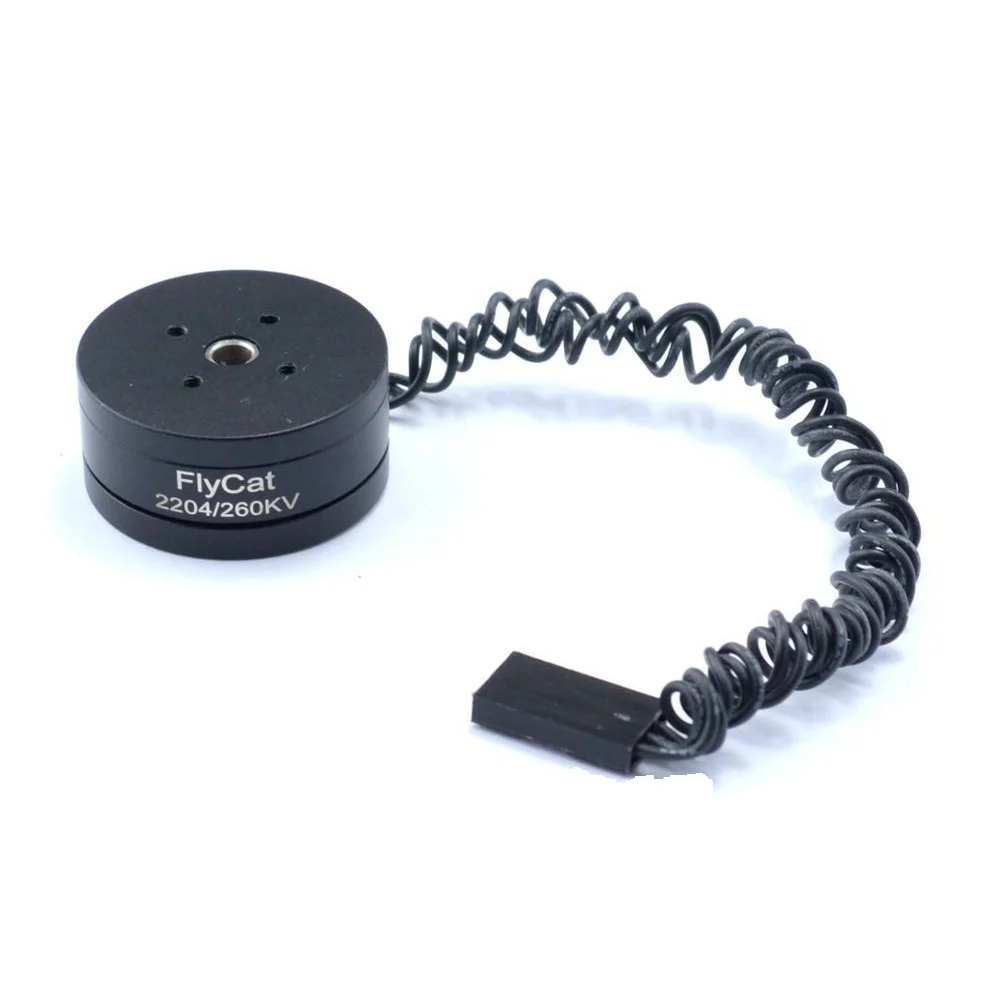
2204 260KV Brushless Gimbal Motor (30cm Cable)
High-efficiency brushless gimbal motor for camera stabilisation, drones, and precision rotation applications demanding smooth, quiet operation.
5. Lifespan and Maintenance
The lifespan difference is dramatic and often the deciding factor in industrial applications. Carbon brushes wear at approximately 0.01–0.05 mm per hour of operation. A standard brush set may last 1,000–5,000 hours depending on load and speed. In demanding applications (continuous operation, high current, high speed), brush life can be as short as 500 hours. Brush replacement requires motor disassembly.
Brushless motors have only two wear points: the two ball bearings on the shaft. Quality sealed bearings last 10,000–30,000 hours. For practical purposes in most applications, brushless motors last until the machine they drive is retired or until the bearings are serviced (a simple, inexpensive maintenance task).
For home hobbyist use running a few hours per week, a brushed motor will last years before brushes need replacement. For a robot running 8 hours per day in a school or research lab, brushless is the only sensible choice.
6. Control Complexity
This is where brushed motors hold their biggest practical advantage. A brushed motor needs only a transistor switch for unidirectional control, or an H-bridge IC for bidirectional control — total extra cost: ₹20–100. The entire control loop can be implemented in three lines of Arduino code.
A brushless motor requires an ESC: a dedicated three-phase inverter with its own microcontroller running commutation algorithms. Entry-level ESCs for hobby drone motors cost ₹300–600. Industrial three-phase variable frequency drives (VFDs) for large BLDC motors cost thousands of rupees. Programming an ESC from an Arduino typically involves servo-style PWM signals (1000–2000 µs), which is straightforward but adds one more component and calibration step to every project.
For beginners building their first robot or motor control project, brushed motors provide a far simpler learning experience. Brushless makes sense once you need the performance advantages it delivers.
7. Noise and EMI
Brush arcing generates significant electrical noise (EMI — electromagnetic interference) that can disrupt sensitive electronics nearby. If your robot carries an ultrasonic sensor, an I2C IMU, or a Bluetooth module, brushed motor noise may cause erratic sensor readings or communication errors. Ferrite beads on motor leads, capacitors across motor terminals (100 nF ceramic + 47 µF electrolytic), and twisted-pair motor wiring all help but cannot eliminate brush-generated EMI entirely.
Brushless motors produce no brush sparks. Their EMI is limited to switching noise from the ESC’s MOSFETs, which is easily filtered. This makes BLDC motors far more compatible with sensitive electronics, medical equipment, and precision measurement systems.
Acoustic noise also differs: brushed motors produce a characteristic hum and roughness from brush vibration, especially at low speeds. Brushless motors are significantly quieter — critical for camera gimbal applications where acoustic vibration would transmit through the frame to the camera.
8. Cost Considerations
At the component level, brushed motors are cheaper. A TT gear motor for a small wheeled robot costs ₹50–120. An N20 gear motor costs ₹150–300. Comparable torque from a brushless gear motor with a suitable ESC costs 3–5× more.
Over the system lifetime, this changes. Factor in brush replacement costs, downtime for maintenance, and efficiency losses (a 75% efficient brushed motor in a battery-powered application requires 25% more battery capacity than a 90% efficient brushless equivalent), and the total cost of ownership often favours brushless for high-usage systems.
For a school robotics project, hobby build, or prototype that runs occasionally: brushed. For a commercial product, industrial automation application, or anything running continuously: brushless.
9. Project-by-Project Decision Guide
Use Brushed Motors For:
- Beginner wheeled robots: TT motors with L298N or TB6612FNG — simple, cheap, adequate
- RC car steering servos: MG996R and similar are brushed — well-optimised for this role
- Conveyor prototypes: Low-duty-cycle, easily controlled, cost-effective
- Desktop CNC (Z-axis feed): Low RPM geared motors work well
- Educational projects: Simplicity enables faster learning
- Battery-powered toys: Low cost, acceptable efficiency at small scale
Use Brushless Motors For:
- Drones and UAVs: The only viable choice — weight and efficiency are paramount
- Camera gimbals: Low noise, smooth torque, no EMI disrupting IMU sensors
- Electric vehicles (scooters, go-karts): Efficiency and lifespan justify cost
- CNC spindles: High RPM, long continuous duty, no brush wear
- 3D printer extruder steppers: (Note: these are actually stepper motors, but the comparison is relevant)
- Commercial product development: Reduced maintenance = lower support costs
- Continuous-duty industrial machines: 8+ hours/day operation demands brushless reliability
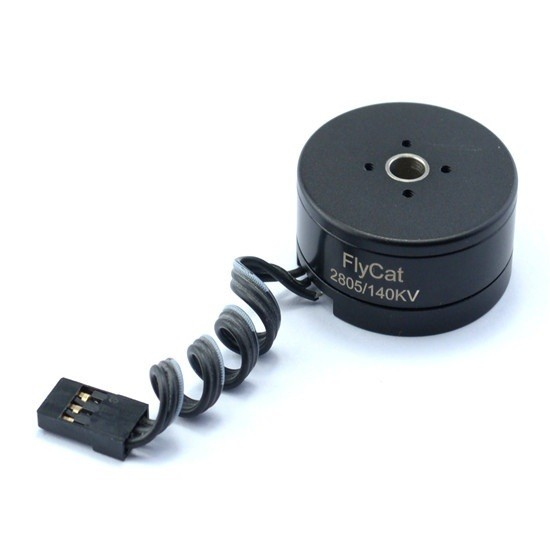
2805 140KV Gimbal Brushless Motor
Low-KV brushless gimbal motor delivering high torque at low RPM for 3-axis camera stabilisers and precision positioning systems.
10. Recommended Motors at Zbotic
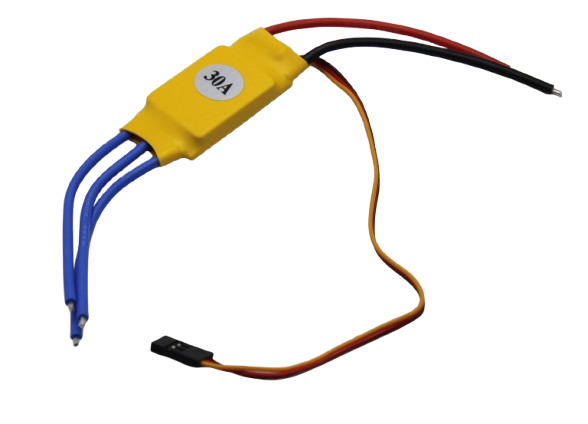
30A BLDC ESC Brushless Electronic Speed Controller
30A ESC for brushless motors in drones, RC aircraft, and boats — pairs perfectly with the 2204 and 2805 brushless motors.
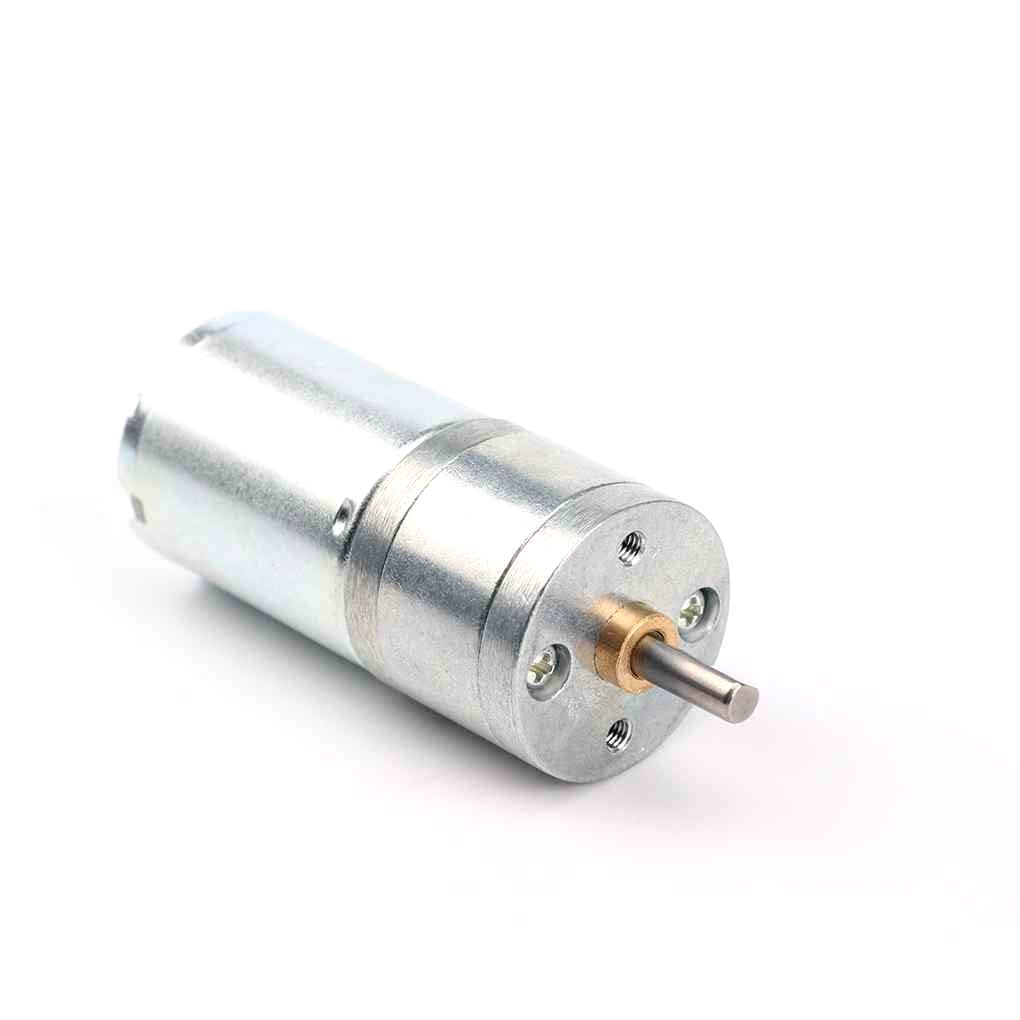
25GA-370 12V 12RPM DC Reducer Gear Motor (Brushed)
Reliable brushed gear motor for wheeled robots, conveyor belts, and low-speed automation — ideal entry point for brushed motor projects.
Frequently Asked Questions
Can I replace a brushed motor with a brushless motor in an existing design?
Mechanically yes, if the shaft size and mounting pattern match. Electrically, you must add an ESC and modify the control signal. The effort is often worthwhile for products that will run continuously, but for a one-off prototype, sticking with the original brushed motor is usually simpler.
What does KV mean in brushless motor specifications?
KV is the RPM per volt constant — not kilovolts. A 1000 KV motor running on a 12 V supply will rotate at approximately 12,000 RPM unloaded. Lower KV motors (260 KV, 140 KV) run slower but produce more torque — these are gimbal and propeller motors. Higher KV motors (2300+ KV) run fast with small propellers — these are racing drone motors.
Are brushless motors more reliable in dusty environments?
Yes. Brushed motors accumulate carbon dust inside from brush wear, and external dust can contaminate the commutator causing erratic operation. Brushless motors have no internal brush dust and are easier to seal against environmental contamination. Many brushless motors carry an IP rating for dust and water resistance.
Which type is better for a solar-powered project?
Brushless, unambiguously. The 10–20% efficiency advantage directly translates to requiring smaller solar panels or longer runtime on the same panel. Every watt saved matters in solar-powered applications.
Can a brushless motor work without an ESC?
No — brushless motors require properly timed three-phase commutation to produce continuous rotation. Applying DC voltage to any two wires will cause the motor to torque to one position and lock there. An ESC (or a dedicated BLDC driver IC like the DRV10970) is mandatory.
Do brushed motors work at very low speeds?
Better than sensorless brushless motors. Sensorless ESCs typically have a minimum speed below which back-EMF sensing fails and commutation breaks down. Brushed motors work down to near-zero speed (extremely slow crawl), limited only by brush friction and static motor friction. Sensored brushless motors with Hall sensors also work well at very low speeds.
Conclusion: Making the Right Choice
Neither motor type wins universally. Brushed DC motors win on cost, simplicity, low-speed torque, and ease of getting a beginner project running quickly. Brushless DC motors win on efficiency, power density, lifespan, low noise, and suitability for demanding continuous-duty applications.
Apply this decision framework: if your project is battery-powered, weight-sensitive, noise-sensitive, or will run for hundreds of hours — choose brushless. If it is a prototype, a learning exercise, a low-cost build, or a fixed machine where simplicity matters more than efficiency — choose brushed. Both motor types are available at Zbotic across a wide range of specifications to match any project requirement.




Add comment