
Battery Capacity mAh vs Wh: Understanding the Difference Explained
One of the most common points of confusion for electronics beginners and experienced hobbyists alike is understanding battery capacity — specifically the difference between mAh and Wh. You see mAh on your phone battery, Wh on a laptop battery, and sometimes both on a power bank. Why does the same battery need two different capacity units? Which one actually tells you how long your device will run? This guide explains everything clearly with real-world examples relevant to Indian makers, Arduino projects, and everyday electronics.
What is mAh (Milliampere-Hour)?
mAh stands for milliampere-hour — a unit of electric charge. One milliampere-hour means a current of one milliampere (1 mA = 0.001 A) flowing continuously for one hour. Alternatively, it means 1000 mA flowing for 0.001 hours, or 10 mA for 0.1 hours — the math always multiplies back to the same total charge delivered.
Think of mAh like a water tank capacity measured in litres per hour at a specific flow rate. A 3000 mAh battery can supply:
- 3000 mA (3A) for 1 hour, OR
- 1000 mA (1A) for 3 hours, OR
- 300 mA for 10 hours, OR
- 30 mA for 100 hours
mAh is a measure of charge only — it tells you how many electrons the battery can deliver, but says nothing about the voltage at which those electrons are delivered. This is a critical distinction that many people overlook.
Common mAh values you’ll encounter:
- CR2032 coin cell: 225 mAh
- AA alkaline battery: 2400–3000 mAh
- 18650 Li-ion cell: 2000–3500 mAh
- Smartphone battery: 3000–6000 mAh
- Tablet battery: 6000–12000 mAh
What is Wh (Watt-Hour)?
Wh stands for watt-hour — a unit of energy. One watt-hour is the energy delivered when one watt of power flows for one hour. Since power = voltage × current (P = V × I), a watt-hour accounts for BOTH voltage and current.
This makes Wh the more physically meaningful unit for comparing batteries. A 10 Wh battery can deliver:
- 10 watts for 1 hour, OR
- 5 watts for 2 hours, OR
- 1 watt for 10 hours
…regardless of the voltage. You can directly compare a 12V battery and a 3.7V battery using Wh — you cannot do this with mAh alone.
Common Wh values you’ll encounter:
- Smartphone battery (3.85V, 3500 mAh): ~13.5 Wh
- 18650 Li-ion cell (3.7V, 3000 mAh): ~11.1 Wh
- Laptop battery (10.8V, 5000 mAh): ~54 Wh
- Car lead-acid battery (12V, 45Ah): 540 Wh
- Home solar battery bank (48V, 100Ah): 4800 Wh (4.8 kWh)
The Key Difference: Why Both Units Exist
The fundamental issue is this: mAh only makes sense when you know the voltage. Two batteries can both be labelled “3000 mAh” but contain very different amounts of energy if they operate at different voltages.
Example that trips up many beginners:
- Battery A: 3000 mAh at 3.7V (a typical 18650 Li-ion) = 11.1 Wh
- Battery B: 3000 mAh at 7.4V (a 2S LiPo pack) = 22.2 Wh
Battery B has exactly twice the energy of Battery A, even though both say “3000 mAh”. If you used mAh to compare them, you’d think they’re identical — a costly mistake in drone design, electric vehicles, or any high-power application.
This is why:
- Smartphones and power banks use mAh — all are nominally 3.6–3.7V Li-ion cells, so the voltage is implied and mAh comparison is valid between similar devices.
- Laptops and EVs use Wh — they use multi-cell packs at different voltages, so Wh is the only honest comparison.
- Aviation regulations use Wh — airlines limit carry-on batteries to 100 Wh (or 160 Wh with approval) because Wh is the true energy measure regardless of chemistry or voltage.
How to Convert Between mAh and Wh
The conversion formula is straightforward:
mAh = (Wh × 1000) ÷ V
Example conversions:
| Battery | Voltage | mAh | Wh |
|---|---|---|---|
| 18650 Li-ion cell | 3.7V | 3000 mAh | 11.1 Wh |
| 3S LiPo drone pack | 11.1V | 5000 mAh | 55.5 Wh |
| 6S LiPo racing drone | 22.2V | 1500 mAh | 33.3 Wh |
| 12V lead-acid (car) | 12V | 45,000 mAh (45Ah) | 540 Wh |
| AA alkaline | 1.5V | 2500 mAh | 3.75 Wh |
| Laptop battery | 11.1V | 4400 mAh | 48.8 Wh |
Important note on nominal vs average voltage: Li-ion cells are often rated at 3.7V nominal but their actual average discharge voltage over a full cycle is closer to 3.6V, and they’re fully charged at 4.2V. Battery datasheets may use different reference voltages, which can cause small discrepancies in Wh calculations. For practical purposes, use 3.7V for 18650 and LiPo cells.
Practical Examples for Indian Makers
Example 1: How long will an 18650 run my Arduino Nano?
Arduino Nano draws about 19 mA at 5V when running. But powered directly from a 3.7V Li-ion cell with a 3.3V regulator, the actual draw from the battery is higher due to regulator losses. Assume 25 mA from the battery.
Runtime = 3000 mAh ÷ 25 mA = 120 hours. Even with other sensors adding 50 mA total, you’d get 3000 ÷ 75 = 40 hours of runtime. That’s impressive for a field sensor node!
Example 2: Can I take my LiPo drone battery on a flight from Mumbai to Dubai?
Airlines allow batteries up to 100 Wh in carry-on. Your 4S 5000 mAh LiPo: 14.8V × 5000 mAh ÷ 1000 = 74 Wh. Yes, it’s under the limit. Two such packs: 148 Wh — you need airline approval for each pack between 100–160 Wh.
Example 3: Comparing two power banks
Power bank A: 20,000 mAh (but uses 3.6V cells internally) = 72 Wh
Power bank B: 18,000 mAh (same 3.6V cells) = 64.8 Wh
At 5V USB output with 85% efficiency, Bank A delivers ~61 Wh usable, Bank B delivers ~55 Wh. The mAh numbers don’t tell the whole story.
Example 4: Sizing a solar battery for overnight LED lighting
10 LED lights × 5W each = 50W load for 8 hours at night = 400 Wh needed. With a 12V battery system, you need 400 Wh ÷ 12V = 33.3 Ah capacity minimum. With 50% DoD for lead-acid: 66.6 Ah battery. With 80% DoD for LiFePO4: 42 Ah battery. The Wh calculation directly tells you what you need.
Which Unit Should You Use and When?
Here’s a simple decision guide:
Use mAh when:
- Comparing single-cell Li-ion/LiPo batteries at the same voltage (3.7V nominal)
- Calculating runtime for a low-power microcontroller project on a known battery
- Specifying capacity for phone, tablet, or earphone replacements
- Buying power banks (though Wh is more honest, most brands list mAh)
Use Wh when:
- Comparing batteries of different voltages (e.g., 1S vs 3S LiPo, Li-ion vs lead-acid)
- Calculating energy storage for solar systems or UPS
- Checking airline carry-on compliance
- Sizing a backup system to run specific watt loads for specific hours
- Comparing batteries across different chemistries
Calculating How Long Your Battery Will Last
For any electronics project, you can calculate expected runtime using these formulas:
Method 1: Using mAh (same-voltage systems)
Runtime (hours) = Battery capacity (mAh) ÷ Load current (mA)
Method 2: Using Wh (any system)
Runtime (hours) = Battery energy (Wh) ÷ Load power (W)
Always apply a real-world efficiency factor. DC-DC converters typically run at 85–95% efficiency. Inverters at 85–90%. So multiply your theoretical runtime by 0.85 for a realistic estimate.
For Indian field deployments with temperature extremes, also note that battery capacity drops at low temperatures (cold nights in North India) and is slightly reduced at high temperatures (desert conditions in Rajasthan summer). Li-ion typically loses 15–20% capacity at 0°C and 10% at 45°C compared to 25°C rated capacity.
Recommended Products from Zbotic
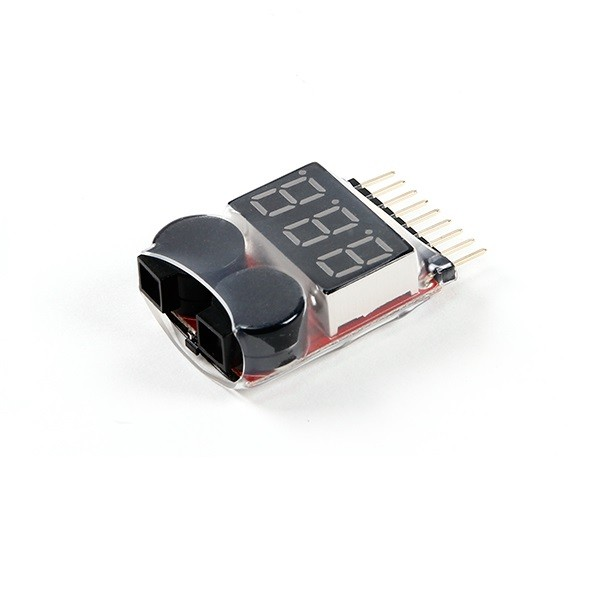
1-8S Lipo Battery Voltage Tester without Alarm
Measure per-cell voltages in your LiPo packs instantly. Essential for understanding the actual state of charge of each cell in a multi-cell pack.
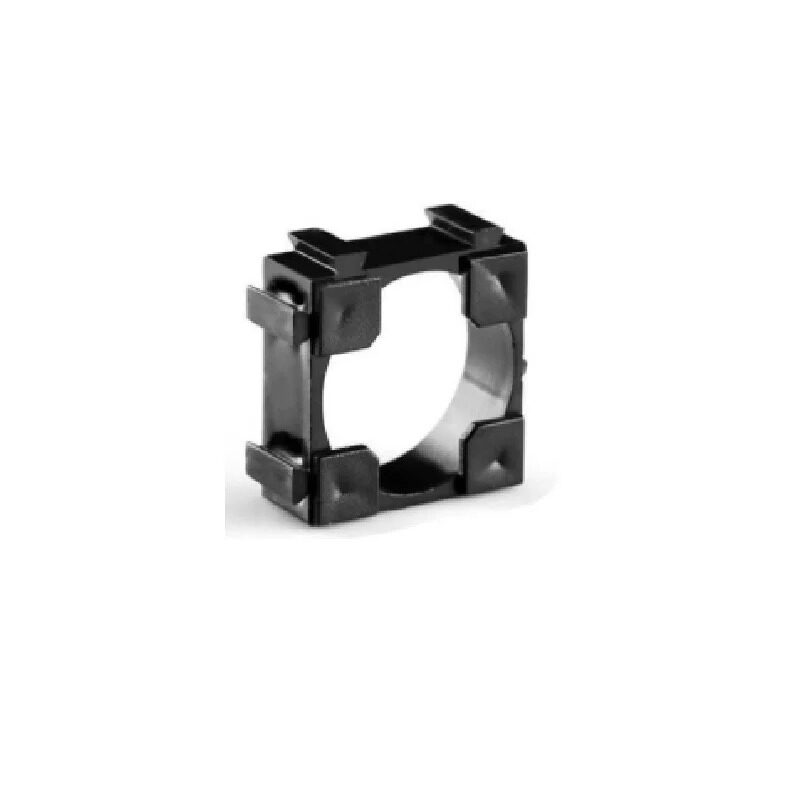
1 x 18650 Battery Holder with 18.4MM Bore Diameter – Pack of 4
Hold standard 18650 cells (2000–3500 mAh each) securely in your project. Combine multiple holders in series or parallel to achieve your target Wh capacity.
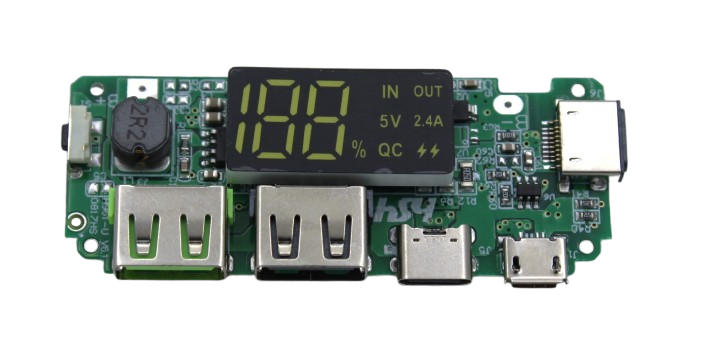
18650 5V 2.4A Lithium Battery Digital Display Charging Module Dual USB
All-in-one 18650 power bank module with digital display. Shows voltage so you can manually estimate remaining capacity even without a dedicated fuel gauge.

25cm Lipo Battery Strap Belt Reusable Cable Tie Wrap
Secure your LiPo packs safely in drones and RC vehicles. Good battery securing prevents the puffing and internal damage that reduces effective mAh capacity over time.
Frequently Asked Questions
Q1: My power bank says 20,000 mAh but my phone only charges 4–5 times. Why?
This is normal. The 20,000 mAh rating is at the internal Li-ion cell voltage (3.6–3.7V). When converted to 5V USB output, capacity = 20,000 × 3.7 ÷ 5 = 14,800 mAh effective. With 85% converter efficiency: ~12,580 mAh at 5V. If your phone has a 3,000 mAh battery, you get about 4.2 full charges — exactly what you observed.
Q2: Does a higher mAh battery always last longer?
Yes, but only when comparing batteries at the same voltage. A 5000 mAh 3.7V battery lasts longer than a 3000 mAh 3.7V battery running the same device. But a 5000 mAh 3.7V battery does NOT necessarily last longer than a 3000 mAh 7.4V battery — the 7.4V battery actually has more total energy (22.2 Wh vs 18.5 Wh).
Q3: Why does my battery capacity decrease over time?
All rechargeable batteries lose capacity through a process called capacity fade. Li-ion and LiPo batteries lose about 20% capacity after 300–500 full charge-discharge cycles. Factors that accelerate degradation include: charging to 100% regularly, deep discharging below 3V, charging at high temperatures, and fast charging. You can slow degradation by charging to 80–90% for daily use.
Q4: Is Wh or mAh printed on batteries by default?
Most batteries aimed at consumers (phones, power banks, RC LiPo) use mAh. Batteries in professional equipment (laptops, power tools, medical devices) typically show Wh. Battery cells from manufacturers always show mAh capacity alongside voltage, from which Wh can be calculated.
Q5: How much is 1 Ah in mAh?
1 Ah (ampere-hour) = 1000 mAh. Large batteries like car batteries and solar storage batteries are rated in Ah because the mAh numbers would be unwieldy (a 45Ah car battery = 45,000 mAh). For small batteries in electronics, mAh is the conventional unit.
Build Smarter Battery Projects
Understanding the difference between mAh and Wh is foundational knowledge for any electronics enthusiast, maker, or engineer. Once you grasp that mAh is charge and Wh is energy — and that you need to know the voltage to convert between them — battery specifications become much clearer. You’ll make better decisions when choosing batteries for projects, comparing power banks, sizing solar storage systems, and packing batteries for travel.
The next time you’re speccing a battery for your Arduino project or a drone build, think in Wh to compare options fairly, then calculate the mAh runtime at your specific load current. Zbotic has a wide range of 18650 cells, LiPo packs, battery holders, and BMS boards to help you build reliable, well-calculated battery systems for any project.






Add comment