
Bluetooth BLE vs Classic: Data Rate, Range & Power Guide
When designing a wireless product, one of the most important early decisions is choosing between Bluetooth BLE and Classic Bluetooth. Both versions share the same 2.4 GHz band and the “Bluetooth” brand, but they are fundamentally different radio protocols optimised for completely different use cases. This in-depth comparison covers data rate, range, power consumption, latency, and application fit — everything an Indian maker, product designer, or electronics engineer needs to make the right call for their project.
History and Overview of Bluetooth Versions
Bluetooth was standardised in 1998 to replace short-range cables. The original Bluetooth (Classic) was designed for continuous data streaming — audio, file transfer, serial replacement. It is the technology behind wireless speakers, headsets, and keyboard/mouse dongles.
Bluetooth Low Energy (BLE), introduced in Bluetooth 4.0 in 2010, was designed from scratch as an entirely separate protocol within the same specification. It targets devices that run for months or years on a coin cell battery by transmitting small bursts of data infrequently. Fitness trackers, heart rate monitors, beacons, door sensors, and IoT tags all use BLE.
Bluetooth 5.0 (2016) and later versions improved both Classic and BLE, adding longer range modes, higher data rates, and mesh networking for BLE. Today, most modern chips like the ESP32 and ESP32-C3 include both Classic Bluetooth and BLE in a single dual-mode radio.
Data Rate: Which Is Faster?
Raw throughput is where Classic Bluetooth significantly outperforms BLE:
| Standard | Peak Air Rate | Effective Throughput | Protocol |
|---|---|---|---|
| Classic BT 2.1 (EDR) | 3 Mbps | ~2.1 Mbps | A2DP, RFCOMM, HFP |
| Classic BT 4.0+ | 3 Mbps | ~2.1 Mbps | A2DP, SPP |
| BLE 4.0 (1M PHY) | 1 Mbps | ~125 kbps usable | GATT, ATT |
| BLE 5.0 (2M PHY) | 2 Mbps | ~250 kbps usable | GATT, ATT |
| BLE 5.0 (Coded PHY) | 125 kbps / 500 kbps | ~20 kbps usable | GATT (long range) |
The usable BLE throughput is much lower than the air rate due to GATT protocol overhead, ATT MTU size (23 bytes default, up to 512 bytes with negotiation), and connection intervals. For audio streaming or file transfer, Classic Bluetooth is the only practical choice. For sensor data (temperature, heart rate, a few bytes every few seconds), BLE’s throughput is more than sufficient.
Range: How Far Can Each Reach?
Both Classic Bluetooth and BLE operate at 2.4 GHz, but their range differs based on TX power and the protocol mode used:
- Classic Bluetooth Class 1: Up to 100 m (typically for industrial/PC adapters, 100 mW TX)
- Classic Bluetooth Class 2: 10–30 m (typical for phones and headsets, 2.5 mW TX)
- Classic Bluetooth Class 3: ~1 m (rare, 1 mW TX)
- BLE 4.0 (1M PHY): 20–50 m line-of-sight, 5–15 m indoors
- BLE 5.0 (2M PHY): Similar to BLE 4.0 (faster, same range)
- BLE 5.0 (Coded PHY S=8): Up to 400–1000 m line-of-sight — the “long range” mode
BLE 5.0’s Coded PHY is a game-changer for IoT: it trades data rate for exceptional range by using forward error correction. This mode is particularly useful for Indian industrial applications — factory floor sensors, outdoor soil moisture monitoring, or warehouse asset tracking can cover the entire facility with a single gateway.
The ESP32 supports BLE 5.0 long range mode. The ESP32-C3 and ESP32-S3 also support Coded PHY.
Power Consumption: The Core Difference
This is where BLE truly earns its “Low Energy” name. The difference is not incremental — it is orders of magnitude:
| Mode | Classic Bluetooth | BLE |
|---|---|---|
| Active TX | ~30–50 mA | ~5–10 mA (burst) |
| Idle/connected | ~5–20 mA (keepalive) | ~0.01–0.1 mA (sleep) |
| Average (IoT sensor) | Not applicable | ~1–10 µA |
| Battery life (CR2032) | Hours to days | Months to years |
Classic Bluetooth maintains a continuous connection with constant keepalive packets — even when no data is being sent, the radio is consuming significant current. BLE uses a connection interval mechanism where both devices enter deep sleep between intervals. A BLE device advertising every 1 second with 1 ms transmit window has an active duty cycle of only 0.1%, consuming microamps on average.
For any battery-powered project that needs to last more than a day, BLE is the only viable wireless option. Classic Bluetooth is appropriate only when connected to mains power or a large battery (like a speaker or laptop).
Latency and Connection Setup Time
Connection setup time matters for user-facing products:
- Classic Bluetooth pairing: 1–5 seconds (inquiry, paging, link key exchange)
- BLE connection setup: 3–6 ms (simplified discovery + connection)
- BLE advertising detection: <100 ms if advertising interval is 100 ms
BLE beacons (non-connectable advertising) can be detected essentially instantly by scanning devices — no connection overhead. This is how retail iBeacons and Eddystone proximity detectors work.
Once connected, latency for a data transfer depends on the connection interval configured. With a 7.5 ms connection interval (minimum), round-trip latency is about 15–30 ms. Classic Bluetooth has lower jitter for audio (SCO/eSCO links have isochronous timing), which is why it remains the standard for headsets and speakers despite BLE Audio being introduced in Bluetooth 5.2.
Application Use Cases: When to Use Which
Choose Classic Bluetooth for:
- Audio streaming (music, phone calls) — use A2DP/HFP profiles
- Serial port emulation at high speeds — SPP (Serial Port Profile) at 100+ kbps
- Keyboards, mice, and game controllers where latency and throughput matter
- File transfer between devices (OBEX/FTP profiles)
- Any application connected to mains power where battery life is not a concern
Choose BLE for:
- Battery-powered sensors (temperature, humidity, GPS trackers, soil moisture)
- Fitness bands, heart rate monitors, smartwatches, pulse oximeters
- Proximity beacons, retail tags, asset tracking
- BLE provisioning for WiFi devices
- Smart locks, key finders, and low-data-rate wearables
- Industrial sensor networks with Coded PHY long range
- Any device on a coin cell or small LiPo
Use Dual-Mode (Classic + BLE) for:
- Products targeting both phone audio and sensor data (like a smart scale with audio feedback)
- Development boards where flexibility matters (ESP32 supports both)
- Devices that need SPP backward compatibility while also advertising BLE beacons
Modules with BLE and Classic Support
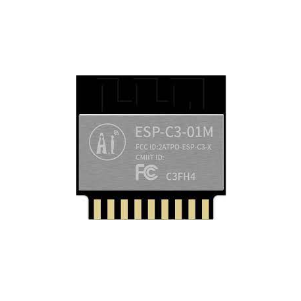
Ai Thinker ESP32-C3-01M Wi-Fi + BLE Module
ESP32-C3 with BLE 5.0 — supports Coded PHY long range mode. RISC-V core with ultra-low power sleep modes, ideal for battery-powered BLE sensor nodes.
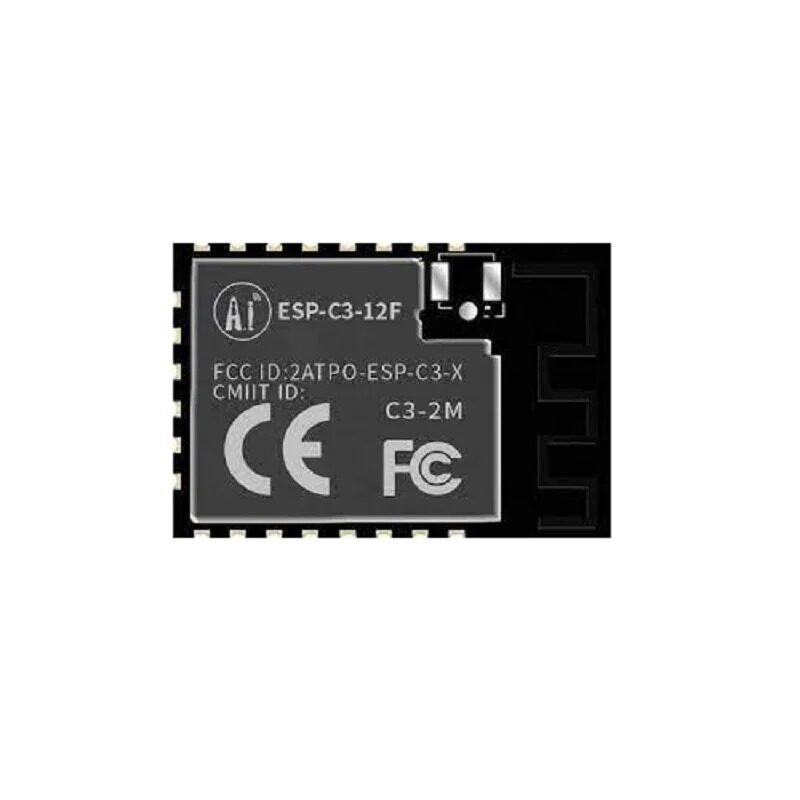
Ai-Thinker ESP32-C3-12F Wi-Fi + BLE Module
4MB flash ESP32-C3 module with PCB antenna for good BLE and WiFi range. Supports both 1M and 2M PHY, perfect for BLE 5.0 projects with increased throughput needs.
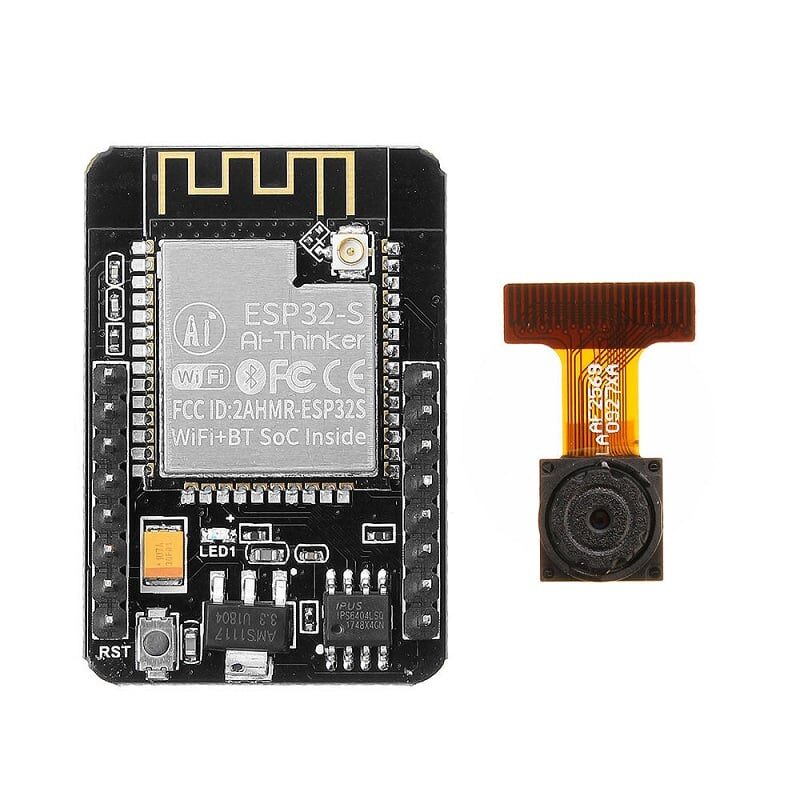
Ai Thinker ESP32 CAM Development Board WiFi+Bluetooth
Full ESP32 dual-mode (Classic + BLE) with onboard camera. Use Classic BT for A2DP audio feedback and BLE for provisioning on the same chip simultaneously.
Waveshare ESP32-S3 1.47inch LCD Display Development Board
ESP32-S3 with BLE 5.0 and onboard colour LCD. Visualise BLE signal strength, connected device names, and data throughput on the display in real time.
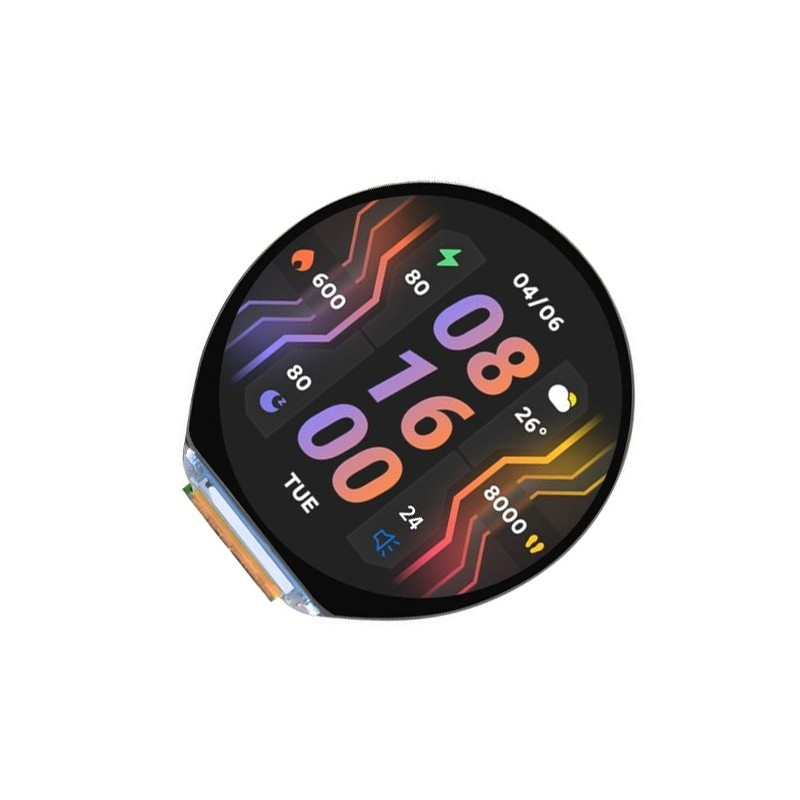
Waveshare ESP32-S3 1.46inch Round Display Development Board
ESP32-S3 with accelerometer, gyroscope, speaker, mic, and round 412×412 display. Demo BLE heart rate monitor display or BLE audio spectrum analyser on this all-in-one board.
Frequently Asked Questions
Can I use BLE and Classic Bluetooth at the same time on ESP32?
Yes, the ESP32 supports dual-mode operation — it can run both Classic Bluetooth (for SPP or A2DP) and BLE (for GATT services or advertising) simultaneously. However, since they share the same 2.4 GHz radio hardware, there is time-division multiplexing, which may slightly reduce throughput and increase latency of each protocol when used together. The ESP32-C3 and ESP32-S3 support BLE 5.0 only (no Classic Bluetooth).
Why does my BLE device show “3 Mbps” Bluetooth but actual transfer is slow?
The “3 Mbps” figure shown in phone settings refers to Classic Bluetooth 3.0+HS — which uses WiFi (802.11) as the high-speed transport alongside Bluetooth signalling. Standard BLE data throughput is much lower due to GATT protocol overhead, 23-byte default ATT MTU, and the overhead per packet. Use Data Length Extension (DLE) and a larger MTU (up to 512 bytes) to approach the theoretical 2M PHY throughput.
Is BLE Audio a replacement for Classic Bluetooth audio?
BLE Audio (Bluetooth 5.2+) with the LC3 codec is the emerging standard that can replace Classic A2DP for music streaming. It offers comparable quality at lower power and enables new features like broadcast audio (one transmitter, many receivers). However, as of 2026, most wireless earbuds and speakers in India still use Classic Bluetooth A2DP due to wider device compatibility. BLE Audio is gaining traction in premium TWS earbuds.
What is the practical indoor range of BLE on ESP32?
With the standard 1M PHY and 0 dBm TX power, expect 10–20 metres through one or two walls in a typical Indian apartment. With an external antenna module and maximum TX power (+9 dBm on ESP32), this can reach 30–50 metres indoors. The BLE 5.0 Coded PHY (S=8 mode) can achieve hundreds of metres line-of-sight at the cost of much lower data rate.
Do I need to pair my phone with a BLE device?
Not necessarily. BLE has two connection modes: bonded (like Classic Bluetooth pairing, stores a link key for re-connection) and non-bonded (connect fresh each time without PIN). Most IoT apps like BLE sensor dashboards connect without formal pairing. Pairing is only required when you need encrypted connections with stored keys — for example, BLE HID devices (keyboards, mice) require bonding.
Find the Right Bluetooth Module for Your Project
Browse Zbotic’s range of ESP32, ESP32-C3, and ESP32-S3 modules with BLE 5.0 — fast delivery across India, student-friendly pricing.



Add comment