
Table of Contents
- What Is a Coreless DC Motor?
- Coreless vs Cored DC Motors
- Coreless vs Brushless Motors for Drones
- Key Advantages for Drones and Robotics
- Drone Applications
- Robotics Applications
- How to Select a Coreless Motor
- Driving Coreless Motors: Electronics
- Lifespan, Maintenance, and Failure Modes
- Frequently Asked Questions
Open a micro drone — the palm-sized quadcopter that fits in your pocket — and you will find four tiny motors spinning at tens of thousands of RPM with almost no vibration. These are coreless DC motors, also called hollow cup motors or ironless core motors, and they represent a fundamentally different approach to electric motor design compared to the brushed motors you find in toy cars or drills.
Understanding coreless DC motors will help you make better design decisions for any project where weight, response time, and efficiency matter more than raw torque. This guide covers the technology, applications in drones and robotics, and how to select and drive these motors in India.
What Is a Coreless DC Motor?
A conventional brushed DC motor has a wound coil wrapped around an iron core. The core gives the magnetic circuit low reluctance (making the magnetic field stronger), but it also adds mass, creates cogging (the tendency to snap to preferred positions), and introduces eddy current losses that heat the motor at high speeds.
A coreless DC motor eliminates the iron core entirely. Instead, the coil winding is self-supporting — formed into a hollow cylindrical basket (hence also called a cup motor) that rotates freely around a central permanent magnet stator. The magnet is fixed; the coil rotates. This is the opposite of a conventional motor where the magnets rotate and the coil is fixed.
The hollow cup structure is typically made from wound copper wire bonded with epoxy resin into a rigid cylinder. High-end versions use silver or gold contacts, vacuum-impregnated windings, and rare-earth permanent magnets (neodymium) for maximum flux density in a compact package.
Coreless vs Cored DC Motors
| Property | Cored (Iron Core) | Coreless (Cup) |
|---|---|---|
| Rotor inertia | High (iron + copper) | Very low (copper only) |
| Acceleration | Moderate | Extremely fast (10–50ms) |
| Cogging torque | Present (vibration) | Zero (smooth start) |
| Efficiency | 60–75% | 75–90% |
| Power-to-weight | Moderate | Excellent |
| Noise / vibration | Higher | Much lower |
| Max torque | Higher (iron concentrates flux) | Lower for same size |
| Brush wear rate | Normal | Higher (often precious metal brushes) |
| Cost | Low | Higher (precision winding) |
The defining advantage of coreless motors is their mechanical time constant — the time to accelerate from stop to no-load speed. A typical cored brushed motor might have a time constant of 100–200 ms. A coreless motor of equivalent power achieves 5–30 ms. This is why they are irreplaceable in applications needing instantaneous response: camera gimbal stabilisation, haptic feedback, and flight control.
Coreless vs Brushless Motors for Drones
Many makers confuse coreless DC (which is brushed) with brushless motors. They are fundamentally different:
- Coreless DC (brushed): Has brushes and commutator for current switching. Simpler electronics — direct voltage control. Excellent for micro drones under 100g where brushless ESC and motor mass is too high. Typical size: 4×8mm to 8×20mm motors.
- Brushless DC (BLDC): No brushes — electronic commutation via ESC. Higher efficiency, longer lifespan, more torque for size. Standard for drones over 150g (every racing drone, consumer quadcopter, and professional camera drone uses brushless).
The crossover point is approximately the 100mm wheelbase (prop-to-prop diagonal) drone class. Below that, coreless brushed motors win on simplicity and weight. Above it, brushless wins on everything else.
Key Advantages for Drones and Robotics
1. Near-Zero Mechanical Time Constant
Flight controllers on micro drones run PID loops at 1000 Hz or higher. The motor must respond to corrections in under 5 ms for the loop to be effective. Coreless motors achieve this; standard brushed motors cannot.
2. Zero Cogging
Cogging causes vibration at low speeds as the rotor snaps between preferred iron positions. In gimbals, cogging causes jitter visible in video. Coreless motors start and run smoothly at any speed from near-zero upward — critical for camera stabilisation applications.
3. Excellent Power Density at Micro Scale
At diameters below 20 mm, coreless motors outperform brushless equivalents in watts-per-gram because brushless BLDC stators become mechanically difficult to wind at small scales, while coreless cup windings scale down readily.
4. Simple Drive Electronics
A MOSFET or H-bridge chip is all you need — no ESC firmware, no startup sequence, no commutation timing. A simple PWM signal from a microcontroller or flight controller directly controls speed. This dramatically reduces system complexity in micro platforms.
5. Low Electrical Noise
Coreless motors have lower inductance than cored motors, reducing the PWM switching noise that can interfere with radio receivers and sensors mounted nearby. They still need good decoupling capacitors, but RF interference issues are less severe.
Drone Applications
Micro and Nano Quadcopters (65–100mm class)
The Tiny Whoop class of micro FPV drones (65mm–75mm wheelbase) exclusively uses coreless motors — typically 0720 (7mm diameter, 20mm length) or 0820 motors. These spin 55mm propellers at 20,000–40,000 RPM and produce 10–20g of thrust each from a 1S LiPo (3.7V). The complete quadcopter weighs under 30g.
Coreless 8.5mm × 20mm motors (often listed as 820 or 8520) are the next size up, used in 85–100mm class quads with 2S power.
Camera Gimbals
Brushless gimbal motors (like the ones available at Zbotic) are technically brushless, but the gimbal-specific coreless DC motors used in small camera stabilisers for phones and action cameras rely on the same zero-cogging property for the smoothest possible stabilisation response. Any jitter in the motor translates directly to jitter in the video frame.
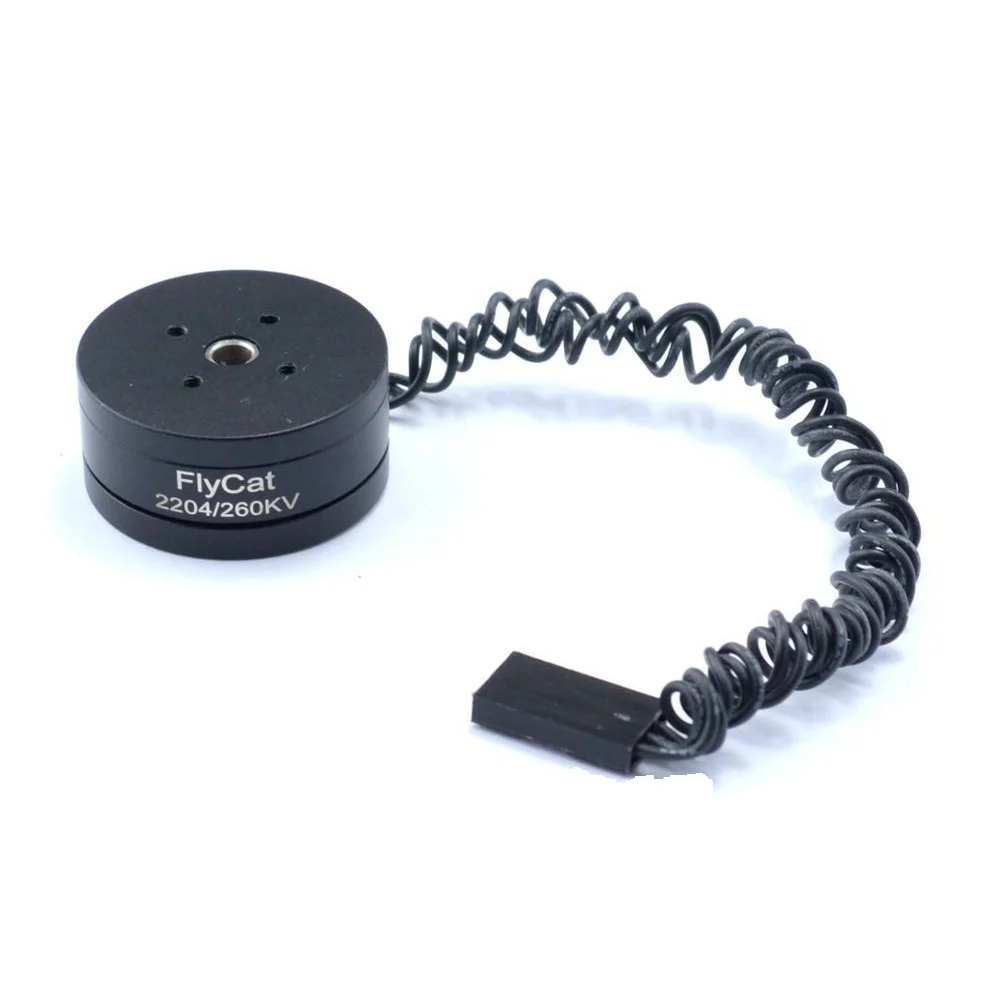
2204 260KV Brushless Gimbal Motor (30cm Cable)
A low-KV brushless gimbal motor — the smoothest possible camera stabilisation platform for 3-axis drone gimbals and handheld stabilisers.
Delivery Micro-Drones
Research platforms for indoor package delivery (hospitals, warehouses) often use coreless motor micro-drones that can fly through doorways and land on narrow surfaces. Their light weight means less risk of injury in human environments.
Robotics Applications
Haptic Feedback Devices
Coreless vibration motors (the 4×8mm and 4×20mm hollow cup vibration motors) are used in game controllers, smartwatches, and medical alert devices. Their eccentric weighted shaft creates vibration, and the fast response time (under 10 ms) allows precise tactile feedback patterns.
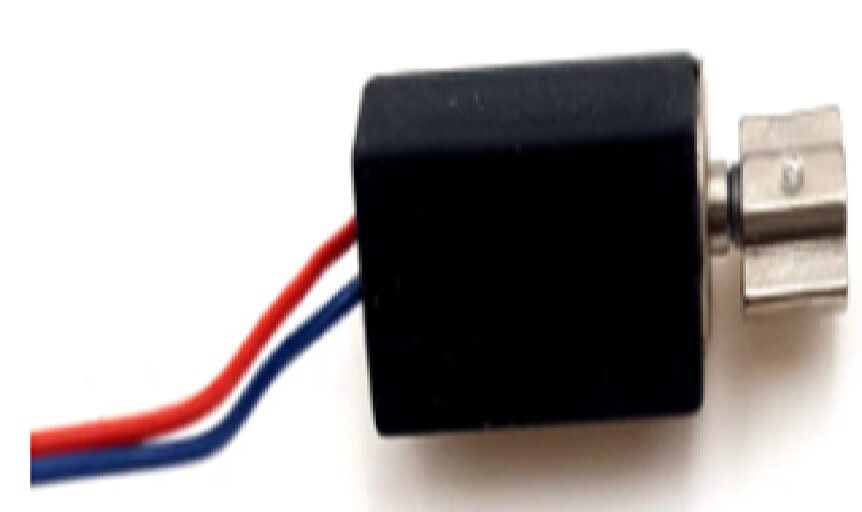
1.5V-3V 4×8MM Hollow Cup Miniature Micro DC Vibration Motor
Ultra-compact coreless vibration motor — used in wearables, haptic feedback devices, and any project needing a tactile response under 3V.
Medical Robotics and Lab Automation
Pipetting robots, syringe pumps, and microfluidic valve actuators demand precise, low-vibration motion. Coreless motors with optical encoders achieve micron-level positioning without the cogging vibration that would disrupt sensitive fluid handling.
Finger-Scale Robotic Joints
Prosthetic hands and dexterous manipulation robots need motors that fit inside finger-sized linkages. Faulhaber and Maxon (Swiss manufacturers) have built entire product lines around coreless motors in 6–22mm diameters specifically for this market.
Writing and Drawing Plotters
Pen plotters and CNC laser engravers use coreless motors for spindle and laser on/off control where instant start-stop response prevents overburn at line start points.
How to Select a Coreless Motor
Key Parameters
- Motor diameter and length: Listed as e.g., 0720 (7mm × 20mm), 0820 (8mm × 20mm), 1020 (10mm × 20mm). Larger = more torque and current, heavier.
- Voltage rating: Most micro coreless motors are rated for 1S (3.7V) to 2S (7.4V) LiPo. Exceeding voltage rating rapidly degrades brushes.
- No-load RPM: At rated voltage. Divide by KV (RPM/V) to compare across voltages.
- Shaft diameter: Must match your propeller hub. Common: 0.8mm, 1mm, 1.5mm for micro motors.
- Propeller compatibility: For drones, match prop to motor — 55mm props for 0720/0820 motors at 1S, 65mm for 1020 at 2S.
For Drone Use: Choose by Drone Class
- 65mm micro whoop → 0720 motor, 1S LiPo, 31mm-40mm props
- 75mm micro whoop → 0820 motor, 1S LiPo, 40-45mm props
- 85-100mm → 1020 or 1103 brushless, 2S LiPo (transition to brushless)
For Haptic/Vibration Use: Choose by Size and Voltage
- Wearables (watch, band) → 4×8mm hollow cup, 1.5–3V
- Controllers/phones → 4×20mm hollow cup or coin vibration motor, 3–5V
- Industrial alerting → 10mm+ can vibration motor, 5–12V
Driving Coreless Motors: Electronics
Single Direction (Drone, Fan, Pump)
A single N-channel MOSFET (IRLZ44N, 2N7000, or even the BSS138 for micro motors) on the low side of the motor is all you need. Connect the gate to a PWM pin on your microcontroller (through a 100Ω gate resistor), source to GND, drain to motor negative terminal. Motor positive to supply. A flyback diode (1N4001 or Schottky 1N5819) across motor terminals prevents back-EMF spikes from damaging the MOSFET.
Bidirectional (Robotics, Gimbals)
Use an H-bridge IC: DRV8833, TB6612FNG for micro motors (0.5–1.5A), L298N for larger brushed coreless motors. The H-bridge architecture lets you reverse current direction, enabling forward/reverse and regenerative braking.
PWM Frequency Recommendations
For coreless motors, use 20–50 kHz PWM frequency. This is above the audible range (eliminates annoying motor whine) and fast enough to keep current ripple low (the low inductance of coreless motors means current ripple at low PWM frequencies can be large, causing heating). Most modern flight controllers automatically output high-frequency PWM.
Lifespan, Maintenance, and Failure Modes
Coreless motors are inherently wear items due to their brush-and-commutator design. Typical lifespan:
- Cheap no-name micro drone motors: 5–20 hours of flight
- Mid-range quality motors: 20–100 hours
- Precision industrial coreless (Faulhaber, Maxon): 1000–10,000 hours with precious metal brushes
Common Failure Modes
- Brush wear: Motor slows, sparks visibly through ventilation holes, then stops. Replace the motor — brushes are not field-serviceable on micro motors.
- Commutator corrosion: Increased contact resistance causes heating and erratic speed. Can sometimes be cleaned with isopropyl alcohol on accessible commutators.
- Winding short circuit: Caused by mechanical impact, excess heat, or overvoltage. Motor draws excess current, heats rapidly, controller may trip current protection.
- Bearing failure: In motors with ball bearings (larger coreless types), bearing noise precedes failure. Replace before total seizure.
Frequently Asked Questions
What is the difference between coreless motor and brushless motor in drones?
Coreless motors are brushed — they have physical copper brushes that make contact with a rotating commutator ring to switch current direction. Brushless motors use electronic commutation (an ESC) and have no brushes. Coreless motors are simpler and lighter at small scales (under 100mm drones); brushless motors are more efficient, more powerful, and longer-lasting for larger applications.
Why do micro drones use brushed motors instead of brushless?
At very small sizes (under 10mm diameter), brushless motor construction becomes mechanically challenging — the stator laminations and winding complexity do not miniaturise easily. Coreless brushed motors, by contrast, use simple wire winding that scales down to 4mm diameter motors. Additionally, brushless ESCs add weight and cost that is disproportionate on a 20–30g drone.
Can I use a coreless motor as a generator?
Yes. All DC motors are reversible — spin the shaft and they generate voltage. Coreless motors are actually excellent generators because their low cogging means very smooth power output without the pulsing of iron-core generators. Small coreless generators are used in precision instrumentation for measuring angular velocity (tachometers).
How do I control the speed of a coreless micro drone motor with Arduino?
Connect the Arduino PWM pin through a 100Ω gate resistor to the gate of an N-MOSFET (e.g., IRLML6344 for 1S motors). MOSFET source to GND, drain to motor negative, motor positive to LiPo 1S (3.7V). Use analogWrite(pin, 0-255) for speed. Set PWM frequency to 20+ kHz using Timer1 library to avoid motor whine. Always add a 1N5819 flyback diode and a 100µF capacitor at the motor terminals.
Are coreless motors available in India?
Yes — the micro 4×8mm and 4×20mm vibration coreless motors are widely available. Full-range micro drone coreless motors (0720, 0820) are available through drone component suppliers. Zbotic stocks vibration motors and brushless gimbal motors; for racing micro drone coreless motors, look for drone-specific suppliers or import from Banggood/AliExpress.
Build Lighter, Faster, Smarter
Coreless DC motors represent the pinnacle of brushed motor engineering — extracting maximum performance from the simplest possible circuit. Whether you are building a palm-sized racing drone, a vibration feedback glove, or a precision camera gimbal, understanding coreless motor technology opens up design possibilities that conventional motors simply cannot match. Explore Zbotic’s motor catalogue for gimbal motors, vibration motors, and the full range of actuators for your next build.





Add comment