
How to Build a VTOL Drone: Fixed Wing Meets Multirotor
VTOL — Vertical Take-Off and Landing — drones represent the most technically ambitious category in the hobbyist and professional drone world. They combine the hover capability of a multirotor with the efficient cruise flight of a fixed-wing aircraft, giving you the best of both worlds: no runway required, yet long endurance and high cruise speed once airborne.
In India, VTOL drones are increasingly used for agricultural surveys, mapping large tracts of farmland, border surveillance, and logistics pilot programmes. If you want to build one yourself, this guide walks you through every step — from design choices to first successful transition.
What Is a VTOL Drone?
A VTOL drone can take off vertically like a quadcopter, transition to horizontal cruise flight like a fixed-wing plane, and then transition back to vertical flight for landing — all without any ground infrastructure. This capability fundamentally changes the mission profile of unmanned aircraft.
Traditional fixed-wing drones need a runway, catapult, or belly-landing strip. Traditional multirotors are limited to 15–30 minutes of flight time by their power-hungry hovering requirements. VTOLs solve both problems: take off from anywhere, cruise efficiently for 45–90+ minutes, and land precisely in a small space.
The trade-off is complexity. A VTOL drone has two propulsion systems that must work in coordination, and the transition between modes is a challenging control problem that requires careful tuning.
Types of VTOL Configurations
1. Tilt-Rotor VTOL
The lift rotors physically tilt from vertical (for hover) to horizontal (for cruise). Think V-22 Osprey scaled down. Very efficient in cruise, but the tilting mechanism adds mechanical complexity and is a potential failure point.
2. Tail-Sitter VTOL
The entire aircraft sits on its tail for take-off, then rotates to horizontal for cruise. Mechanically simple (no tilting parts), but the transition is abrupt and the payload must withstand reorientation. Less suitable for camera payloads.
3. Fixed-Rotor Quad-Plane (Recommended for Beginners)
A fixed-wing airframe with four additional vertical lift motors (quadcopter style) mounted on fixed booms. The lift motors power vertical flight; a separate pusher or puller propeller powers cruise. The lift motors simply switch off during cruise. This is the easiest VTOL type to build and tune, and the most popular in the DIY community.
4. Hex-VTOL / Octo-VTOL
Adds motor redundancy by using six or eight lift motors. More complex and heavier, but suitable for heavy payloads or safety-critical applications. Common in agricultural survey builds.
For this guide, we will focus on the fixed-rotor quad-plane — a fixed-wing airframe with four vertical lift rotors and one pusher motor — as it is the most practical starting point for builders in India.
Essential Components for a VTOL Build
Airframe
The airframe is typically a foam or composite fixed-wing fuselage with wings spanning 1.2m–2.0m. Popular DIY options include the Mini Talon, Skywalker X8, or custom-cut EPP foam designs. For professional builds, carbon fibre composite frames are available.
Lift Motors (x4)
Four brushless motors arranged like a quadcopter on booms extending from the wing or fuselage. Each motor needs 150–300W depending on the all-up weight. For a 3kg VTOL, you need approximately 1,200W total lift power (2x hover thrust margin).
Cruise Motor (x1)
A single pusher motor (mounted at the tail) or puller motor (mounted at the nose) provides forward thrust in fixed-wing mode. This motor runs continuously during cruise while lift motors are off.
ESCs
Five ESCs total: four for lift motors (rated for peak current draw) and one for the cruise motor. The cruise motor ESC should support reverse/braking if using a folding propeller.
Servos
Servos actuate the control surfaces (ailerons, elevator, rudder). Digital servos with metal gears are recommended for the accuracy demanded by VTOL transition control.
Flight Controller
A Pixhawk-family flight controller running ArduPlane is the standard for VTOL builds. It has dedicated VTOL support with transition logic, motor mixing, and safety features built in.
GPS Module
A high-quality GPS with compass is mandatory for VTOL. Position hold during hover, transition initiation points, return-to-home, and mission waypoints all depend on reliable GPS lock.
Battery
A 4S or 6S LiPo with high capacity (6,000–16,000mAh) depending on endurance requirements. VTOL builds often use two batteries in parallel to extend flight time.
Telemetry Radio
Essential for monitoring the transition process and flight parameters in real time from your ground station laptop. 915MHz is preferred in India for its longer range and fewer interference sources than 433MHz.
Frame Design and Construction
For your first VTOL build, modifying an existing flying-wing or conventional fixed-wing airframe is recommended over designing from scratch. Here is the general construction approach for a quad-plane style VTOL:
Wing Selection
Choose a high-wing or mid-wing configuration with a flat, stable wing profile (Clark-Y or similar). Avoid delta wings or flying wings for your first VTOL — their pitch stability characteristics make VTOL mode more difficult to tune.
Wing loading should be 20–35 g/dm² for good VTOL-to-fixed-wing transition speeds. Higher wing loading requires faster transition speeds, which is more demanding on control authority and battery.
Boom Mounting
Fabricate four motor booms from carbon fibre tubes (10–16mm diameter depending on AUW). These extend from the wing spar area at four symmetric points. The boom placement should position the four lift motors at the corners of a square whose geometric centre aligns with the aircraft’s centre of gravity.
Mount booms so the lift motors are slightly above the wing chord line to prevent propeller-wing interference during hover.
Centre of Gravity
The CG for VTOL must be correct for both modes. For fixed-wing mode, CG should be at 25–30% of mean aerodynamic chord (MAC). The lift motor booms and additional wiring add weight; account for this by adjusting battery position.
Flight Controller and Firmware
ArduPlane (the fixed-wing firmware of ArduPilot) has the most complete VTOL support available in open-source firmware. It handles:
- Motor mixing for multirotor hover (QuadPlane mixer)
- Automatic transition logic with safety checks
- Forward transition: gradually increasing forward motor while lift motors compensate for pitch-up tendency
- Back transition: slowing the aircraft to below stall speed while spin-up of lift motors catches the descent
- Failsafe: if transition fails, aircraft stays in previous mode
Key ArduPlane Parameters for VTOL
Q_ENABLE = 1— enables QuadPlane (VTOL) modeQ_FRAME_CLASS— set to match your motor layout (1 = quad X)Q_TRAN_PIT_MAX— maximum pitch during forward transition (typically 3–5°)Q_TRANSITION_MS— time allowed for transition (5,000–10,000ms)Q_ASSIST_SPEED— speed below which VTOL motors assist in fixed-wing modeQ_VFWD_GAIN— how aggressively the forward motor assists during vertical flight
Motor and ESC Setup
The motor sizing for your VTOL lift system follows the same calculations as a multirotor, but with a critical difference: the lift motors only need to run at 50–60% throttle to hover (leaving headroom for attitude control), and they need to handle the full AUW plus fixed-wing components.
Thrust-to-Weight Ratio
Target 2:1 total thrust to weight for VTOL hover. For a 3kg VTOL, you need 6kg total thrust across four motors — 1.5kg per motor. Cross-reference motor datasheets to find the right KV and propeller combination.
ESC Calibration
Calibrate all four lift ESCs together using ArduPlane’s ESC calibration routine. Mismatched throttle curves cause attitude imbalance in hover. Use a power distribution board to ensure identical power delivery to all four ESCs.
Cruise Motor Selection
The cruise motor should provide enough thrust to fly at 1.5x stall speed in level flight. For a 3kg VTOL with a 1.5m wingspan, this is typically 500–800g of forward thrust at cruise throttle. Select the propeller for efficiency at cruise RPM rather than maximum static thrust.
Control Surfaces and Servos
Control surfaces on a VTOL work differently depending on flight mode:
- In VTOL mode: Ailerons, elevator, and rudder still deflect, but their authority is reduced because airspeed is low or zero. The lift motors provide primary attitude control through differential thrust.
- During transition: Both systems are active simultaneously. ArduPlane blends them based on airspeed.
- In fixed-wing mode: Full aerodynamic control authority. Lift motors are off.
Use high-torque digital servos (4–6 kg-cm at minimum) with metal gears. Plastic gear servos are prone to stripping under the vibration loads of a VTOL airframe.
Ensure all control linkages have zero slop. Even 1mm of slop in a control horn translates to significant control surface error that can cause oscillation during transition.
GPS and Telemetry
GPS positioning is non-negotiable for a VTOL build. Here is the minimum GPS requirement:
- Horizontal accuracy: 2.0m CEP or better (M8N grade or above)
- Satellites: At least 8–10 satellites before attempting any transition
- Compass: External compass in the GPS module (away from motor/ESC interference)
- Fix time: Cold-start lock within 60 seconds
Mount the GPS module on a mast above the fuselage and as far from ESCs and wiring harnesses as possible. Magnetic interference from current-carrying wires is the number one cause of GPS compass issues that destabilise VTOL hover.
Telemetry lets you monitor GPS status, battery voltage, attitude, and transition status from Mission Planner or QGroundControl on a laptop. Never attempt a VTOL transition without active telemetry link during initial testing.
Transition Tuning: The Critical Phase
The hover-to-fixed-wing transition is the most complex and most dangerous phase of VTOL operation. Follow this methodical tuning process:
Phase 1: Bench Testing
With props removed, verify all motor directions, servo directions, and control surface throws in both VTOL and fixed-wing modes using Mission Planner’s motor test and control surface test features.
Phase 2: Hover Tuning (Tethered)
With the aircraft tethered to a rope attached to the ground, tune hover PIDs until the aircraft hovers stably within a 50cm circle. Do not attempt transitions until hover is rock solid.
Phase 3: Untethered Hover
Fly in VTOL mode at 3–5m altitude. Practice position hold for at least 10 minutes across multiple flights. The aircraft should hold position within 2m without constant input.
Phase 4: First Transition (High Altitude)
Choose a large open field (minimum 500m of clear space ahead). Hover at 30m altitude. Command a forward transition. The aircraft will pitch nose-down slightly, the forward motor will spin up, and airspeed will build. Once above stall speed, the lift motors will spin down automatically.
Keep your hand on the mode switch throughout. If anything feels wrong, switch back to VTOL mode immediately. At 30m altitude you have time to recover.
Phase 5: Back Transition
This is where most crashes happen. Approach the transition point at cruise speed. ArduPlane will decelerate by angling the aircraft nose-up. As speed drops below the stall threshold, lift motors spin up to catch the descent. Set Q_TRANSITION_MS conservatively long (8,000ms) for initial tests.
First Flight Procedure
- Pre-flight checks: GPS lock (10+ satellites), battery voltage, all motor directions confirmed, control surfaces moving correctly, telemetry connected and reading.
- Arm in VTOL mode: Arm on the ground in QSTABILIZE mode, not QLOITER. You want manual control for initial checks.
- Hover check: Rise to 2m, confirm the aircraft responds correctly to stick inputs. If it oscillates, land and reduce P gains.
- QLOITER check: Switch to position-hold mode and verify the aircraft holds position. Then ascend to 30m.
- Transition attempt: Switch to FBWA (Fixed Wing Assisted) mode. Observe the transition. Be ready to switch back to QLOITER if anything is unexpected.
- Fixed-wing flight: If transition succeeds, fly large, gentle circuits. Avoid steep turns or abrupt manoeuvres on the first flight.
- Return and back-transition: Approach at reduced throttle, let ArduPlane manage the transition. Land gently.
Recommended Products from Zbotic

3DR 100mW Radio Telemetry 915MHz for APM/PX4/Pixhawk
Real-time telemetry is essential for VTOL builds. This 915MHz link provides reliable connectivity at the distances needed to test transitions safely, compatible with Mission Planner and QGroundControl.
View on Zbotic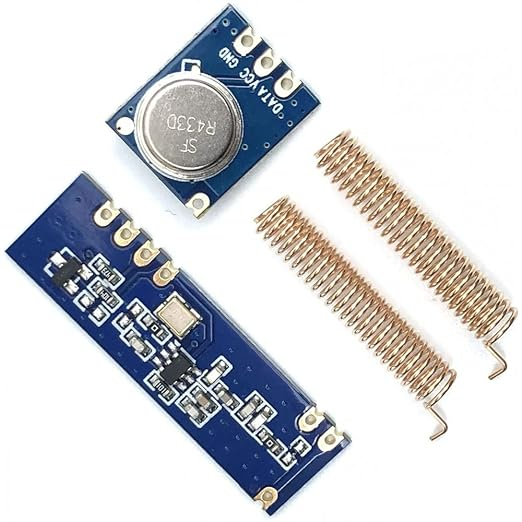
433MHz STX882 Transmitter + SRX882 Receiver Module with Antenna
Budget-friendly short-range RF module for data relay applications in VTOL builds. Useful for telemetry over shorter test ranges or as a secondary comms link.
View on Zbotic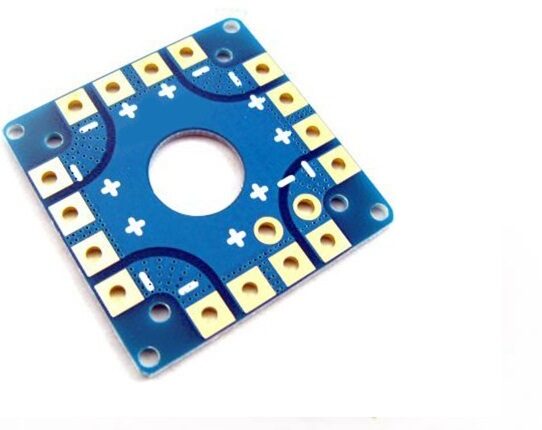
100A Multirotor ESC Power Distribution Battery Board
Central power distribution for all four VTOL lift motor ESCs. Rated at 100A continuous, ensuring clean, balanced power delivery to each motor during hover and transition.
View on Zbotic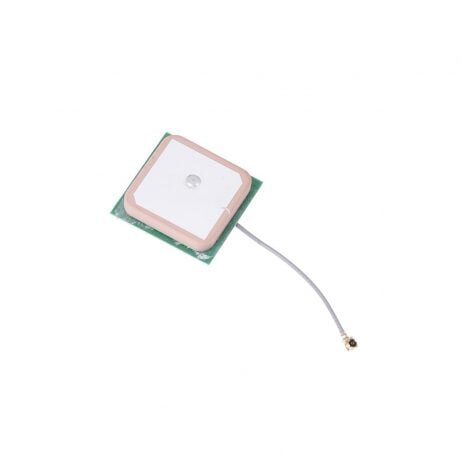
28dB High Gain Ceramic Active GPS Antenna for NEO-6M/7M/8M
High-gain ceramic GPS antenna for fast satellite acquisition. Critical for VTOL builds where position hold accuracy directly affects transition safety. Works with NEO-6M, 7M, and 8M modules.
View on Zbotic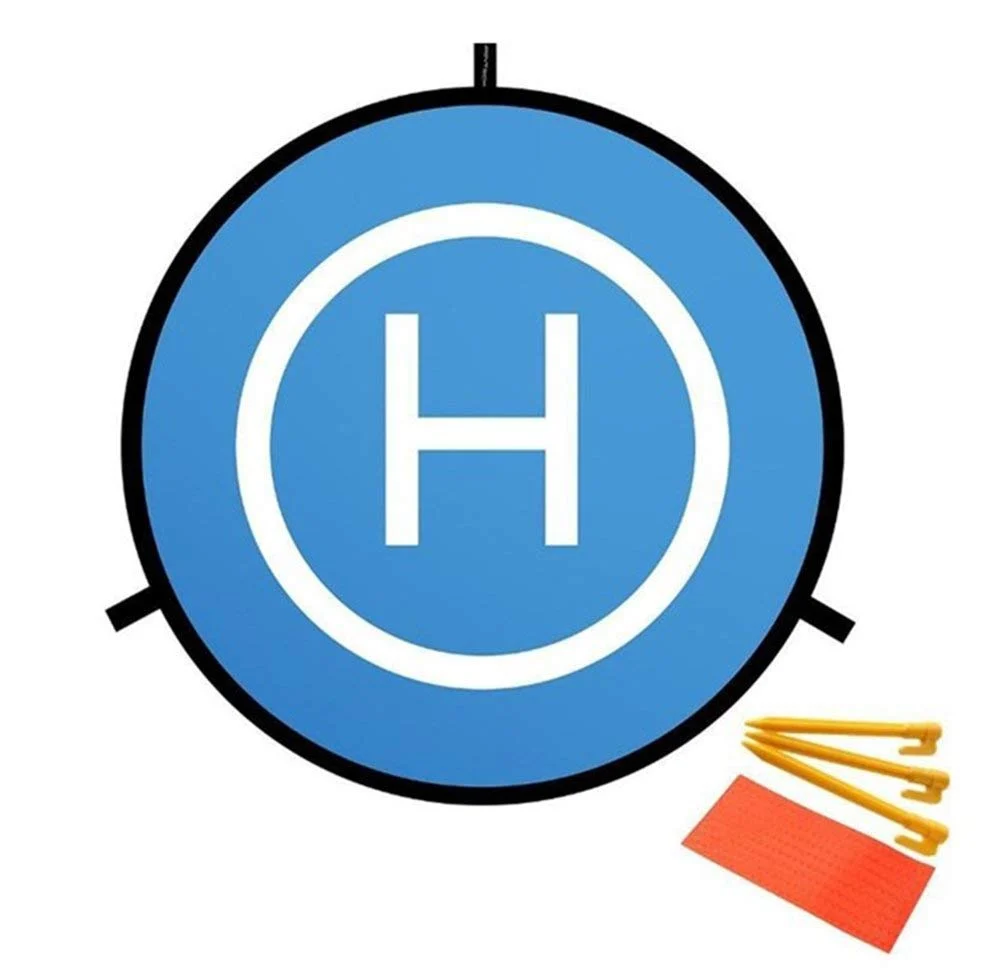
110cm Fast-Fold Landing Pad / Helipad for RC Drone
A large, high-visibility landing pad is essential for VTOL operations. Provides a clear, clean landing surface and gives the pilot a precise visual target for precision landings.
View on ZboticFrequently Asked Questions
How long can a VTOL drone fly?
A well-designed DIY VTOL with a 10,000–16,000mAh 6S battery can achieve 45–75 minutes of cruise flight. The majority of energy is consumed during hover (take-off and landing), so minimising hover time by transitioning quickly after launch maximises endurance.
Is VTOL drone building legal in India?
Building a VTOL drone is legal. However, flying it requires DGCA registration if the all-up weight exceeds 250g (which nearly all VTOLs do). Commercial operations require a Remote Pilot Certificate. Always check the current Digital Sky platform for the latest regulations before flying.
Can a VTOL drone hover in strong winds?
Most DIY VTOL builds can handle 15–25 km/h winds in hover mode. Beyond that, the aircraft may drift excessively. In high-wind conditions, increase hover altitude before transitioning to benefit from potentially calmer air above. Never attempt a back-transition to hover in strong crosswinds as a beginner.
What is the minimum wing size for a VTOL build?
For a stable quad-plane VTOL, a wingspan of at least 1.2m is recommended. Smaller wings require higher transition speeds, which increases the challenge and risk during the transition phase. Most successful DIY VTOL builds use 1.5m–2.0m wingspans.
What firmware is best for VTOL — ArduPlane or PX4?
Both support VTOL, but ArduPlane has a larger community, more documentation, and more real-world tested VTOL configurations. PX4 has a more modern architecture and better standardised VTOL parameters. For beginners, ArduPlane on Pixhawk hardware is recommended due to the larger support community in India.
Conclusion
Building a VTOL drone is one of the most rewarding projects in the DIY drone world. The combination of hovering convenience and fixed-wing efficiency opens up mission profiles that neither type alone can achieve. The key to success is patience: master the hover, then the transition, then the fixed-wing flight — never rush ahead to the next phase before the previous one is solid.
Start with a proven airframe, use ArduPlane on a Pixhawk flight controller, invest in quality telemetry, and fly in open areas with no crowds during all test phases. With the right approach, your first successful VTOL transition is an experience you will not forget.
Build Your VTOL Drone with Components from Zbotic
All drone components delivered fast across India. ESCs, flight controllers, telemetry, GPS, frames and more — everything you need in one place.
Shop VTOL Components at Zbotic






Add comment