
Table of Contents
- Introduction: Why Your Frame Choice Defines Your Drone
- Frame Materials: Carbon Fibre, G10, and Aluminium Compared
- FPV Drone Frame Sizes Explained
- Frame Configurations: True-X, Stretched-X, and H-Frame
- Best Frames for FPV Racing
- Best Frames for Freestyle Flying
- Best Frames for Long-Range FPV
- Heavy-Lift and Agricultural Frames
- What to Check Before You Buy
- Frame Assembly Tips for Beginners
- Frequently Asked Questions
Introduction: Why Your Frame Choice Defines Your Drone
If you ask any experienced FPV pilot what the most important component in their build is, most will say the frame. The flight controller runs the algorithms, the motors provide the thrust, but the frame is the skeleton that holds everything together and dictates every handling characteristic of the drone.
Choose a frame that is too flexible and your drone will wobble through every turn. Choose one that is too heavy and your flight time plummets. Choose the wrong size and your motor-prop combination will be inefficient. In India, where drone building has exploded in popularity over the last three years, many beginners waste money on the wrong frame simply because no one explained the fundamentals clearly.
This guide fixes that. Whether you are building your first 5-inch racer, a bando-bashing freestyle machine, or a heavy-lift agricultural drone, you will finish this article knowing exactly which frame to buy and why.
Frame Materials: Carbon Fibre, G10, and Aluminium Compared
Carbon Fibre (3K Twill Weave)
Carbon fibre is the gold standard for FPV frames. The “3K twill weave” designation you see on frame specs refers to the weave pattern of the carbon fibres — 3K means each bundle contains 3,000 individual carbon filaments. This weave pattern delivers an excellent balance of stiffness and impact absorption.
Thickness matters:
- 3mm carbon arms: Standard for 5-inch racing and freestyle frames. Stiff enough for aggressive flying, light enough for performance.
- 4mm carbon arms: Found on heavier freestyle builds and 7-inch frames. More durable under crashes.
- 5–6mm bottom plate: Provides rigidity to the whole frame. Many quality frames use 5mm bottom + 2mm top plate.
Indian market note: Genuine aerospace-grade carbon fibre is expensive. Be cautious of ultra-cheap carbon frames on e-commerce sites — they are often made with lower quality fibre layup and will crack under the first serious crash. Brands like Iflight, GEPRC, and Diatone (available through Zbotic) use verified carbon quality.
G10 (Fibreglass)
G10 is a fibreglass-epoxy composite that is significantly cheaper than carbon fibre but also heavier and more flexible. A G10 arm at the same thickness as carbon will flex noticeably under load, which introduces propwash (the dreaded oscillation you see in FPV video during quick direction changes).
However, G10 has one major advantage: it does not shatter. Carbon fibre is brittle — a hard crash can snap an arm cleanly. G10 tends to bend rather than break. For beginners learning to fly (and crashing frequently), a G10 frame can survive many more impacts before needing replacement.
Aluminium Alloy
Aluminium is used primarily in heavy-lift and agricultural drone frames (like the EFT E410P series) for the central body and folding arm hinges. It is not used for FPV racing arms because it is heavy, but it provides excellent structural integrity for larger multi-rotor platforms that need to carry payloads reliably over many flight hours.
Summary Comparison
| Material | Weight | Stiffness | Crash Resistance | Cost | Best For |
|---|---|---|---|---|---|
| 3K Carbon Fibre | Very light | Excellent | Moderate (brittle) | High | Racing, freestyle |
| G10 Fibreglass | Moderate | Moderate | Good (flexible) | Low | Beginners, training |
| Aluminium Alloy | Heavy | Good | Excellent | Moderate | Agricultural, delivery |
FPV Drone Frame Sizes Explained
FPV frames are primarily classified by propeller size in inches. A “5-inch frame” is designed to fit 5-inch diameter propellers. Here is the full breakdown:
Micro / Toothpick (1–2.5 inch)
Ultra-lightweight brushless builds weighing 30–80g. Perfect for indoor flying in India’s monsoon season when outdoor flying is impossible. Motor spacing is extremely tight, and components are often soldered directly to the frame PCB. Not recommended as a first build due to precision required.
3-inch Cinewhoop
Protected propeller guards make these safe for flying near people. Used for cinematic video in tight spaces — office interiors, marriage functions, events. Popular among videographers in India. Heavier than open-prop builds due to the guards, but much safer.
5-inch (the “standard” FPV size)
The 5-inch is the dominant FPV platform globally and in India for good reason. It hits the sweet spot of performance, efficiency, and spare parts availability. 5-inch builds typically weigh 300–500g (without battery) and can reach speeds of 120–150 km/h in a racing setup. Components are widely available and competitively priced.
7-inch Long Range
Larger props spin more slowly and push more air per revolution, making 7-inch builds significantly more efficient. Flight times of 20–30 minutes are achievable with the right motor-prop combo. Popular for long-range FPV exploration across India’s scenic terrain. Often paired with GPS for return-to-home capability.
10-inch and Above (Heavy Lift)
Once you cross into 10-inch prop territory, you are firmly in the heavy-lift / commercial domain. Frames like the EFT E410P (agricultural quad) and EFT 6120 (hexacopter) fall here. These are designed for professional applications — crop spraying, survey, payload delivery — not recreational FPV flying.
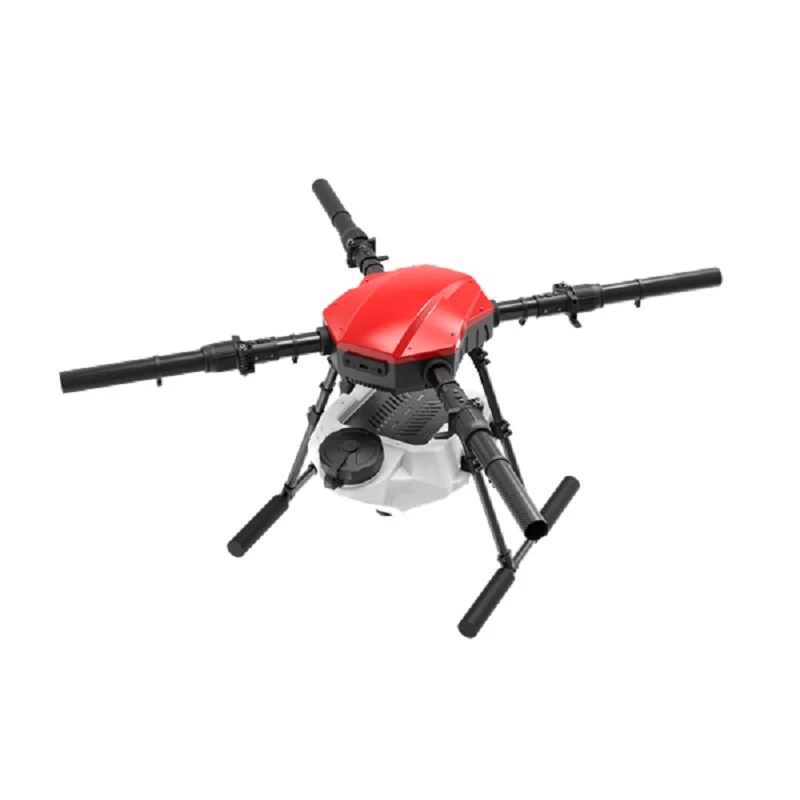
EFT E416P 16L 4-Axis Agricultural Drone Frame
A professional heavy-lift quadcopter frame designed to carry a 16-litre spray tank. Built from high-grade aluminium alloy with carbon fibre booms, this frame represents the pinnacle of Indian agricultural drone technology with folding arms for easy transport.
Frame Configurations: True-X, Stretched-X, and H-Frame
Beyond size, FPV frames differ in how the four motor positions are arranged relative to the centre. This dramatically affects handling.
True-X
All four motors are equidistant from the centre in a perfect X shape. This gives symmetrical roll and pitch response — the drone handles identically whether pitching forward or rolling sideways. Most beginner frames use True-X because it is predictable and easy to tune in Betaflight.
Stretched-X
The rear two motors are pushed further back, creating a rectangular footprint. The wider rear motor spread reduces propeller wash interference during forward flight, giving cleaner video and more stable high-speed performance. Stretched-X is the dominant configuration in professional FPV racing.
H-Frame
Arms run parallel in pairs (like the letter H). This puts the FC electronics between the arm pairs, offering better protection. H-frames were popular in early FPV days but have largely been superseded by X configurations for performance builds. Still used in some heavy-lift platforms.
Hybrid / Dead Cat
Front arms are spread wider, rear arms closer together. This keeps the front propellers out of the camera’s field of view. Common on camera-focused quads. The trade-off is asymmetric handling between roll and pitch.
Best Frames for FPV Racing
FPV racing puts extreme demands on a frame: it must be stiff (for precise steering), light (for acceleration), and have a long wheelbase-to-arm ratio (for motor leverage). Key specifications for racing frames:
- Wheelbase: 210–220mm for 5-inch (Stretched-X preferred)
- Arm thickness: 4–5mm carbon for crash durability
- Weight: Sub-100g frame weight target
- Motor mounting: 16×16mm or 25.5×25.5mm pattern
- Stack mounting: 30.5×30.5mm or 20×20mm
Look for frames with replaceable arms — the arms take the most abuse in racing crashes. Buying a frame with 2–3 spare arms is much cheaper than replacing the whole frame after every race day.
Best Frames for Freestyle Flying
Freestyle flying (tricks, flips, power loops in bandos) requires a frame that survives repeated hard impacts. Key specifications:
- Arm thickness: 5–6mm for maximum durability
- Low profile: Reduces snag points on obstacles
- Battery mounting: Both top and bottom mounting options for balance
- Extra hardware: Standoff protection, arm protection guards
Many Indian freestyle pilots flying in Mumbai’s abandoned buildings or Hyderabad’s bando complexes prefer over-built, heavier frames because the cost of replacing snapped carbon is higher than the performance penalty of extra weight.
Best Frames for Long-Range FPV
Long-range FPV (using systems like ExpressLRS or Crossfire for 5–50 km links) needs a different frame philosophy:
- 7-inch or larger prop size for efficiency
- GPS mount provisions (often on a mast)
- Extra battery capacity — dual battery mounting or large single pack
- Low drag profile — some long-range frames have angled arms that reduce aerodynamic drag
- Lightweight construction — every gram counts at the battery sizes needed for 30+ minute flights
Heavy-Lift and Agricultural Frames
India’s agricultural drone sector is one of the fastest-growing in Asia. Under the SMAM (Sub-Mission on Agricultural Mechanisation) scheme, drones for crop spraying and survey attract significant government subsidies. Agricultural frames have specific requirements:
- Folding arms: Transport in Bolero/Mahindra to the farm
- IP rating: Water and chemical resistance for spray operations
- Tank mounting provisions: Standard integration with 10L–20L spray tanks
- Redundancy: Hexacopter (6 motors) preferred so the drone stays airborne if one motor fails over a crop field
- High current capacity: Motors draw 30–50A each at full spray load
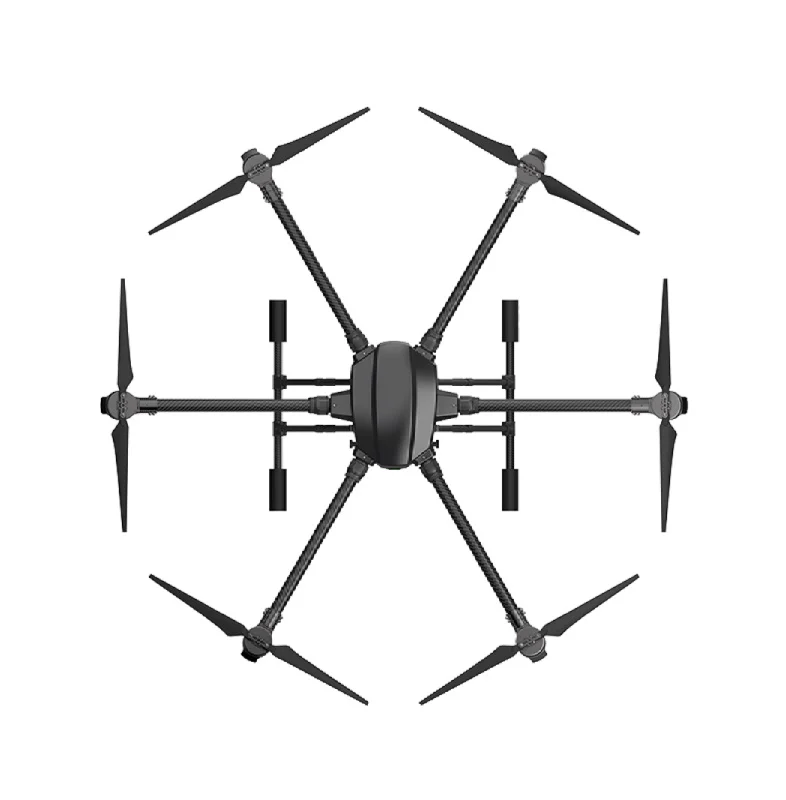
EFT 6120 Multifunction Surveillance Drone Frame
A professional-grade hexacopter frame designed for surveillance, inspection, and heavy-lift applications. Six-motor redundancy makes it ideal for critical missions where a single motor failure cannot be tolerated. Compatible with T-Motor and Hobbywing propulsion systems.
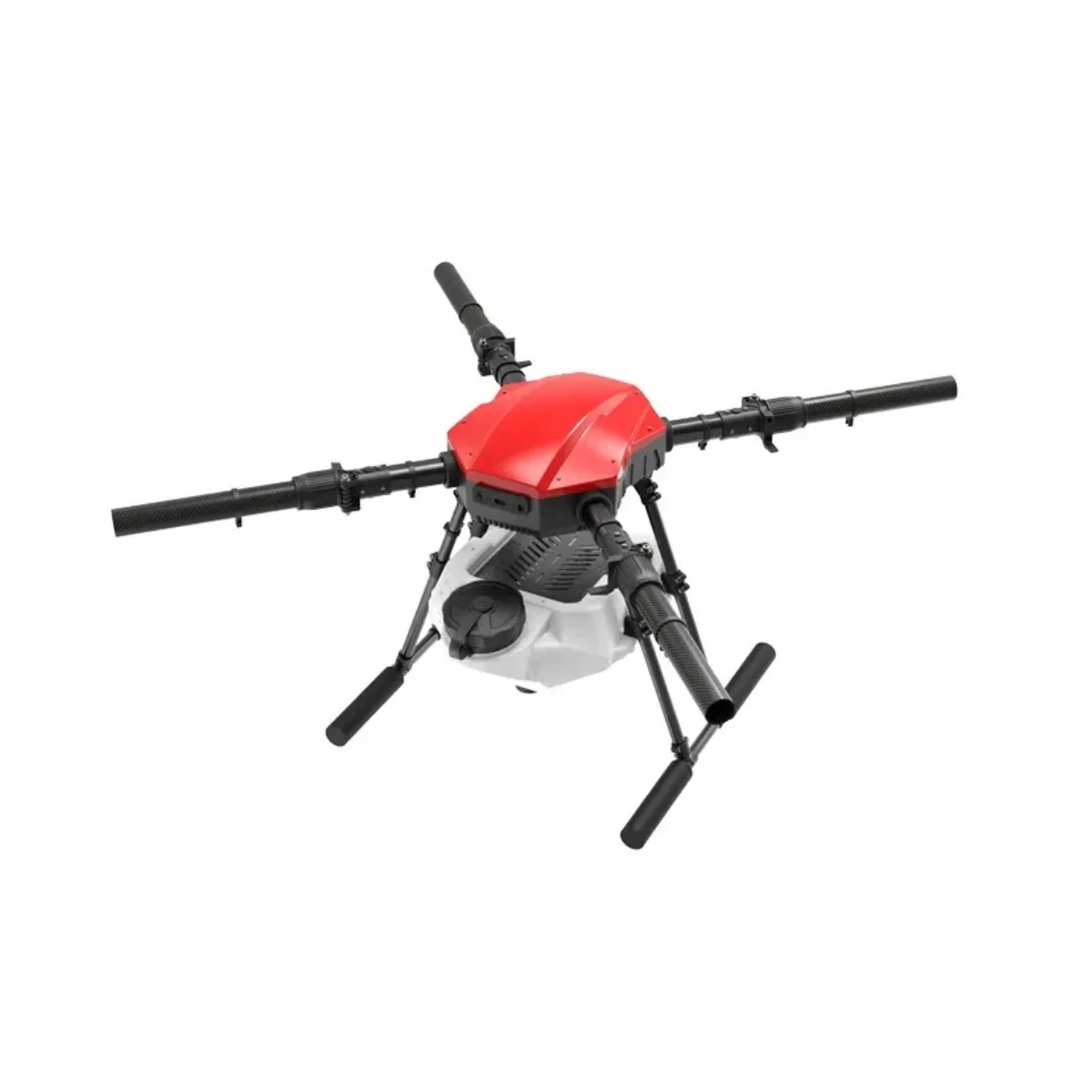
EFT E410P 10L 4-Axis Agricultural Drone Frame
Purpose-built for 10-litre spray operations, this foldable quadcopter frame combines aluminium alloy structure with carbon fibre arms. Engineered for the demanding conditions of Indian agriculture with easy field maintenance.
What to Check Before You Buy
Use this checklist before purchasing any FPV frame:
- Motor mounting pattern: Verify it matches your motors (9mm, 16mm, 19mm, 25.5mm bolt spacing).
- Flight controller stack size: 30.5×30.5mm, 25.5×25.5mm, or 20×20mm — your FC must match.
- Propeller clearance: Ensure the prop diameter fits without arms blocking the arc.
- Camera mount angle: Fixed, adjustable, or TPU mount? What camera format (micro, nano, full-size)?
- VTX antenna routing: Does the frame have a dedicated antenna exit to prevent antenna damage?
- Hardware quality: M3 stainless steel screws included? Nylon standoffs for vibration isolation?
- Spare arms availability: Can you buy replacement arms separately, or must you replace the entire frame?
- Weight: Add frame weight + components weight + battery weight. Total all-up-weight (AUW) must be within motor thrust budget.
Frame Assembly Tips for Beginners
Once you have chosen your frame, here are assembly tips that will save you hours of frustration:
- Use threadlocker on vibration-prone screws: Apply a tiny drop of blue Loctite (medium strength) to motor mount screws. Do NOT use red (permanent) Loctite on any FPV frame hardware.
- Dry-fit before final assembly: Assemble the entire frame without electronics first. Check all clearances, routing paths, and that the stack fits before you start soldering.
- Route motor wires inside the arm: Most carbon frames have channels cut into the arms for wire routing. Use this to protect motor wires from prop strikes.
- Anti-vibration pads for FC: Even if your frame does not include them, add rubber O-rings or silicone pads between the FC and standoffs. This dramatically reduces high-frequency vibration that causes Betaflight tuning problems.
- Tape the carbon: Carbon fibre can conduct electricity. Where your ESC or FC stack comes close to the carbon plates, add Kapton tape as insulation to prevent shorts.
- Balance your props: After assembly, use a prop balancer. Even 1g of imbalance on a 5-inch prop creates significant vibration at high RPM. This shows up as noise in your FPV video and accelerometer readings.

35A V2.1 2-5S 4-in-1 Brushless ESC for FPV Racing
A compact all-in-one ESC that mounts directly to your FPV frame’s stack, eliminating the rats-nest of individual ESC wiring. Handles up to 35A per motor and supports 2S–5S LiPo batteries, making it compatible with most 5-inch FPV builds.
Frequently Asked Questions
What is the best FPV drone frame size for a beginner in India?
Start with a 5-inch true-X frame. Components are widely available across India, tuning resources are abundant, and the power-to-weight ratio lets you feel the performance of FPV flying without going into ultra-micro builds that are harder to solder and repair.
Is carbon fibre better than fibreglass for FPV frames?
Carbon fibre is stiffer and lighter, making it better for performance. Fibreglass is cheaper and more forgiving in crashes. For beginners who are still learning to fly and crash often, a fibreglass frame can be more economical. Switch to carbon fibre once your flying skills reduce crash frequency.
How thick should FPV frame arms be?
For 5-inch racing: 4mm is the minimum, 5mm is better for durability. For 5-inch freestyle: 5–6mm for crash resistance. For 7-inch long-range: 4mm is usually fine since these builds are flown more carefully. For agricultural/heavy-lift: arm thickness becomes less critical than material quality and overall structural design.
Can I use an agricultural drone frame for FPV?
No — agricultural frames are too heavy, slow, and large for FPV flying. They are designed for stable GPS-guided flight carrying heavy payloads, not for agile manual piloting. The handling would be extremely sluggish. Use purpose-built FPV frames for recreational flying.
How do I know if a carbon frame is genuine quality?
Look for a uniform weave pattern with no air bubbles or white spots in the carbon. Genuine 3K twill weave has a distinctive diagonal pattern. Flex a spare arm between your fingers — it should feel very rigid. A good frame’s cut edges will be smooth and sealed, not frayed. Buying from established brands through authorised dealers like Zbotic guarantees authenticity.
Conclusion
The right FPV frame is the foundation of a great build. Carbon fibre stretched-X frames dominate racing and freestyle. G10 frames serve beginners well during the learning phase. Aluminium-carbon hybrid frames handle the demanding world of Indian agricultural drones. And 7-inch efficiency-focused frames open up the long-range exploration of India’s diverse landscape.
Take time to plan your build around the frame’s specifications — motor mount pattern, stack size, camera mount — before purchasing any other component. A frame that does not fit your components is an expensive mistake. Use the checklist in this guide, source your components from Zbotic, and you will have a solid foundation for an excellent flying machine.






Add comment